
Since he became mayor, John Hickenlooper has followed an ambitious program aimed at changing — literally, at times — the cultural underpinnings of the city. The latest idea is the Denver Biennial of the Americas, slated for the summer of 2010. And while the staff at the Denver Office of Cultural Affairs, headed by Erin Trapp, will take the lead, the $2 million-plus event will be paid for mostly with donated private funds.
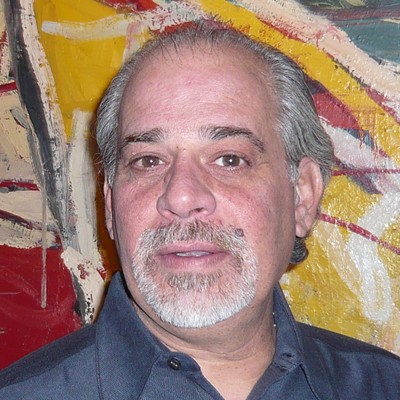
To conjure the whole thing, DoCA brought on Canadian superstar design-theorist Bruce Mau (pictured), with whom I had a chance to talk last week.
The biennial, subtitled In Good We Trust, will comprise seven themes — health, environment, economy, habitat, technology, energy and education — but how these topics will be fleshed out has not yet been determined. (For an ever-evolving look at the biennial, go to www.ingoodwetrust2010.com.) Careful readers may notice that art is not among these topics, and that's the biggest way in which Denver's biennial differs from traditional ones, such as those in Venice and Santa Fe. "The mayor said to me that there are two hundred biennials and he didn't want this to be two hundred and one," Mau told me, reiterating a point he has made many times before.
But that story strains credulity, because Mau was obviously hired in the first place for his established practice of creating cultural events (and books) based not on art, but on ideas. As I understand it, the Denver Biennial, which will run for seven weeks — an elegant symmetry with the seven subjects — will be something like a cross between a major lecture series and a set of linked trade fairs, with adjunct exhibits and performances thrown in for good measure. Mau hopes it will be interesting to locals and to visitors, who will want to come to Denver to see it. On this score, I think he's got his work cut out for him.