
Audio By Carbonatix
Independent Journalism in Denver Needs You
We need to raise $25,000 by August 9 to support the reporting our community depends on. Reader support keeps us independent and is playing a larger role in funding local journalism and shaping what comes next. If you believe independent local journalism matters, make a contribution today.
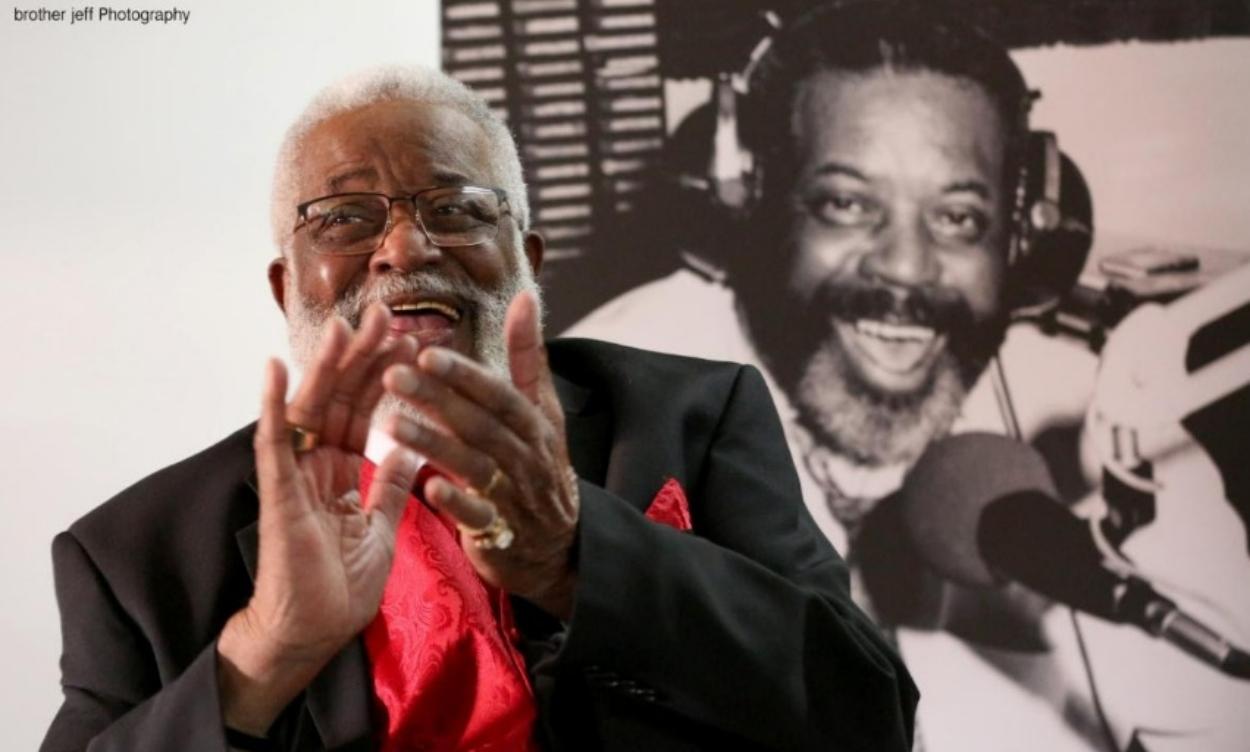
James Walker, known to a generation of Denver radio listeners as “Dr. Daddio,” passed away on January 26. He was 86 years old.
A family statement about “the Transition of James ‘Dr. Daddio’ Walker” reads: “With hearts full of love and gratitude, we announce the peaceful transition of our beloved father, grandfather, and great-grandfather, James ‘Dr. Daddio’ Walker. He has gone home to meet the Lord and to reunite with his beautiful wife, Pat.”
An apt summary of his life and work is also included. “James ‘Dr. Daddio’ Walker was a legendary broadcaster and entrepreneur who owned and operated KDKO Radio, one of the nation’s most influential Black-owned radio stations,” it says. “A visionary voice in media, he used radio to uplift culture, amplify community voices, and mentor generations of broadcasters and leaders.”
These days, the station heard at 1510 AM, KDKO’s old dial position, is KPLS, a Christian-oriented station whose slogan is “Positive Lifestyle Radio.” But even though KDKO ceased operation in the early 2000s, it’s still remembered fondly by plenty of locals. Among the online resources worth exploring are a KDKO Retrospective Facebook page and a brief history of the outlet penned by Don Mueller, who used the air name Don Miller while employed by the broadcaster from 1969 to 1978, during a period when it was owned by Dave Segal, a Denver radio veteran who’d previously played an outsize role in the success of KOSI, a legacy signal that’s still a major player today.
“On April the first, 1967, a new radio station in the Denver area burst upon the scene with the words, ‘SOUL POWER!’ KDKO radio was born, the first station in Colorado serving the Black community,” Mueller writes, adding that “85,000 people now had a radio station that they could call their own!”
This number was reportedly a reference to the total Black population at the time. But in his 2022 autobiography, Radio in My Soul: The Journey of James “Dr. Daddio” Walker, Walker suggested that this figure was considerably inflated. Prior to moving to Denver from Houston, Walker wrote, he did some research that “indicated there were approximately 26,000 Blacks in Denver.” Moreover, he continued, “I was told that much of that population was ‘a lot of in and out’ with the military bases.”
Walker didn’t let these challenges dissuade him. He saw the potential listenership as similar to that of Shreveport, Louisiana, where he’d spent many of his formative years. If it worked in Shreveport, it could work in Denver.
And it did, in part because KDKO quickly became the main source of information about events of all kinds for a group that the overwhelmingly white mainstream media purveyors consistently ignored. The theme Daddio preached was “Unity in the Community.”
By the mid-1970s, KDKO had increased its power to 5,000 watts — and this additional reach was among the factors that led management to embrace disco, the hottest musical trend of the era. According to Mueller, KDKO briefly dubbed itself “KDisKO.”
In 1980, around the time disco was running out of steam, Segal sold KDKO — and before the decade was out, it would be on the market again. This time, however, the purchaser was a cadre of investors led by Walker, who instituted a format that supplemented rhythm-and-blues and a sprinkling of rap with talk shows and even some sports features.
The road ahead wasn’t smooth. In 1991, Mueller documents, KDKO defaulted on its loan, and the following year, the Internal Revenue Service briefly shut down the station, reportedly for “overdue Social Security and federal withholding taxes.” But Walker was a fighter, and he managed to keep the station running until 2002. That’s when billionaire Phil Anschutz bought it for $2.7 million on behalf of his then-son-in-law, Tim Brown, who remade it as KNRC, a news-talker. A Westword article on the switch pointed out that Walker had “inked a three-year, $295,000 contract as a consultant to the station,” in part to ensure that KDKO’s audience would be represented. Nonetheless, KNRC’s weekday talent lineup wound up being overwhelmingly Caucasian. The station lasted only about six years.
In the time that followed, Walker’s reputation only grew. A 2023 Westword report that focused on former KUVO general manager Nikki Swarn included this: “Originally from Ann Arbor, Michigan, Swarn attended grade school and high school in Denver, and became a dedicated listener of KDKO, an urban-music outlet overseen by James ‘Dr. Daddio’ Walker, who was a role model and inspiration. ‘He was the first African American to be general manager of a Denver radio station, and I’m the first African American woman…. I never put my feet in the shoes of people like him, but I put my shoes next to them, and he was a big influence on me.”
The family statement released January 27 underscores the admiration that Walker inspired: “We thank each of you for the prayers, love, and unwavering support you have shown our family. His life was profound, purposeful, and deeply impactful. The legendary voice that carried us through sunshine, rain, and long afternoon drives home. He touched generations, shaped lives, and leaves behind a legacy of faith, strength, wisdom, and of course, ‘United in the Community.’ A love that will continue to live through us.”
Services for James “Dr. Daddio” Walker are pending.