
Courtesy of the Denver Museum of Nature & Science

Audio By Carbonatix
When you step into Brick Planet: A Magical Journey Made with LEGO Bricks, which opened November 14 at the Denver Museum of Nature & Science, you’re immediately swept into a world where nature and creativity literally click together. The new traveling exhibition by acclaimed LEGO artist Sean Kenney transforms ecosystems from around the globe into vivid, playful environments made from more than 1.5 million colorful bricks.
“LEGO artist is his title, but you could also say he’s one of the best customers of LEGO ever,” quips Bridget Chalifour, the museum’s curator for the show. “He does have a workshop, which you can see in this picture here as you enter Brick Planet. What’s cool about Sean is that he’s mostly using just regular bricks, which is great if kids have LEGOs at home because they can go home and be inspired to create something themselves.”
Courtesy of the Denver Museum of Nature & Science
But while the sculptures are dazzling, the heart of the show is how seamlessly it fuses art with scientific discovery, which is a balance the museum has spent months tailoring specifically for Denver audiences. Brick Planet is only the second stop on the traveling exhibit’s tour after its debut in Las Vegas, and DMNS will host it until May 3, 2026, giving visitors six months to explore its LEGO-built ecosystems. Knowing the exhibition would naturally captivate children, the museum team focused on deepening its appeal for teens and adults.
“One of the big themes Sean talks about is how interconnected everything is,” Chalifour says. “We’re trying to inject a little more science into it because we’re a science museum. When we walked through this the first time, we saw a lot of examples of symbiosis, but we wanted to explain what that was more explicitly. So we added magnetic matching games, ‘symbiosis alert’ signs and scientific panels that break down mutualism, parasitism and commensalism. We wanted people to understand the science that these sculptures are hinting at.”
The show also carries the unmistakable fingerprints and personality of its artist. Kenney appears throughout the exhibition via playful “artist connection” icons that reveal personal inspirations behind certain sculptures, including his love of bicycling and sustainability. Those touches tie back to the one-minute welcome video that greets visitors upon entering.

Courtesy of the Denver Museum of Nature & Science
“As an artist, I am inspired by everything around me, and I want to share that with you,” Kenney says in the video. “Just like LEGO bricks connect together, everything in nature is interconnected in a really delicate balance. I want to show you a lot of that today, but I also want to see what you can make. I want you to get inspired by everything that our planet has to offer, and maybe even learn some facts about what makes this place so special.”
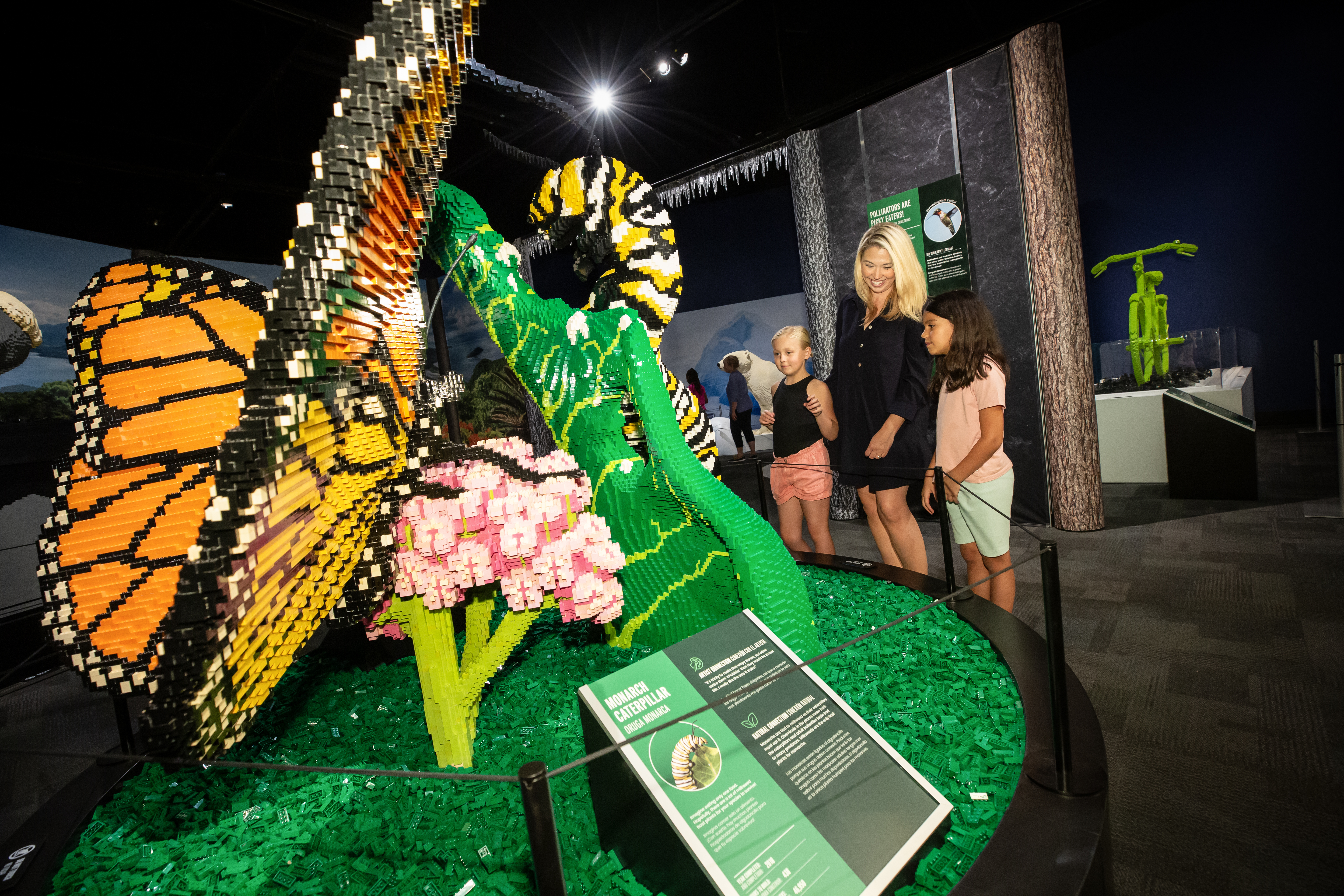
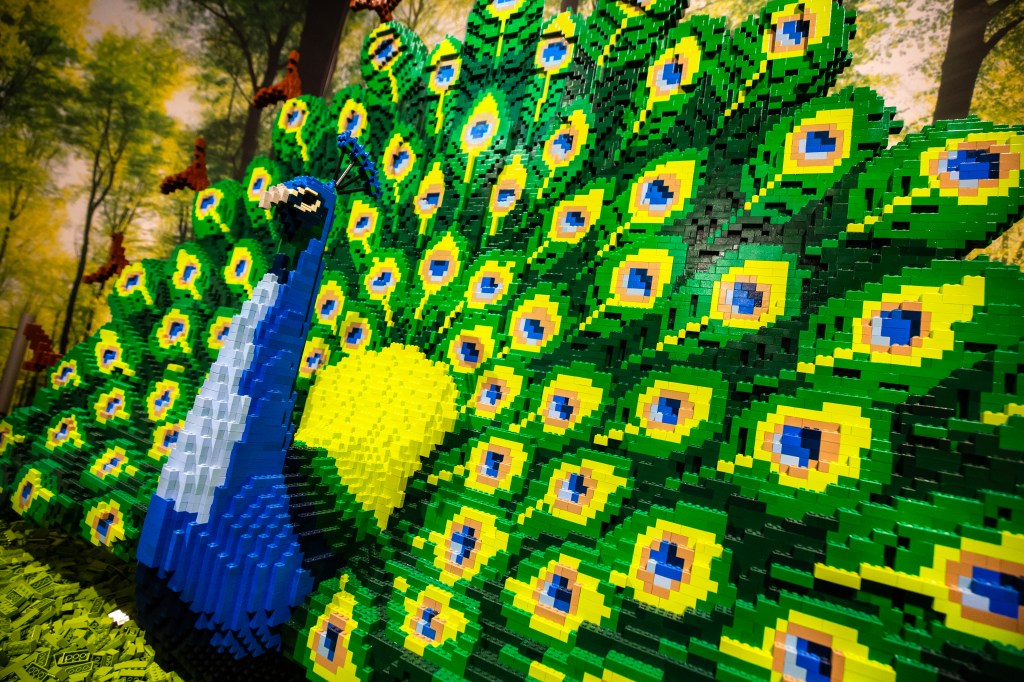
From there, the journey into Brick Planet begins in earnest. The opening gallery, titled “Our Planet,” erupts with biodiversity: a monarch caterpillar perched near its adult butterfly form, a Galapagos tortoise accompanied by a finch, a peacock shimmering in microscopic brick-built detail and a dodo perched on a block. Many sculptures illustrate real scientific relationships, something the DMNS team leaned into while developing Denver-specific enhancements.
Courtesy of the Denver Museum of Nature & Science
“The finch and tortoise sculpture is a real example of mutualism,” Chalifour says. “The tortoise gets a clean shell while the finch gets food. We wanted people to understand what they were seeing scientifically.”
Even the bricks themselves contain hidden discoveries. Chalifour pauses beside the dodo sculpture and gestures to the subtle gradient of gray pieces along its base. “It’s actually a bar graph showing the dodo population decline from 1505 to 1681,” she says. “A lot of people miss that. They’re looking at the bird, but I think the bargraph is a really interesting addition to this one.”
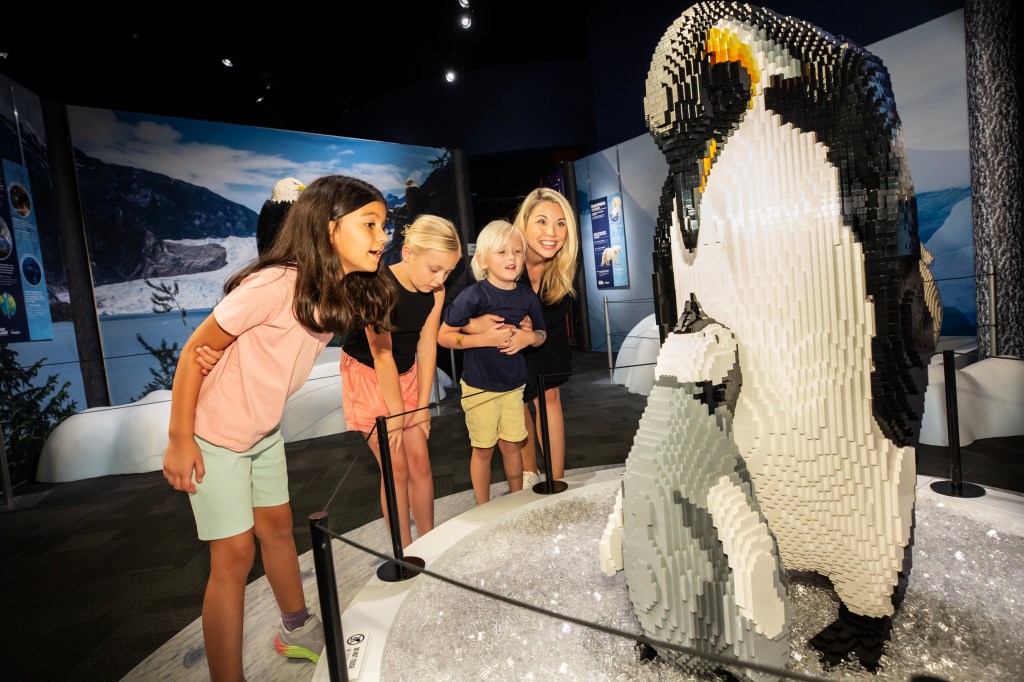
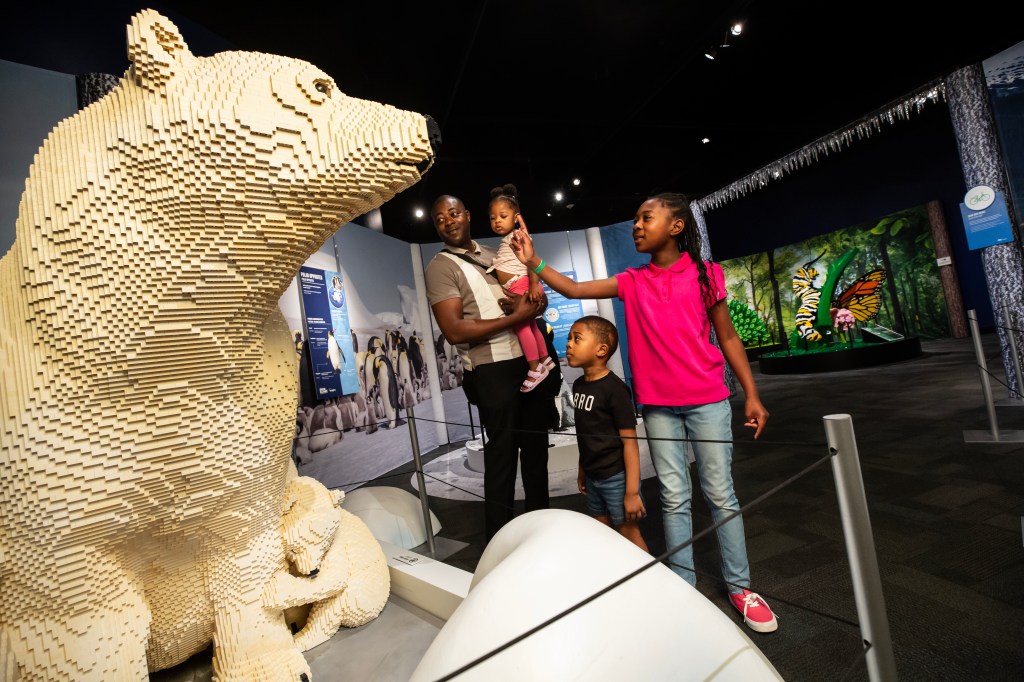
Inside “Polar Brrrricks,” the temperature seems to drop as towering polar bears, emperor penguins, and bald eagles populate an icy landscape. “I’m pretty sure this polar bear is the biggest sculpture in the exhibit,” Chalifour says. “It took over a thousand hours and over 100,000 bricks.”
Courtesy of the Denver Museum of Nature & Science
Kids can shuffle their feet in a waddle-like-a-penguin interactive element, while adults linger on the sheer scale of the polar bear, penguin and bald eagle sculptures. Nearby, Kenney’s signature green bicycle appears on a panel, indicating why he chose to highlight the polar regions: few people ever see these animals in person, and he hopes the sculptures humanize creatures.
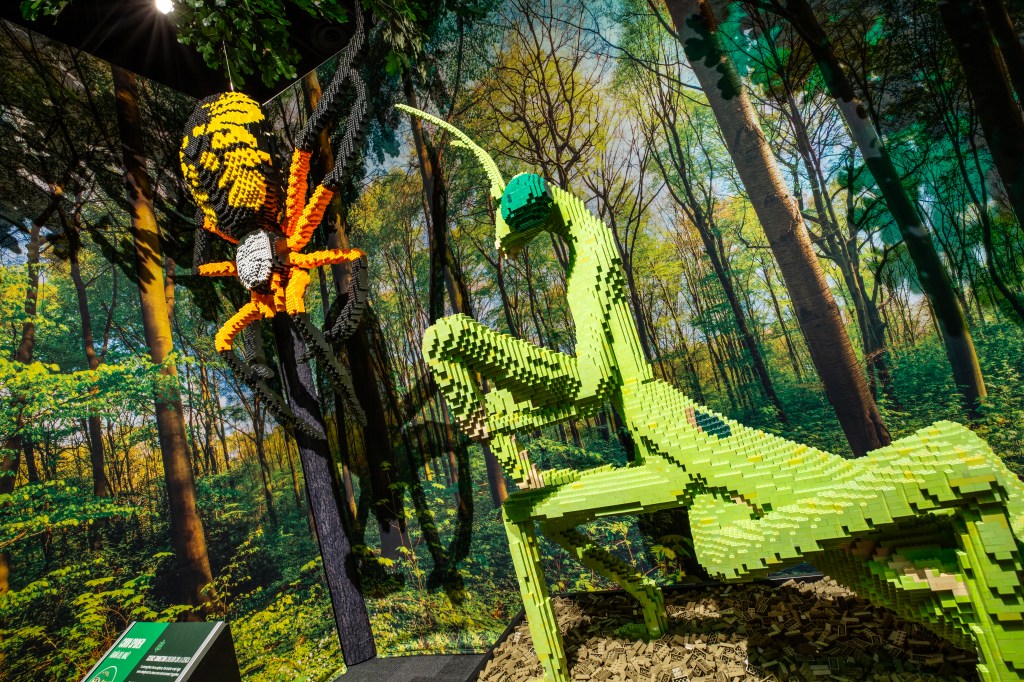
A dramatic shift in atmosphere leads into “Walk in the Woods,” where insects, arachnids, reptiles, birds and mammals populate a forest of brick trees and hidden butterflies. “What I really like is that it’s not all mammals or all birds,” Chalifour says. “There’s something for everyone.” Tucked throughout are “Sean-oculars,” kaleidoscope-like viewers that “brickify” the real world when you look through them. “It just lets you look around and get inspired,” she says.
Courtesy of the Denver Museum of Nature & Science
Just outside the forest, a Denver-specific hallway showcases iconic Colorado landscapes like Red Rocks, Garden of the Gods and the Great Sand Dunes rendered in pixelated, bricklike form. “Our graphic designer, Patrick Kennedy, came up with this,” Chalifour says. “We were like, ‘This is fun; do more!’”
From there, visitors step into the sunlit world of “Savannah Crossing,” anchored by Kenney’s famous Disappearing Rhino. “It’s fun to view from lots of angles,” Chalifour says. “We can see all of the holes in between the panels of the rhino from the side, and then if you move towards the head of the rhino, it all comes together and it looks solid. This is, again, another strong conservation message from Sean about how rhinos in real life are disappearing.
Chalifour points out a tiny custom LEGO brick bearing Kenney’s signature, which is one of many placed throughout the exhibit as part of an informal scavenger hunt. “I don’t even know where they all are,” Chalifour admits. “People are just going to have to hunt for them. They all look the same. It’s a small, white brick that says ‘Sean Kenney’ on it, and then there’s his signature on it. They all look like that brick, and you can try to find them in all of the sculptures. You’ll definitely need a keen eye.”
Courtesy of the Denver Museum of Nature & Science
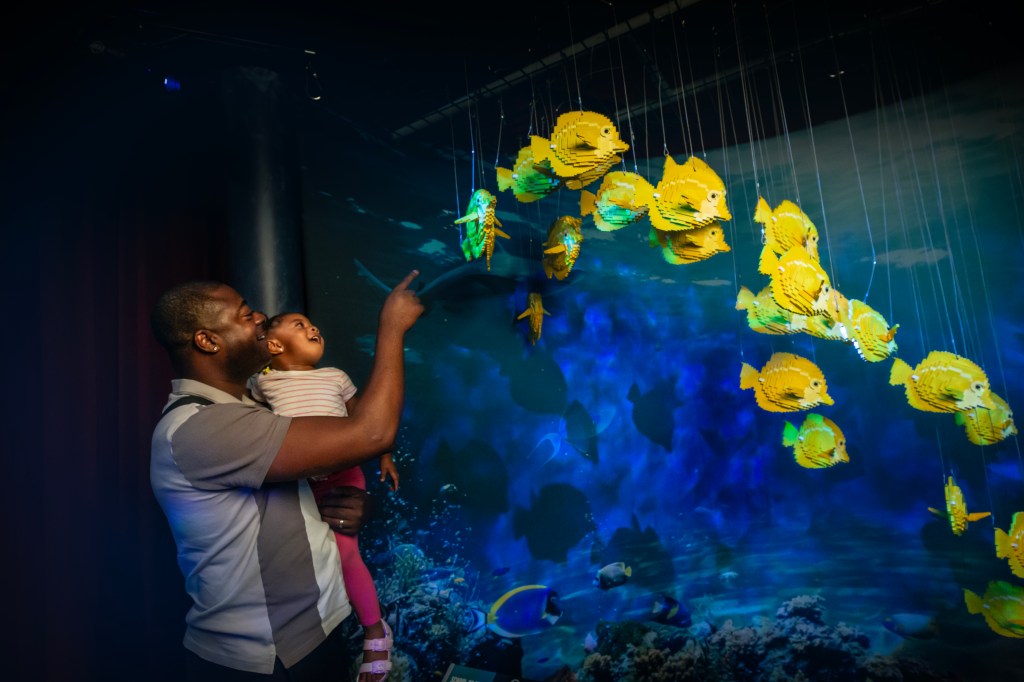
After the savannah, “Ocean Odyssey” plunges visitors underwater with glowing blue lighting, swirling schools of brick fish and a vibrant coral reef centerpiece. Guests can contribute coral pieces to a growing community reef or hunt for surprises, like the moray eel concealed deep within the sculpture. “Even after going through the exhibit five or six times, I’m still discovering new things,” Chalifour says.
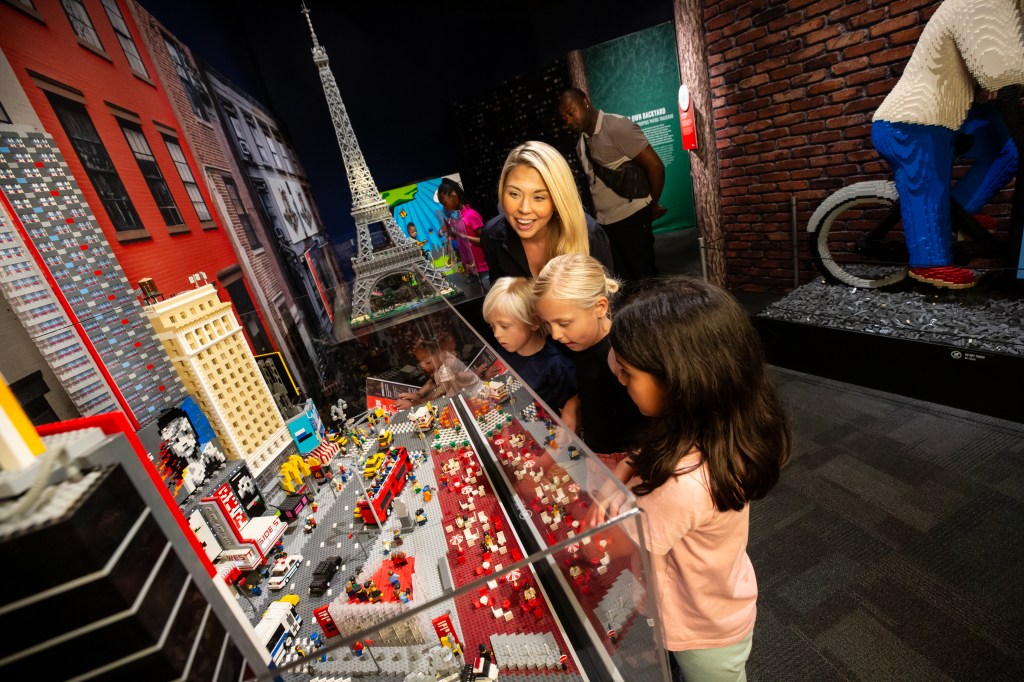
“Connect in the City” shifts the focus to urban ecosystems. A sculpture of a parent returning from the market on a bicycle depicts Kenney’s real family, while a sprawling, light-up Times Square, originally built in 2009 and updated over the years, invites visitors to hunt for dozens of hidden Easter eggs, from Spider-Man to the Naked Cowboy. “It’s so fun,” Chalifour says. “You could spend forever finding all the Broadway musicals hidden in the billboards.”
Courtesy of the Denver Museum of Nature & Science
The exhibition concludes in a community garden, where visitors can add to an ever-growing collaborative display. A final panel nearby connects the exhibition’s exploration of symbiosis to real-world research being conducted at DMNS by Paula Cushing in commensalism, Garth Spellman in parasitism and Chalifour in mutualism.
“I study the human microbiome,” Chalifour says. “Microbes help keep us healthy and happy, so it’s a mutualistic relationship. We display the museum’s connection to symbiosis in a sign right here at the end.”
With its blend of engineering marvel, scientific insight, bilingual accessibility and interactive play, Brick Planet is a world you truly have to experience firsthand.
“I’ve been telling people that you truly just have to see it to believe it,” Chalifour says. “Even if you see it in a photo or a video, it’s not the same as being in the same room as these incredible pieces of art.”
Brick Planet: A Magical Journey Made with LEGO Bricks is on view through Sunday, May 3, 2026, at the Denver Museum of Nature & Science, 2001 Colorado Boulevard. Tickets are free with museum admission; learn more at dmns.org.