Westword

Audio By Carbonatix
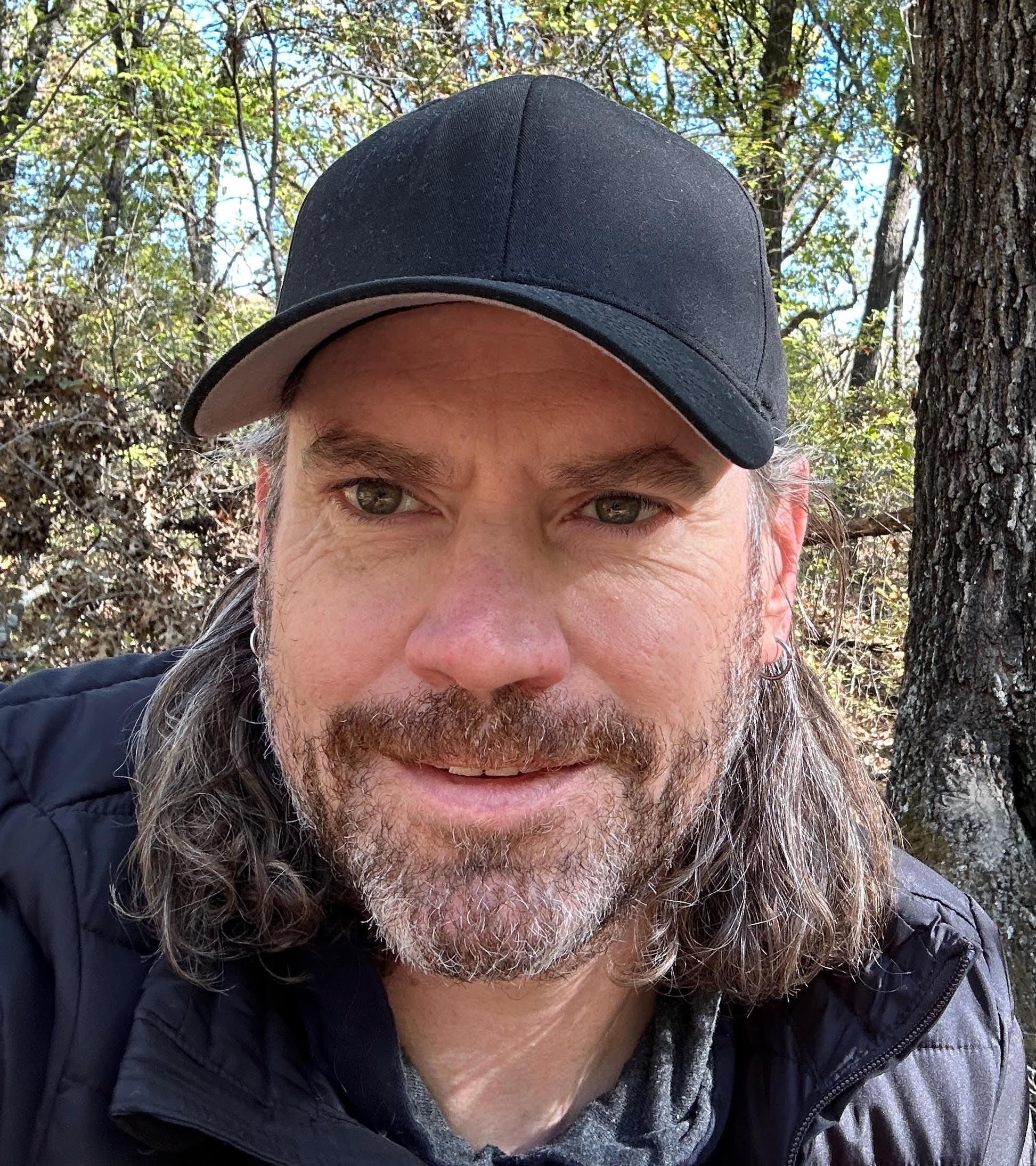
Dante Liberato is 75 miles into his first 100-mile footrace when he starts hoping for a moose attack.
His knees are screaming, his stomach is turning mutinous, but the idea of dropping out feels worse than death. He doesn’t want to be a DNF (Did Not Finish) on the results page for the Silverheels 100 Trail Run through a stretch of the Front Range. He wants an act of God.
Instead, he gets a little brown bottle.
At an aid station, one of his mentors holds up a tincture. “This will help your knee. This will help your stomach,” he tells Liberato. It’s LSD. Liberato hesitates, then opens his mouth. The mentor squeezes.
Back on the trail, climbing toward the high point of the race, headlamp cutting through the dark, thin air, Liberato watches the other runners falling apart — zombies stumbling, shells of the people he saw at the start. He feels the opposite: Every step seems easier, better than the last. His mind gets lighter. Conversation with his pacers flows. He laughs.
By the final three miles, he doesn’t want the race to end. He thinks about blowing past the finish line and running straight to the hotel. Instead, another idea begins to take hold: running from Manitou Springs all the way to Moab, using psychedelics the whole way to see how far this strange new edge can take him.
Liberato doesn’t know it yet, but that late-night dose in 2024 will end up changing everything: his sport, his work and the kind of community he’s trying to build in Colorado.
From Air Bases to Cage Fights
Long before the desert ultramarathons and LSD experiments, Liberato was a military kid who didn’t want to be tough.
His father flew F-16s. The family bounced from base to base every couple of years, classic military-brat style. When the next deployment came, Colorado Springs became home by accident, and then by default. Liberato was eight when they moved there in the mid-2000s and became anchored for the first time. But he was clear on one thing: He was a mama’s boy.
His dad viewed this as a problem, and the solution was taekwondo.
“As soon as we got here, he put me in martial arts,” Liberato recalls. He hated that, too, but he stuck it out long enough to earn a black belt. Then he saw his first UFC fight. The goofy taekwondo uniform could go. At the age of ten, he started asking his dad how to become a UFC fighter.
There wasn’t much of a mixed martial arts scene in Colorado Springs at the time, so he stitched his own together: wrestling, kickboxing, Muay Thai, boxing, jiu-jitsu. Liberato ping-ponged between gyms because there was no one-stop fight shop, but the results still came. He made Colorado’s state wrestling team.
His parents had kept him out of heavy striking until his early teens to “save his brain,” but by the time they relented, Liberato was already all-in. Two days after his eighteenth birthday, he signed his first amateur cage-fight contract. That was supposed to be the beginning.
But as Liberato walked toward the cage under bright lights, his heart was somewhere else.

by Jordan Baabs
Therapy, MDMA and Letting Go of the Dream
While his dad was deployed, Liberato’s mom loved to take him hiking. As a kid, he didn’t get the point of just walking a trail for hours. But as a young adult, he realized that time with her in the mountains was the only thing that consistently felt right. Between fights, he’d disappear into the backcountry, trying to balance the violence of combat sports with long days under open sky.
Then a missing hiker pushed him over the edge.
A young man named Micah Tice disappeared on Longs Peak in November 2018. Liberato had seen his mother’s posts online, begging anyone to come help with the search. He worked at a gym, and told his boss that the missing hiker was his cousin so he could leave. He says he spent about a month up on the mountain, working alongside National Guard units and search-and-rescue teams, digging through snow for a kid he’d never met. Tice’s remains weren’t found until the following summer.
“That was really where my passion was,” Liberato says. The mountains, not the cage.
He tried to pivot to becoming a flight nurse — something that blended adrenaline, service and the outdoors. But right before he committed to college, the old dream grabbed him by the throat. He took another fight, obtained his pro card…and then got hurt almost immediately.
Liberato ruptured a quadriceps muscle forty seconds into a tune-up match he thought he’d cruise through. The injury joined a list that already included a broken spine, multiple knee surgeries and a reconstructed shoulder, all wrestling and training injuries that had been building up since high school. He was done.
The difference now was who he was seeing to help heal his head.
Liberato had shifted from the sports psychologist he’d started seeing at twelve, who had worked to focus his obsession with physical training, to an “ecopsychologist” who specialized in therapy blended with nature. She recommended “medicine work,” or MDMA and psilocybin journeys. He scheduled his first MDMA session to sharpen his purpose for the fight.
Instead, he showed up on crutches after a tune-up fight he never should’ve taken.
Liberato spent hours in that MDMA session, wailing in his therapist’s arms, grieving the identity he’d carried since childhood: the MMA fighter he now understood he wouldn’t be. It felt like a first heartbreak.
He wasn’t new to psychedelics. In high school, he’d eaten an eighth of mushrooms, decided they weren’t working and smoked weed to try to sleep, only to watch his bed dissolve into a raft and his dog morph into a snake in dark water. No set. No setting. Just terror. He stayed away from mushrooms for years.
The first MDMA experience and resulting work with his therapist were the opposite. They did two MDMA journeys, then two psilocybin journeys. MDMA was the softer landing, but the mushrooms went deeper.
After the first MDMA session, Liberato felt a classic “helper” pull, with something telling him I need to do this for other people. The next day, he enrolled in Hakomi training, a body-centered psychotherapy program he’s now been in for years.
Liberato began weaving mindfulness into the coaching he was already doing. As he worked with athletes, he saw that some were carrying trauma of their own — and that psychedelics might help. Slowly, he started braiding the medicine work into his training.

by Jordan Baabs
Away From a Bad Relationship, Toward a New Program
Running didn’t arrive with a training plan; it came as an escape route.
During the COVID lockdowns, Liberato was stuck in what he calls an unhealthy, toxic relationship. Trips to the store were the only reason to leave the house. So he started running there.
There was a liquor store seven miles away. He’d run there, buy booze and walk home drinking, numbing himself. Those slogs built a base he didn’t yet understand.
After that, he tried one last time to take fighting seriously. That’s when the quad popped. In the fog of pain, he decided he needed to ask his legs to do something new. A day and a half after the injury, he signed up for the Black Canyon Ultra, a 60K race through Arizona’s Sonoran Desert, to be held six months later.
He’d barely trained and finished near the back. Seven months later, he ran a 40-miler and did better. Then he jumped to 100 miles. Liberato didn’t win, but he proved he belonged out there.
But after that LSD aid station at mile 75, running stopped being cross-training and became the main act.
Road to the Den and 500 Miles
To pay bills through the identity shift, Liberato coached at the same fluorescent-lit fitness studios he now criticizes. Eventually, he landed at a shared studio in downtown Colorado Springs to teach strength, mobility and martial arts.
But what he was chasing didn’t quite fit: ecstatic dance, microdose movement workshops, drum circles. The other coaches weren’t interested, and their relationships fell apart. His clients quickly stepped up, however, pooling money to buy him equipment and offering warehouse space and free rent for a year. They didn’t just like Liberato’s programming: They believed in what he was building.
That’s how the Den was born. A gym in Manitou Springs that operates as a community center for people doing deep self-work, the Den teaches strength and conditioning as well as ELDOA, which involves long, intense postures meant to shake loose stored tension. There are barefoot hikes, primal movement, even sumo wrestling. Most members have one thing in common: They’re doing “medicine work,” or something adjacent, and don’t feel like they fit in their old lives.
Liberato knows the question is coming: Is taking psychedelics a performance-enhancing act worthy of disqualification, or could it be soon? He thinks the answer is yes, but not because regulators suddenly believe LSD or psilocybin create a meaningful competitive edge. “I see it as just another barrier that our government can place around psychedelics,” he says, as a way to tighten access and reinforce taboo.
Mainstream sports will drift one way toward stricter bans, he envisions, while “enhanced” competitions like the nascent Enhanced Games move the other direction, openly courting athletes who are breaking records outside traditional rule sets. Liberato says he and his training partners are “crossing our fingers we can keep doing what we’re doing.”
As his gym was gaining momentum, psychedelics were pushing other dominoes for Liberato.
At an underground retreat center in Colorado, Liberato’s mentor guided a ceremony for a man named Fernando Gonzalez, who came out of it wanting to live in a Korean monastery. Gonzalez eventually returned with cameras for a planned documentary about psychedelics.
When he heard someone was training to run from Manitou Springs to Moab on acid, he knew he’d found his topic — and personal challenge.
The running route kept expanding as Liberato added dirt and removed pavement. It sat around 455 miles when Gonzalez pointed out that “500” hits harder. That meant adding another ultramarathon’s worth to the route.
“Fuck it,” Liberato said. “I can run 500 miles.”
Liberato left on September 22 with a small crew and a psychedelics protocol of his own: not one massive hit of LSD, but a series of small ones, thirty to forty micrograms at a time, trickled throughout the day. By night, he might have 200 micrograms in his system, riding the edge of what he calls “that journey space.”
The run is now complete, finished just over ten days after its start. The film, Dante, is in post-production. Now Liberato is explaining the adventure to people who’ve never considered dropping acid at mile 75, much less day ten.
Couchmilk and the Keys Psychedelics Hand You
While the film took shape, another thread twisted into a psychedelic-centric business.
Couchmilk started as a nonsense phrase from a psychedelic journey, shorthand in Liberato’s circle for the ineffable magic of psychedelics. The serious turn came when two fighters he coached took psilocybin before their bouts. Both won, decisively. Days later, they crewed Liberato through his 100-miler. The group realized they had something unusual in athletes performing well while openly experimenting with mushrooms.
A tech-savvy friend saw an opportunity: What if there were a platform where athletes could track their training and medicine use together?
Couchmilk became a data-driven app. Athletes log workouts alongside dosing, adding information about what they took, how much, when and what happened afterward. Patterns emerge, and so does a core insight: No two bodies respond the same way.
There’s an AI coach, but that’s secondary. The real point is helping people learn their own systems. In Liberato’s language, Couchmilk athletes are “superathletes,” or people who perform hard and live emotionally literate lives devoted to something deeper than a belt or title.
Sometimes that devotion pulls them out of the ring entirely.
“A lot of fighters have daddy issues,” says Liberato, who’s now 27. “Once they realize they don’t have to do something to please their father, fighting doesn’t really make as much sense anymore.”
The coach of many colors doesn’t push psychedelics as a fix, but if you keep doing what you’ve always done, he points out, you’ll keep getting what you’ve always gotten.
“People look at psychedelics as a way to fix things,” he says. “It doesn’t open any doors for you, but psychedelics can give you a whole bunch of different keys, and you can decide which doors you want to open.”
The work — long runs, gym sessions, building an app, making a film — is everything that came after those doors opened.