
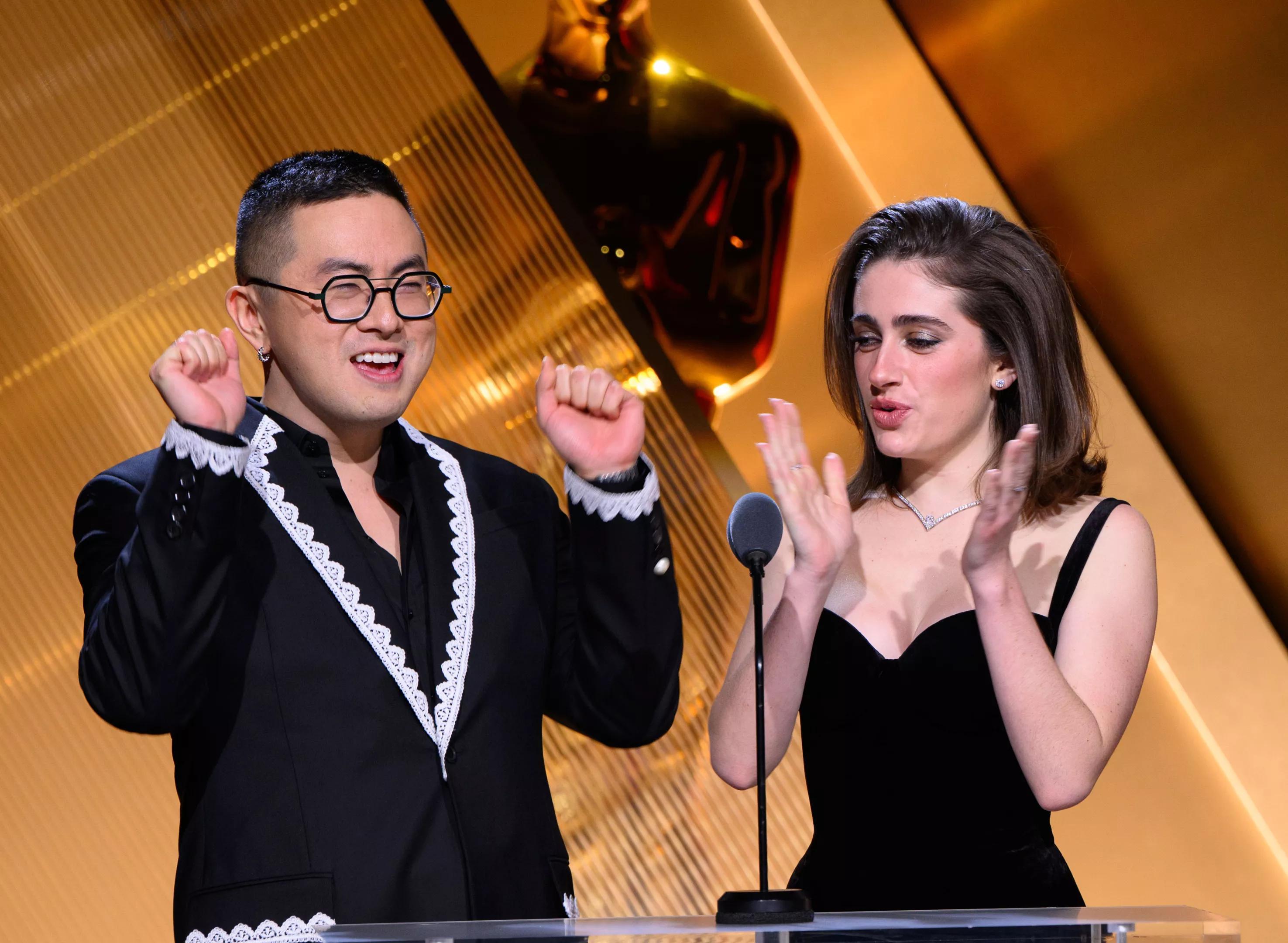
Richard Harbaugh/The Academy

Audio By Carbonatix
While New York critics are busy dissecting Bowen Yang’s Wicked era or analyzing his impact on late-night diversity, those of us living ten minutes away from Smoky Hill High School are feeling something much simpler: hometown pride grounded in proximity rather than personal connection.
Bowen Yang wrapped his final episode of Saturday Night Live on December 20, and national coverage has framed the moment as the farewell of a suddenly discovered star. But in Aurora, Colorado, his success feels less like a surprise and more like the visible result of long-term talent and consistency developed over time.
Long before he became a recognizable face on television, Yang was known locally as an exceptional student who balanced academic excellence with creative ambition. At Smoky Hill High School, he managed advanced coursework while participating in choir and performance groups, moving fluidly between analytical discipline and expressive confidence. That balance reflected a work ethic that often goes unnoticed until it appears on a larger stage.
Before portraying characters like “The Iceberg That Sank The Titanic” or “The Chinese Spy Balloon” (my personal favorite), Yang was a standout member of Smoky Hill’s improv troupe, Spontaneous Combustion. Under the guidance of his math teacher and improv coach, Adrian Holguin, he learned how to translate everyday suburban experiences into precise, character-driven comedy. Holguin once compared Yang to a major league athlete in training, emphasizing preparation, focus, and intention rather than novelty. That perception was echoed when classmates voted him Most Likely to Be a Cast Member on SNL in Smoky Hill’s 2008 yearbook, a recognition rooted in expectation, not irony.
Yang’s final moments on Saturday Night Live carried emotional weight for audiences nationwide. His performance of “Please Come Home for Christmas” alongside Ariana Grande and Cher was widely framed as a defining pop culture moment. Locally, it was understood as the closing of a long professional arc that began in familiar classrooms and rehearsal spaces rather than entertainment industry corridors.
Beyond comedy, Yang’s career holds broader cultural significance. He has spoken publicly about surviving conversion therapy in Colorado Springs, an experience that contextualizes his work without defining it. Becoming Saturday Night Live’s first Chinese American cast member represented a milestone shaped by persistence, self-knowledge and creative clarity.
While national tributes emphasize polish and legacy, local appreciation remains quieter and rooted in place rather than proximity to celebrity. Yang’s trajectory demonstrates that cultural influence does not require a coastal origin or inherited access. It can begin in Colorado, shaped by public schools, community programs, sustained effort and individual curiosity, before reaching audiences far beyond its starting point.
That outcome invites recognition not as ownership or familiarity, but as appreciation for craft, resilience and the steady accumulation of meaningful work over time, viewed from a respectful distance. This response reflects appreciation for creative work and cultural influence rather than personal connection. It recognizes professional impact, public visibility, and sustained effort over time, without assuming familiarity, shared history, or individual relationship, emphasizing respect for achievement as an observer rather than participant.