
Bennito L. Kelty

Audio By Carbonatix
Colorado is one of the worst states to drive in, according to a recent study from the financial website WalletHub. The study, based on issues like road congestion, safety and vehicle affordability, ranked Colorado as the sixth-worst states heading into 2026.
WalletHub used a point system to weigh 31 different metrics, including a state’s cost of car ownership, traffic, infrastructure and safety, as well as access to vehicles and maintenance. Based on 2025 data, Colorado’s overall score was 51.68, better than only Washington, Montana, California, Maryland and Hawaii, which holds the title as the country’s worst state to drive in.
Poor Safety, High Vehicle Costs?
Colorado came in 36th place for both the cost of ownership and safety.
Points for the cost of ownership were based on the prices of gas, insurance and maintenance, and the cost of owning a second vehicle. Safety scores were partly based on “traffic indiscipline,” which factored in phone use, speeding, aggressive acceleration, harsh braking and poor turning. Other metrics included seatbelt use, traffic fatality rate, car theft and larceny rates, DUI laws and high-risk punishment. The share of uninsured drivers and the likelihood of collision with animals were also factored in.
According to AAA, the average gas price in Colorado is currently $2.62, down from $2.99 a year ago. According to AutoInsurance.com, the average insurance premium in Colorado is nearly $3,000 a year, or about $250 a month, for full coverage.
As far as fatalities go, the Colorado Department of Transportation (CDOT) counted 701 traffic deaths statewide in 2025, according to its fatal crash data dashboard. Last year marked an increase from 659 traffic deaths in 2024 but a decrease from 764 deaths in 2022, the state’s deadliest year on record.
Denver surely didn’t help Colorado’s safety score, as the city just had a record year for traffic deaths. In 2025, the City of Denver counted 93 deaths in traffic, including drivers, pedestrians, cyclists and scooter riders, and the figure is the highest single-year traffic death count on record for Colorado’s biggest city.
According to WalletHub, Colorado also ranked fourth-worst in car theft. Data from the Colorado Auto Theft Prevention Authority, a division of Colorado State Patrol, shows that about 20,000 cars were stolen in 2025. According to Governor Jared Polis, the number of car thefts statewide dropped by about 35 percent in 2025, or about 5,300 fewer thefts, compared to the previous year.
Again, the state probably wasn’t getting much help in that area from Denver, a city whose mayor has had his car stolen twice. According to the Denver Police Department, more than 5,800 cars were stolen in the city in 2025, but that marks a decrease from more than 9,000 in 2024 and nearly 13,000 in 2023.
Traffic and Road Issues
WalletHub ranked Colorado 40th of all fifty states for vehicle transportation and infrastructure, the state’s poorest category in the study. Scoring factors included rush-hour congestion, weather, the rate of increased highway traffic, average commute times, road and bridge quality, and the amount of roadway miles per 1,000 people.
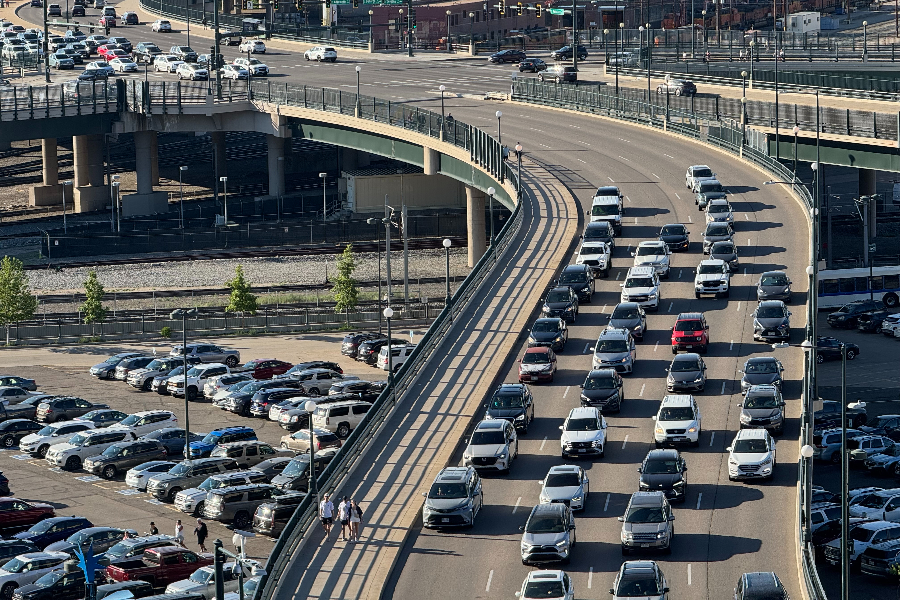
In November, the Texas A&M Transportation Institute’s latest Urban Mobility Report found that metro Denver drivers spend an average of 76 hours a year stuck in traffic, up from 62 in 2019, which is the seventeenth-worst in the nation. The report also estimated that congestion costs individual drivers more than $1,700 a year in lost productivity and wasted gas, which is 16 percent worse than other cities of the same size as Denver.
Regional transportation bodies in Colorado are considering widening highways, like interstates 270 and 25 and Peña Boulevard, for billions of dollars in the face of a growing population and aging roads.
Denver is also in the midst of addressing bridge quality. Nearly two-thirds of Denver’s 400 vehicular bridges have some structural deterioration and need some kind of repair, according to the Denver Department of Transportation and Infrastructure.
Colorado scored relatively well in access to vehicles and maintenance, coming in fifteenth nationwide, saving the state from ranking among the five worst overall.
And the best state to drive in? Vermont, which WalletHub praises for “decreasing deaths on the road” by 10 percent from 2022 to 2023 and for “the fewest motor vehicle thefts per capita” nationwide in 2025. Iowa and Colorado’s neighbor to the east, Kansas, followed in second and third place, respectively.