
Bennito L. Kelty

Audio By Carbonatix
The Denver International Airport team opened a public feedback process for upgrades to Peña Boulevard at a Green Valley Ranch open house on Thursday, January 22, and nearby residents had big ideas.
Although Peña Boulevard is narrow and has small shoulders, it’s still a highway. As the lone public roadway to the airport, Peña Boulevard handles an estimated 187,000 drivers a day, according to DIA, but the route wasn’t intended to accommodate that volume when it was built in 1993. Airport officials alluded to a major project to address congestion in the 2024 Peña Master Plan, with the Federal Highway Administration expected to fund major improvements. The open house, hosted at the Green Valley Ranch Recreation Center, marked the start of the National Environmental Policy Act (NEPA) review process, which is required for the airport to be eligible for federal funding down the road.
There’s still no solid idea of how the project will look, however, and DIA probably won’t make a final decision until the end of the year, according to Mandy Whorton, the owner of Peak Consulting, a Denver-based company hired for the NEPA process.
“We’re still really in listening mode,” Whorton said during the meeting. “We’re trying to absorb all the different ideas with open minds. We’re not really favoring one thing or another.”
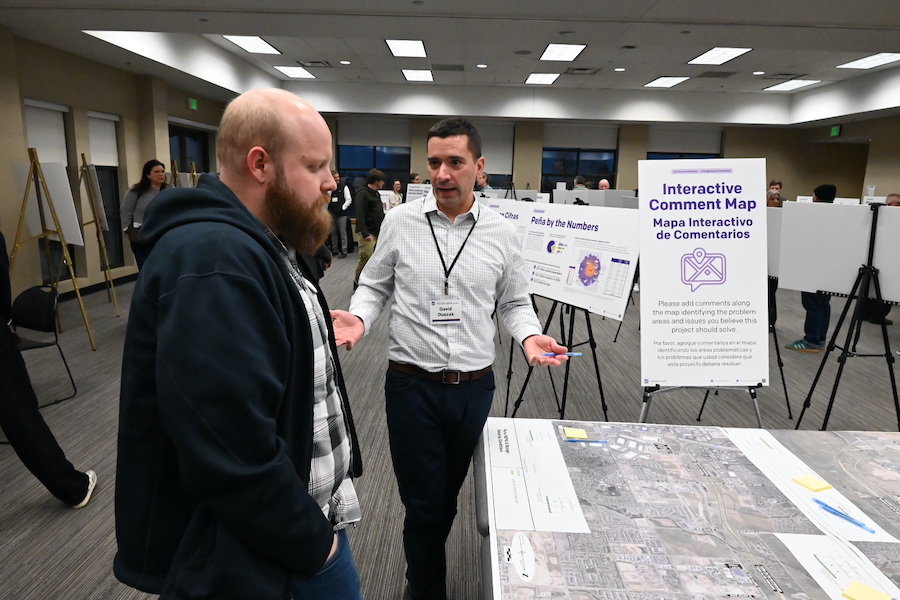
The open house took place in a small room with poster boards describing NEPA, explaining that about 50 million people use Peña Boulevard per year, and that the road is named after former Denver Mayor Federico Peña, among other factoids. Planners and experts from Peak Consulting and DIA outreach staff spoke with around two to three dozen people in the room at a time, with chatter about “widening” and “tolls.”
Chris Brosz, a Green Valley Ranch resident, attended the open house and spoke with planners about adding lanes to Peña Boulevard. Brosz liked the idea because he often deals with airport traffic on his daily commute.
“My goal is to see some kind of widening or airport-only route, or something for the local traffic just to separate those two out, so it’s not a bunch of interweaving,” Brosz said. “Hopefully, we get better flowing traffic.”
Adding more lanes is certainly on the table, according to Whorton. Other planning bodies are considering widening highways to handle metro Denver’s growing population and aging infrastructure, but some residents oppose widening roadways. Brosz not only welcomes it, but sees it as the only solution.
“Widening is probably going to have to happen,” Brosz said. “[Peña] is always congested. There’s not a timeframe in which it opens up, especially with all the new developments. We have so many more houses, and 61st has the Gaylord and, like, ten different communities. The traffic dumping onto that is a lot more than I think Peña was designed for.”
Bennito L. Kelty
Amanda Troutman, another Green Valley Ranch resident, said that it takes 35 minutes to leave her neighborhood because of congestion on Peña and Green Valley Ranch boulevards.
“My other options are I can pay a toll to get to my house,” Troutman said, referring to Colorado toll road E-470. “My options to get out of my house to go to work, to go to recreation, to visit friends, to get to the hospital, all those things require navigating a lot of traffic.”
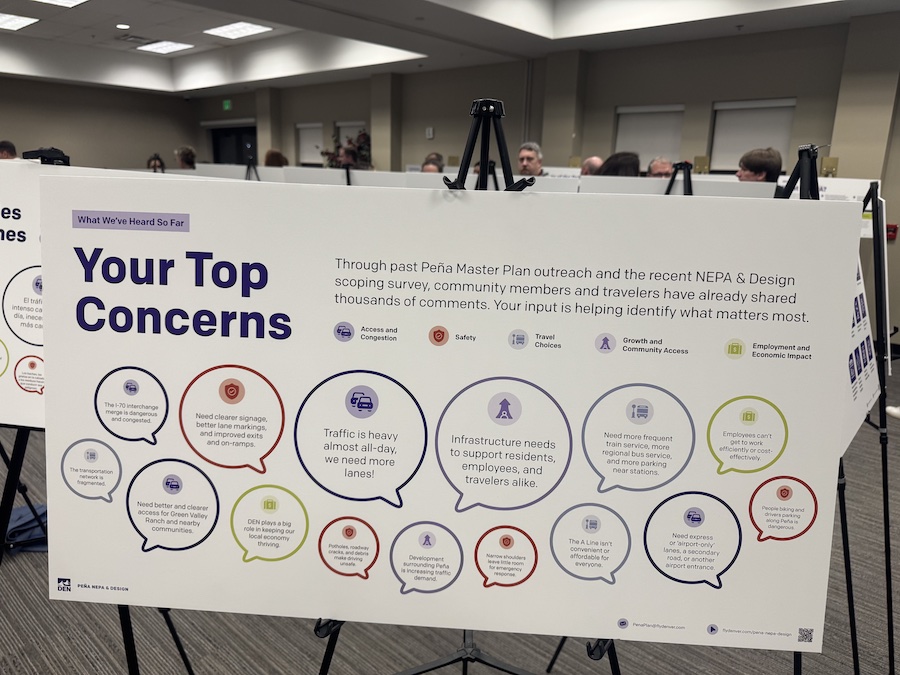
More than 5,000 comments about the project were collected through online feedback in November and December, according to Whorton. The most common concerns about Peña Boulevard centered on heavy traffic throughout the day; confusing signage, exits and on-ramps; and not enough transit and infrastructure serving people who live nearby, she said. Adding a bus lane was another frequent suggestion.
One poster board at the open house included comments such as “We need more lanes!” and “Narrow shoulders leave little room for emergency response.” Another poster board listed the most common solutions offered in the online feedback, including adding a toll, airport-only or normal car lanes to Peña.
Complaints about the A Line, the RTD light rail route from Union Station to the airport, and the lack of public transit were common at the open house and in written feedback. “the A Line isn’t convenient or affordable for everyone,” according to one online comment shared at the open house, and another called Denver’s transportation network “fragmented.”
Peña Boulevard is about eleven miles long, but DIA is currently focusing on a six-mile stretch between Interstate 70 and E-470. The project area considered at the open house included the A Line as well as roads and infrastructure around Peña Boulevard; Whorton said that the airport wants to make improvements to the “Peña Corridor,” not just the road. Light rail lines and stops, on-ramps, shoulders and nearby roads could also be a part of any final project.
Residents also told DIA officials that they want to see a better Interstate 70 interchange with Peña Boulevard. The current interchange is tangled with lanes to access Chambers Road, so drivers coming off Interstate 225 to enter I-70 or Peña have to merge left as Chambers-bound drivers are veering right. One written comment described the interchange as “dangerous and congested.” Troutman noted that the corridor isn’t included in the proposed project area, adding that “how to get onto Peña should also be part of the conversation.”
Feedback can still be submitted via DIA’s online open house; the site includes information about the project. More public-facing events are coming, according to DIA spokesperson Stacey Stegman, with another expected around May.