Bennito L. Kelty

Audio By Carbonatix
Independent Journalism in Denver Needs You
We need to raise $25,000 by August 9 to support the reporting our community depends on. Reader support keeps us independent and is playing a larger role in funding local journalism and shaping what comes next. If you believe independent local journalism matters, make a contribution today.
The Denver Broncos and City of Denver presented details to residents on February 12 for a new football stadium planned at Burnham Yard in the La Alma Lincoln Park neighborhood. The stadium’s construction, expected to be complete by 2031, would require an entrance from West 8th Avenue while leaving open space for recreation, according to plans shared during a community meeting at the La Alma Recreation Center.
“It’s so cool that we’re going to have a new stadium. We’re going to have the best stadium in the country until somebody else decides to build a newer one,” David Medina, a Broncos fan who’s sure his team would’ve beat the Seattle Seahawks in the Super Bowl this year, told Westword during the meeting. “I think we’ll have a Super Bowl within three years after we have the stadium. …I never thought I’d have the chance to see the Broncos win a Super Bowl here.”
In September, the Broncos ownership announced intentions to build a new stadium at Burnham Yard, a 115-old former train maintenance facility in the middle of La Alma Lincoln Park, just west of the neighborhood’s namesake park. In November, city officials and the Broncos hosted an open house to share early development plans and collect public feedback. At that meeting, some residents, including die-hard Broncos fans, expressed worries about increasing property values, traffic congestion and crime, while others were interested parking revenue disbursement or contracting with the team to sell locally made goods.
Last September, the Broncos confirmed the team wants the new stadium to be roofed, a likely NFL requirement for Denver to host a Super Bowl, with a surrounding development plan that includes hotels, restaurants and housing on 150 acres. On Thursday, Denver residents gandered at early designs that showed more trees and greenery, conceptual roads extending West 11th Avenue past Osage Street, and a large parking lot in the Baker neighborhood. A timeline from the Broncos shows plans to start construction next year and work out a community benefits agreement by the end of this year. The team also launched a new informational webpage, which has some the same material shared on Thursday.
Questions and Concerns
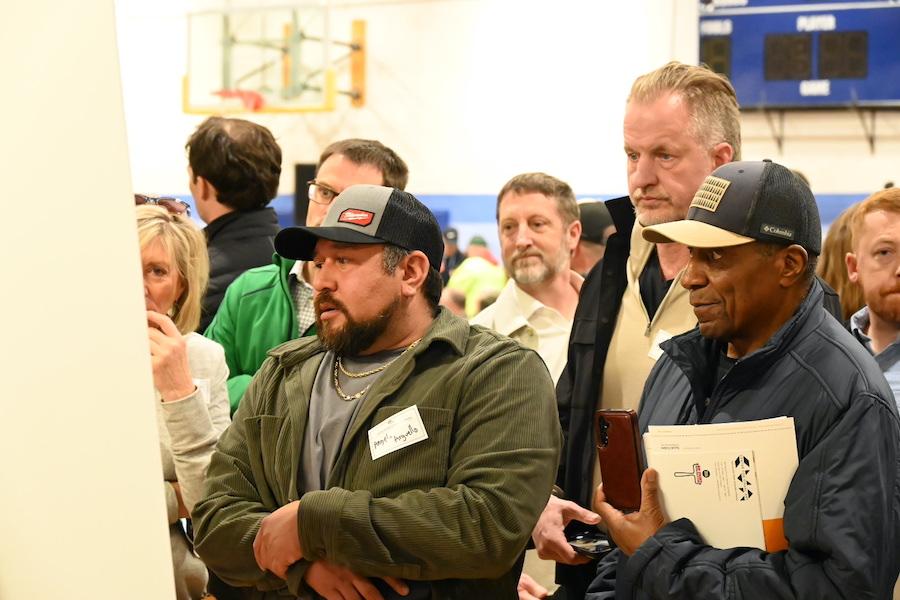
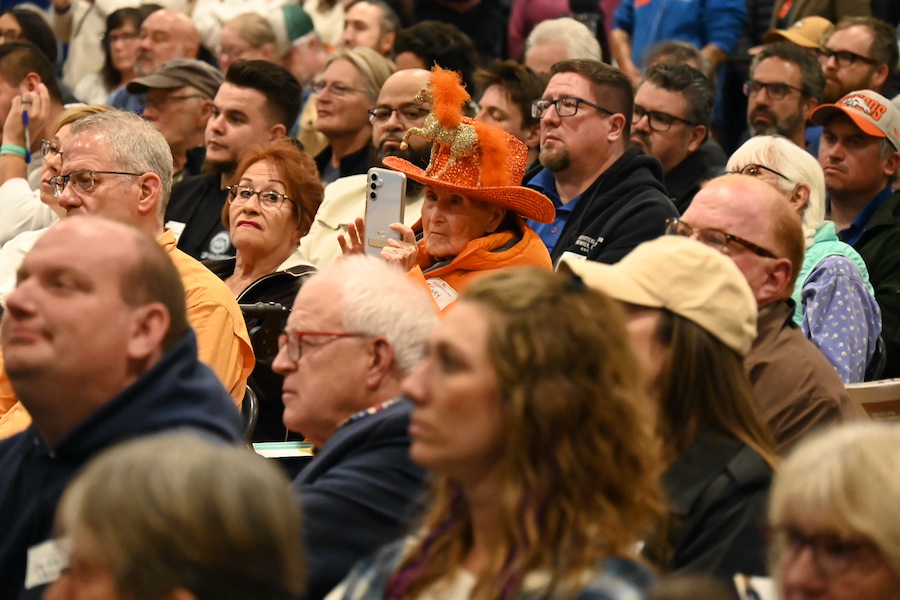
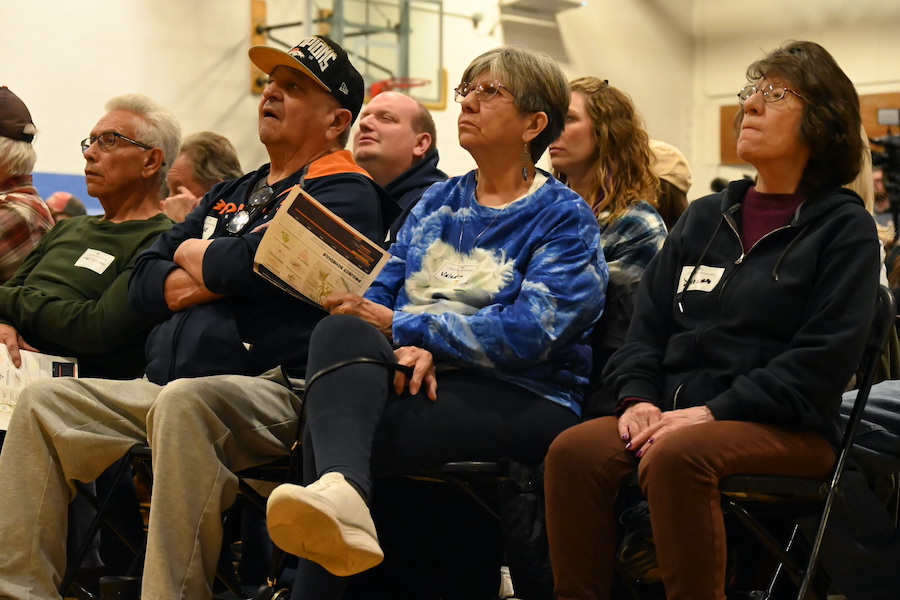
An estimated 300 people attended the meeting on Thursday, with residents echoing earlier concerns about property taxes and traffic. No plans have been finalized or adopted, so everything presented can still be changed, planners noted.
A community advisory committee made up of representatives from the Broncos, the city, the La Alma Lincoln Park neighborhood and local businesses has met three times since October, but the meeting on Thursday was set up mostly as open house.
In addition to representing La Alma Lincoln Park, Councilwoman Jamie Torres reps Sun Valley, the neighborhood that currently hosts the Broncos and Empower Field. Torres said she has heard from “all rungs of reaction,” including “some who are supportive and can’t wait to see it happen. Some who are absolutely dead-set against it and think it will kill the neighborhood.”
According to Torres, property owners in La Alma Lincoln Park have told her they nixed plans to sell their land after news broke of the incoming stadium, which “starts to escalate land costs for everyone.”
Bennito L. Kelty
Denver resident Thom Cook said he attended the meeting because he owns properties in the neighborhood, “and we’re trying to get an idea of what’s going on.” Eminent domain, a law allowing the government to seize private property for essential public use, was his biggest concern, he said, but the stadium is “a great thing for the city of Denver, so I’m just trying to get involved.”
Roman Manuel, a fifteen year old who lives in west Denver, was probably the youngest person at the meeting. Manuel said attended because he wants “to be part of my community.” His main concern was that such a big project could disrupt utilities in west Denver, and he wondered what was wrong with the current stadium.
“It’s been here since I was little. I feel like it would be weird, personally, to move the stadium. Nothing’s wrong with it. It’s not hurting anybody,” Manuel said. “If they have to shut down water or electricity, if they need to rebuild and shut it down, I feel like that could occur around the neighborhood and make some folks unhappy.”
Sun Valley resident Dolores Garcia told Westword that she lives across the street from Empower Field. Although she’s a lifelong Broncos fan, she wouldn’t mind seeing a new stadium go to another neighborhood because “we get all the traffic, we get all the noise.”
David Gaspers, the principle Denver city planner on the Burnham Yard project, said that the city and Broncos have collected upwards of 1,500 comments on the new stadium, including from the last open house, “community navigators,” and online surveys. According to Gaspers, residents are saying they want “to feel like they’re connected into and invited into the new development site. They don’t want to feel like it’s for somebody else.”
Neighborhood feedback is also in favor of a stadium that will “reflect the culture of La Alma Lincoln Park,” an area known for deep Chicano roots, a celebrated arts district and quaint homes, Gaspers added.
Trusting the Broncos?
The meeting featured a presentation after the open house by city planners alongside Sasaki, the architectural firm helping with designs on the project, and Broncos team president Damani Leech. Leech reiterated that the team’s ownership, the Walton-Penner group, “expects to privately finance the stadium,” which was a key promise when the franchise announced a new stadium, but “we hope and expect to get necessary support from the state and the city” with potential public infrastructure costs related to the new stadium.
Torres “wasn’t happy” with the idea to redesign West 8th Avenue and says the first time she’d heard about it was at the meeting on Thursday.
Along West 8th Avenue, a viaduct street goes over Burnham Yard, but the Broncos design calls for the avenue to dip to ground-level and force every eastbound driver to pass directly in front of the stadium. Anyone who parks at the stadium’s main lot in Baker would have to cross not only West 6th Avenue but also the redone West 8th Avenue to get to the game. Gaspers said addressing Eighth Avenue is “a big question” in the planning process right now.
The Eighth Avenue viaduct currently sees an estimated 15,000 cars a day but needs to be replaced, according to the city. Last summer, Denver City Council requested that Mayor Mike Johnston’s Vibrant Denver bond package to allocate $89 million towards replacing the viaduct. Last week, the city released Vibrant Bond funds to design the replacement bridge, Torres said, adding that she has asked for a meeting with the Denver Department of Transportation and Infrastructure to learn more.
Torres said she’s “not supportive an at-grade [or ground-level] crossing at Eighth Avenue,” because of the possible safety risks and costs, and she’s set against letting the Broncos stadium plan use bond funding meant for the bridge replacement.
“This team doesn’t tell us what we do with our bond dollars,” she said. “And we already told voters what we would do with our bond dollars, so we need to make sure those things square up. We’re not just handing over money to this team to do what they want to with Eighth Avenue.”
Bennito L. Kelty
Other big ideas quietly suggested in the plans included elevating the nearby RTD light rail to go over 13th Avenue and building a pedestrian crossing over the existing 10th and Osage Station.
“Like my neighbors and residents in La Alma Lincoln Park, I’m seeing a lot of this for the first time,” Torres said. “But they’ve got a lot of areas that need more substance.”
Torres wants the Broncos to flesh out how nearby businesses, especially on Santa Fe Drive, will benefit from stadium events, how the NFL franchise will manage traffic and how to keep pedestrians safe when crossing train and light rail lines. She also wants to keep an eye on how many promises made by the Broncos on Thursday night are going to be delivered, and when.
“It’s just going to be a stadium, initially,” Torres said. “Are we legitimately going to get playgrounds and rec spaces, or is it just going to be green walkways?”
The councilwoman also noticed that the Broncos didn’t present any information on talks with the Denver Urban Renewal Authority or the development agreement that the Broncos must get approved by City Council. More so than the community benefits agreement, the development agreement is going to have teeth because “that’s going to be the affordable housing, the open space requirements, work requirements, construction jobs, union jobs, things we can enforce,” Torres said.
Whatever happens, Torres is certain that the new stadium in La Alma will change the neighborhood.
“There’s no way it will have no affect,” she says. “Undeniably, it will have some affect on this neighborhood.”