Sage Kelley

Audio By Carbonatix
Independent Journalism in Denver Needs You
We need to raise $25,000 by August 9 to support the reporting our community depends on. Reader support keeps us independent and is playing a larger role in funding local journalism and shaping what comes next. If you believe independent local journalism matters, make a contribution today.
Somewhere, a business owner just shuddered. State officials are seeking public input on a new bus rapid transit corridor in Denver.
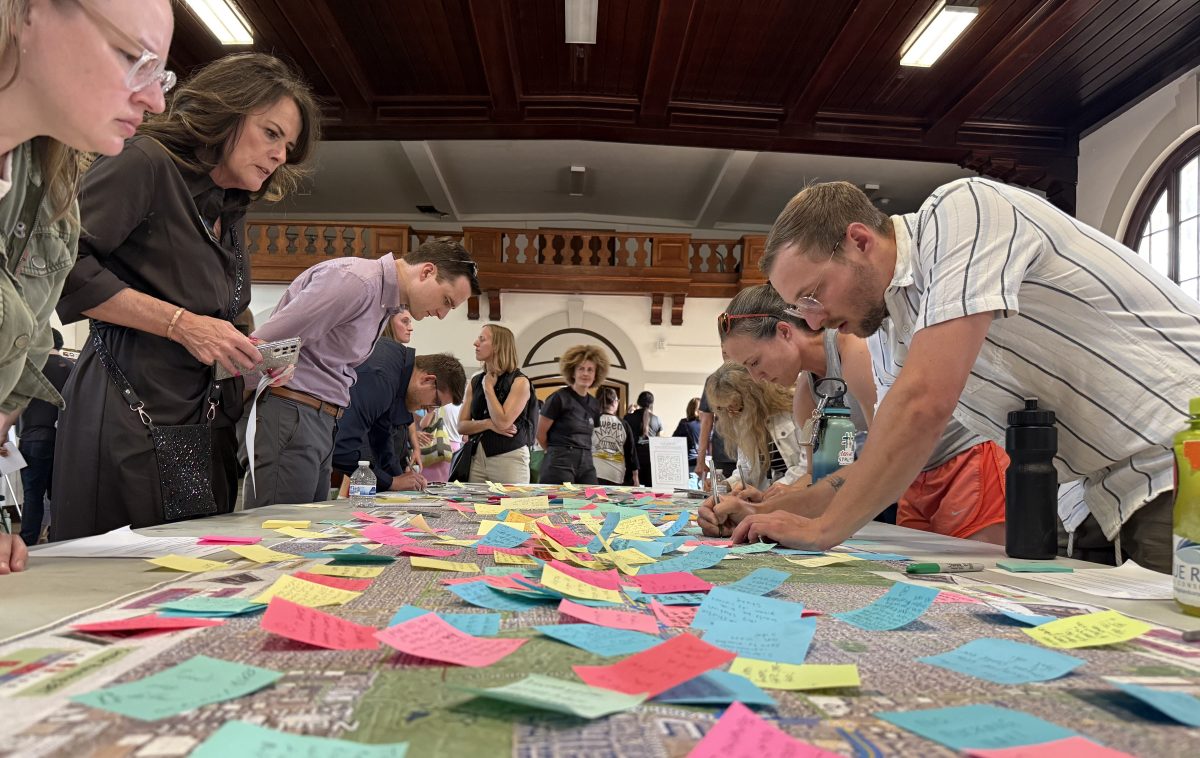
The Colorado Department of Transportation (CDOT) held its second open house regarding the proposed Colorado Boulevard Bus Rapid Transit (BRT) on Wednesday, May 13, at the Clayton Early Learning Center, packing in around 300 residents to learn about the project and discuss potential drawbacks. The plan for Colorado Boulevard was first introduced in 2023 and is still in its early stages, with the department seeking community feedback before beginning construction on bus improvements on Colorado Boulevard from Hampden to East 40th avenues.
If the phrase “BRT” sounds familiar — or sends shivers down your spine — it’s likely from the ever-debated East Colfax Bus Rapid Transit project that broke ground in 2024. That project, spearheaded by the Denver Department of Transportation and Infrastructure (DOTI) and RTD, initially began with high-level discussions in 2008. The $280 million project is supposed to be finished by 2028.
The plan for East Colfax’s BRT places a center-running bus lane from Broadway to Interstate 225 in Aurora. (CDOT plans to eventually extend that bus line past I-225, all the way to Interstate 70, but that’s a discussion for another day.) Ongoing construction, limited foot traffic and a lack of parking during the East Colfax BRT has brought about some ire, however, with an array of Denver staples having shuttered their doors since construction started, despite the city providing a $15,000 grant to struggling businesses on the corridor.
The transportation department recognizes the hurdles, noting that a center bus lane for the majority of Colorado Boulevard’s BRT could cause “unacceptable traffic impacts, higher construction impacts and costs,” according to the project’s website.
“We’ll definitely take lessons from Colfax. [DOTI] would be doing the same thing if we went before them,” Tamara Rollison, a spokesperson for CDOT, said during the meeting. “They were the pioneers.”
Three Different Proposals
Residents currently have three options to consider during the feedback phase: side-running bus lanes; a center lane north of Alameda and a side lane south; or no bus lanes at all. The latter would just include increased bus frequency, improved stations and new, “comfortable vehicles,” according to CDOT. The new buses, which CDOT has compared to a “light rail on wheels,” would be operated by RTD.
The total cost of the project would depend on the option chosen, with no definite answers yet — but people already have strong opinions.
“I’ve taken public transportation at least 1,000 times over the last 25 years… I’m against spending $300 million, then RTD has to go out and buy a whole new set of buses,” nearby resident Wayne Graham said, sporting a sign on his chest speaking against the BRT project.
Another resident disagreed with Graham, saying he took the bus every day and that minimum-wage workers would “appreciate faster service.”
Similar discussions echoed through the halls.
“It’s part of our process to get public input all the way from the beginning of the project to the end. It’s incredibly important,” Rollison said. “There may be some nuances that people bring up that we could improve.”
Safer? Faster? Eco-friendly?
At the heart of the Colorado Boulevard BRT project lies safer and faster transportation.
The corridor is one of the city’s “high-injury network” areas, with 117 fatal or serious crashes on the boulevard between 2018 and 2022, according to CDOT’s 2024 Colorado Boulevard Corridor Plan. It’s also part of CDOT’s 10-Year Vision Plan to improve infrastructure throughout the area.
Proposed BRT options for Colorado Boulevard would increase bus speeds along the corridor by around 20% to 30%, partly by cutting 50 stops on the nearly seven-mile stretch, to 20.
“Our transportation network is a river of blood,” Lucas Reilly, an advocate for the middle lane or side lane structure, told Westword. “We’ve consciously designed our transportation systems to be hard and deadly.”
Reilly works for Roadway.Report, an online map placing every traffic death in the country. He pointed toward the 93 traffic deaths in the city last year, with 140 pedestrian fatalities in Denver between 2020 and 2025.
Reilly said he has heard and understands opposing grievances, including a lack of concrete data from CDOT regarding potential improvements and an increase in traffic during construction.
“But how badly do you want to prioritize driver convenience over human life?” he asked.
Grievances stretch past normal commuters, though.
Local Government Pushback
On may 5, the Glendale City Council voted unanimously in favor of a “no-build” resolution through the small enclave community, claiming the city only supports the no-build, mixed-flow alternative after “hundreds of collective hours” discussing the project with CDOT, according to the resolution.
The BRT plans to run about one mile through Glendale, which, roughly stretches from Arizona to Alameda avenues (and, yes, would include Shotgun Willie’s).
Glendale’s council sent an eight-page letter recommending the mixed-flow alternative last May, but council members have claimed they never heard back from CDOT.
Rollison said CDOT is open to discussing the plan with Glendale and hearing concerns.
Glendale’s letter questioned whether the focus on north-south traffic would cause extended wait times for east-west travelers, also potentially increasing carbon impact.
Graham agreed.
“There is a lot of greenhouse gases created from the construction,” he said. “If the traffic is bad on Colorado Boulevard; people will drive more miles on other roads to get around it, causing more pollution. This is not going to reduce greenhouse gases.”
On the other hand, CDOT has theorized that the BRT would double riders on the boulevard from around 3,000 a day to 6,000, reducing vehicles on the road overall.
Rollison doesn’t expect a third open house, but a feedback survey for the project can be found at codot.gov.
Another BRT project is on the docket for Federal Boulevard, and that one is ahead of schedule compared to the Colorado Boulevard plan. According to CDOT, the Federal Boulevard BRT is expected to start construction in 2027.