RiNo Arts District

Audio By Carbonatix
Reader support matters more than ever
We're in the final stretch of our summer campaign. Our goal is to raise $25,000 by August 9 to support the journalism our community relies on. Reader support is helping shape the future of local news.
Artist Jill Hadley Hooper had been working at home for a year, “feeling pretty isolated,” when a friend drove her by Ironton, a building in the dusty old warehouse at the corner of 36th and Chestnut streets. Four artists — Russ Beardsley, Mike Mancarella, David Walter and Debra Goldberg — had just bought and renovated the building into workspaces.
“She had gone to a potluck there hosted by the artists and thought they might have a studio,” Hadley Hooper remembers. “That morning it was locked and lonely-looking. I fell in love.”
In September 2001, Hadley Hooper rented a small space there for painting and doing illustration work for Westword; she also began helping Goldberg with an 800-square-foot gallery at Ironton. By 2002, it had regular hours and a yearly schedule of exhibits that mixed studio artists with outside artists. “The outside artists never paid to show, kept any money from a sale, and just bought their own beer and wine for the openings,” she recalls.
Ironton’s neighbors included Do It Yourself Plumbing, Bud’s Warehouse and the remains of the Denargo Market, a once-bustling farming and food wholesale area. Across the river was the Yellow Cab staging ground that would become the Taxi development. In 2002, artist Tracy Weil bought another old building on Chestnut that he turned into a studio and occasional tomato farm; he hosted shows there, too.
In 2004, Hadley Hooper became a partner in Ironton. Late that year, she, Weil and another gallery owner met on the Ironton porch and decided to band together, scheduling openings at the same time and even pushing to make the area along the South Platte to Brighton an official city creative district: the River North Creative District, or RiNo, for short.
“Because LoDo was a thing, we thought it would be fun to make something so unrefined. A place, too, with a ridiculous acronym,” Hadley Hooper says. “I drew the logo, a rhino with a little bird on his back. We called the bird LoDo. Tracy did a website and all the online infrastructure, designed a map and some cards, and we were a place.”
A place that would take off over the next decade, as the onetime artistic haven became the city’s hottest real estate, full of new apartment complexes, bars and restaurants. Ironton closed in 2017 and Hadley Hooper moved her studio out of the area; Weil sold his place a few years ago and moved up to Pine.
After a few years of upheaval, the RiNo Arts District celebrated its 20th anniversary with a new director, Daisy Fodness-McGowan, and a new structure that separates the district from the RiNo Business Improvement District, which was formed to help support the area’s artistic endeavors.
Tonight, Aug. 7, RiNo will host a slightly belated celebration of its 20 years as an official arts district at a free First Friday Festival that includes a reception for “Welcome Back,” an exhibit of artists both old and new, curated by Hadley Hooper, along with emerging curator Jonas Sanchez.
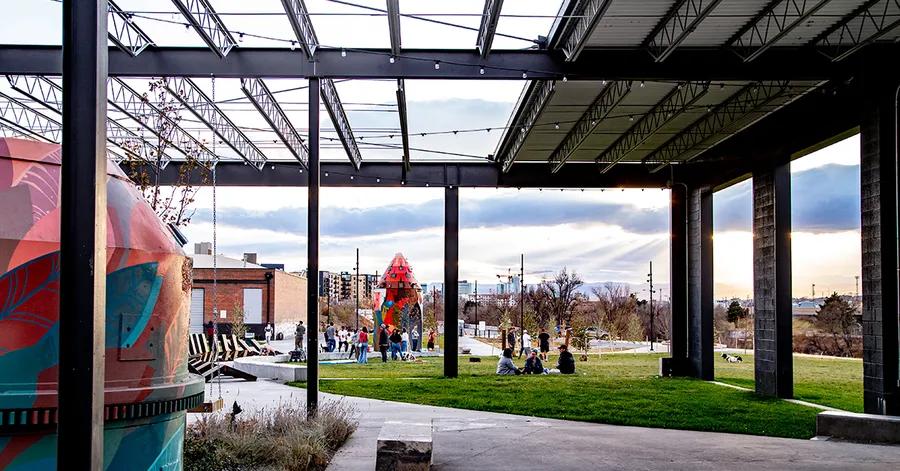
A few days ago, Hadley Hooper and Fodness-McGowan were envisioning that future as they set up the exhibit in the Truss House, the former automotive shop in the heart of the RiNo ArtPark, which opened in 2021, as well as the nearby Creative Welcome Center that will debut tonight in the Bob Ragland Branch Library, dedicated in 2022 in the ArtPark.
Looking up and down the park that borders the South Platte (where a homeless encampment has set up under an old RiNo tent), Hadley Hooper remembers what the RiNo Arts District founders envisioned for this area, a true creative gathering place. While new buildings and businesses continue to pop up nearby, new galleries are opening, too, and artists who have workshops in the area drop in to deliver work for the show. The Mananas, a band with a residency at the fancy new Flora apartment complex across from the park, will be playing at the festival, too.
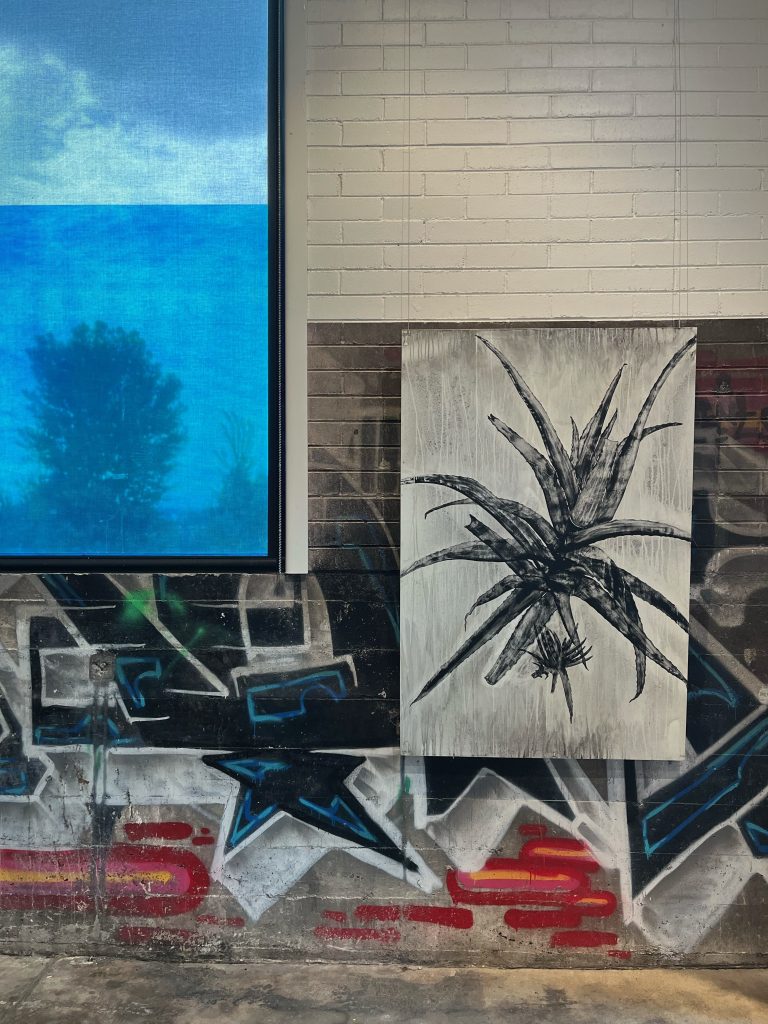
Heidi Jung’s painting hangs on a graffitied wall at the Truss House,.
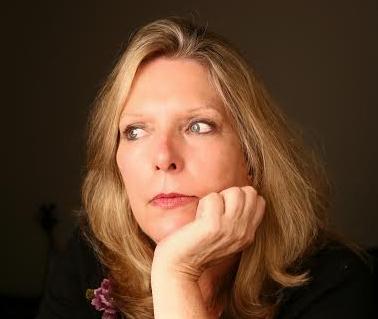
Hadley Hooper
Pieces by emerging artists hang near work by such longtime Denver names as Tracy Weil, Matt O’Neill, Chandler Romeo, Mark Sink, Steve Batura and a lovely early work by Sabin Aell and Randy Rushton, whose Hinterland gallery moved from RiNo to Morrison. Overall, 58 artists are represented, with everything pulled together in just a little over a month. Through it all, the curators “tried not to make it full of nostalgia,” says Hadley Hooper, who didn’t include any work of her own.
“Debra Goldman is the only original Ironton owner that was able to be included in the show, though all are still active and working,” she says. “I want to thank all four for having the vision to create a place for people to gather and work together. And I’m so glad I was a part of it, and RiNo came from it, and there’s something here that will continue into the future.”
“Welcome Back” opens at 5 p.m. Friday, Aug. 7, in the RiNo ArtPark, 1900 35th St. The free festivities include a performance by The Mañanas at 6 p.m., along with a set by experimental musician Polly Urethane at 7 p.m. Local vendors and food trucks will also be on hand; learn more here. The RiNo Welcome Center will be open from 11 a.m. to 3 p.m. Tuesdays through Saturdays.