
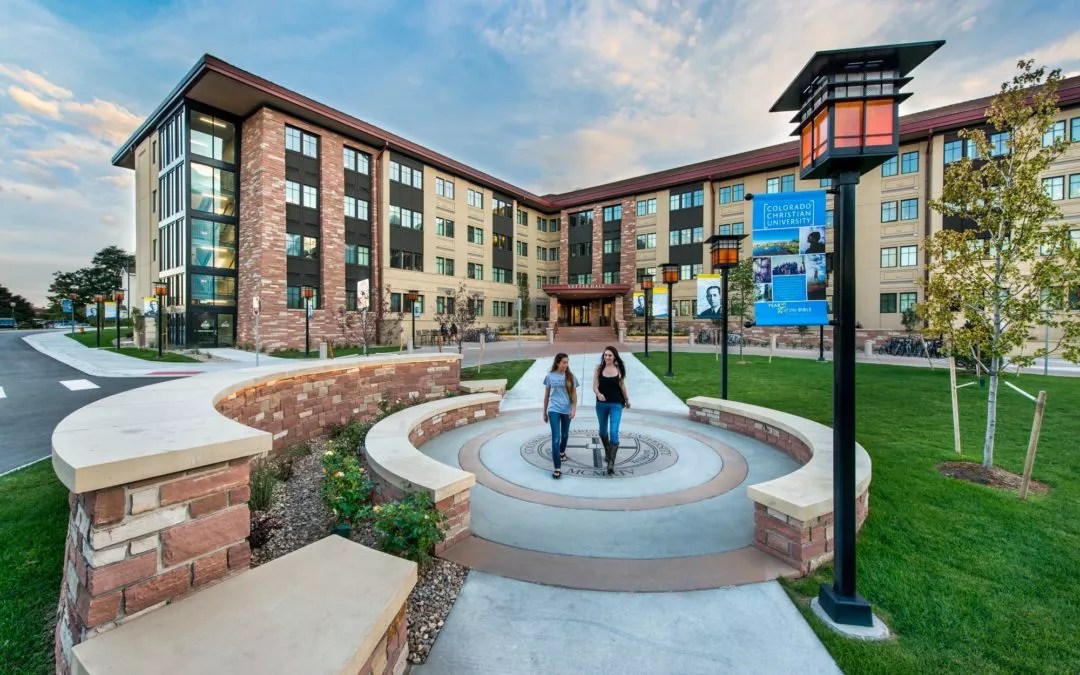
Colorado Christian University via TheNewsStation.com

Audio By Carbonatix
Last spring, the National Endowment for the Humanities and the National Endowment for the Arts rescinded grants across the United States. The pivot under new Trump administration’s guidelines called for a focus on topics like AI, “the 250th anniversary of American independence,” empowering houses of worship, and turning away from diversity, equity and inclusion-related projects.
As a result, Colorado arts and humanities organizations lost millions of federal dollars last year. With reduced staff at the NEA and NEH, plus the general air of uncertainty around federal funding under the current administration, it’s hard to predict which grant requests will be funded this year.
But there is money to award. In January, Congress passed a minibus appropriations package that approved around $207 million in funding each for the NEA and NEH. This is consistent with previous grant amounts, despite concerns that the agencies would be cut completely by 2026.
Funding a Speaker Series That Links Christianity and the Bible to U.S. Independence
This month, Colorado Christian University’s think tank, the Centennial Institute, was awarded some of that funding through a $30,000 NEH Chairman’s Award for its Faith and Freedom Speaker Series, lectures focused on “exploring the religious roots of America’s founding and the profound influence of Christianity and the Bible on the nation’s move toward independence and self-government.”
It is one of two Colorado University programs awarded NEH funding in 2026 so far. The other is a program at the University of Colorado Boulder that focuses on European Enlightenment.
CCU, which is located in Lakewood, was founded in 1914 as the flagship Christian university in the Rocky Mountain region. The university offers undergraduate and graduate degrees for traditional adult students, and more than 10,000 students attend CCU on its main campus, at a regional center in Colorado Springs and through online courses.
The Centennial Institute was founded in 2009 by then-CCU President Bill Armstrong, a former U.S. senator, and former state lawmaker John Andrews “to enhance public understanding of the most important issues relating to faith, family, and freedom,” according to a CCU spokesperson. Andrews served as CCI’s president until he retired in 2015. Since 2010, the institute has hosted the Western Conservative Summit every summer.
The Centennial Institute applied for the NEH award in August 2025, after the NEH announced its shift in focus; this marks the first time the think tank has applied for federal humanities money, says Centennial Institute director Gregory Schaller.
“Our primary interest is in the NEH’s core mission, which is to support the study of history, literature, philosophy and culture,” Schaller says. “The topics the NEH funds have varied across different administrations, but the underlying purpose of advancing humanities scholarship and public understanding has remained consistent.”
While the Centennial Institute hosts a wide range of public lectures each year, the Faith and Freedom Speaker Series differs from others in that it’s organized around a single theme and timed to contribute to the national conversation about the country’s semiquincentennial. The first event featuring author and research professor of church history Thomas Kidd was on February 9; others will follow on April 20, September 21 and October 19.
“Serious historians widely acknowledge that religion played a significant role in early American public life, alongside Enlightenment thought, English constitutionalism and classical influences,” Schaller says. “We believe that understanding the founding period requires examining all of those strands, including the religious ideas that shaped how many colonists understood human dignity, rights and moral responsibility. …Studying that context helps us better understand what the founders were arguing, what they meant and how those ideas have been interpreted over time. Our goal is not to reduce the founding to any single influence, but to ensure that the religious dimension, sometimes underemphasized in popular discussions, is part of the conversation.”
The Faith and Freedom Speaker Series lectures at Colorado Christian University, 8787 West Alameda Avenue in Lakewood, are open to the public; learn more here.