
Photo by Jamie Kraus Photography

Audio By Carbonatix
Twenty years in, the Colorado New Play Summit has become one of the Denver Center Theatre Company’s most reliable engines for generating hits. Since its founding, the Summit has introduced 74 new plays, and more than half have later returned as full productions at the Denver Center for the Performing Arts. The festival’s track record includes titles that have become genuine calling cards for the DCPA’s commitment to new work: Samuel D. Hunter’s The Whale, Matthew Lopez’s The Legend of Georgia McBride and Lauren Gunderson’s The Book of Will, among others.
“As we celebrate the twentieth anniversary of the Colorado New Play Summit, we’re honoring two decades of bold storytelling and boundary-pushing voices,” says Chris Coleman, artistic director of the Denver Center Theatre Company. “This year’s selected readings reflect the Summit’s enduring commitment to new work, and we can’t wait to share them with our audiences.”
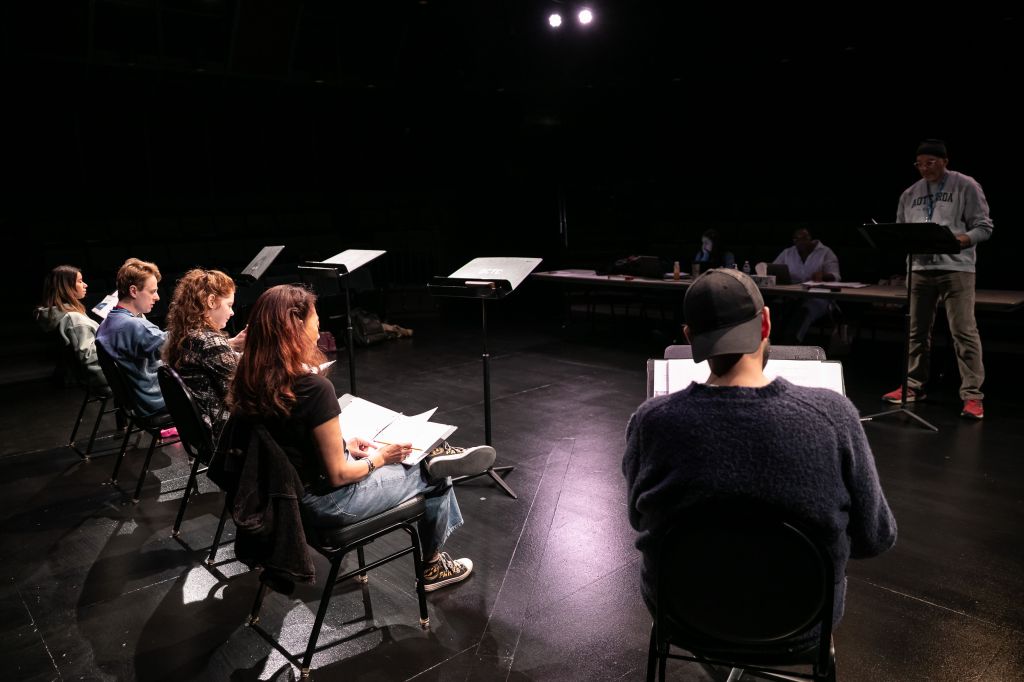
Photo by Jamie Kraus Photography
The twentieth annual Colorado New Play Summit, set for February 14-15, will feature staged readings of new plays by Bonnie Antosh, DCPA-commissioned playwright Isaac Gómez, Alyssa Haddad-Chin and Tony Meneses, as well as world premiere productions of Cowboys and East Indians by Nina McConigley and Matthew Spangler, and Godspeed by Terence Anthony, both of which were first introduced as readings at the 2024 Summit.
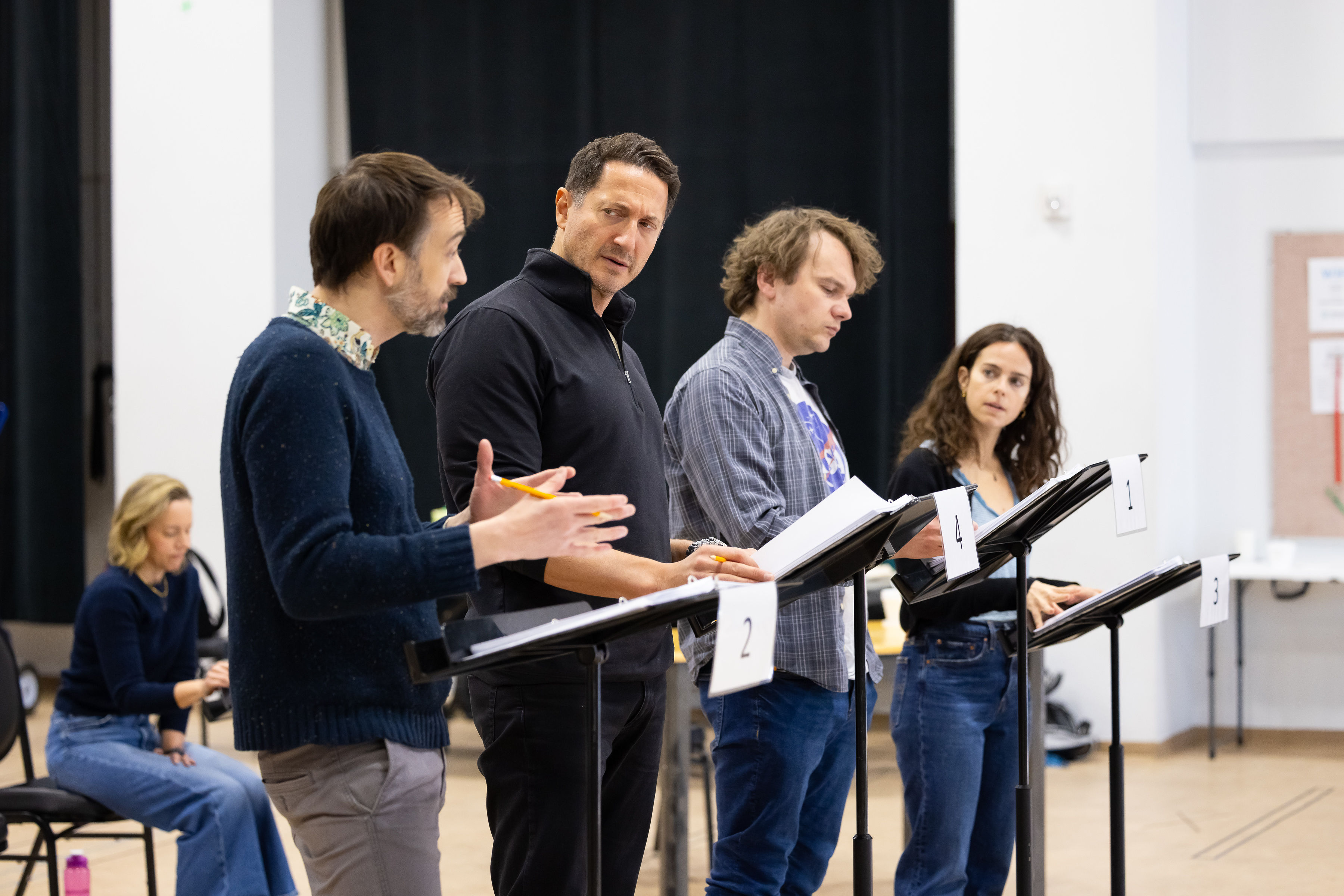
Summit writers spend a week rehearsing with directors, actors and dramaturgs before presenting readings to the public twice over the weekend, using the room as a kind of live diagnostic to determine what’s working and what needs work. All four playwrights emphasize that this model of new play development is even more important now that the larger ecosystem that once incubated new work has thinned.
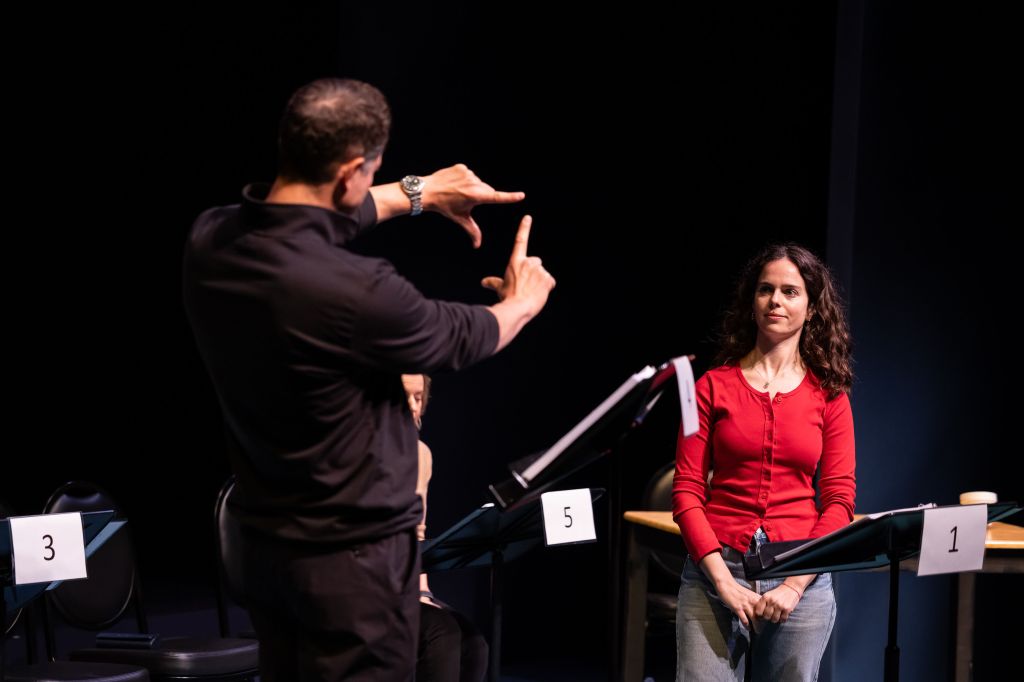
Photo by Jamie Kraus Photography
“Since the pandemic, so many theater companies have closed, and those who haven’t closed have lost new play development,” Gómez says. “So the existence of the Summit — thank God it’s still around — means that new plays have a chance at a world beyond. Denver’s commitment to new work is so necessary, and I hope it continues to thrive and flourish.”
In advance of the Summit, Westword spoke with all four of the playwrights involved with the 2026 Colorado New Play Summit. Here, in alphabetical order, is a closer look at the writers bringing new work to Denver, as well as what they hope to gain from their participation in the Summit:
Lemuria by Bonnie Antosh
Based out of Asheville, North Carolina, Bonnie Antosh describes Lemuria as “matriarchal King Lear.” Her starting point was an inheritance drama set in the contemporary South, centered on women fighting to succeed an outgoing leader. She just needed the right framework, something “based strongly in science or technology,” that could justify a matriarchy as more than a metaphor.

Courtesy of the DCPA
Then, as Antosh tells it, a long-ago undergraduate class on primate evolution came roaring back: She remembered learning that lemurs, like orcas and honeybees, exist in natural matriarchies. When a “queen lemur dies,” Antosh says, “younger females battle to claim her spot, so that was sort of the click – finding a parallel between this sort of inheritance drama I wanted to tell in the human world and its analog in nature.”
The result is a deliberately odd cocktail. “It’s a crazy flavor combination,” Antosh says. She wrote the pitch in three hours, fueled by “delight and passion,” even as she wondered if anyone would ever produce it. Antosh calls Lemuria her “COVID play,” commissioned in the first month of lockdown and developed across years of workshops and readings. That origin story shapes its emotional frequency.
“In many ways, it’s a comedy about grief. I wrote it during the pandemic, and I thought, ‘Oh, this play will be produced in a more optimistic cultural moment, in a more optimistic world,’ and that has not necessarily proven to be true,” she says. “So I think audiences are still trying to find a sense of wonder amidst experiences of grief.”
Antosh is excited by the chance to experiment at the Summit. She’s even considering different openings or closings across the weekend, imagining that Saturday and Sunday audiences “may see alternate beginnings and/or endings of the play.”
Influent by Isaac Gómez
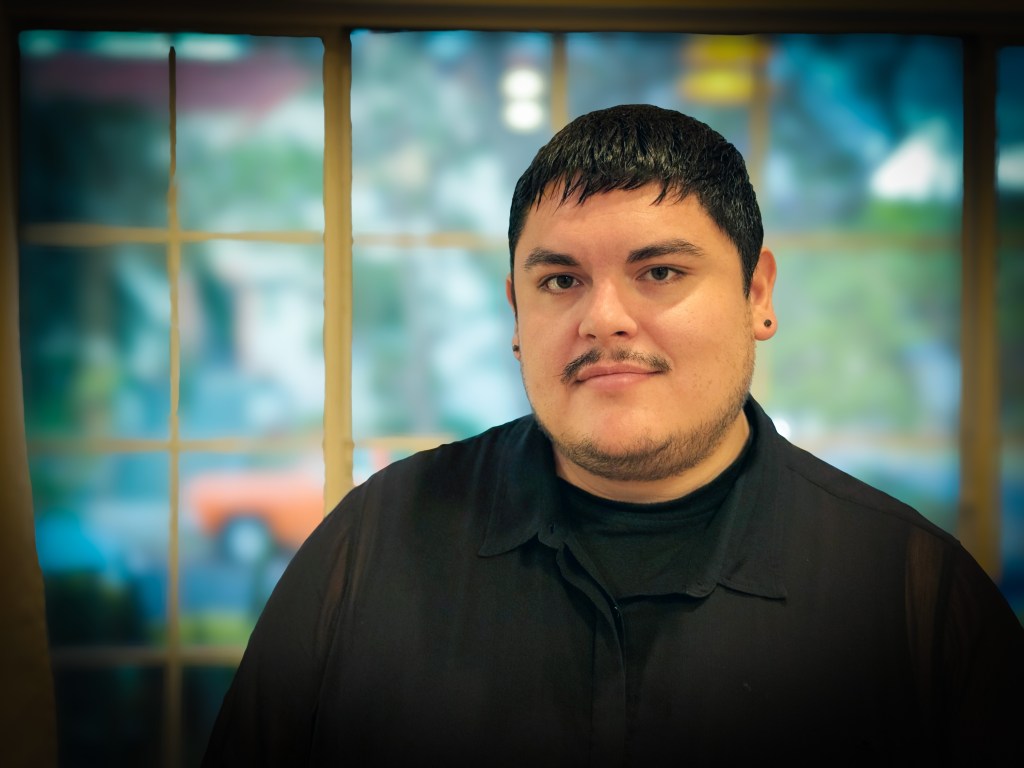
Chicago-based playwright Isaac Gómez returns to the Colorado New Play Summit with Influent, a commissioned work that has been quietly gestating with the Denver Center for nearly a decade. Gómez previously participated in the 2019 Colorado New Play Summit with a reading of Wally World, and coming-of-age adaptation I’m Not Your Perfect Mexican Daughter received a full production at the DCPA in 2024, making Influent both a homecoming and a next chapter in an ongoing artistic relationship.
Influent began life under a very different title, The Social Influence of Paris and Britney, as a millennial reconsideration of Paris Hilton and Britney Spears as proto-influencers. Over time, Gómez says the play shifted inward, forcing a confrontation with the playwright’s own discomfort with “how vulnerability has been turned into currency.” At its core, Influent examines the friction between public and private selves and the way influencer culture offers “belonging and redemption and meaning, but not always reckoning or accountability.”
Courtesy of the DCPA
That thematic inquiry is matched by a formal challenge. Gómez structures the play to mirror the experience of scrolling online. “What you think you see” versus “what is really, really happening” becomes not just subject matter, but a theatrical engine, raising questions about how to stage a screen-driven experience live. The Summit is where Gómez hopes to finally “crack” that problem. “To be really honest, I don’t know if it works,” Gómez says. “We’re going to find out.”
For a playwright whose career has been shaped in close collaboration with the Denver Center, beginning with early advocacy from the late Douglas Langworthy, the DCPA’s onetime director of new play development, uncertainty is part of the appeal. The play, Gómez adds, is dedicated to Langworthy, “one of the greatest new play influencers of all time.”
You Should Be So Lucky by Alyssa Haddad-Chin
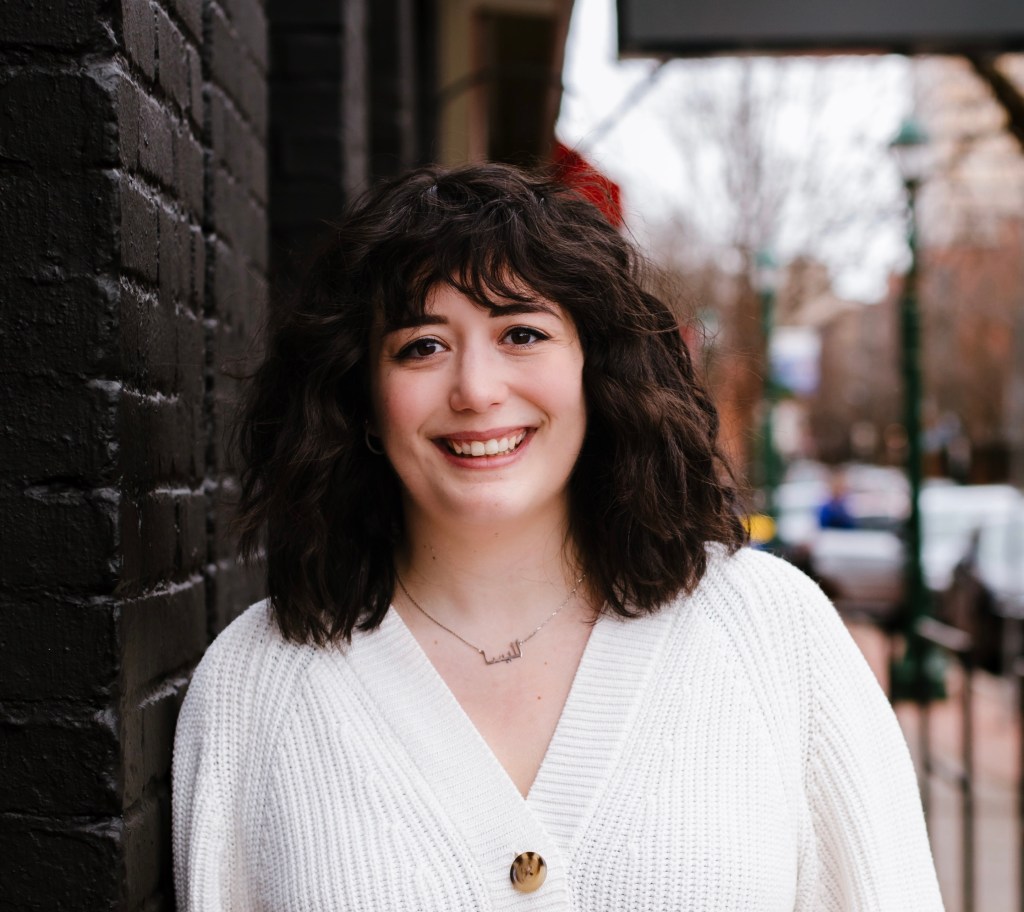
Alyssa Haddad-Chin’s You Should Be So Lucky began with a moment of recognition in an art gallery. The Brooklyn-based Lebanese American playwright was participating in a writers group tasked with creating a one-act inspired by pieces in the gallery when she came across an artwork depicting a market that seemed familiar. She photographed it and showed it to her husband, who is Chinese-American and grew up in New York City. He recognized it right away; he had visited that market with his grandmother, and it no longer existed.
That disappearance became the play’s catalyst. Haddad-Chin traces its origins to the period coming out of COVID, when Chinatown communities were deeply impacted by economic loss and a rise in anti-Asian violence. At the same time, she was personally grappling with the impending loss of her grandmother-in-law, a woman she admired for her tenacity, including her resistance to gentrification as her Chinatown apartment building moved toward conversion into co-ops.
Courtesy of the DCPA
The play began as a short, thirty-page one-act “that was a place to put this energy,” but it quickly became clear that it needed more space. Since 2022, the script has evolved into a full-length work shaped by Haddad-Chin’s recurring interest in “generations of women trying to find ways to come together and pass on tradition.”
As the play expanded, it earned recognition, including the Blue Ink Award for Playwriting, along with development support. Now, Haddad-Chin is eager for what the Summit offers: fresh collaborators, a new audience and the chance to hear the play in a city encountering it for the first time. She’s also clear-eyed about why festivals like the Summit matter right now.
“Opportunities like the New Play Summit are priceless for playwrights,” she says. “In an industry that is shrinking, these new play festivals are so important to the cultural fabric of the theater industry. Also, as playwrights, we cannot make work without an audience. That’s impossible, and the Summit and festivals like it — although this one is particularly special, giving folks a chance to interact with new plays.”
The Myth of the Two Marcos by Tony Meneses
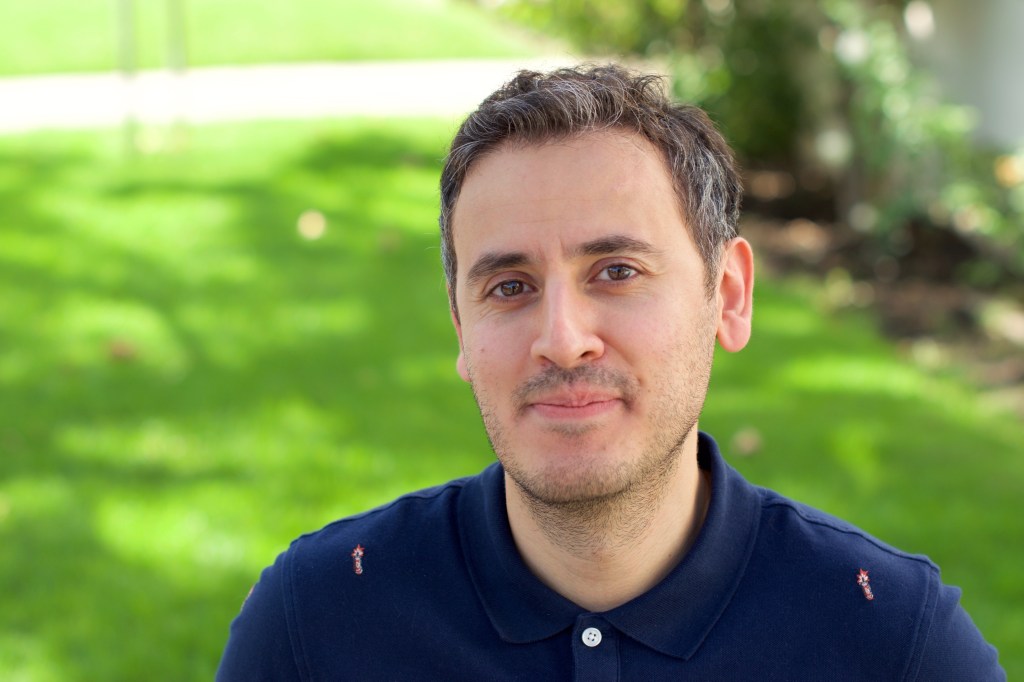
The Myth of the Two Marcos grew out of Tony Meneses’ interest in outsider art and the ways marginalized communities find refuge in culture. During a pandemic-era residency, the immigrant born in Guadalajara, Mexico, began thinking about genres that function as sanctuaries, like how horror films have long served queer and BIPOC audiences. For him, comic books filled a similar role, providing a space where kids on the margins can find belonging and survival.
Once he located that entry point, Meneses drew heavily from his own history. While “not a documentary,” the play is inspired by a formative friendship from his youth. He grew up in Albuquerque, a city he describes as a central character in the play, shaped by rough neighborhoods and the later realization that his life could easily have taken a different path. That personal lens sharpens the play’s core question: how two boys with parallel beginnings can be pulled toward radically different futures by forces both within and beyond their control.
The play has already undergone significant development, including a workshop at the O’Neill Playwrights Conference, which Meneses calls “a playwright’s dream come true,” and additional work at Two River Theater, his longtime artistic home. Across those settings, he’s been encouraged by how audiences connect to a story centered on two Latino boys in Albuquerque. “I hope that Denver audiences will be able to see their experiences in these characters,” Meneses says, “but also there’s a theatrical element in the play that involves an Aztec superhero, so I’m just kind of curious as to what they think of that.”
Courtesy of the DCPA
One of his goals at the Summit is to clarify how the Aztec superhero character functions alongside the play’s shifting relationship to time. Returning to the Denver Center carries particular weight for Meneses, who previously developed the work twenty50 here in early 2020. What he didn’t anticipate, he says, was how those early experiences would lead to an enduring relationship. Coming back now feels like a return “to family and an audience that knows my work,” Meneses says. “We’re in a transitional moment post-pandemic. There’s been a lot of contraction with new play development opportunities. Full stop. So it’s very lucky to be in this position and it’s great that the Denver Center hung on, and that they’re still committed to this kind of development.
“So many really heavy-hitting kinds of shows that, were it not for the Summit, wouldn’t be out in the American theater in the way that they are,” he continues. “It can really change your career, and it can really change your artistic practice. So, yeah, I just want to lift up and celebrate the fact that the Denver Center is committed to continuing to invest in new play development.”
The 2026 Colorado New Play Summit runs Saturday, February 14, and Sunday, February 15, in the Helen Bonfils Theatre in the Denver Performing Arts Complex. Packages range from $204 to $334 and á la carte tickets start at $23.60; learn more at denvercenter.org.