
Toni Tresca

Audio By Carbonatix
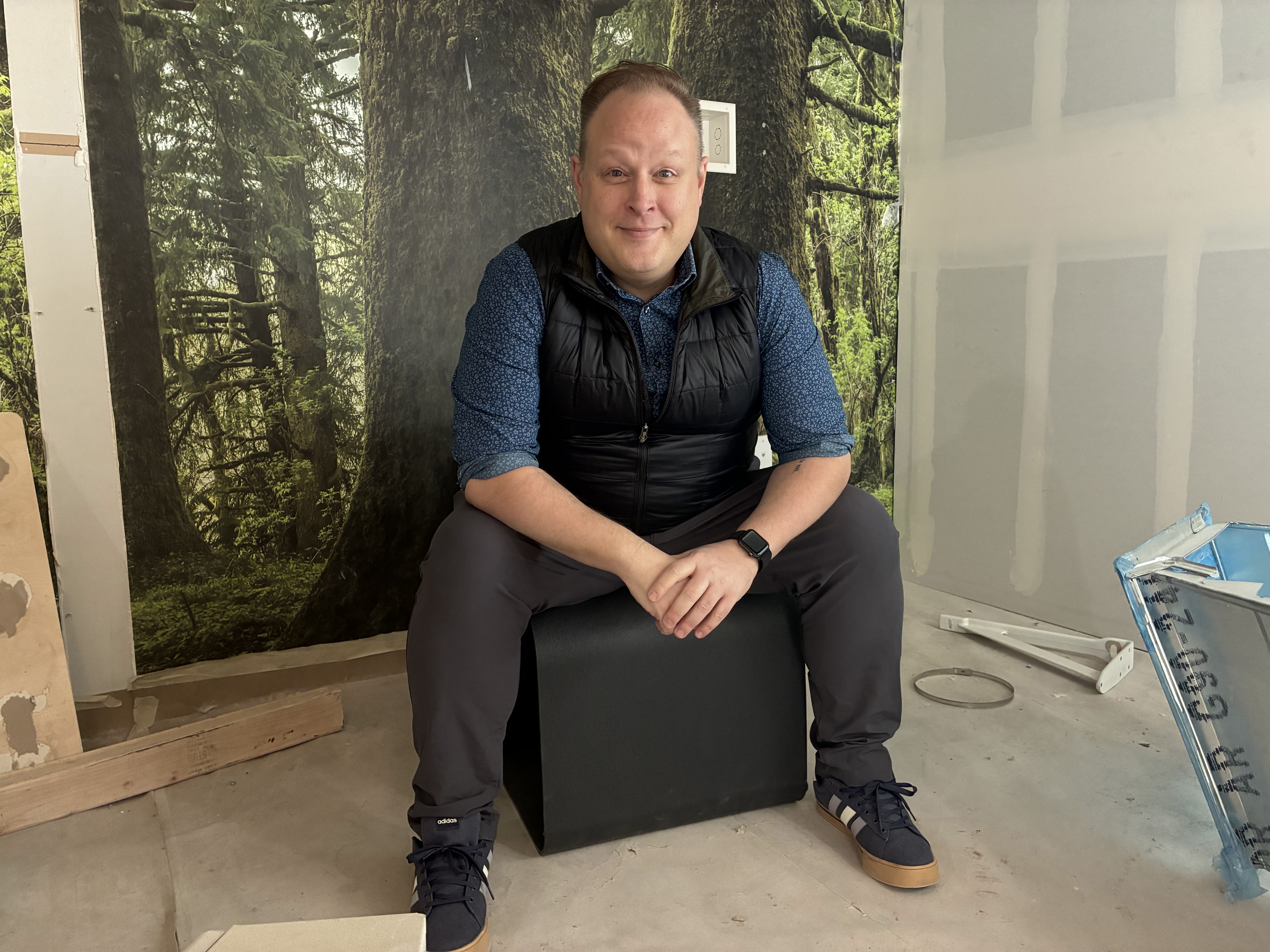
When Westword last caught up with Denver Immersive Repertory Theater in early 2025, Blair Russell and Steve Wargo were the new kids on the block. The company had announced big ambitions and a permanent home at 15th and Blake streets, but much of what lay ahead remained on paper, in planning documents and inside a building that required major renovations. Now, roughly a year later, there is much more to report.
“The journey has been busy; we’ll not deny that,” says Russell, who co-founded DIRT with Wargo. “It’s so exciting to be not only opening a new business, starting a new venture and creating a new show but also basically building a new community around this project, and there’s a lot that goes into that.”
Russell described the past year as a decisive shift from imagining to executing. “The past year has been moving from the planning phase, which we were in and kind of finished around when we spoke to you, to getting the lease, and now it’s just been the work,” he says. “And boy, do we enjoy the work.”
That work now has a name, a shape and a scale. Midnight’s Dream, DIRT’s inaugural production, is slated to launch in spring 2026 (around April 10, assuming the current timeline holds) as an open-ended immersive experience that will fill the company’s 10,000-square-foot, two-level LoDo space.
The production reimagines Shakespeare’s A Midsummer Night’s Dream using Celtic folklore and faerie mythology, unfolding across eleven interconnected environments in which audiences can freely wander, masked and silent, choosing which characters and storylines to follow. Wargo began writing Midnight’s Dream shortly after moving to Denver in the summer of 2024, describing it as an “open-box immersive storytelling machine,” and drafting a script that reads more like an operating manual for a living world than a traditional play.
“I finished the draft in early February, and it ended up being a 381-page script. With appendices! It has appendices,” Wargo says, laughing at the scale. “It is at once bonkers and, at the same time, refreshingly simple … It’s funny! And that’s the thing, there’s not a lot of funny going on in the immersive world. This is a sex comedy. It’s a rom-com. There’s a fairy rave in this. It’s sort of a goof. And yet, at the same time, I think it’s going to be very moving.”
Courtesy of Denver Immersive Repertory Theater
The show’s script includes a number of staged environments, each designed to tell its own story while also contributing to the larger narrative ecosystem. Characters move across rooms, colliding and spiraling apart in new combinations depending on who is watching and where the audience chooses to stand.
“I like to say that we’re less storytellers and more story builders, because we build our stories with our audiences, which is nifty,” Wargo says. “There are eleven different environments and sixteen characters, and they all have their own agenda and their own plot arc that they follow through these environments. I tried to make it work so that each room sort of has its own story to tell so that the audience can have the night that they want based on where they want to go.”
If that sounds like Sleep No More — the long-running masked immersive production created by Punchdrunk in New York City that became a gateway for many American audiences — Wargo doesn’t dodge the comparison. He refers to it as “a huge influence,” but he also cites older roots, such as the 1960s environmental theater movement, the 1981 play Tamara, which was staged inside a house, and the DIY haunted-house scene, where Wargo got his start.
The difference, he argues, is language: Midnight’s Dream leans into text, not just movement and atmosphere. “There’s a reason it’s 381 pages,” Wargo says. “It is full of language, direct addresses to the audience, and scenes where you have to get close to hear them, because these characters are on the move, so the language is a big thing.”
That motion is part of the contract. Guests should expect extended periods of standing and walking, dim lighting, theatrical haze and occasional loud sounds, with accessibility accommodations including a dedicated mobility lift between floors. Wargo, who has watched the venue’s guts get installed piece by piece, insists the lift won’t feel like stepping out of the world.
“It is going to be an in-world experience that I’m writing,” he says of the ADA lift, describing it as “half of a room in and of itself … everywhere you go inside the space is a part of Midnight’s Dream.”
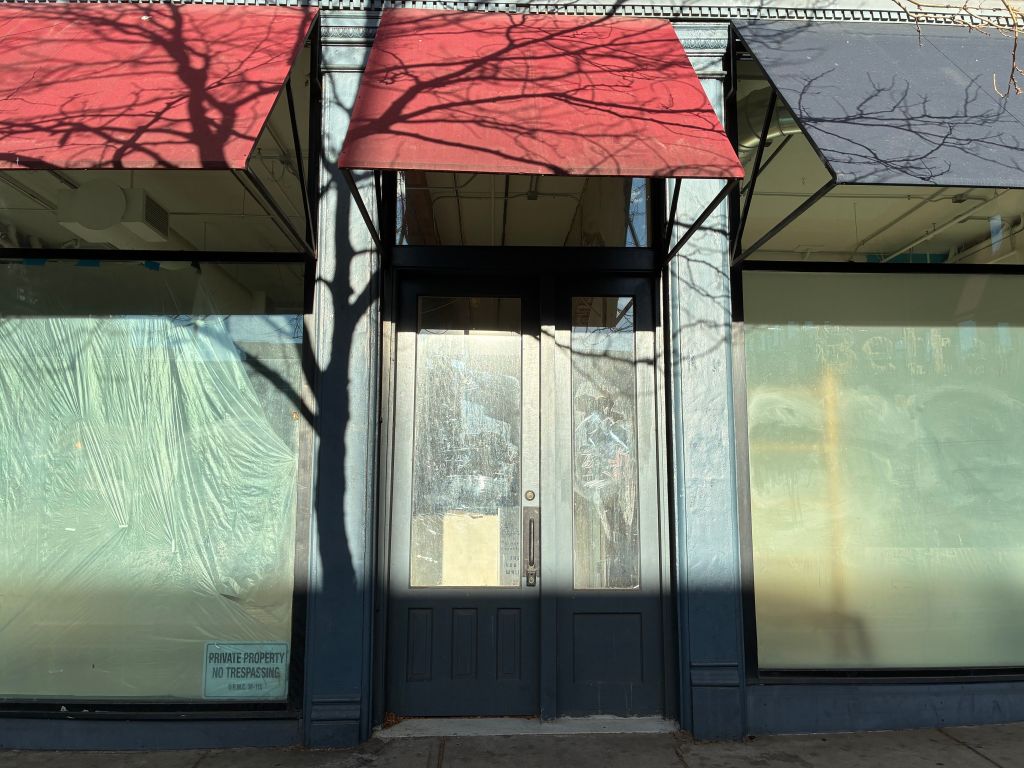
Even the building’s practical challenges have been folded into the design. Russell calls the hardest puzzle “connecting the floors,” ensuring the experience stays mysterious and navigable without breaking immersion. Wargo describes the unsexy necessities, such as adding ramps, rerouting HVAC and redistributing power throughout the space, as the “nervous system” that will support not only this show but also “whatever it could be over time.”
Toni Tresca
For the City and County of Denver, that “whatever” is part of the appeal. Denver’s Downtown Development Authority Board announced in July that the company would receive $400,000 as part of its pilot business incentive program. According to Shelby Morse, communications director for Denver Economic Development and Opportunity, DIRT aligns with the DDA’s goals of supporting projects that help downtown evolve from a central business district to something more like a neighborhood.
“DIRT, just being who they are, they were a really good candidate because they are one of those transformative projects that are going to offer a different experience for those people that are downtown,” Morse says. “When you come downtown, you can get dinner and participate in something like this. It’s something that adds to the value of downtown and encourages people to come down to experience something.”
The $400,000 DDA investment is structured as a small business loan. The contract terms are still being finalized but Morse describes them as “affordable and accommodating” and intended to allow DIRT to get started before payments begin.
Russell says the money is earmarked for renovating the building itself, part of a broader build-out he estimates at just under $1 million to create the “warm gray shell” that will “be our home for a good long while” and bring the space up to code. From there, the show becomes the next major lift. Wargo estimates roughly $600,000 for Midnight’s Dream (rehearsal, actor salaries and physical production), emphasizing how intertwined these costs are with the venue’s infrastructure.
If the economics appear daunting, Russell argues that the whole point is to “properly resource” the work, especially now that audiences have so many options for their attention. “When things feel difficult, there is often a sort of knee-jerk reaction to do shorter rehearsals or spend less. I actually think you need to put more resources into it,” Russell says. “We need to be making things of higher quality. We need to be making things that audiences want to see and people are willing to get off the couch for.”
DIRT is treating the first production like a training ground for an entire company. Wargo describes a fourteen-week rehearsal process, with the first two weeks devoted specifically to immersive and interactive technique that will get “everybody speaking the same language and playing the same game.”
The cast, he says, will include twenty performers (sixteen principals and four circus/variety artists), plus two offstage swings. Though guests will only spend about two and a half to three hours inside the experience, Wargo estimates that Midnight’s Dream has approximately 24 hours of content.
“You will have taken away a full story after your three hours,” Russell adds. “But there are many more stories that you can discover, and many more stories that are being told.”
That density is part of what makes the show built for return visits, something Wargo says was both a creative and a business decision. Internally, the team projects that Midnight’s Dream will run for several years.
“If you like Easter eggs, you’ll really enjoy this,” Wargo says, noting that relationships between characters and storylines reveal themselves differently depending on when and how an audience member encounters them.
Even though Denver’s immersive scene has changed dramatically since the partners announced their decision to start the company, most notably with DCPA’s Off-Center announcement that it would stop producing original immersive work, the creators remain confident in their vision.
“We’re still really excited,” Russell says. “Each individual company, everybody working in this industry, kind of has their own ebbs and flows and challenges that they have to face and things that they have to deal with. I don’t think that we can worry about what’s going on in anybody else’s house. We have so much to worry about in ours. And on our side, we’re just excited. We’ve got so much tailwind behind us from the city, from people we’ve been talking about in the community and from this announcement about our first project. So, yeah, we’re still pushing forward; we still believe Denver is the place and there’s so much opportunity here.”
“We have no reason to believe that the market has bottomed out or that it has collapsed,” Wargo adds. “There’s no data to indicate that whatsoever.”
DIRT expects to begin welcoming audiences in April, with research-and-development previews and audience testing as the show comes online. Tickets are expected to go on sale in late winter. The production is planned as an 18-and-older experience at launch, given adult themes and the venue’s alcohol service, though Russell and Wargo say they’re also exploring a future daytime family-oriented adaptation.
In the meantime, the founders are still in the thick of it: finishing fixtures, installing systems, building the world and preparing to bring actors into rehearsal before the grand opening. As the company prepares to finally welcome the public into the space they’ve been building for years, both founders emphasize that there is no single correct way to experience Midnight’s Dream.
“Leave the FOMO at the door,” Wargo says. “You’re not missing out; you made it in. But find a character that intrigues you and stick with them for a while. That’s the number one thing … Also, wear comfortable shoes. But, truly, find what interests you. When you get into the space, take a tour, go downstairs. Go ahead and orient yourself with the whole thing, if you can, because something’s probably gonna grab you pretty soon. But, just know, there’s no wrong way to do this.”
Midnight’s Dream is slated to open in April 2026 at 1431 15th Street. Tickets will go on sale in late winter 2026. Learn more at denverimmersive.com/midnightsdream.