
Colorado Department of Education

Audio By Carbonatix
“There’s been very little information available about prison libraries, just in general,” says Charissa Brammer, director of Library Research Service with the Colorado State Library, housed within the Department of Education. “There’s a lot of reasons for that, but it was research that peaked in the 1980s or ’90s, and then there was nothing. In the last five years, we’re seeing a lot more research being done.”
An important part of that resurgence is PRISM, which stands for PRISon Motivators and refers to the role that prison libraries serve in the outcomes of the incarcerated population that uses them. Working with the State Library’s Institutional Library Development group, PRISM set out to answer relatively simple questions: Do prison libraries help people? And if so, how? The initial answer came easily: Of course, they help. But then it gets complicated.
Brammer was new to the State Library when the project began. “We started back in 2021 or ’22,” she recalls. “And right away, because of the relationship that Institutional Library development has with the Colorado Department of Corrections, we were able to expand the scope of our study to include focus groups in all the state-funded prisons in Colorado.” That study became far more expansive than originally planned, covering over 250 individuals in the prison system, many of whom were included in focus groups.
“Normally, you just identify your population, and then you get a handful of people, and that’s your focus group,” explains Brammer. “But within prisons, we had to separate it by custody level. Where we’d usually do one or two groups, at some facilities we had to do up to nine.”
The resulting PRISM Project report shows that “sentiments regarding prison libraries from both currently and formerly incarcerated people were overwhelmingly positive,” she notes. “Even while identifying barriers to use and thoughts for improvement, focus group participants were resoundingly thankful and positive when describing their experiences.”
The report identifies thirteen “prosocial” behaviors (voluntary actions motivated by a desire to better society as a whole) associated with prison library use. One of those is “connection with others,” identified in 85 percent of the transcripts, and “a direct result of time spent in the library with other residents, staff, and loved ones outside of prison, or engaging with materials checked out from the library.”
Another prosocial behavior vital to rehabilitation is “self-regulation,” which occurs when people opt to remove themselves from negative situations and instead engage with the library or library materials. It’s a coping mechanism that’s associated with better mental health.
According to the report, one of the most important benefits of prison library use is “Behavior modification,” which was seen in three-quarters of the respondents. Some modified their behavior in order to stay out of trouble and maintain library privileges, while others found that library use changed their perspectives, moods or thoughts, which in turn influenced their behaviors.
Brammer acknowledges that these findings are not absolute. “We can’t make a direct correlation to recidivism rates. We’re speaking to people anonymously, and we’re not following people through the system,” she notes.”We were interested in how libraries help people while they’re incarcerated, and how they help build those essential skills that let us all live out here in the world.”
Colorado Department of Education
Libraries aren’t the only literary initiatives inside prison walls. Several Colorado groups — Unbound Authors, Colorado Radio for Justice, Impact Arts and others — have been providing creative outreach to Colorado’s inmate population. But walls work both ways: Getting in is sometimes as tough as getting out.
“It was logistically complicated, getting into the prisons,” admits Brammer. “But Institutional Library Development helped, and once we were in, working with CDOC was great. We were able to do the studies without any COs [correctional officers] or library staff present. So we were able to protect people’s confidentiality that way.”
What happens next with this study is up to the CDOC; the hope is that in the short term, it improves services. “Long term, we’re hoping that now this research exists, that it will start to exist in more places,” Brammar says. Since Colorado now has its prison library story, other states, other systems, could tell their own story, and “we’d be able to build a better understanding of what these libraries are doing for people,” she adds.
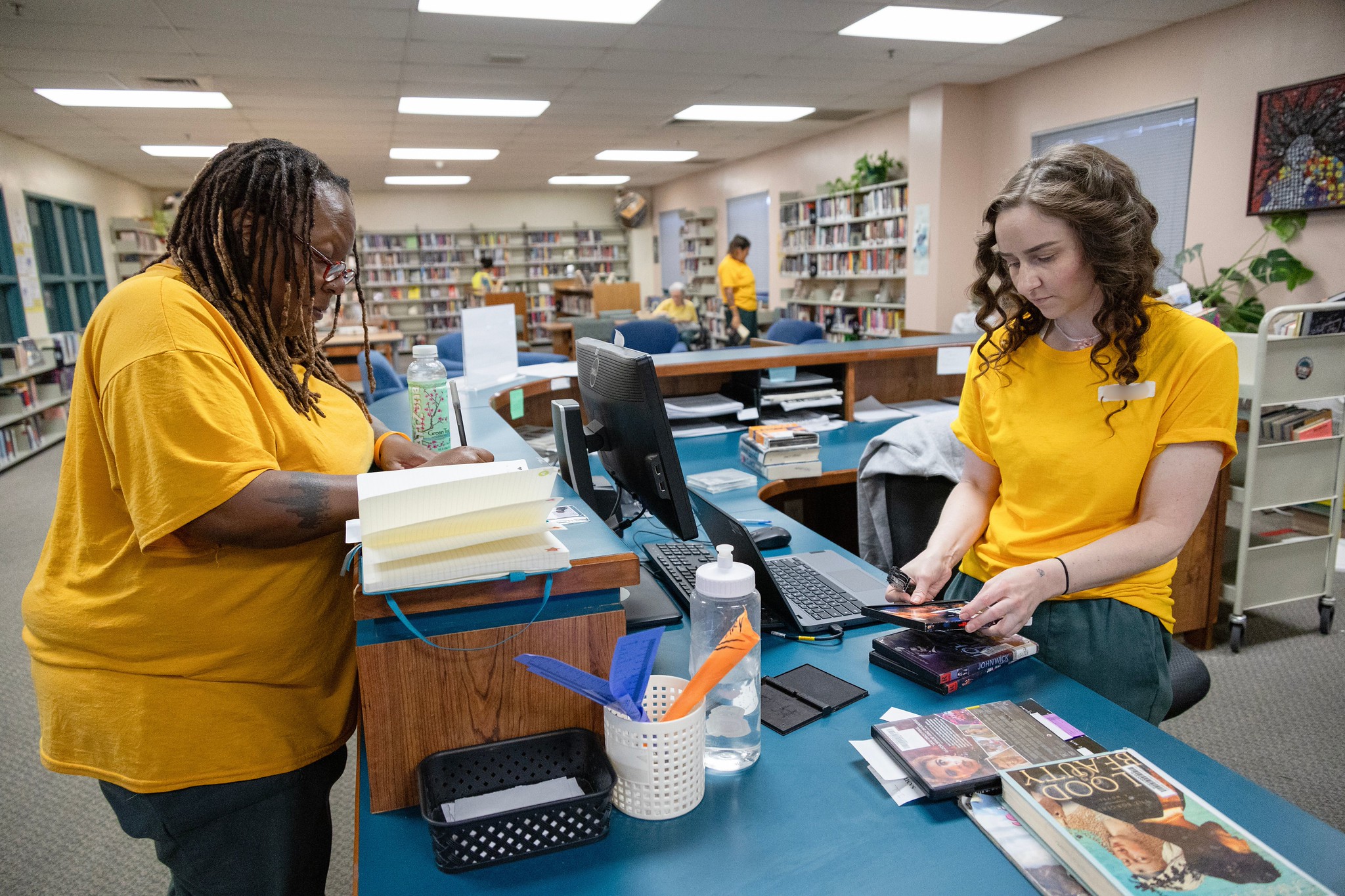
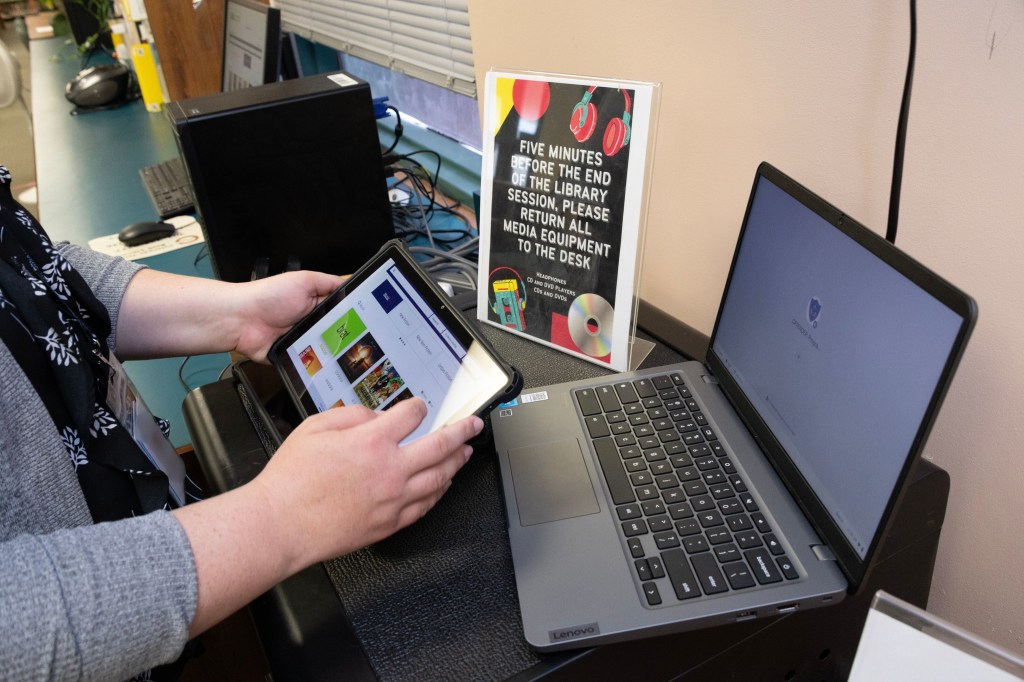
“Libraries are a cradle to grave service,” Brammar concludes. “They’re here for us our whole lives. Prison libraries are a part of that. They’re actually very much like a school library, the kind we’ve all been in and used. Low shelving, books displayed, all that. Music is really important to people. Newspapers and magazines are really important. There’s a wide variety of services, wider than people expect. Prison libraries feel very familiar. This isn’t Shawshank.”