
Abigail Bliss

Audio By Carbonatix
The 2026 Olympic Winter Games may be over, but there’s always a celebration of the Olympics in Colorado Springs, which was granted the designation “Olympic City, USA” ten years ago.
Formerly headquartered in New York, the United States Olympic and Paralympic Committee moved to the Springs in 1978 and debuted its flagship training facility the same year. Today, the city is also home to more than two dozen National Governing Bodies, which manage all aspects of their individual sports and nominate athletes to Team USA.
Plus, the nation’s only U.S. Olympic & Paralympic Museum is based in Colorado Springs. “It’s a natural spot to be considered Olympic City USA,” affirms the museum’s chief marketing officer, Tommy Schield. A patriotic score of horns and percussion underlines his statement as we chat in the museum’s final installation.
Though an hour had passed, I had only scratched the surface of everything the exhibits offered — and that was with my fantastic guide, Ricky Miles, who was raised in Steamboat Springs (alongside the country’s largest number of winter Olympians).
Schield admits, “With 13,000 athletes that represent the United States dating back to 1896, you’re not going to get it all in one visit.” And there’s no question about that. But these ten things to see at the US Olympic & Paralympic Museum are a good place to start.
Abigail Bliss
Grasp a Torch for the ‘Gram
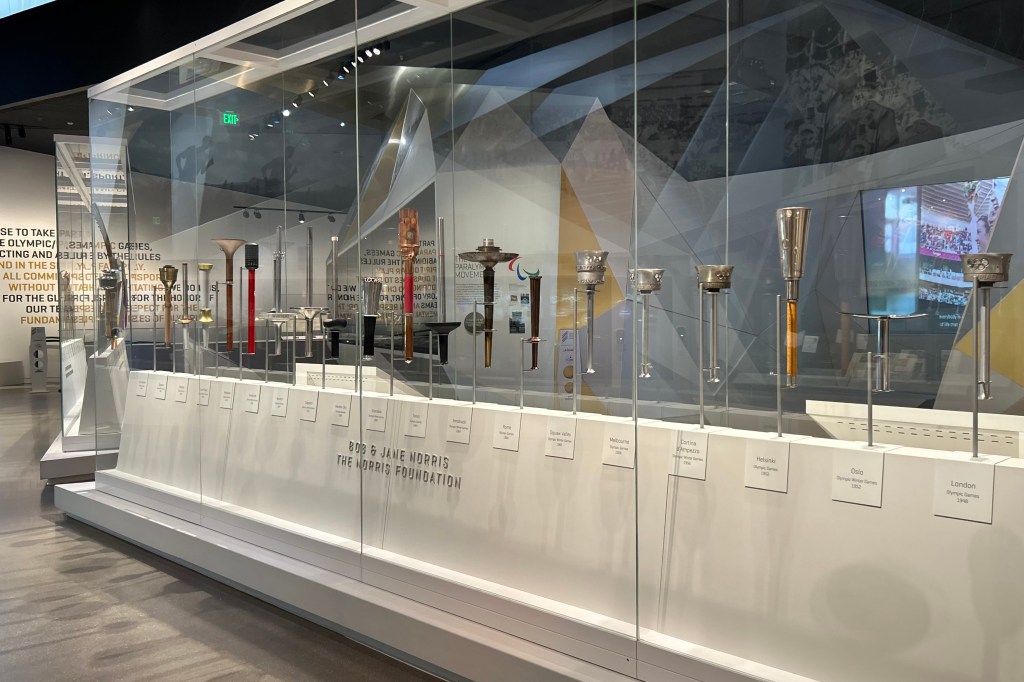
The museum displays one of only two complete collections of authentic Olympic torches (the other is held at the Olympic Museum in Lausanne, Switzerland). Miles explains that the torch relay was introduced in 1936, “and ever since then, they’ve had a new torch for each games.” The set is ordered chronologically, with utilitarian designs becoming more futuristic over the years. Many also incorporate cultural themes through artistic details. Should you book the premium guided tour, you can pose with one in your hand.
Race Jesse Owens on the Running Track
Think you can compete with the best? Inside the interactive gallery, there’s a long digital screen running the length of a race track. Another monitor allows you to select an athlete to race, such as gold medalist Jesse Owens. Take your place at the starting line, wait for the countdown and watch the Olympian’s digital form dash across the screen at their real award-winning speed. You can then compare your pace and time with the athlete. Expect to walk away humbled, but don’t feel too bad. Miles jokes, “We’ve had some of these athletes come in and lose to themselves.”
Experience Skeleton Racing (Safely)
Few would willingly sprint, dive and hurdle headfirst down an icy track at eighty miles per hour. But in a video game setting, why not? Without the risk of broken bones, museum visitors can lean against a mounted skeleton bobsled and follow a track on-screen. Miles explains, “You’re trying to stay within this little pink line and get your fastest time possible without hitting the sides of the wall and getting penalties.” This experience is also in the interactive gallery alongside other digital games, including those inspired by archery, alpine skiing, sled hockey and goalball.
Abigail Bliss
Put Yourself in the Shoes of an Olympian
When designing the museum, curators polled many athletes on what they remembered most about the Olympic and Paralympic Games. “Most of them said to us that it was actually walking down the opening ceremony tunnel for the first time as a USA athlete, so we wanted to give guests that experience,” says Miles. Past the tunnel, a montage of layered clips from years’ commencements plays across the walls. The elaborate pageantry and national pride feel powerful, even in that recreated room.
Leap like Bob Beamon
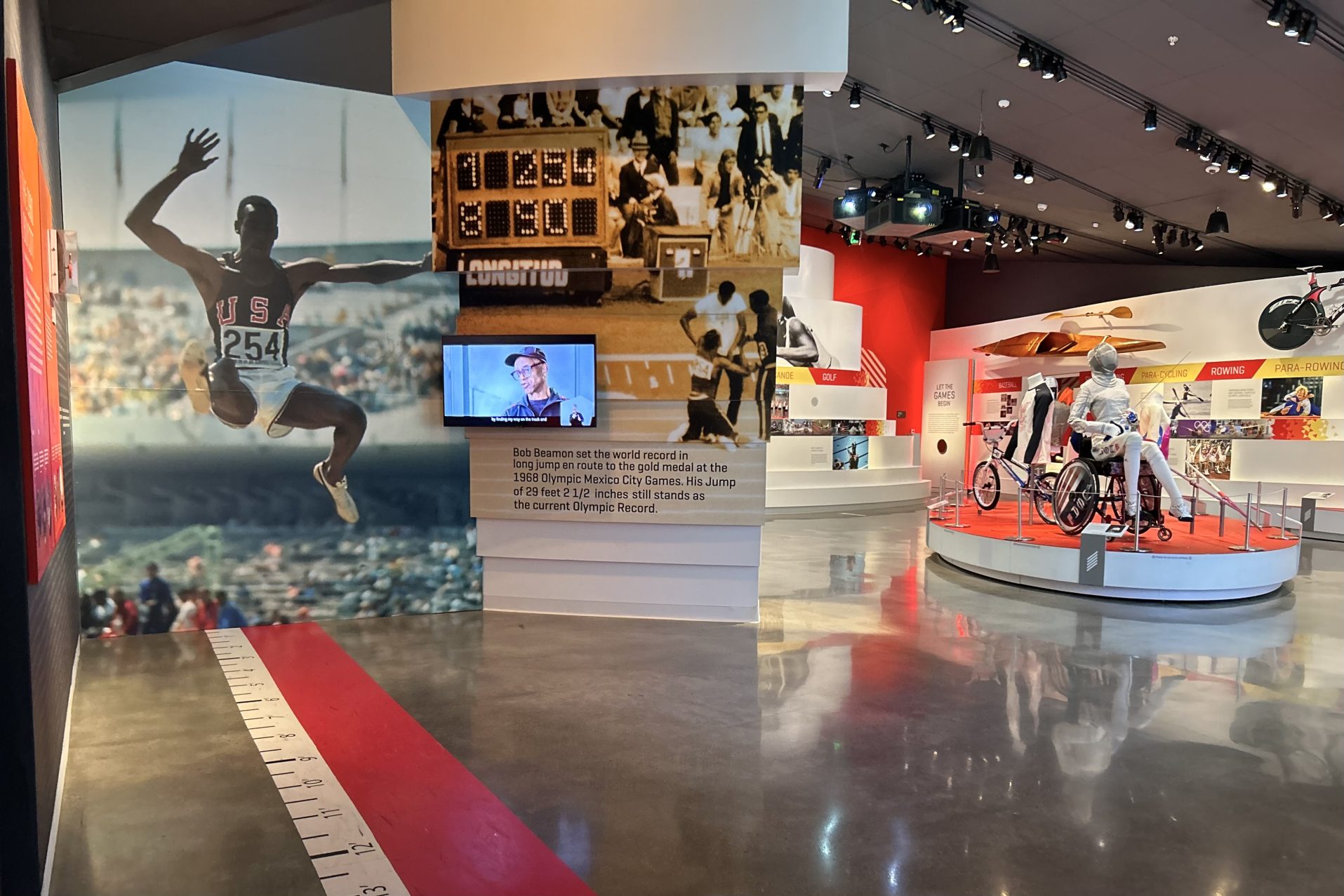
In the summer games gallery, a painted measuring tape spans across the floor, measuring 29 feet and 2.5 inches. Above it, a monitor plays track and field athlete Bob Beamon’s long jump of this unbelievable length. “This is the longest-standing Olympic record in history,” comments Miles. “It was set all the way back in Mexico City, 1968, and has not been broken to this day.” Line up on the ruler and find out how your hop compares (and when you don’t match up, blame the lack of a running start).
Be Convinced of Miracles
Noticed the new Miracle: The Boys of ’80 documentary on your reel of Netflix recs? Give it a watch, then head to the museum to see the scoreboard from the “miracle on ice” — appropriately set at 4-3 with three seconds remaining. For those unfamiliar with this iconic moment in sports history, Miles recounts how the U.S. men’s hockey team, despite comprising college athletes and being the unquestionable underdog, beat the three-time gold-winning Soviet Union squad in the last period of play. He adds, “With three seconds left on the clock, announcer Al Michaels came on air and said, ‘Do you believe in miracles?’” Perhaps, yes.
Abigail Bliss
Feel a Sense of Colorado Pride
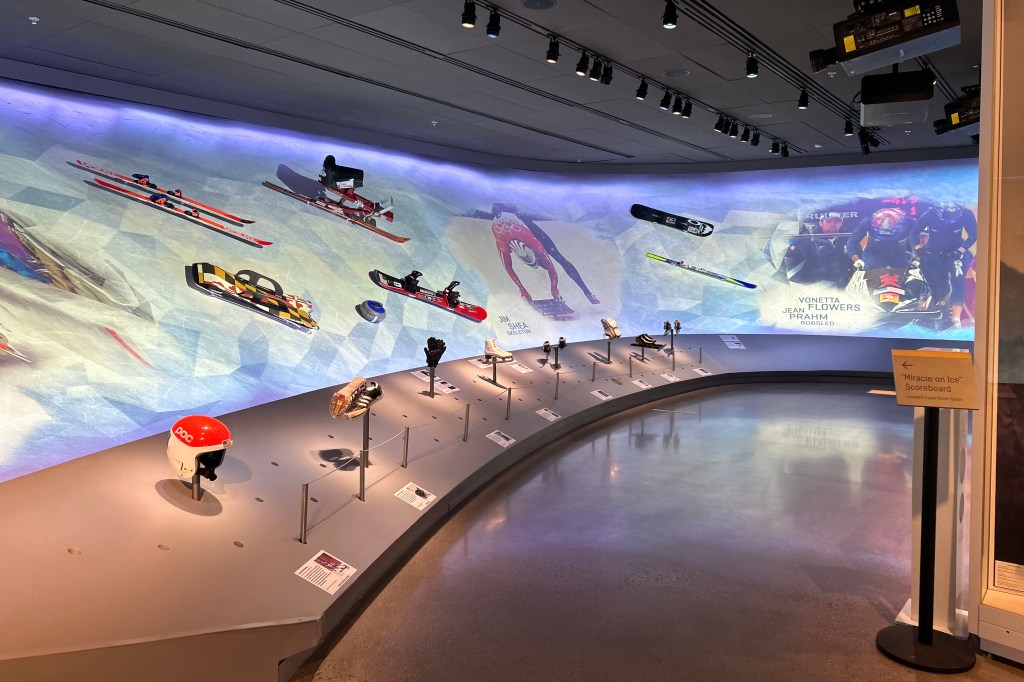
Colorado leads the country in winter Olympians, so it’s no surprise that several local athletes’ names appear in the winter games gallery. These include snowboard gold medalist Red Gerard of Silverthorne, Paralympic alpine skier Sarah Will of Vail and Billy Kidd of Steamboat Springs, the first American man to win a gold medal in skiing. “I, myself, have gotten to ski with him,” recalls Miles. While Kidd, now in his eighties, is not a participant, Steamboat debuted one of this season’s most exciting ski resort updates: the opportunity to glide through champagne powder alongside an Olympian.
Learn About Denver’s Rejection of the Olympics
“On this wall, you can see a highlight of every single Olympic and Paralympic Games from 1896 all the way up to the most recent one in Paris,” explains Miles in the World Watchers gallery, which delves into how politics have influenced the games and athletes. Select a year’s poster to watch a short video about what was happening in the world at that time. It’s easy to nerd out here, as collectively, the content spans for hours. But for some local history, skip ahead to 1976 when voters in Denver said “thanks, but no thanks” towards hosting the winter Olympics.
Abigail Bliss
Dig Into the Breakfast of Champions
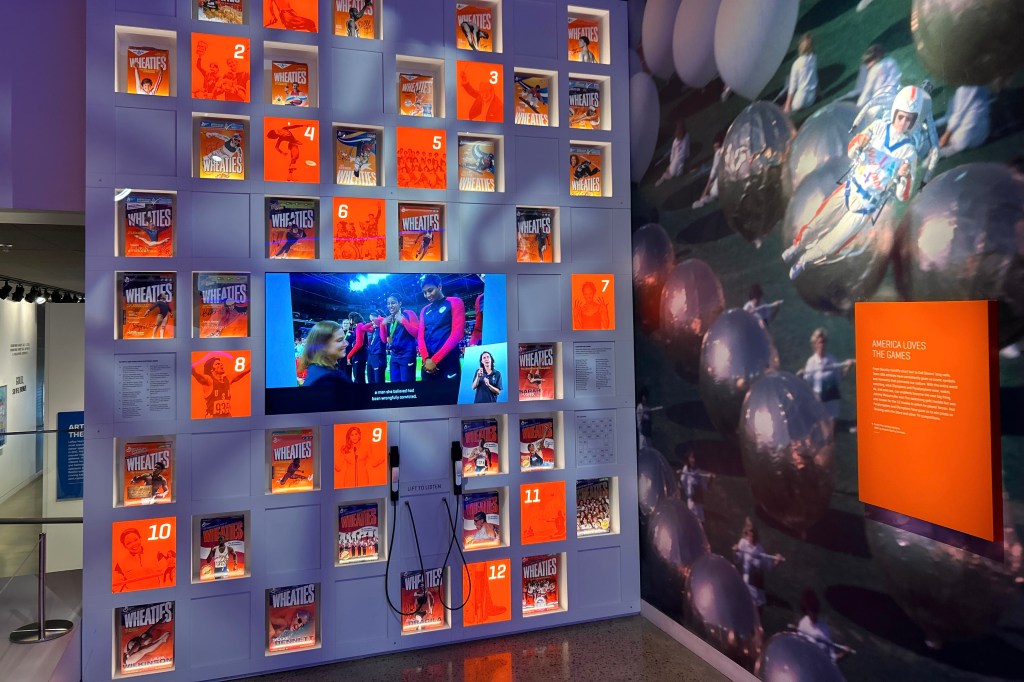
Orange boxes of breakfast cereal stand tall on the Wall of Wheaties. Though the brand has celebrated athletes for nearly a century, the honor of appearing on its packaging is rarer than winning gold. Denver’s own champion swimmer, Amy Van Dyke,n is one of several Olympians featured in this fun display.
Marvel at Every Year’s Olympic Medals
Past the museum’s rotating gallery, which currently holds memorabilia from Hall of Fame athletes, visitors will discover gold, silver and bronze. “We don’t have a full collection of Paralympic medals, but we do for the Olympic medals,” comments Miles. He shares insight into many of them, like how braille, indentations and weighted ball bearings allow Paralympic athletes of varying disabilities to discern their award. Ask about the introduction of the lanyard, the meaning behind various gemstones, and why the winter games’ medallions are more original than the summer’s designs. You won’t get these cool takeaways without a tour guide.
The U.S. Olympic & Paralympic Museum is at 200 South Sierra Madre Street in Colorado Springs. Learn more and purchase admission on its website.