
Photo by Rodney Brazil

Audio By Carbonatix
Every food culture seems to have its version of a hand pie: a portable pastry or dough turnover stuffed with meat and vegetables.
Latin America has the empanada, Italy claims the calzone, Jamaica made famous the beef patty, while Australia and New Zealand have popularized the meat pie and sausage rolls. Even America has contributed its own version — Hot Pockets.
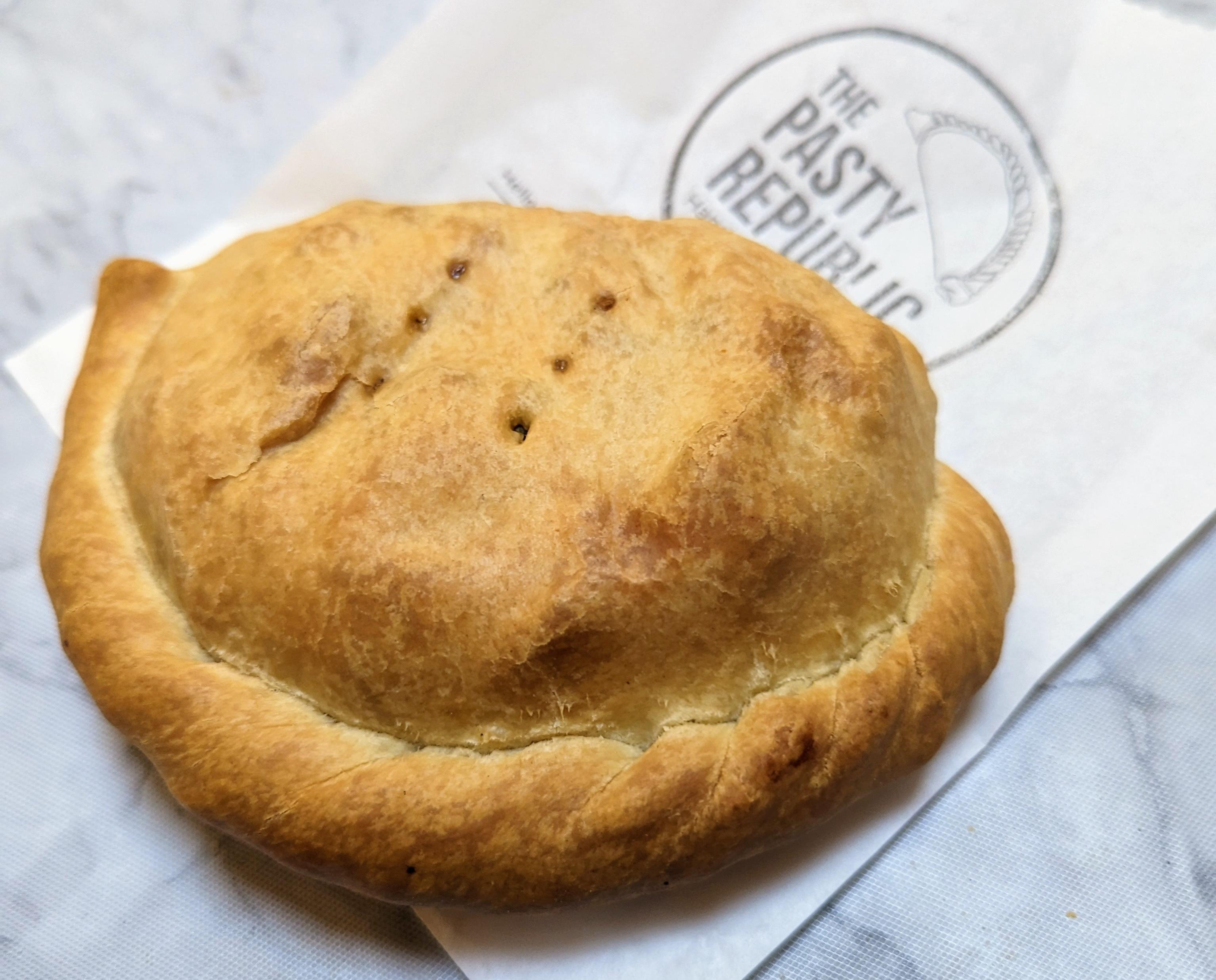
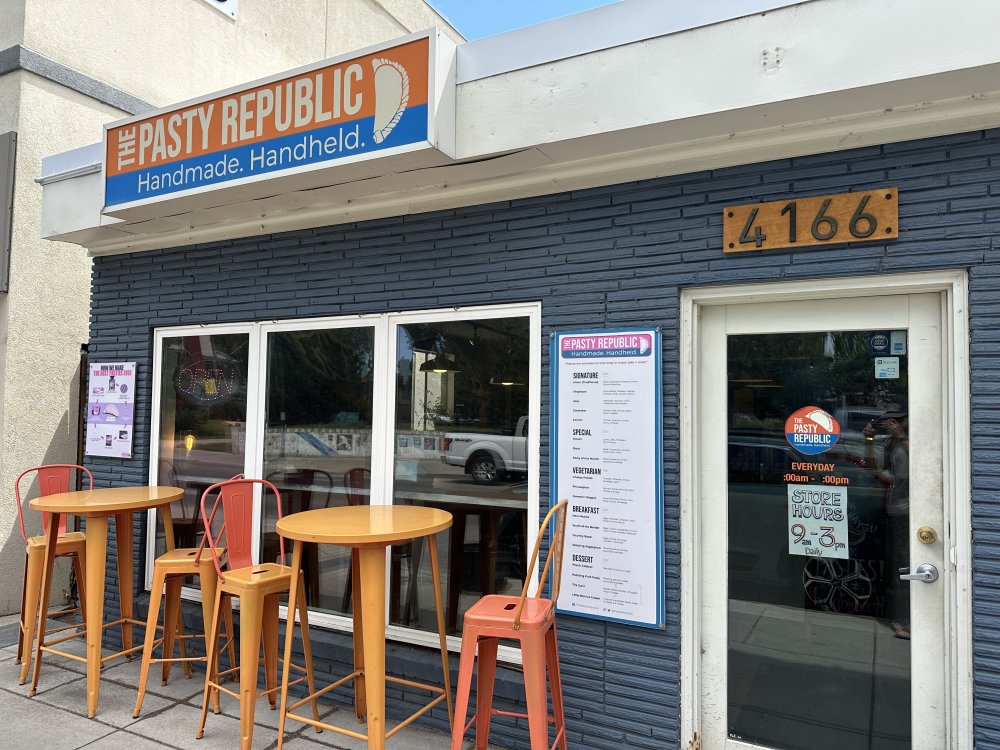
But a lesser-known example hails from Cornwall, England: the pasty (pronounced PASS-tee), a traditional British hand pie that you can find here in Denver thanks to The Pasty Republic, one of the only establishments dedicated to serving pasties in town.
In 2013, owner Matthew Cherry opened The Pasty Republic’s first location on Tennyson Street, and as the business grew, he opened a second storefront in Cherry Creek in 2019.
“We feel that the pasty is a perfect match for the active and ‘on the go’ Colorado lifestyle,” he says. “The pasty serves people today the same way it did hundreds of years ago: a great, delicious meal that can be eaten anywhere.”
Keith McBrayer for Westword
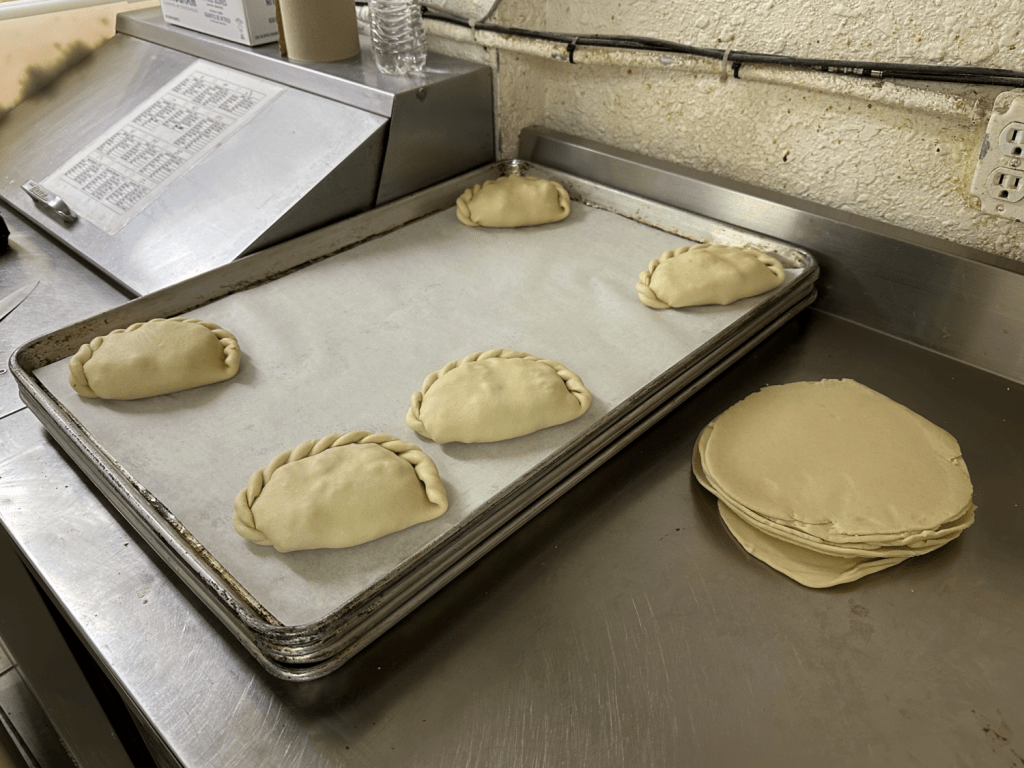
Pasties are made from a circle of dough (either shortcrust or puff pastry), folded over to encase savory fillings, crimped shut, then glazed with egg wash or milk, and baked.
Readers from Michigan’s Upper Peninsula or specific pockets of Wisconsin might already be familiar with the pasty, since it followed the immigration of Cornish miners across the Atlantic, who landed mostly in the Midwest. Pasties were a fitting lunch for 17th-century miners who needed a hearty, transportable meal. The crimped, rolled edge on the pasty is larger than that of other turnovers, originally serving as a sort of handle or disposable crust to grasp with dirty hands.
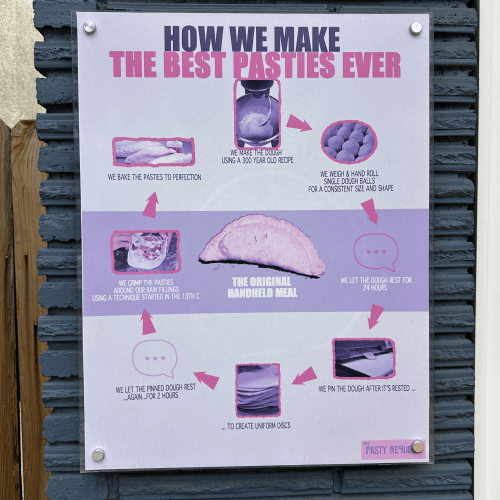
Another distinguishing factor is that pasty fillings are always raw when encased in the dough. Cherry says this method is preferred because, during baking, it allows “the fat from the steak or sausage to render into the dough and become at one with the crust.” In its strictest form, a pasty is stuffed with beef and potato, onion or turnip (according to the Cornish Pasty Association’s guidelines for the protected “Cornish Pasty” label). But most pasty purveyors go beyond the traditional formula, adapting to locally available ingredients or regional preferences.
Keith McBrayer for Westword
The Pasty Republic’s homage to the classic is the Miner, which is loaded with steak, rutabaga and potatoes. But if you prefer bolder flavors, try the Stout, which pairs steak, gorgonzola and mushrooms. Other popular options encapsulate the ingredients of shepherd’s pie, chicken curry or lamb kebabs. There are vegetable-forward (even vegan) options, and a slew of breakfast versions stuffed with eggs, cheddar and proteins like green chile chorizo or maple sausage.
But why hasn’t the pasty become more widespread in Denver? Cherry admits the logistics are hard.
“One of the reasons why pasties have stayed largely regional in the U.S. is that the pasty is much more difficult to make, as far as time and labor go, than a burrito,” he says.
Unlike just taking a tortilla out of a package, The Pasty Republic’s dough undergoes a two-day process before it’s elastic enough to be pinned flat into a disk, folded, crimped, and baked.
It’s also hard to compete with the prevalence of the breakfast burrito. But every city will always have its default options. Texas has breakfast tacos and kolaches. In New York City, you’ll probably think of a bacon, egg and cheese bagel first.
Keith McBrayer for Westword
The broader challenge for Cherry’s business is general awareness and education of what a pasty even is. People are familiar with calzones and empanadas (of which, in Denver, we’re spoiled for choice), but might think a pasty is just a misspelled pastry. Outside of The Pasty Republic’s reach, your options are limited. GB’s Fish & Chips shops have pasties on the menu as an appetizer and sell them frozen to-go (along with other British-style meat pies), but it’s not the focus of their business.
So, to increase pasty presence around the city, Cherry is partnering with coffee shops and other establishments to sell the product beyond his two storefronts, including Linger Coffee Co. in Lyons and the mead hall Carw Gwyn on Colfax. The retail butcher, Rugby Scott, also sells wagyu beef pasties as part of a special collaboration with its new Tennyson Street location, just doors down from The Pasty Republic.
At both The Pasty Republic locations, you can buy all of its offerings frozen for $10, or if they have any left, day-old pasties are sold half off.
So the next time you’re tempted to grab yet another burrito midweek, maybe consider the way of the Cornish miner and pack a pasty for lunch instead.
The Pasty Republic is located at 4166 Tennyson Street and 2615 East Third Ave. and is open from 9 a.m. to 3 p.m. daily. For more information, visit thepastyrepublic.com.