
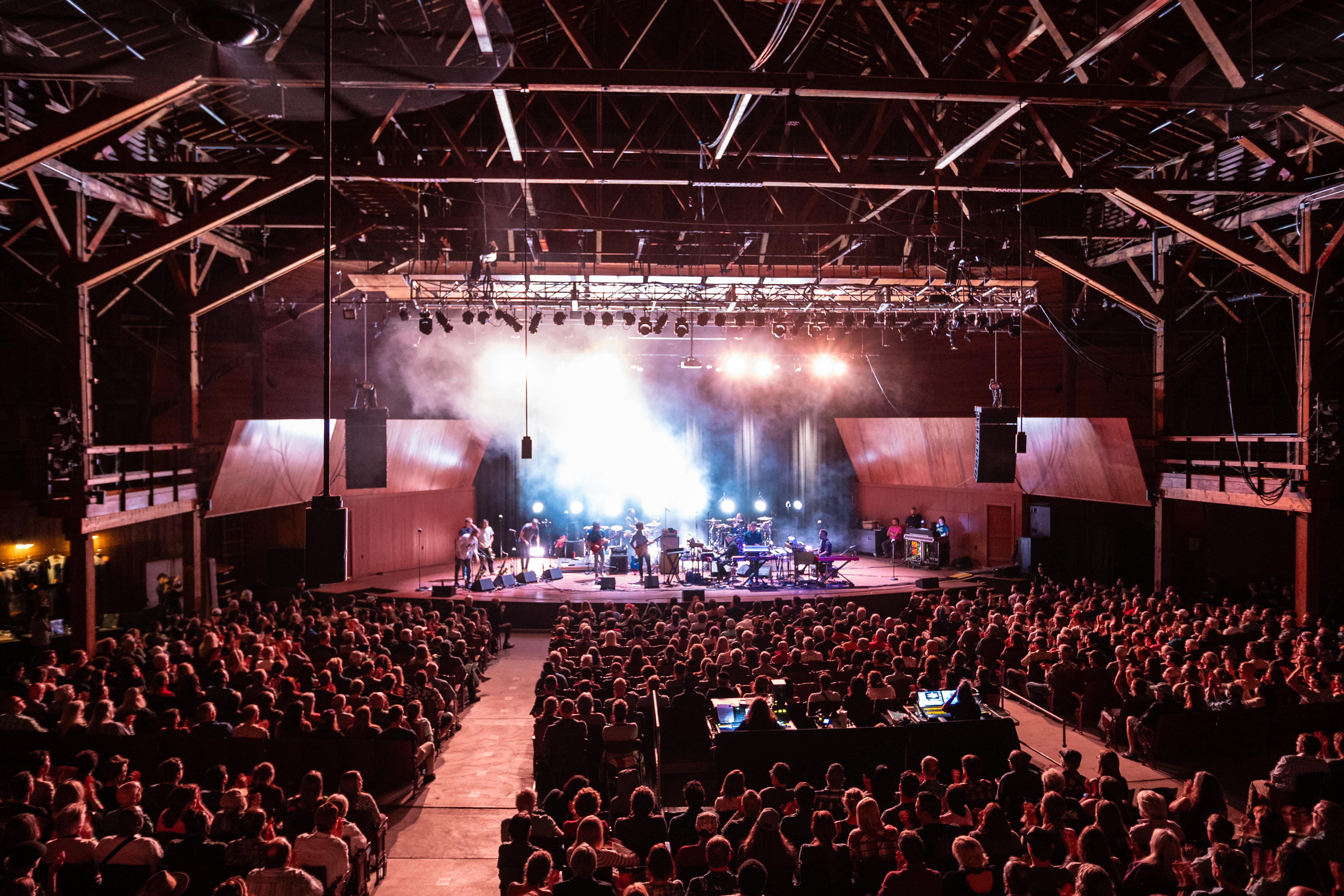
Courtesy of Colorado Chautauqua Association

Audio By Carbonatix
Just four minutes before Graham Nash was supposed to take the stage at Boulder’s Chautauqua Auditorium on August 3, 2024, the power went out. Staff scrambled backstage trying to figure out whether the concert could continue. The wooden venue beneath the Flatirons had endured more than a century of Colorado summers, but for the first time in its history, there were no lights or sound prior to a performance.
“We sure did,” says Chautauqua general manager Scott Bauer when asked if they considered canceling the show. “I went to Graham and his tour manager, and I said, ‘What do you guys want to do?'” And they were like, ‘We’ve got this. We can play acoustic.’ So I wrangled some electric candles and some work lights from a back storage room somewhere, put them up onstage, and they managed to do basically a whole set.”
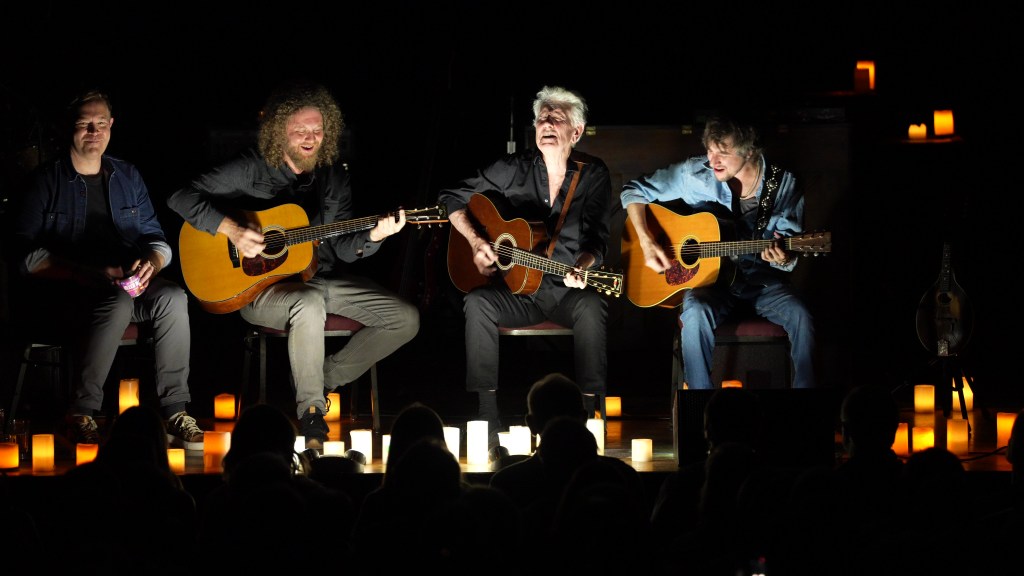
Photo by Mike Moran
The story quickly became a defining part of Chautauqua lore, another chapter in the long history of a venue that has survived changing entertainment trends, near-demolition, deteriorating infrastructure,and more than a century of Colorado weather to remain one of Boulder’s defining cultural landmarks.
Now, the auditorium is preparing for another transformation. Ahead of its participation as a venue in Boulder’s first Sundance Film Festival in January 2027, the Colorado Chautauqua Association is undergoing a major renovation project that will allow it to operate year-round. As a result of that work (and a few permitting problems), the summer 2026 season was slightly delayed.
“We have had to move a few shows early in the season to other venues due to construction delays to ensure we are fully protecting the building,” says Liza Purvis, director of marketing and communications for the Colorado Chautauqua Association. “The season will now kick off officially with our free Flatiron Sounds Music Festival on June 21, and the first auditorium show [Blind Pilot + John Craigie] will be June 25.”
Renovation work, including winterization, will resume after the summer season ends.
A historic Colorado destination since the late nineteenth century
The renovation marks a dramatic shift for a venue originally created for summer use. The auditorium was designed for the national Chautauqua movement, a late nineteenth-century adult education phenomenon that combined lectures, music, political debate and cultural programming into immersive summer gatherings. Communities across the country competed to host Chautauquas, which were viewed as both intellectual hubs and tourist attractions.
“Boulder had been part of a bidding process to win a Chautauqua,” Purvis says. “This was an important movement at the time in the late 1800s, and part of that movement involved people going, often for a whole summer, to enhance their adult education and also to experience nature.”
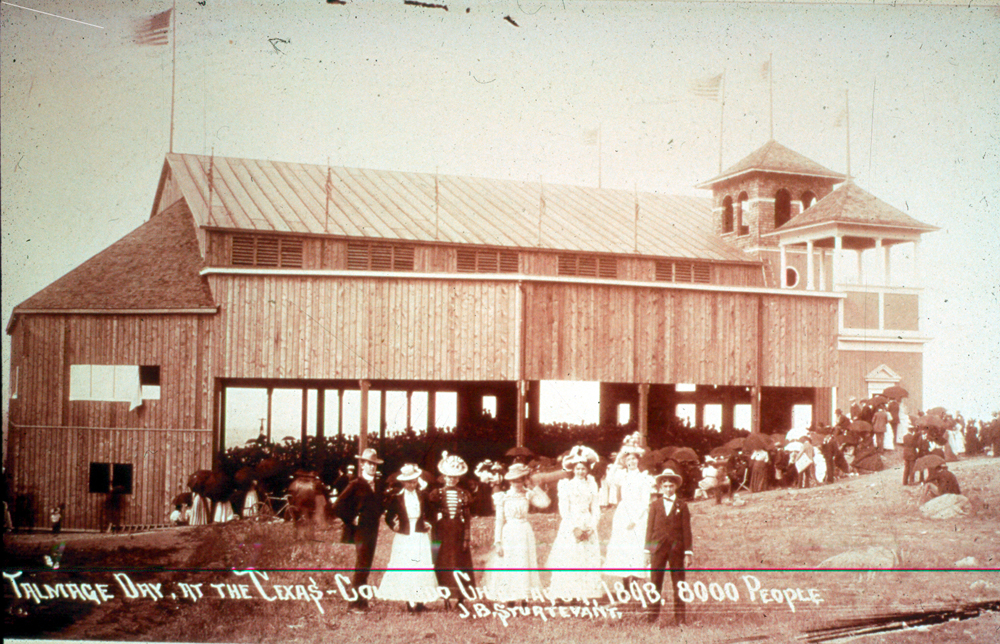
Courtesy of Colorado Chautauqua Association
Once Boulder secured its Chautauqua designation, the auditorium became one of the first priorities. Alongside the dining hall, it was among the first structures built on the new campus. Built in just 53 days by 75 workers and their draft animals, the auditorium opened on July 4, 1898, and drew thousands of visitors to Boulder. The venue served as a central gathering place for lectures, concerts, vaudeville acts and some of Colorado’s first film screenings.
“The company that won the bid for the auditorium won that bid for $6,700 to build Chautauqua,” says Jason Hill, Chautauqua’s chief operating officer. “And they got a $20 bonus per day that they beat the deadline. There were 75 workers, so the race to meet that deadline to build the auditorium in those 53 days was intense. They met the deadline. They didn’t get any bonuses, but I just always get a kick out of that story.”
At the time, the auditorium seated roughly 6,000 people on hard wooden benches above dirt floors covered in sawdust. The building was open on three sides, allowing fresh mountain air to pass through the venue during summer lectures and performances. “It was purpose-built originally to be a summer retreat,” Hill says.

Courtesy of Colorado Chautauqua Association
The building was also surprisingly forward-looking for the turn of the century. Chautauqua wired the auditorium for electricity when it was built in order to host motion pictures, a brand-new technology at the time. In July 1898, audiences watched one of the earliest films screened in Colorado: Diorama and Wargraph, with Music, Reproducing Scenes of the War with Spain.
“You could attract strong political speakers from across the country,” Purvis says. “You could host some of the earliest movies; you could have vaudeville acts. That versatility was a huge part of the draw.”
Movies quickly became one of Chautauqua’s most popular attractions. By the late 1910s, film screenings made up a significant portion of the auditorium’s programming, helping the Colorado Chautauqua survive while many other Chautauqua communities around the country faded away.
The building itself evolved alongside those programming shifts. Dirt floors slowly gave way to concrete. Wooden benches were gradually replaced by salvaged theater and opera seating from schools, theaters, and universities around the region.
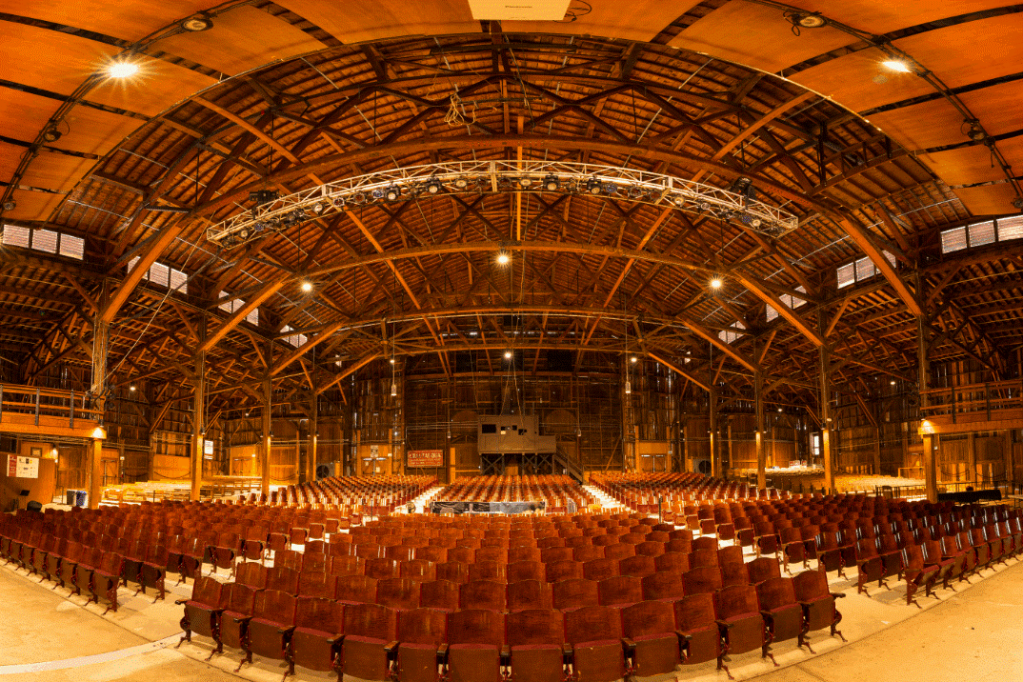
Courtesy of Colorado Chautauqua Association
“When it was originally built, there was capacity to hold about 6,000 people in there,” Hill says. “With today’s codes, you can’t get 6,000 people in there. The first year was just dirt, and then they added benches, and then eventually later on, in the late 1940s and early 1950s, they began to add concrete and better benches, and then in the 1970s and 1980s, they got better seats. So there’s been an evolution from dirt to concrete, from benches to chairs, to today’s seating.”
A few original benches still remain inside the auditorium today. “We have the original benches that were used back in the day,” Hill says. “We have kept them for one small section of the auditorium for general admission.”
Despite its current status as one of Boulder’s defining cultural institutions, the auditorium’s future once looked uncertain. By the 1950s and 1960s, the building had fallen into disrepair as programming dwindled and funding became scarce. “There was a serious deterioration that took place in those decades,” Hill says. “And nothing was really done about it till the ’70s.”
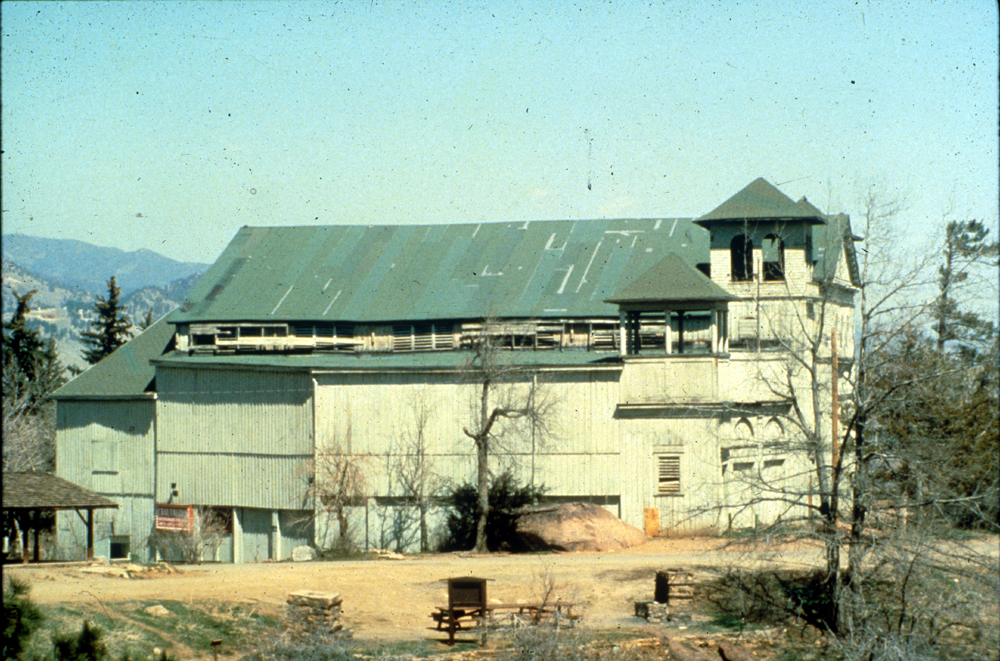
Courtesy of Colorado Chautauqua Association
Preserving a state treasure and expanding programming year-round
At one point, there were discussions about demolishing portions of the Chautauqua campus entirely and replacing them with new development.
“Chautauqua was really kind of on the chopping block for the city of Boulder,” Hill says. “There were serious meetings in the city of Boulder about razing Chautauqua and creating a new development up here and erasing the physical history that existed.”
Instead, preservationists, community members and arts organizations rallied around saving the site. Chautauqua was added to the National Register of Historic Places in 1974, and a wave of restoration projects followed throughout the late 1970s and early 1980s.
The return of major arts programming helped revive public interest in the venue. The Colorado Music Festival moved into the auditorium, eventually helping establish the venue as a nationally recognized summer performance space once again.
“If there’s a lesson that came out of that moment, it was that you have to stay relevant to people’s lives,” Purvis says. “With the programming we’re offering in the auditorium now, there is some continuity, but it’s staying relevant, and it’s attracting younger people and people from further afield. That’s crucial.”
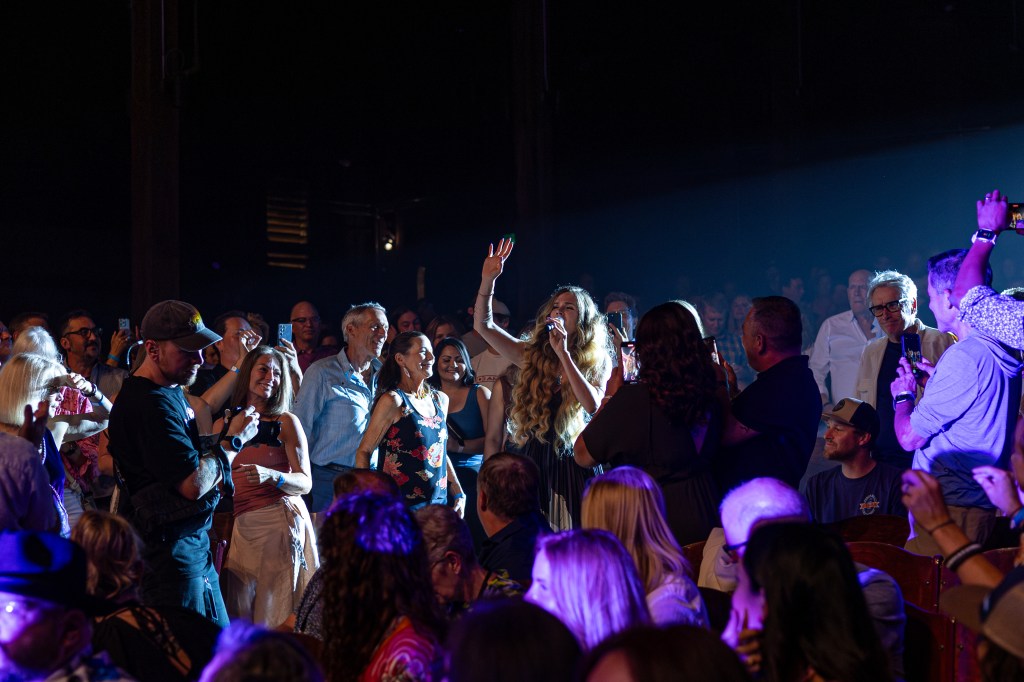
Photo by Katie Frim
Over the following decades, Chautauqua evolved into one of Colorado’s most beloved concert venues. Artists ranging from Joan Baez, B.B. King and Bela Fleck to Joss Stone, Herbie Hancock, Gregory Alan Isakov and David Byrne have performed beneath the auditorium’s exposed wooden beams. Artists often comment on the unusual intimacy of the room.
“There’s an intimacy to that space, too,” Purvis says. “The way it was constructed, partly because of the adult education piece, was that it’s very wide, so people actually feel closer to the artist. Artists are really drawn to come out into the audience and walk around.”
The new winterization project aims to preserve that atmosphere while making the auditorium usable beyond Boulder’s warmer months. Crews are reinforcing structural elements, improving accessibility and adding systems that will allow the building to remain functional during winter without permanently altering its historic appearance.
“Our programming window was about 150-ish days, and we would program anywhere from 50 to 65 days a summer,” Hill says. “Basically mid-May to mid-October, but now with these renovations, we’ll be able to program the whole year.”
Purvis says that the expanded calendar could include more film screenings, talks, partnerships and national touring acts interested in performing at the venue during colder months.
“Obviously, there’s the Sundance of it all, but it’s just a huge opportunity for us,” Purvis says. “Locally, there are a lot of organizations that really need a space like this. Nationally, we’re going to get more acts who are excited about the opportunity to perform here in the winter.”
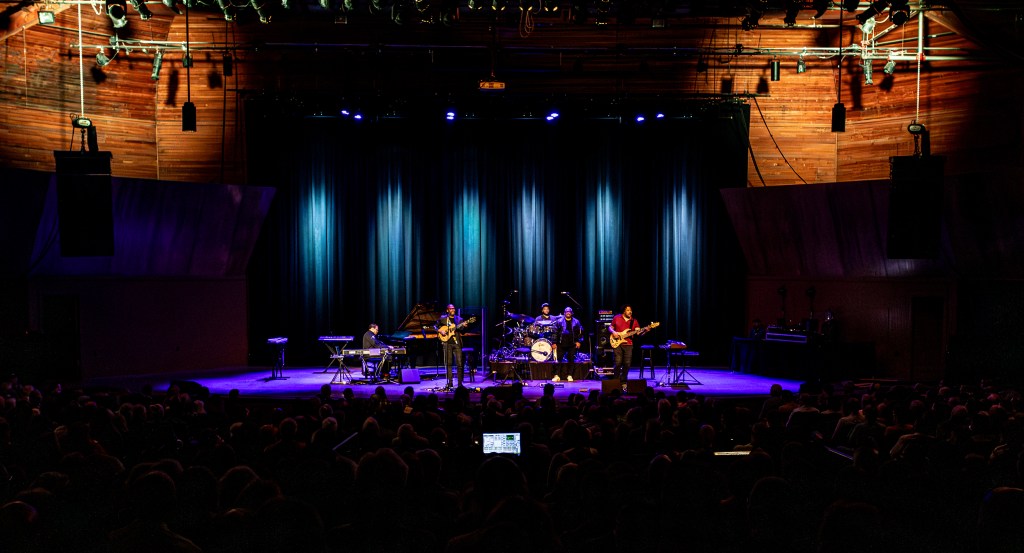
Photo by Katie Frim
For Chautauqua staff, Sundance represents an especially meaningful, full-circle moment. One of Colorado’s earliest film venues is preparing to become part of one of the world’s most prominent film festivals.
“It’s so exciting that we were one of the first places in America to show film,” Purvis says. “And now it’s kind of come full circle that we are going to be known as an important film destination.”
Chautauqua Auditorium is located at 900 Baseline Rd., Boulder. Check out the venue’s upcoming shows at chautauqua.com/events.