
Courtesy of Denver Arts & Venues

Audio By Carbonatix
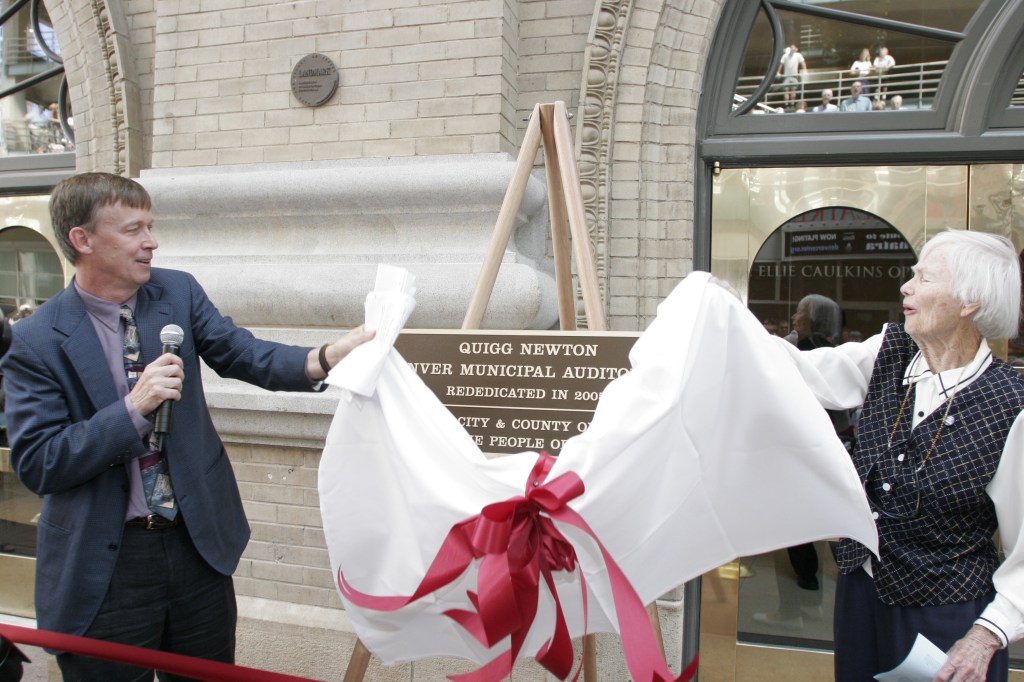
“Absolutely, naming the building after me was a surprise,” 89-year-old Ellie Caulkins says of her family’s 2004 pledge of $7 million to help renovate the century-old Auditorium Theatre and secure her name on Denver’s opera house. “I never would have allowed it.”
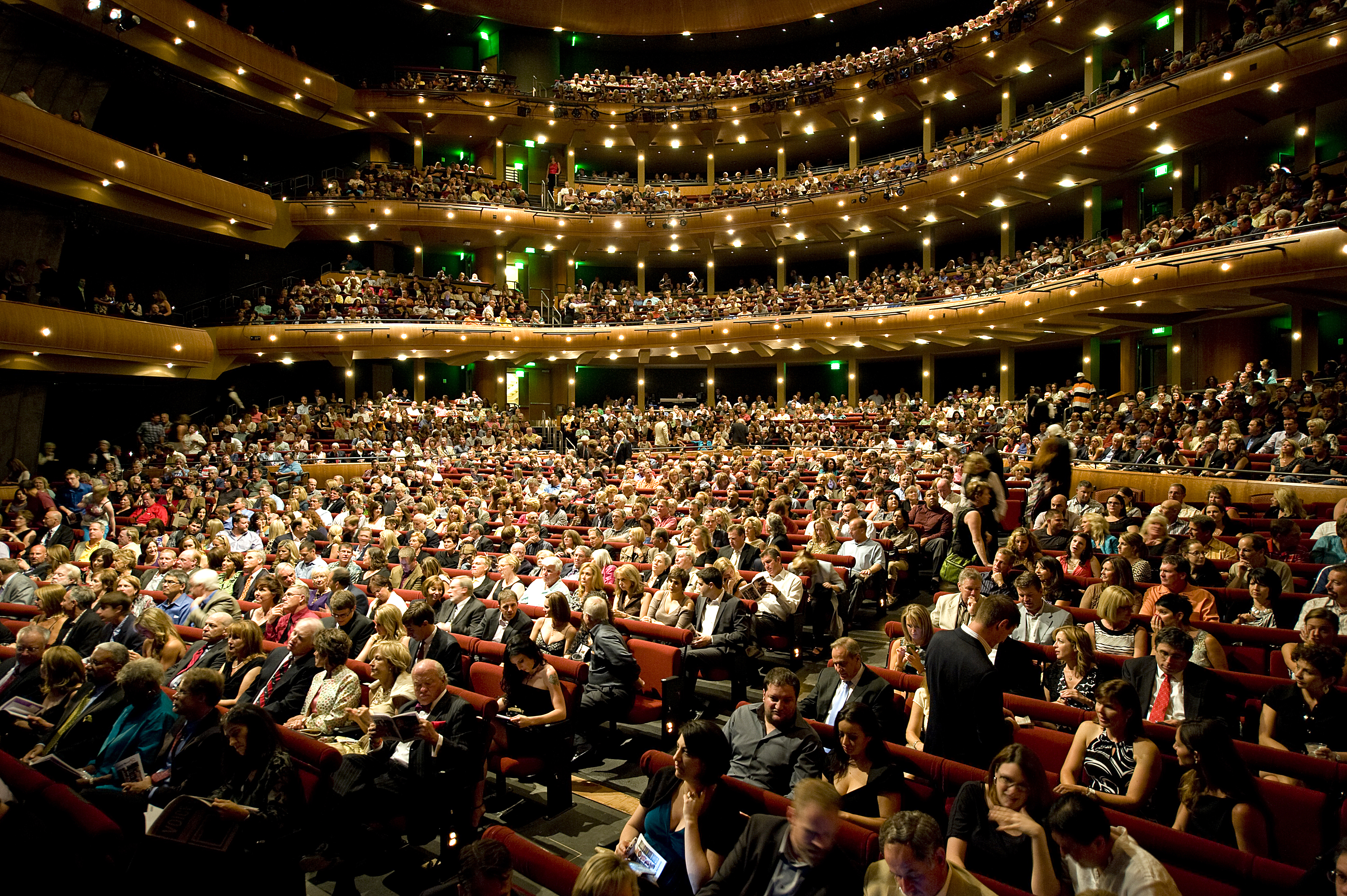
More than twenty years after the venue reopened on September 10, 2005, as the Ellie Caulkins Opera House, Caulkins still speaks about the naming with a sense of humility. What began as a major civic investment supported by voters, public funding and private philanthropy created one of the cultural anchors of the Denver Performing Arts Complex. Today, the venue serves as a performance space for Opera Colorado and Colorado Ballet, as well as a wide range of touring and community acts.
“It was embarrassing for the first few years, but now I love it,” Caulkins says. “One funny thing about having your name on a building is that when I meet people, they say, ‘Wait, I thought you were dead.’ I am not dead, but I am very lucky. I had a wonderful husband. He loved me, but not opera. He frequently told me that he preferred opera only slightly over a root canal. He did this for me. He knew he wasn’t going to be here long and knew this would keep me out of the bars.”
Courtesy of Denver Arts & Venues
The opera house has become, in her words, “a home away from home” — and not just for her, but for a city that is constantly discovering new reasons to gather inside it. “Oh, it’s meant everything to see what the opera house has grown into,” Caulkins says.
Opera Colorado will mark the venue’s twentieth anniversary on February 27 with a gala and performance featuring GRAMMY Award-winning baritone Will Liverman and pianist Elizabeth G. Hill. The concert will open with At the Statue of Venus, a short, one-woman opera performed by soprano Hallie Schmidt and pianist John Morefield; the work was commissioned by Opera Colorado to mark the Ellie’s opening and will be presented again as a nod to the venue’s first season.
“We are raising money for the future of Opera Colorado while also celebrating the history of the venue,” says Barbara Lynne Jamison, the company’s general director and CEO. “There are going to be lots of dignitaries and important people who were here, helped create the building and helped conceive it. It is very exciting to reflect on the space’s history.”
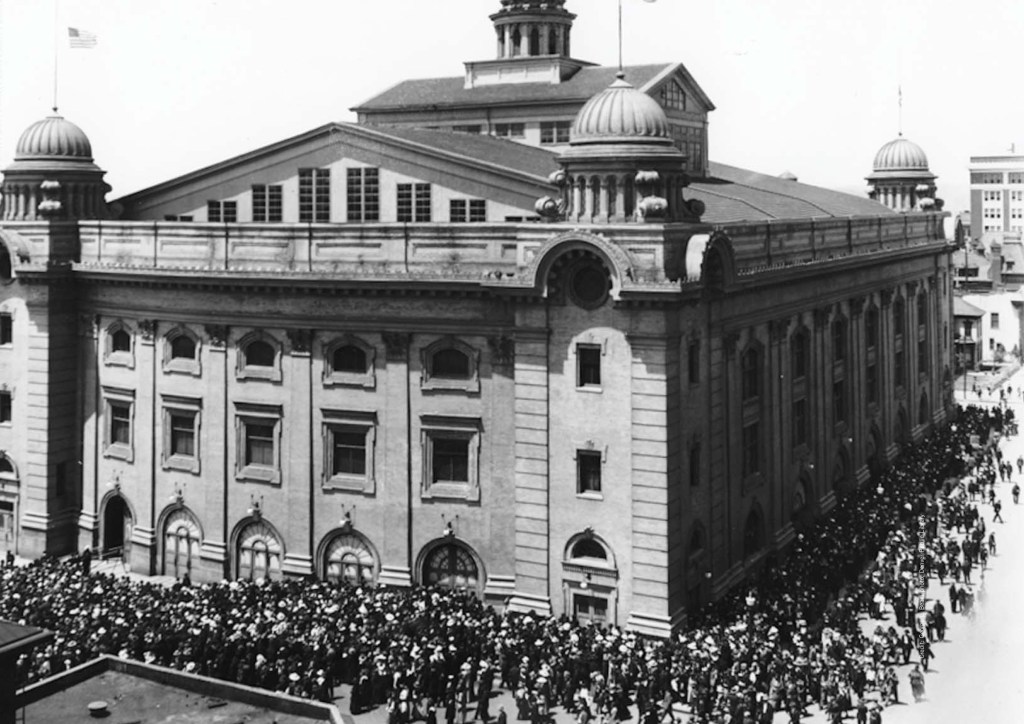
The building that today houses the Ellie Caulkins Opera House first opened in 1908 as the Denver Municipal Auditorium, a multipurpose civic venue constructed in time to host that year’s Democratic National Convention. According to stories shared on venue tours, convention organizers worried that visiting delegates would expect to see snow in Colorado.
“So what they did is they brought down trainloads of snow from the mountains and put it outside the building,” says Carol Krueger, a Denver Arts & Venues patron service manager who has given tours of the Ellie for years. “Because it was July, there would have been no snow, but they put snow on that street right outside the venue so that all the delegates could have a snowball fight.”
Courtesy of Denver Arts & Venues
Over the following decades, the auditorium hosted political gatherings, concerts and sporting events. From 1967 to 1975, the Auditorium Arena inside what had been renamed the Quigg Newton Municipal Auditorium served as the home court for the ABA’s Denver Rockets, the professional basketball team that later became the Denver Nuggets. As the surrounding area developed into what is now the Denver Performing Arts Complex, the Auditorium remained a central gathering place.
By the late twentieth century, however, the facility was no longer suitable for large-scale opera and ballet productions; the space lacked the acoustics and technical infrastructure required for unamplified performance.
In 2002, Denver voters approved public financing to transform the aging Auditorium into a lyric opera house designed specifically for opera, ballet and classical music. The renovation was funded through a combination of bond proceeds, seat tax revenue and private donations, including the Caulkins family’s contribution.
Because the exterior of the building was historically protected, the structure could not be demolished. Instead, construction crews removed the roof and rebuilt the interior from the inside out while preserving the original shell. The $92 million renovation was led by Semple Brown Design and principal architect Chris Wineman, who oversaw the transformation.
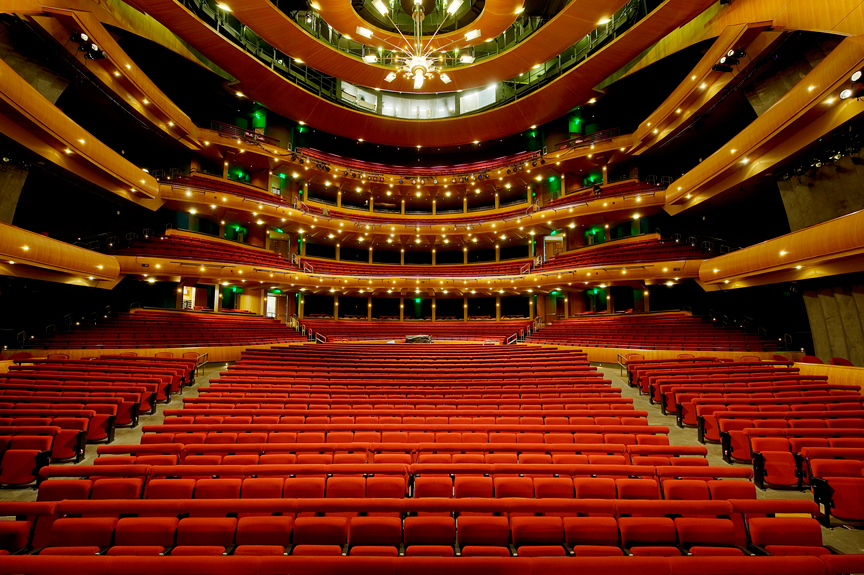
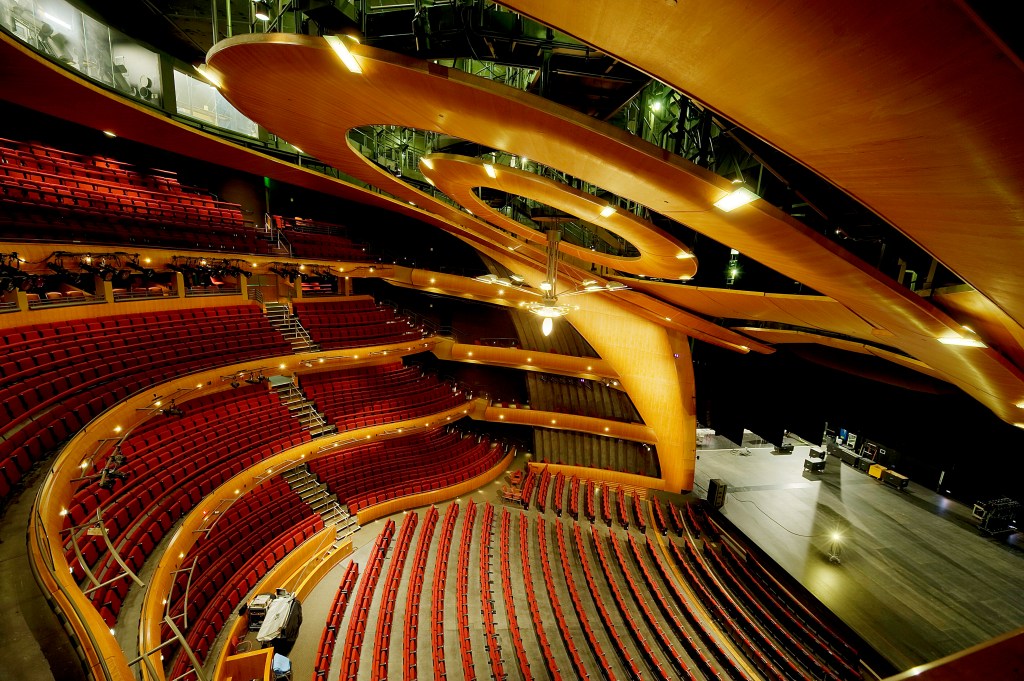
The Ellie Caulkins Opera House reopened in 2005 as a 2,268-seat venue designed to accommodate large-scale productions, located inside the shell of the Quigg Newton Denver Municipal Auditorium. The updated space includes expanded orchestra pits that can be reconfigured for opera or ballet, a fly system capable of lifting scenery more than 100 feet above the stage, and acoustics tailored for unamplified performance.
Courtesy of Denver Arts & Venues
Since then, it has served as the primary performance venue for Opera Colorado and the Colorado Ballet, which present their annual seasons in the space from September through May. For Colorado Ballet Artistic Director Gil Boggs, the Ellie’s opening expanded what the company could produce locally.
“When you do Swan Lake or Sleeping Beauty, we’re able to bring in large sets,” Boggs says. “We rent from other companies such as American Ballet Theatre or Boston Ballet, and we’re able to fit those sets on the Ellie stage, given its configuration.”
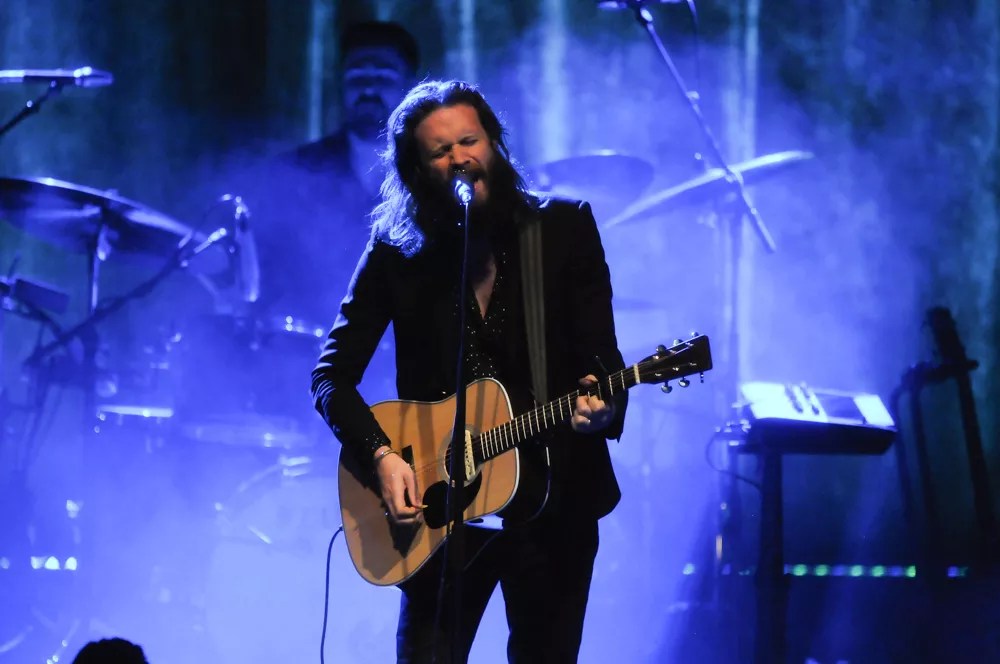
In addition to serving resident companies, the venue has hosted a diverse range of performances and events on its mainstage, smaller Studio Loft theater and Chambers Grant Salon event space. Touring productions, including the pre-Broadway run of Disney’s The Little Mermaid, have used it for development. National tour launches, such as The Book of Mormon, have also gotten their start at the Ellie. The venue has hosted concerts by artists such as Tony Bennett and Diana Ross, as well as regular screenings for the Denver Film Festival, comedy acts and even performers who play video games live for their audience.
“If you look back through the history of the Ellie, it’s really a history of pop culture,” says Brian L. Kitts, communications director of Denver Arts & Venues. “Yes, it is primarily the home of the opera and ballet, but there is a lot of other activity here throughout the year. It’s a beautiful venue that’s also really, really multipurpose.”
Miles Chrisinger
As the venue marks its twentieth anniversary, Denver Arts & Venues has continued to invest in updates intended to support both resident companies and visiting performers. A recently installed Harlequin Liberty Switch Stage allows the floor to transition between a rigid surface for heavy scenery and a sprung surface designed for dance. The system, which cost roughly $1 million to install, is among the first of its kind in the United States and was designed to meet the needs of both production crews and dance companies working in the same space.
Previously, installing a sprung floor required two hours and six people. With the new system, switching from an unsprung to a sprung floor takes minutes and is accomplished by simply pressing a button. “Not to have that extra expense of laying the floor makes it much easier on your budget,” Boggs says.
Additional renovations are planned for this summer, with the opera house replacing all of its seats from June 8 to September 13. The project will keep the same number of seats while improving accessibility and replacing the current seat-back titling system with a new translation display located on the side of the stage and above the proscenium.
“The renovations are an important part of celebrating the venue’s twentieth anniversary,” Kitts says. “We’re replacing seats. We put in a new floor. Twenty years in, and we’re still putting investments into that house. And it’s a constant thing with any venue, so when you talk about what the next twenty years are going to look like, it’s going to be a constant set of upgrades that the city is responsible for as technology changes and as things wear out. You don’t get to rest when it comes to this sort of maintenance.”
Courtesy of Denver Arts & Venues
For Jamison, maintaining and updating the Ellie is essential to its role as a public cultural resource. “We are fortunate as an American opera company to call the Ellie home,” she says. “Not every opera company has a home. Many move from venue to venue, so to have a place to call home, where people know where to find us in a beautiful theater, is a gift to the people of our community.”
Looking ahead, Jamison says the priority is ensuring the opera house continues to serve a broad range of audiences.
“I would hope that we would continue to remember how opera and the opera house are owned by and belong to the people here,” she says. “Our goal is to continue finding ways to activate it so everyone feels like it is their home. They can dress up if they want, but they can also explore and experience the awe and wonder that art can provide. I want to activate it so that everyone in our city and region feels like it’s theirs. It is up to us to ensure that it is activated in ways that honor people from all walks of life, and we are working to do so.”
“We are very lucky,” Caulkins concludes. “The opera house is a fantastic space in the heart of Denver that the city manages and we, the taxpayers, help to maintain. Not every city has a venue like this, so it’s wonderful that it exists and is so accessible to the public.”
The 2026 Opera Colorado Grand Gala and Concert Celebrating 20 Years of the Ellie Caulkins Opera House starts at 5 p.m. on Friday, February 27, in the Denver Performing Arts Complex, 1400 Curtis Street. Tickets to the gala start at $400; tickets for the 8 p.m. concert are pay-what-you-wish. Learn more at operacolorado.org.