
Justin Jimenez/Wild Goose Saloon TikTok

Audio By Carbonatix
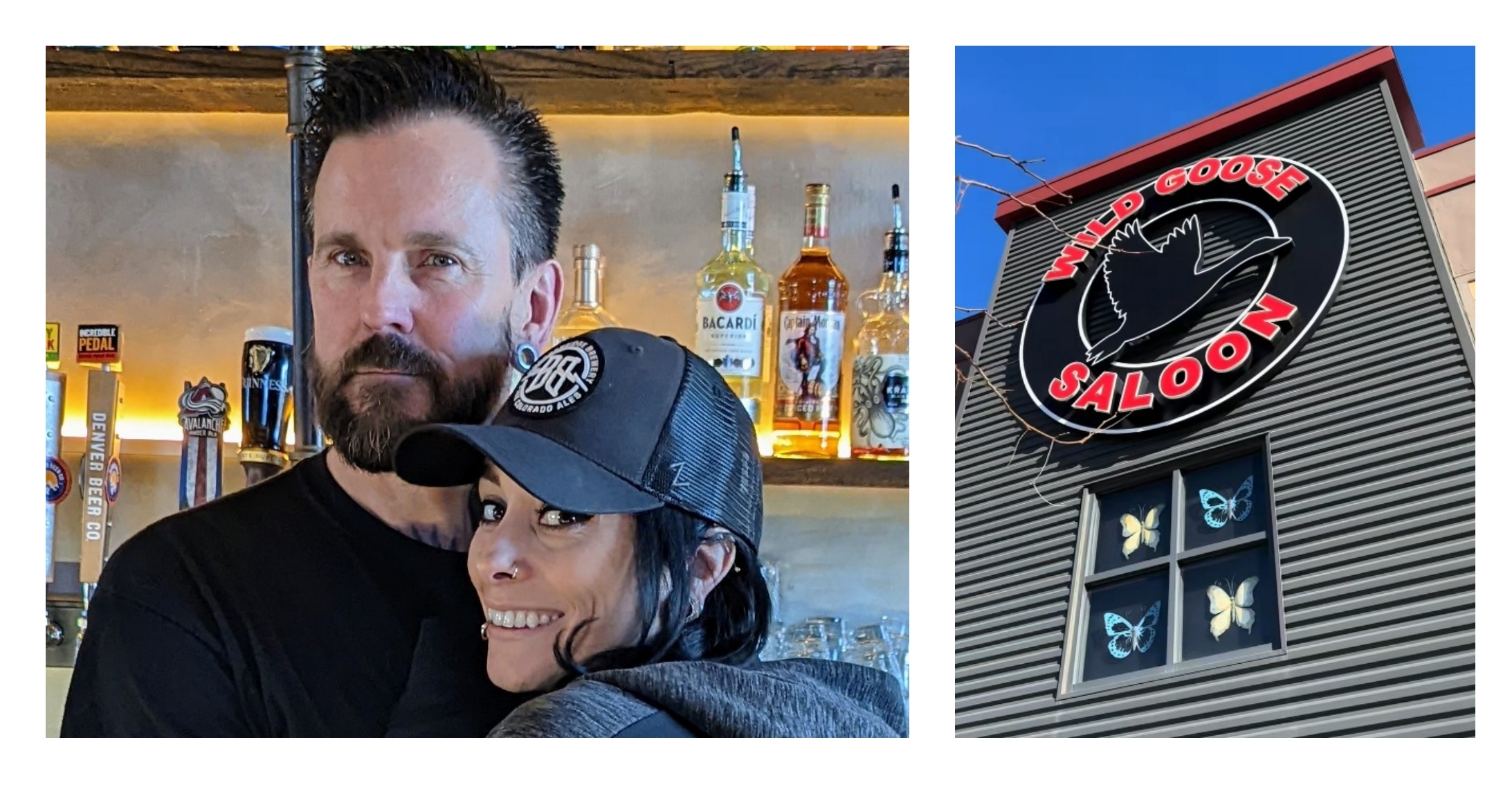
Chris Dellinger is a Denver music hero. The guitarist has played in Colorado bands for more than thirty years — his current combo is Lola Black, named for his partner in love and rock — and remains a much-respected booster of the local scene. As a co-owner (alongside Black) of Parker’s Wild Goose Saloon, he made sure that area acts of every description got a chance to shine alongside touring performers from around the country.
But now Dellinger is fighting for his life, personally and professionally. In late 2025, he learned he had prostate cancer, and on February 22, shortly after publicly announcing his diagnosis, he and Black were blindsided when their business partner suddenly shut down the Wild Goose. The venue, located at 11160 South Pikes Peak Drive, remains closed and there are no current plans to reopen it.
This double blow would have floored a lesser couple. But Dellinger and Black aren’t ready to surrender — and neither are the many friends and colleagues they’ve collected over the years. Dellinger is attacking his healthcare challenges with every ounce of his energy, even as a two-day fundraiser dubbed Chris Fest is being assembled for later this spring with the goal of helping defray medical costs that are growing by the day.
“It’s honestly just amazing,” Dellinger says. “I thought, ‘Oh, shoot, if we’re not going to have the bar anymore, people are all going to abandon ship on us.’ But nobody’s abandoned ship.”
“It’s definitely unbelievable and we’re extremely grateful,” Black adds. “Taking all of this in has been a little hard for me, but how everyone’s stepped up hasn’t gone unnoticed, for sure. It’s gotten me through some of the dark times.”
Jon Solomon
A Colorado native, Dellinger first began playing the Denver band circuit in a combo called Cathouse before moving on to Psycho Holiday and then Blister 66, one of the hardest rocking Mile High City units of the 1990s, and among the most acclaimed, as its success over multiple years at the Westword Music Showcase Awards attests. He also excelled in shorter-lived outfits such as MF Groove Machine, and served as what he describes as “a hired gun” with Seraphim Shock for well over a decade.
His love match with Black had a fortunate false start. “I actually met Chris when I was sixteen years old, but he was a jerk to me — and I’m kind of glad he was,” she says, laughing.
“She was sixteen and I was over 25, so it would have been kind of creepy,” Dellinger confirms. “But we met again later on in life, when she was 21. We met the old-fashioned way, at a bar.”
“I was his bartender,” she reveals.
Black was a fan of punk, ska, nu-metal and more; before connecting with Dellinger circa 2005, her best-known vocal work was shared in amateur settings. “I was known for singing karaoke all around town,” she notes. “But I kept notebooks, moody bar writings, and when I got together with Chris, I would pick his brain about tattoos and music. I told him I’d always wanted to sing.”
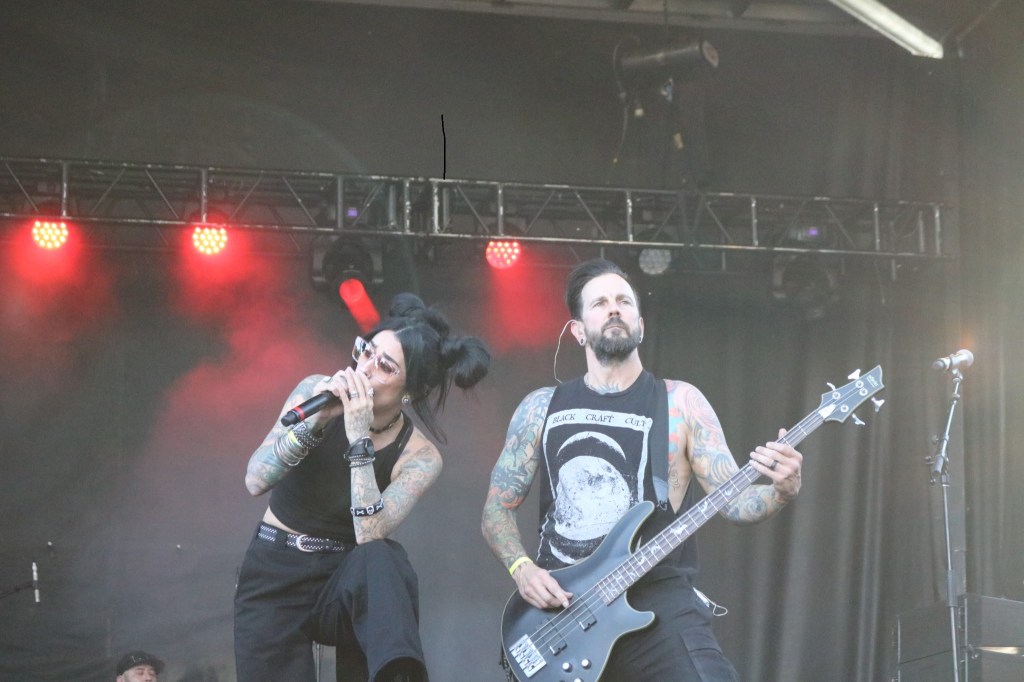
Together they formed the band Lola Black, which initially specialized in punk. But a shift took place after KBPI disc jockey and program director Willie B put the tune “Borracho” into rotation, which led to radio airplay across the U.S. and more opportunities. Lola Black opened up for the likes of Slipknot and Godsmack and recorded with Sid Riggs, a producer whose credits include Seether and Juliette & the Licks, as well as Bob Marlette, known for his work with artists ranging from Sheryl Crow and Tracy Chapman to Rob Zombie and Marilyn Manson.
The unit’s momentum seemed about to crest in 2020, thanks to the Marlette-helmed long-player Nothing’s Gonna Be Alright. “But then,” Black says, “the pandemic hit and shut the entire music industry down.”
Leilani Leon
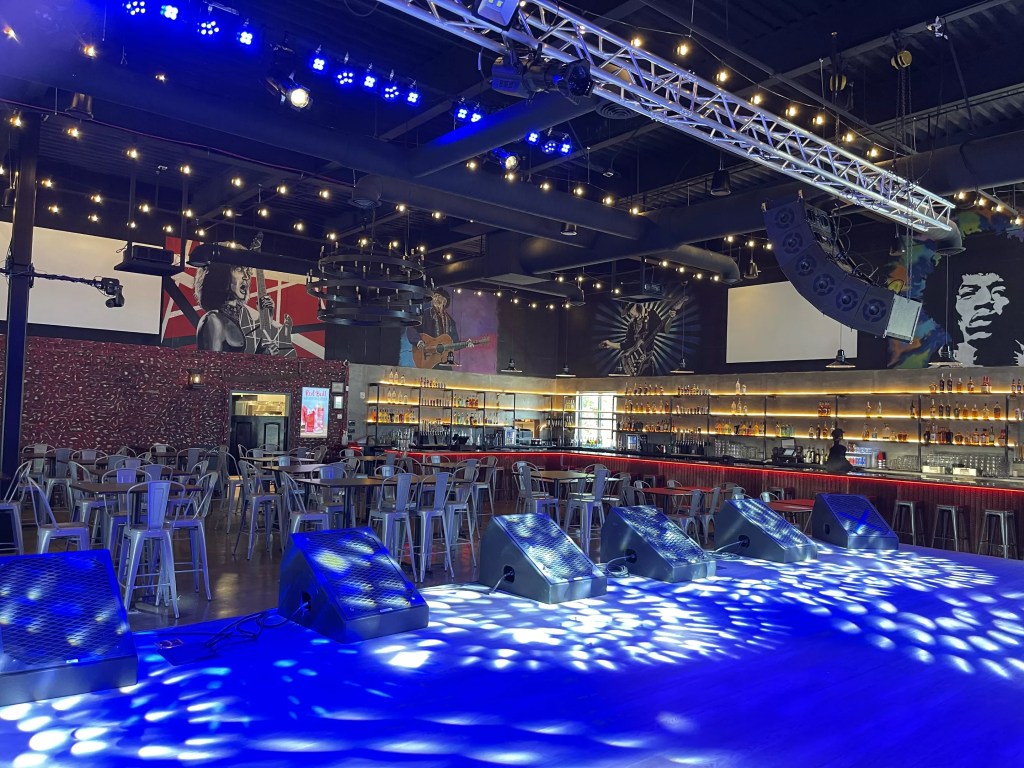
With the band sidetracked, Dellinger and Black began to consider other options. Before COVID-19 hit, they’d looked at opening their own place — and in 2021, as restrictions on social gatherings began to ease, they were hired to manage the Wild Goose. When the ownership opportunity followed, Dellinger says, “we shifted focus from touring. The bar kind of engulfed our lives quite a bit, but we embraced it. We were like, ‘Okay, cool, we can do this and still do our shows.’ And with all our connections in the music business, it was pretty easy to launch a venue and host national acts, since the room was perfect for it.”
“With our knowledge of the music industry and my knowledge of bars and restaurants, it seemed like the perfect little marriage,” Black agrees.
The Wild Goose hosted “bands we had no business getting,” Dellinger says, “like Shinedown, which did an appearance at the Goose for one of the radio stations, and whose next show in Denver was at Ball Arena.” Others that passed through the Wild Goose included Drowning Pool, Saliva, Ratt’s Stephen Pearcy and Struggle Jennings, whom Dellinger says “we had the night before he played Red Rocks with Jellyroll.” There were also headlining gigs for tribute acts and local groups, plus showcases for newcomers such as School of Rock students; the Wild Goose also invited multiple SOR classes onto its stage.
Profit margins began to thin in the past year or so, like those at many club-sized venues across the country. Amid these struggles, Dellinger began to exhibit a variety of health-related symptoms. At first, “it just seemed like normal stuff for my age,” says Dellinger, who’s in his early fifties. “Like, of course I’m going to be fatigued when I’m working eighty hours a week. And the pain in my bones I just chalked up to sciatic nerve problems.”
Last November, he found out he had stage 4 prostate cancer — meaning it was at an incurable phase. And while tests didn’t locate cancer in assorted organs, the disease had spread to ten vertebra, several ribs, lymph nodes, one femur and his pelvis. To make matters worse, Dellinger had no insurance: He was so absorbed in keeping the Wild Goose in flight that he’d let his coverage lapse.
Dellinger, who has two children with Black (they’re 24 and 18, respectively), signed up for aggressive treatment, including hormone therapy and chemotherapy — and money got tight quickly. By last month, after initially keeping word of the cancer quiet, they realized they needed to launch a GoFundMe page in the hope of defraying some of the costs.
The page went live on February 20 and the response was impressive; at this writing, 600-plus donors have pledged more than $75,000. But this good news was quickly undermined just two days later, when the Wild Goose was shuttered.
Right now, Dellinger and Black aren’t giving many details about the closure. They say only that their silent business partner, who has connections with the landlord, made the decision, and they were as surprised by what happened as anyone.
The one-two punch of the cancer and the Wild Goose’s grounding “was a blow to the whole family,” Dellinger says. “We all got fired on our day off. But overall, I think we’re taking it pretty good, because we’re trying not to be negative. They say that you’re only going to do as well as your outlook is going to let you be, and I feel like I’ve got a pretty good outlook. I just don’t think it’s quite my time yet.”
Given the cancer’s stage 4 designation, the best Dellinger can hope for is remission. “I’m very young to have this kind of cancer,” he stresses. “The average age of people who get it is 68. I’m in pretty good shape for my age, and with all the advancements in cancer therapy. I’ve heard of people living as long as twenty years in remission.”
This sense of optimism has added even more passion to Chris Fest, which has been booked for May 16-17 at the Oriental Theater, 4335 West 44th Avenue. The final lineup, ticket prices and other details are pending.
Until then, Dellinger is staying positive. “The amount of support we’ve gotten from the music community is just insane,” he says. “We feel very fortunate and blessed.”