
Bennito L. Kelty

Audio By Carbonatix
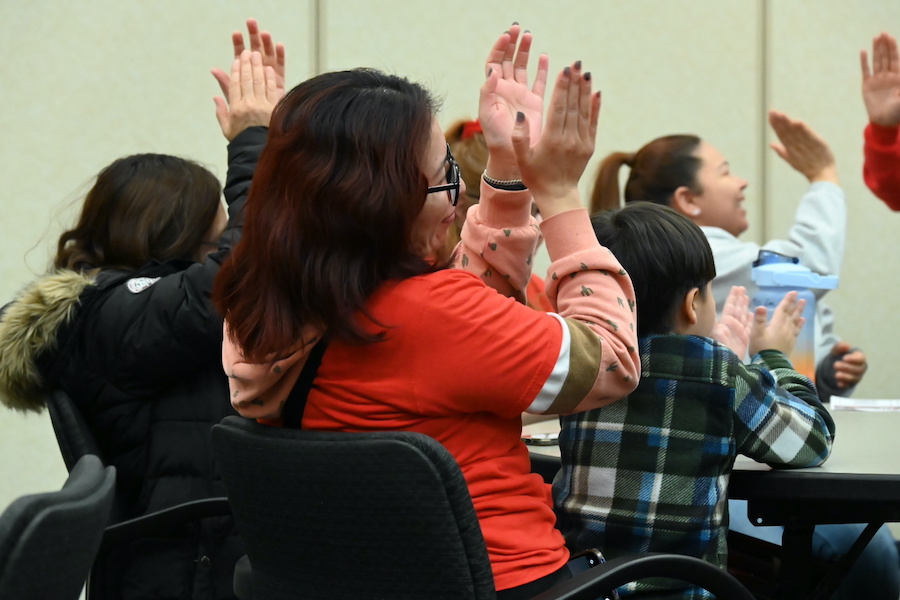
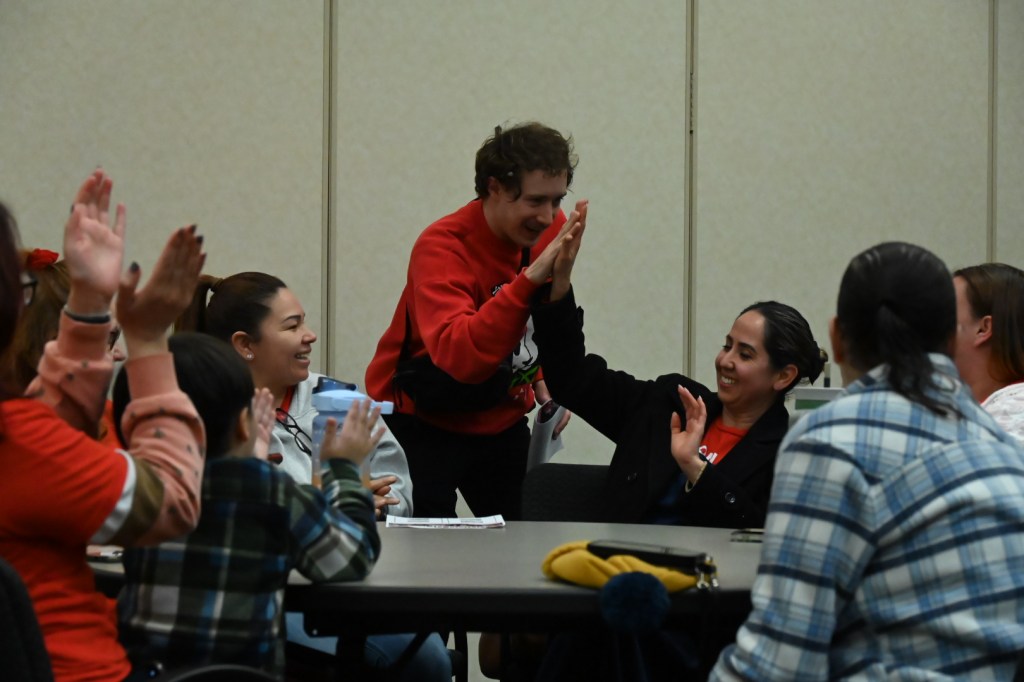
Bus drivers, special education and pre-school teachers, cafeteria employees and other education support professionals known as classified employees now have the greenlight to unionize at Aurora Public Schools following a district board vote on Tuesday, February 17.
“I feel very happy, because it’s now been a long time, about three years, since I heard about the union, and I’ve been persisting at the meetings since then,” Maria Simental, a cafeteria worker at Rangeview High School and one of dozens of classified employees who attended APS board meetings to call for a union, said after the approval. “This feels like a victory.”
The APS Board of Education voted unanimously in favor of a resolution on Tuesday that laid out the process of an election for “an exclusive collective bargaining unit” for APS classified staff that will negotiate with the district and a third-party. Classified employees still need to hold an election for union representatives at each work site, school and administrative office.
“We’re happy,” said Tiffany Barker, a paraprofessional at Aurora Frontier P-8. “We have more work to do. It’s time to get the ball going, so we’re really excited.”
Since August, dozens of classified employees at APS have been wearing red shirts and rallying at the board of education meetings whenever their potential union popped up on the agenda, which happened in August, October, January and finally this month. Classified employees have said that they need a union for better pay and benefits as the cost of living rises, as well as protection from retaliation when they speak out, better retention of long-time classified staff and better training for their replacements.
According to APS estimates, the district has about 1,800 classified employees.
“It’s important that we have this union to retain those people of leadership, because we lose people every single year, and they’re great people,” Barker said. “And they’re replaced with other people who aren’t capable of doing this job, because they don’t have the training. They just get put or placed somewhere, and they’re not told what to do.”
In August, before elections for four of the seven board seats came up, classified employees said they had a petition that more than 60 percent of APS teachers and other licensed, or non-classified, staff signed in support of their union efforts. Teachers at APS are represented by the Colorado Education Association and its local branch, the Aurora Education Association. Liz Waddick, the CEA vice president and a Summit County Spanish teacher, said that the resolution was a win for both classified and non-classified alike.
“I couldn’t be more excited for the workers of Aurora, both the teachers and the classified workers,” Waddick said. “For them to be able to have a voice at the table together and talk about what they need in partnership with Aurora Public Schools, how exciting. Aurora Public Schools should be proud of themselves. The school board should be proud of themselves. These workers have worked a very long time to get that recognition.”
Bennito L. Kelty
The AEA is circulating an online ballot to elect representatives of an “Aurora Classified Union,” the first hint of a name. The ballot asks classified employees if they want “one combined unit (wall-to-wall)” with APS teachers, which would lump them into the AEA, or to form a separate union; it also lists some of the pros and cons of each option. A combined union means “maximum worker power and political influence,” and a “united front can’t be pitted against each other,” according to the ballot, while a new, separate union would be “100 percent focused on classified needs and issues” and would give them “total control over decisions” about bargaining.
However, the ballot also warns that with two separate unions, the district board and administrators can “give teachers raises while denying us ours” and make it “easier for the district to target us when we’re divided.”
Adalise Montoya, a paraprofessional who works with students with autism at Aurora Highlands P-8, has spoken at multiple APS board meetings about the need for a union because staff are overworked. She told Westword that she would like her job to have guaranteed support, workload limits and a fair process for grievances.
“With us having a union, we’ll have better contracts with phrases like ‘workload,’ ‘due process,’ ‘support’ in our job description, and ‘better training,” Montoya said. “With us having the right support in place, we’ll be able to do our job effectively. We’ve been waiting long enough for that to happen.”
There was no outward opposition among the APS board, but the union’s approval took several months longer to consider than workers would have liked. Still, the victory on Tuesday made the whole fight feel worth it, according to Simental, who used the Spanish expression, “Valió la pena,” which translates to, “It was worth the pain.”
“The effort was worth the pain every time we went to these meetings,” she said. “Now, thankfully, it passed for the benefit of all employees. The way I see it, we’ve gotten past the hardest part.”