
Chase Woodruff/Colorado Newsline

Audio By Carbonatix
The board governing the Regional Transportation District would shrink from fifteen elected members to five elected and four appointed members under a bill introduced in the Colorado Legislature on Monday.
It follows a January report from the RTD Accountability Committee, which concluded that the organization’s governance structure is one of the factors holding it back from high performance. That report notes that RTD lags behind comparable agencies in its post-pandemic ridership recovery and is facing a decline in public trust.
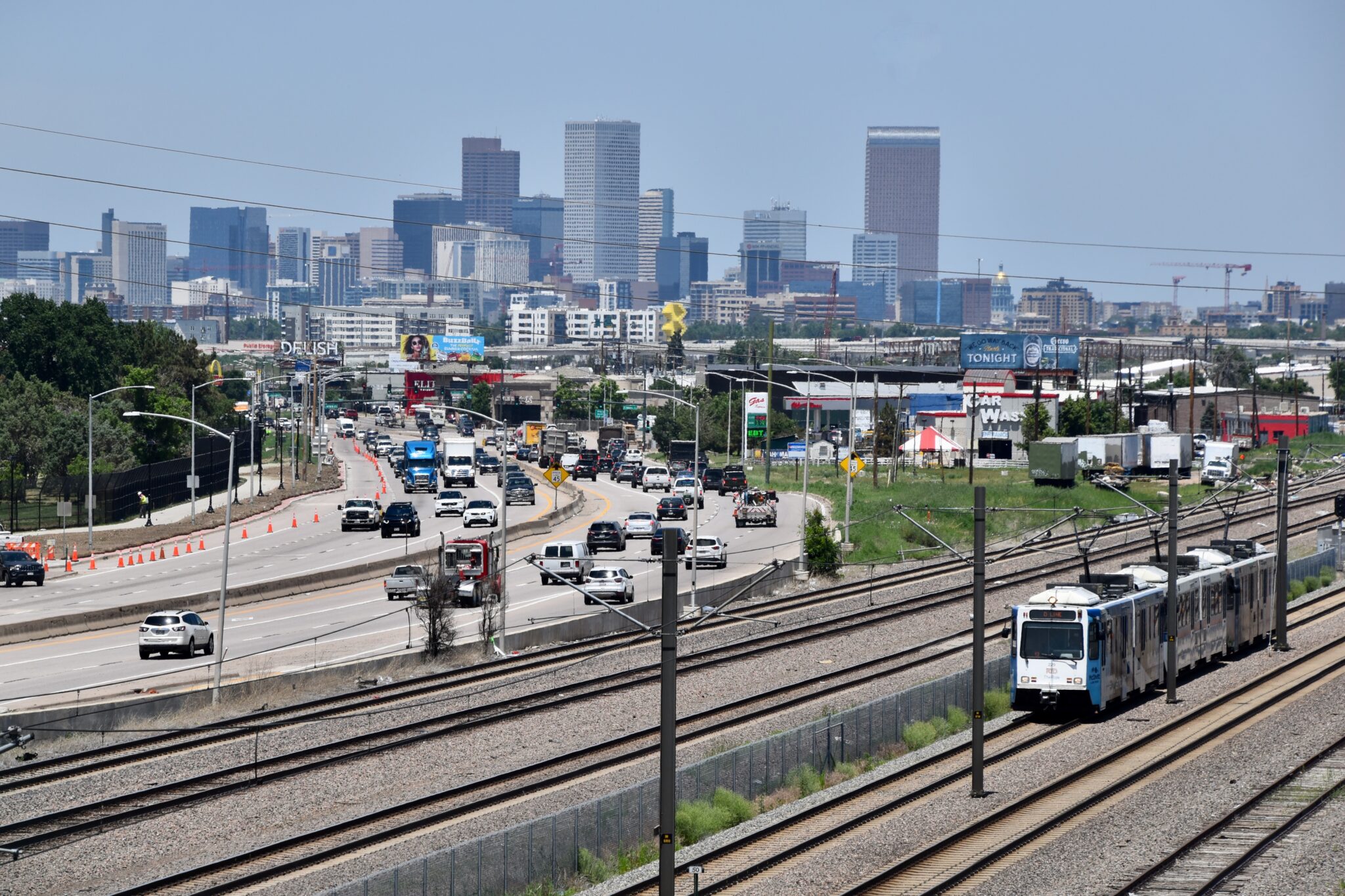
RTD spans eight counties in the Denver metro area and its service includes bus, rail, shuttles and paratransit options. There are over 65 million boardings in the system every year.
“The board must create a vision,” Maria Garcia-Berry, the chair of the accountability committee, said at a press conference Monday. “The board must demonstrate leadership. It sets priorities. It approves budgets and guides long-term strategy. When that structure isn’t working as effectively as it should, it affects everything from service levels to financial positions to accountability.”
That accountability committee was created through legislation last year.
Those who support the proposed RTD reform say concerns over ridership, reliability and workforce retention would be better addressed with a smaller, more nimble board of directors composed of both elected members and appointed experts.
Senate Bill 26-150 would reduce the board size to five elected members — from five newly drawn districts — and four appointed by the governor and confirmed by the Senate. Those appointed members would need to have collective expertise in areas like finance, land use and transportation planning, and experience working with disproportionately-impacted communities. One appointed seat would be reserved for a union representative. That new composition would take effect during the 2028 election cycle.
It would also raise the number of petition signatures required for a candidate to make the ballot from 250 to 1,000 and triple the salary for board members to $36,000.
The bill would also mandate a third-party system-wide analysis on RTD’s paratransit system, which serves riders with disabilities.
“Taxpayers continue to invest in RTD and they should be able to expect a system that delivers consistent, high-quality service,” said state Senator Matt Ball, a Denver Democrat sponsoring the bill. “RTD’s current board structure is large and fragmented, which slows decision making and makes it harder to implement full strategies.”
“It’s really hard to react to something in real time when you have to find consensus across fifteen members who represent really, really different areas in the metro region,” he said.
Ball is sponsoring the bill alongside Senator Iman Jodeh of Aurora, state Representative Meg Froelich of Englewood and rep Jamie Jackson of Aurora, all Democrats.
“We’ve also seen challenges with low turnout and limited competition in board elections, which raises real questions about whether the current structure is producing the level of accountability and expertise that we need,” Ball said.
In 2024, three of the eight seats up for election were uncontested. Another had a write-in candidate garner a few hundred votes against the candidate on the ballot.
Strengthening public transit has been a core goal of the Legislature over the past few years as it also tries to increase the state’s housing stock, particularly boosting density near bus and train lines.
“(SB-150) is the next step in making sure that we are continuing Colorado’s commitment to sustainable growth and to transit-oriented communities, and that we are putting the focus on people who depend on public transit,” Jodeh said.
Larger District Sizes
Chris Nicholson, the RTD Director for District A, said he thinks any major adjustments to the board’s makeup should be approved by voters. That is what happened in 1980 to create the current structure. The changes considered in the bill would mean that each elected board member represents over 645,000 people, versus about 220,000 today. Denver’s urban core, with the highest concentration of transit riders, could be left with one representative.
“If there’s going to be a significant change in the system that we are looking at, then there’s every reason to say that this needs to go to the voters,” he told Colorado Newsline. “It’s a question of ‘Does this fundamentally shift the dynamic in terms of who is running this agency and who has a say in this agency?’”
He also worries about how an appointed member would be responsive to the constituents within RTD and the amount of power a governor — and the Denver Regional Council of Governments, which would provide nominating lists for two seats — would have in those appointment decisions.
“The question is not the size of the board,” he said. “The question is how much power are you giving to unelected officials who are not necessarily representative of the interests of just the voters in this district.”
A 2024 bill originally included a smaller RTD board, but that was amended out early in the legislative process after opposition from transit advocates and members of Denver City Council. The bill ultimately failed in the Senate.
The bill was assigned to the Senate Transportation and Energy Committee. It will need to pass both chambers before the end of session on May 13.
This story was originally published by Colorado Newsline. Colorado Newsline is part of States Newsroom, a nonprofit news network supported by grants and a coalition of donors as a 501c(3) public charity.