
Bennito L. Kelty

Audio By Carbonatix
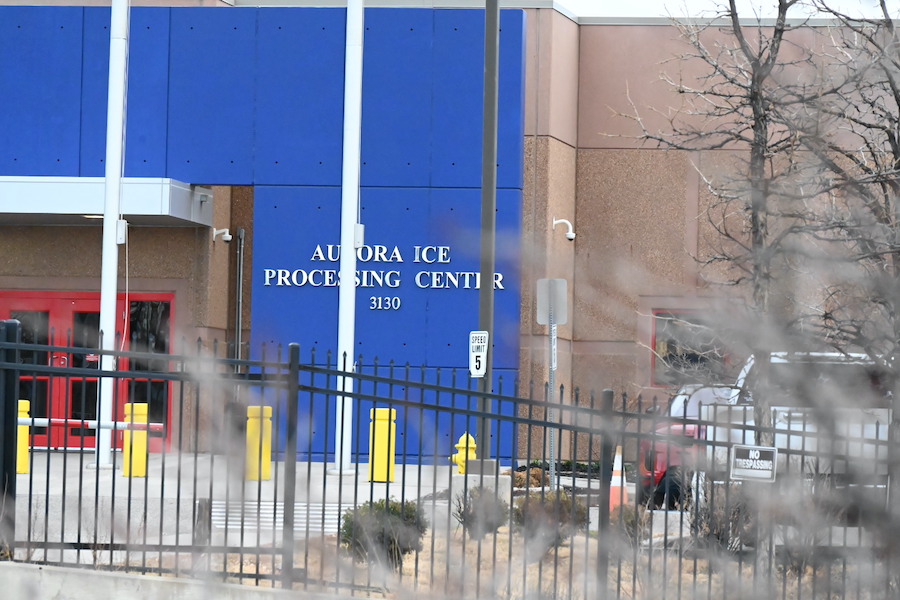
The GEO Group has to renew its contract to operate a facility in Aurora that Immigration and Customs Enforcement is using to detain hundreds of people facing deportation. But as ICE looks to expand its reach in Colorado, local activists and politicians see the contract extension as an opportunity to shut the Aurora complex down and nix plans for a new detention center in Hudson, Colorado.
“It’s not too late,” said Jennifer Piper, an activist with the American Friends Service Committee, during a virtual press conference on Monday. “Coloradans don’t want these facilities, and we’ve been clear about that.”
Piper and the AFSC are part of the Shut Down GEO Campaign, a coalition calling for the Aurora ICE facility to shut down. The activist-led campaign recently released a report on conditions inside the ICE detention center in Aurora, which is currently the only active facility for ICE detainees in Colorado. The report was based on interviews and written testimony from 31 immigrants who were held inside in 2025.
According to the 31 interviews, many detainees were underfed and sick, with estimates of 1,100 people staying there each night
The report was published the same day that the Department of Homeland Security (DHS), ICE’s parent agency, lost a lawsuit from Colorado Congressmembers seeking to keep Congressional oversight in place at the Aurora facility and similar locations. Some members of Congress, including Colorado House Representative Brittany Pettersen, are also demanding that President Donald Trump reveal more information about the planned ICE facility in Hudson.
An estimated 70,000 people are in ICE detention right now, and Homeland Security touts that more than a half-million people have been deported since Trump returned to office in January 2025. The facility in Hudson, expected to be called the Big Horn Detention Center, was revealed in August along with details to increase ICE’s nationwide detention capacity to 100,0000.
The Trump administration hasn’t shown any willingness to backpedal on mass deportation plans so far, but activists and Democratic members of Congress aren’t willing to let up the pressure, either.
Conditions Inside of Aurora ICE Facility
On Monday, March 2, activists from the Shut Down Geo Campaign released their latest report on conditions inside the Aurora ICE facility. The report was based on the experiences of 31 detainees recorded between September 24, 2025, and February 14 of this year.
The Shut Down GEO Aurora Campaign consists of four different groups: the Aurora Unidos Community Service Organization, the American Friends Service Committee, Housekeys Action Network Denver, and Casa de Paz, whose founder, Andrea Loya, joined Senator Michael Bennet as his guest for the State of the Union on February 24.
According to the campaign’s report, an average of more than 1,100 people per night were detained at the Aurora ICE facility in 2025. Loya said the facility is “overcrowded,” while a detainee who worked as a cook inside the facility said “they were definitely making more than 1,600 meals” in a day in December. According to Colorado Congressman Jason Crow, the facility held between 300 to 400 people a night before Trump’s second term.
Detainees reported being given the wrong medication or medical staff outright ignoring them. One person complained that the GEO Group staff neglected to replace their eyeglasses, and nearly a quarter of former inmates said they had contracted a “new diagnosis” or an “unidentified illness” during their stays. Some people caught the flu, while others said they suffered from “uncontrollable vomiting” and gastric ulcers.
Undocumented immigrant and local activist Jeanette Vizguerra, known for avoiding ICE detention by taking sanctuary in a Denver church nearly a decade ago, was arrested by ICE last March. She was released in December after nine months in detention, and has attended protests and press conferences to talk about her experiences inside. In January, shortly after being let out, she told Westword that an undiagnosed illness was spreading in the facility and that she was sick upon release.
According to the report, detainees reported anxiety, depression and suicidal tendencies, with one elderly detainee admitting that he tried to take his own life while inside.
Bennito L. Kelty
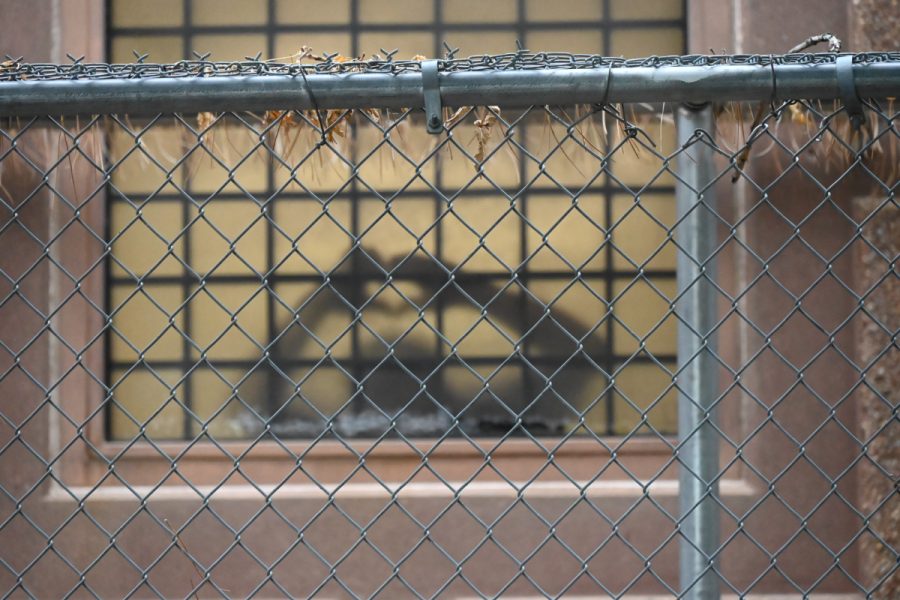
Aurora detainees said they were given “cold, spoiled and stale food” that made some of them ill. The most common foods were “beans, bread, Cheetos, ground beef, hot dogs, oatmeal and canned peas,” according to the report, and the only fresh produce received was a “small lunchbox-size apple, baby carrots and one to two pieces of lettuce.”
“They’re often at near-starving conditions,” Piper said. “Everyone who prepares food is a detainee inside the ICE facility. There are no outside vendors who prepare food.”
Other former detainees noted that inquiring about dietary restrictions required an application process, and some said they had to submit it twice.
The report also revealed prices of the food sold at the commissary inside the Aurora ICE facility: A pack of ramen noodles is $3, twelve ounces of sugar is almost $5, instant rice is $14 and a can of chicken breast is $17.
Detainees also said that they were denied visits from their family for “holes in their jeans or open-toed shoes” or due to “protests as far as the Capitol.”
Labor Inside the ICE Facility
Although detainees at the Aurora ICE facility are in ICE custody, the staff they see inside work for the GEO Group, the billion-dollar private prison company. The GEO Group runs all the programs and transportation, hires the guards and custodians, and even designed and built the facility.
In October 2014, Mexican immigrant Alejandro Menocal and other former detainees at the Aurora facility filed a lawsuit against the GEO Group for its dollar-a-day program, which had been the target of lawsuits in other states as well. The program paid detainees a dollar for tasks like cleaning and cooking, but Menocal said that the GEO Group threatened them with solitary confinement if they didn’t participate.
On February 25, the U.S. Supreme Court ruled in favor of Menocal, nearly a year after it took up the case. Attorney David Seligman, who represented Menocal’s side and is now running for Colorado Attorney General, called it “a massive victory” in “what may be the largest human trafficking class action in United States history.”
“A lot of politicians are out there talking about holding ICE accountable,” Seligman wrote. “But this is what it actually looks like — years of fighting.
According to Vizguerra, detainees during her stay felt forced to work to afford food from the commissary because they’re underfed, or to make phone calls to family.
“They force you to take that work to have seven dollars to make a call,” she said. “The people feel forced to work in all the installations, work in the kitchen, work in the laundry room for just a dollar.”
Colorado V. Homeland Security
Members of Aurora’s Democratic Congressional Delegation have been trading blows with the Trump administration over the right to visit the ICE detention facility in their district without advanced notice.
Congressmembers Jason Crow and Joe Neguse sued the Trump administration last July after they were denied access to the ICE facility. Crow spearheaded a law in 2019 that allows congressmembers to visit ICE detention centers and other federal facilities with just two days’s notice.
Homeland Security, ICE’s parent agency, was ordered by a federal judge in December to comply with the law, but DHS Secretary Kristi Noem “secretly reinstated” a policy requiring more than two days’ notice, according to Neguse’s office.
On February 2, Neguse’s side again won a motion to force ICE to allow visits on short notice, and reported touring the ICE facility shortly after, though the congressman didn’t share details of what they saw.
A federal judge ruled on Monday, March 2, that DHS must continue admitting members of Congress into federal facilities, closing the case unless the Trump administration appeals it.
In a forty-page ruling, U.S. District Judge Jia Cobb wrote that DHS failed to prove that visits by Congress on short notice used up resources and were “circus-like publicity stunts” by politicians, which DHS had argued it was trying to prevent by asking for a week’s notice instead.
New Detainment Center Opening Soon?
On February 24, members of Colorado’s Democratic Congressional delegation, including Representative Brittany Pettersen and Senators Michael Bennet and John Hickenlooper, sent DHS a letter demanding more information on the Big Horn Facility planned in Hudson.
“ICE is out of control,” Hickenlooper said in a statement shortly after the letter was sent. “The proposal to open another ICE detention center in Colorado, this one in Hudson, takes a bad situation and makes it worse.”
Among other questions, Colorado’s Democratic congressmembers want to know if the GEO Group received a $40 million contract in 2025 to run the Big Horn facility before it opens, as well as how many beds the facility will have and what standards and conditions will be for detainees there.
On Monday, the Shut Down GEO Campaign reported that activity is taking place at the Hudson facility, although no one has been reportedly detained there yet. The GEO Group used to hold Alaskan state prisoners there from 2009 to 2014, when it was a 1,200-bed facility, but it has been dormant since.

Bennito L. Kelty
Loya said that on February 10, she and Casa de Paz staff saw deliveries being made to the center. She believes ICE will start using the new facility once it can no longer deal with overcrowding at the Aurora facility.
“You don’t drop off supplies unless you’re really getting ready to open,” Loya said. “Our assumption is that not only are they getting ready to open that up, but the real pressure behind really opening this facility up is how crowded the Aurora facility is.”
Piper called on residents in Hudson to oppose the new facility. Local officials have welcomed the jobs that will come with reopening the facility, but Piper said “the jobs they provide are horrific” inside the ICE facility.
“If you live in or near Hudson, your voice is desperately needed on this,” she pleaded. “We want to see these facilities turn into something that provides dignified work in the end.”