
Courtesy of the Peabody Mansion

Audio By Carbonatix
Keep Westword Free
We’re aiming to raise $20,000 by April 26. Your support ensures Westword can continue watching out for you and our community. No paywall. Always accessible. Daily online and weekly in print.
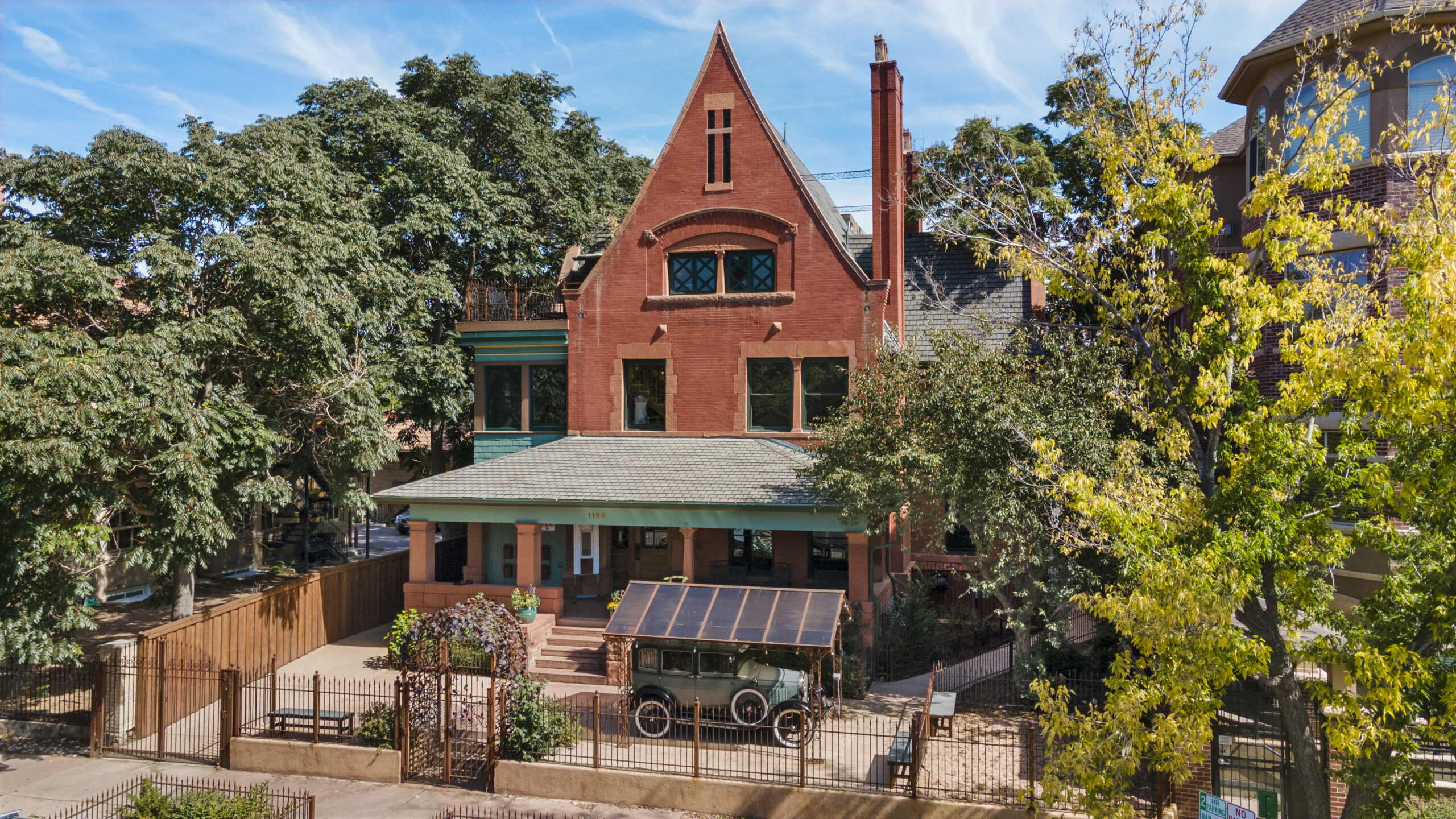
Unless you’re a regular on Capitol Hill ghost tours, you may not pay much attention to the three-story red sandstone mansion at 1128 Grant Street. But the house is hard to forget once you notice the pristine 1929 Ford Model A in the front yard, parked under its own porte-cochère, or see the ornate, arched arbor entwined with a hand-forged grapevine that’s adorned with more than 2,000 individually formed steel leaves.
The house, known as the Peabody-Whitehead Mansion, was built in 1889 and designed by Frank Edbrooke, the architect behind Denver’s Brown Palace Hotel. It’s also reputed to be one of the most haunted buildings in Colorado — but after a thirteen-year, $3 million-plus renovation, the property is ready to welcome living residents who will sign a lease, who ain’t ‘fraid of no ghost.
Embracing Ghosts
The mansion is the passion project of real estate developer and self-described “art and architect school dropout” Ira Wertenteil and his wife, interior designer Cindy Powders. The couple owns a number of historic properties throughout the city, purchasing the Peabody-Whitehead on Halloween in 2013.
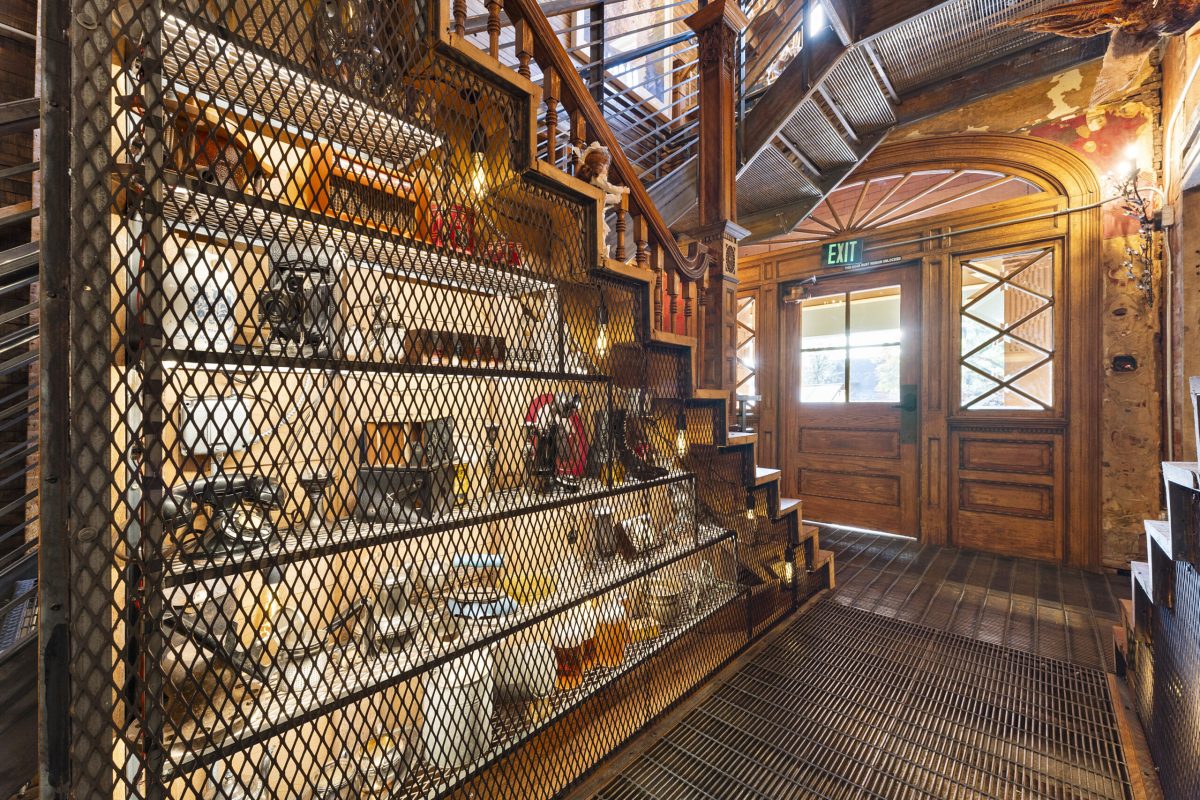
Wertenteil and Powers have spent the dozen years renovating it into eight luxurious and spacious apartments, without losing the haunted charm — because no lovingly renovated luxury apartment building would be complete without a collection of vintage prosthetic limbs. The decor is a nod to surgeon Dr. William Riddick Whitehead, the mansion’s first owner, who amputated countless appendages while serving in the Confederate and Russian armies. (James H. Peabody, the mansion’s second owner and thirteenth and fifteenth governor of Colorado, earned his own hauntings by brutally crushing miners’ efforts to secure better working conditions.)
“[Whitehead] said that the souls of these people whose arms and legs he amputated haunted him to the day he died,” Wertenteil says. “They followed him back here and haunted him. So I started buying these things. I wasn’t just trying to creep people out. I wanted to get in touch with the guts, the history of the story…the stories that made the building.”
Courtesy of the Peabody Mansion
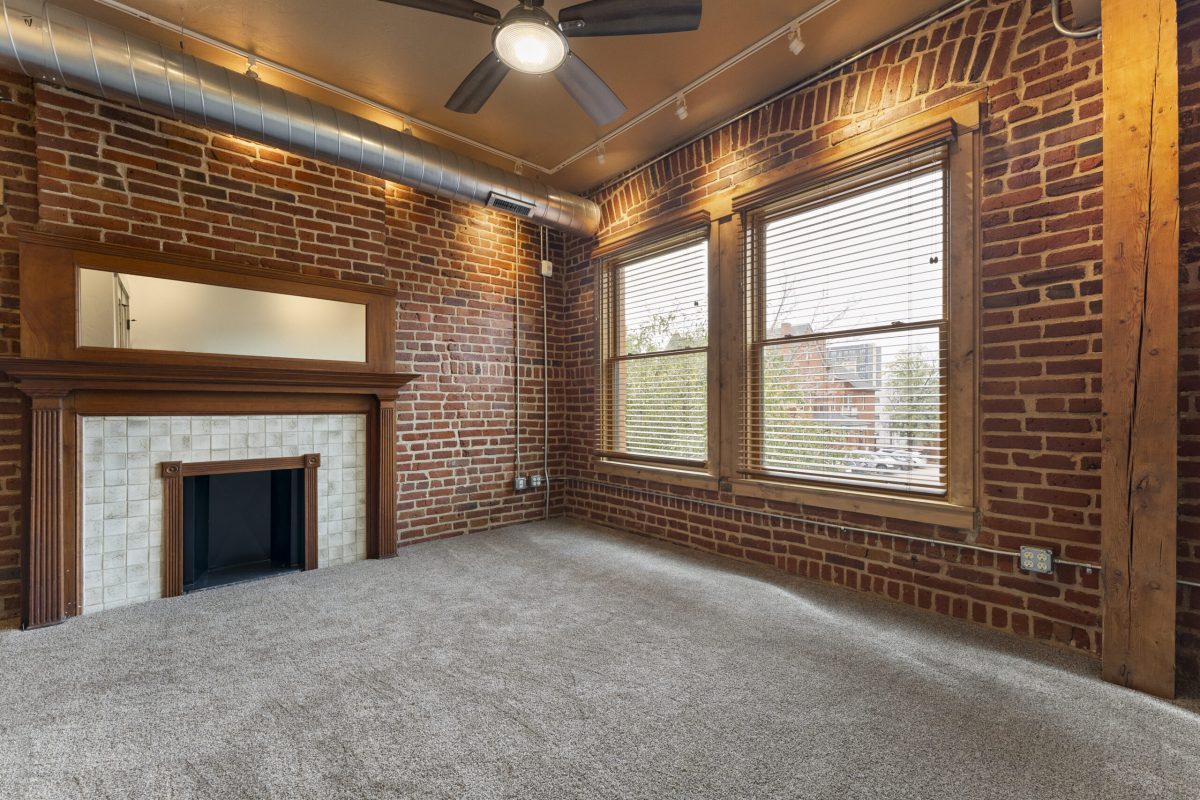
On top of historic decor, the new apartments are full of high-end features. Bathtubs, hardwood floors, exposed brick walls, gleaming stainless steel kitchens with Hansgrohe faucets, high-end cabinetry and in-unit washers and dryers are only the beginning.
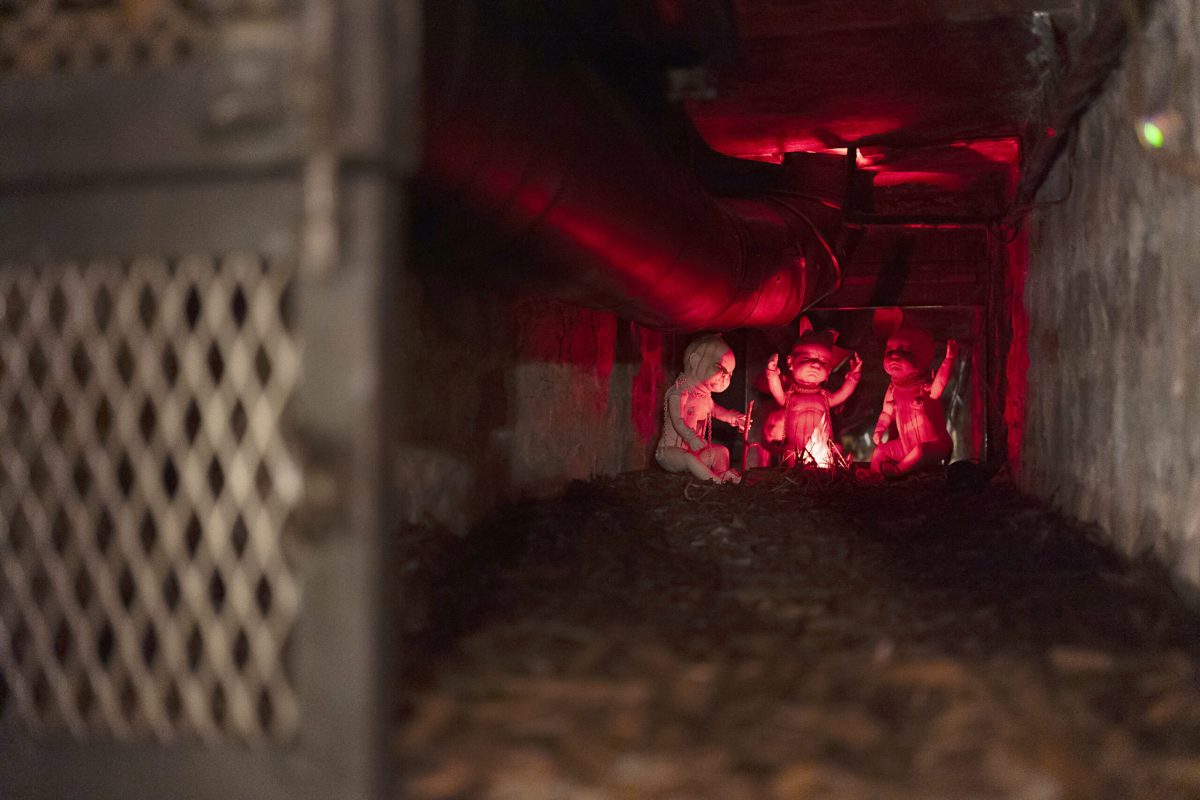
Perhaps the new tenants would appreciate an artfully deconstructed stairway, retrofitted with a fire escape to expose the mansion’s three stories? Done. How about a basement cubbyhole enlivened with demonic dolls gathered around a faux fire? Child’s play.
“This is a labor of love,” says Wertenteil, who retired from trading stocks in 1996 and began buying real estate. “Every building is like this. It all started with a theme. Everything is driven by this kind of passion that Cindy and I have had since we met each other. Just having these old buildings as a canvas, creating the theme of the building. It’s a luxury, a pleasure, but it’s also giving something back.”
You Can’t Rush Perfection
The “guts” of the mansion and its history are evident throughout, exposed by a clever and unorthodox renovation that shows ductwork, support beams, old electrical wiring and the ins and outs of its nineteenth-century construction. Wertenteil recounts a childhood spent disassembling toys and telephones, and an early immersion in New York City’s arts and architecture, courtesy of a mother who began his aesthetic education when he was still in a stroller.
“I loved to take things apart,” he recalls. “I walked in here and said, ‘I gotta tear the staircase apart.’ Because I want you to walk through the staircase as if you’re literally walking into the history of the building. One of my biggest influences was [artist and ‘anarchitect’] Gordon Matta-Clark. He literally cut buildings open.”
Courtesy of the Peabody Mansion
Construction dragged out more than a decade, largely because Wertenteil is a perfectionist, a label he doesn’t deny. But the couple performed much of the labor by themselves and with three master carpenters and welders, taking time to consider each design element carefully. There were also unsurprising intervals wrestling with construction permits and the city’s Landmark Preservation Commission, and the genuine pleasure of taking time to not rush the restoration.
“There’s a lot more thought behind a lot of stuff, a lot of details,” Wertenteil says. “A lot more discussion and a lot more delicate fabrication than anybody notices. Even the handrails for the staircases took three months, for me and [master fabricator Dave Walker] made every one of them by hand.”
A 2018 diagnosis of kidney cancer — the first of three types Wertenteil has received treatment for — and a fire at the couple’s Routt County ranch caused further delays, too. Such major life events also added a new level of significance to the Peabody-Whitehead project, he adds.
“When we finish a project like this — and this is the biggest we’ve done — when you finish it and rent it out, it’s over. We can’t go in and show it to our friends anymore, hang out and open up a beer and say how great it came out,” Wertenteil explains. “After I got sick, we kind of decided as a company that we’re not going to do any more of these. And it became harder to let [the mansion] go, to say goodbye.”
Leasing Information
The Peabody-Whitehead apartments welcomed their first non-spectral tenants on April 1. Wertenteil plans to lease the remaining seven two-and-three-bedroom apartments, which range from 800 to 1,300 square feet and include one off-street parking space, for between $3,200 to $3,800 plus utilities. However, he may reserve one unit for private events, receptions, readings and perhaps the occasional séance.
Courtesy of the Peabody Mansion
For adult beverages, new denizens may wish to get drinks a block away at the Patterson Inn’s 12 Spirits Tavern (a property that’s been described as the second-most haunted hotel in Colorado) or sign up for a cannabis-friendly ghost tour in the neighborhood.