
History Colorado

Audio By Carbonatix
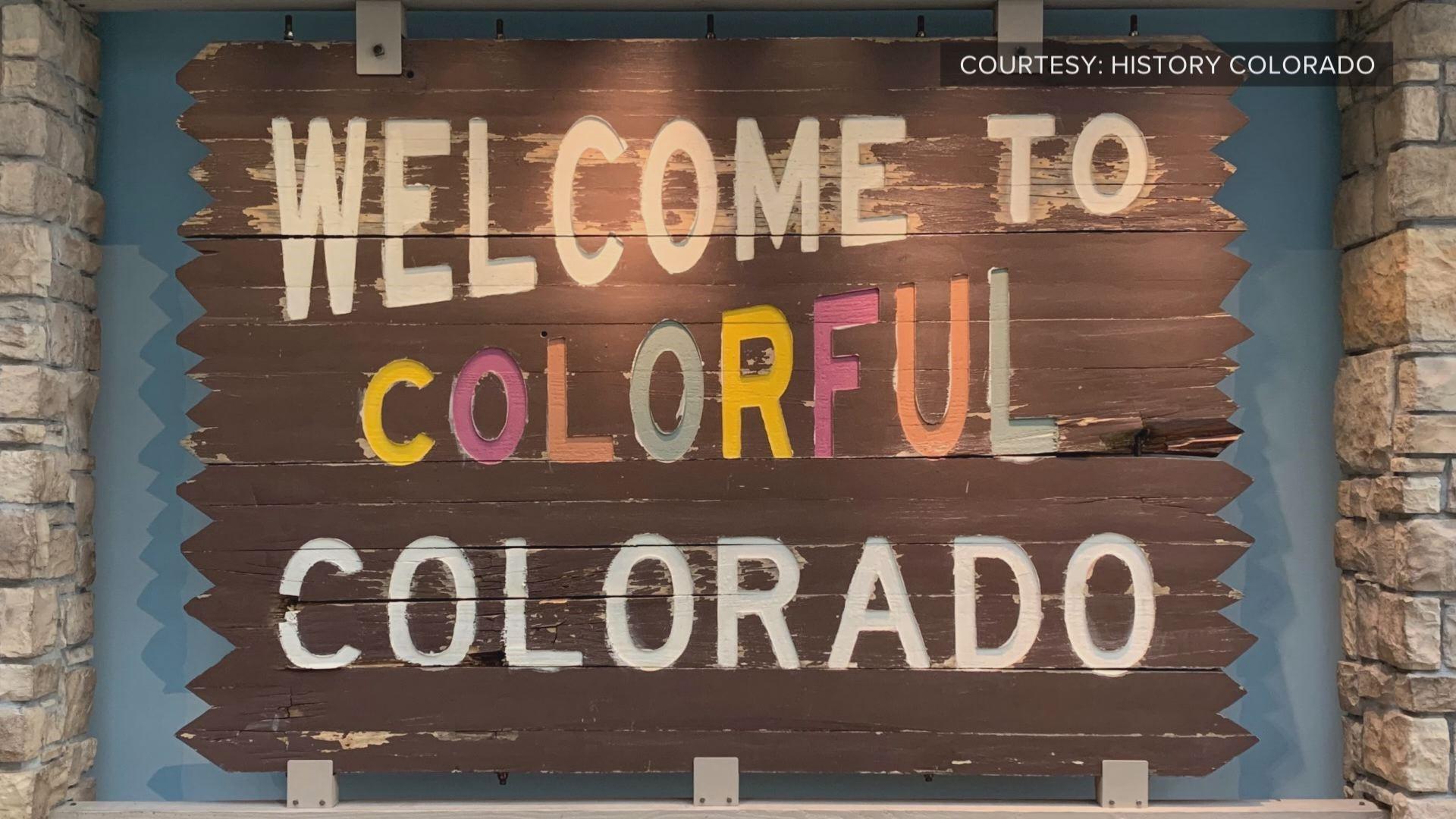
Welcome to Colorado, the state whose “Welcome to Colorful Colorado” sign has a colorful history — even if the sign itself is an unironic brown and white.
The gold-inspired Rush to the Rockies was almost a century old when Colorado boosters decided to take advantage of the booming post-WWII automobile tourism industry by putting welcome signs at the borders of the Centennial State. Despite this state’s glittering past, the first sign set up on Raton Pass in 1950 was a basic wooden marker painted brown, with the chiseled slogan in white.
That simple symbol soon became almost as iconic as Colorado’s peaks, with travelers stopping to snap pictures by the signs as they entered the state. But still, there were attempts to mess with success.
One came in the early ’90s, when the state held a contest to devise a more modern design. The winner? A garish purple and orange silhouette of those peaks on a metal sign with the slogan: “Welcome to Colorado, mountains and much more.”
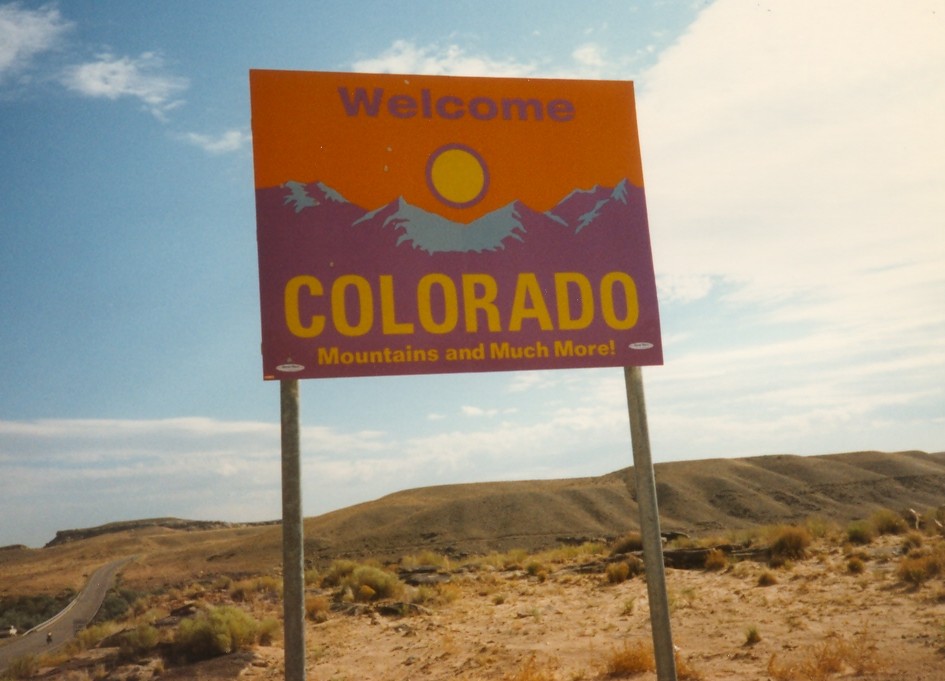
The switch to orange and purple signs was short lived, and we can see why.
Colorado residents did not welcome the new look, and the original “Colorful Colorado” signs soon returned.
A decade later, Brian Vogt —who served in three cabinet positions for Governor Bill Owens before becoming the beloved head of the Denver Botanic Gardens, a post he held from 2007 until he passed away last year — attempted another image update. As head of the state Office of Economic Development and International Trade, which oversees the Colorado Tourism Office, he went for a more corporate, streamlined look, in keeping with the Advance Colorado Center he’d launched.
“He was doing a rebranding of the state,” Owens recalls. “He started with the portal and logos. One was getting rid of that old ‘Colorful Colorado’ sign from back in the ’50s. We took down the signs and replaced them. There was immediate blowback, an uproar.”
The uproar was so loud that Owens could not ignore it. And when the governor gave his annual State of the State address to the Colorado Legislature in January 2006, “We had the old sign brought out under a carpet,” he says. “I unveiled it and said, ‘We’re going back.’ Everyone laughed.”
Everyone but Vogt, perhaps, but lawmakers rewarded Owens’ move by upping the state tourism budget. And Vogt got his own reward when Owens presented him with a Norty Award, a plaque given to the member of the Owens cabinet who had “messed up the most that month,” Owens explains.
“Boy, did we throw Brian under a bus.” But not as badly as Tom Norton, who as head of the Colorado Department of Transportation won four of his namesake awards (once when an unadvertised highway construction project stalled then-Vice President Dick Cheney’s motorcade for two hours).
Today, CDOT continues to create the “Welcome to Colorful Colorado” signs in its sign shop, with forty of them set up across state entry points. They’re made from locally sourced wood, and last up to a decade unless they’re vandalized, stolen or hit by distracted drivers pulling over for a photo . To avoid that, the state has set up smaller, selfie-friendly replicas at its welcome centers.
But the most popular version might be the sign in the atrium of the History Colorado Center, pulled from Western Colorado after locals took to coloring between the lines.
For the record: Colorado, named for the Spanish word “red,” has everything from an official tartan to an official fish, but “Welcome to Colorful Colorado” is not the state’s recognized slogan. The official motto is “Nil Sine Numine,” Latin for “Nothing without Providence or Deity.”
Or without backlash if you try to change tradition.