Bennito L. Kelty

Audio By Carbonatix
Today is Local News Day
A national day of action to support and celebrate the trusted local journalism that strengthens communities. If you believe local news matters — this is the day to show your support. Make a contribution today to help keep our reporting free and accessible to all.
Colorado has grounds to call itself the home of Zyn.
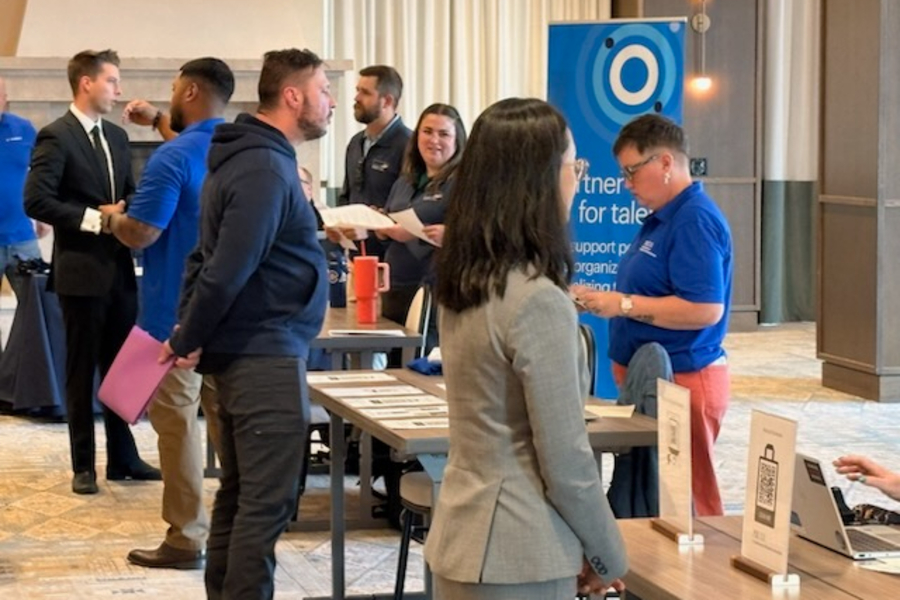
Not only is the Centennial State where Zyn was first sold, but the first and only factory dedicated solely to making Zyn is now up and running in Aurora. Philip Morris International (PMI), the tobacco giant that owns Zyn and its inventor, Swedish Match, is now hiring more than 500 entry-level manufacturing and engineering positions, which was on full display during a job fair on Tuesday, March 17.
“There is something a little poetic about coming back to where we started, going back to Colorado, where this whole journey began,” Dr. Brian Erkkila, PMI’s head of scientific engagement, tells Westword. “Away from the more sentimental reasons, Aurora and the Denver metropolitan area, there’s a lot of innovation there, and we want to be among that innovation. It kind of fires us up.”
To that point, PMI hosted the Zyn job fair at the Benson Hotel in the heart of the Fitzsimons Innovation Community, a health and bioscience hub, as one of Aurora’s most highly anticipated economic engines quietly revs up. Aurora has “a great workforce,” Erkkila says. “You have a lot of educated people, you have a lot of people who have done manufacturing before. We’re excited to grow with Aurora.”
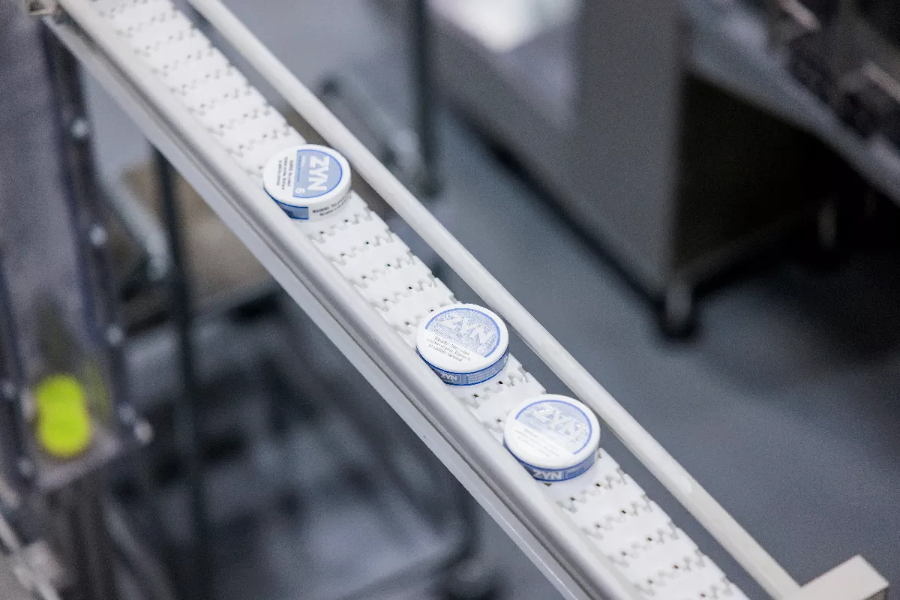
In July 2024, PMI announced that it would invest $600 million into opening a new Zyn factory in Aurora, which would eventually pump $550 million into the Colorado economy per year, according to the company’s projections. Construction began later in 2024 south of the Denver International Airport, near East 48th Avenue and Harvest Road, which was slated to finish this year. The factory’s brand-new, German-made automated machines began rolling out Aurora Zyn pouches last September, but parts of the factory are still under construction.
At the Tuesday job fair, PMI recruiters were mostly looking for people to help maintain and repair those machines that assemble and package Zyn pouches.
Zyn pouches and their puck-shaped containers are ubiquitous nowadays. The brand is the fastest-growing tobacco product in the United States in terms of demand, according to PMI. Compared to the 13 million Zyn pucks sold in 2018, PMI sold more than 800 million cans in 2025. Erkkila describes Zyn as a “tobacco leaf-free nicotine pouch,” but while the ingredients are held to a high standard of quality control, “there is no safe tobacco product,” he admits.
“It’s a plant-based fiber pouch, and inside that we have pharmaceutical-grade nicotine that is, in fact, derived from tobacco,” Erkkila says. “As well as other ingredients — flavorings, bufferings, that sort of thing — that are food-safe ingredients. They’re ingredients you would find in a grocery store. “
According to researchers from the Harvard School of Public Health, Zyn pouches are highly addictive and can lead to an increased risk of heart disease. The American Dental Association warns that Zyn’s long-term effects are mostly unknown; however, nicotine generally can increase heart rates and blood pressure in adults and slow brain development in teens.
Courtesy of Novitas Communications
Dominic Holleman II, an Aurora resident, didn’t know what Zyn was until he came to the job fair on Tuesday. He found out about the job fair through a post on Indeed, he said, as he’s had a hard time finding manufacturing or maintenance jobs around Denver.
“I see [Zyn] in the stores, but it’s not my cup of tea,” Holleman said. “But they’re up-and-coming. The factory is new. It looks like business is about to start booming out here.”
Eddie Lopez, an Aurora native living in Littleton, attended the job fair with a group called Gold Standard, which helps recovering addicts and recently released convicts. He had to go through an Arapahoe County diversion program, and while he was able to avoid prison, Lopez has a criminal record that makes it hard for him to find a job in his hometown.
“It be hard to find a job out here, especially if your background is all messed up. I hope I get hired for any [openings], because I really need it,” Lopez said. “I miss being over here. …I was born in Denver, but I was raised in Aurora.”
The job fair went from afternoon to night, and about a dozen people at a time were in the Benson Hotel convention room, showing their resumes to recruiters, talking about their factory and assembly line experience and filing out paperwork. Applicants learned their shifts could last upwards of twelve hours as the facility hopes to keep the factory running 24/7, recruiters said.
How the West Was Won: Zyn in Colorado
Zyn is inspired by the Swedish tradition of snus (pronounced ‘snoo-s’), where a tobacco leaf is tucked behind the lip to absorb nicotine. Snus and variations, like moist snuff or dip, were banned by the European Union in 1992, but when Sweden joined the EU in 1995, the country’s love of snus was so strong that it was granted an exemption.
“It’s very common to be out and see at a pub or restaurant people using Swedish snus,” says Erkkila. “They call it ‘the Swedish experience.'”
In 2001, the Stockholm-based company Swedish Match, which used to make most of the world’s matches after World War II, started publishing a set of manufacturing standards to minimize harmful, cancer-causing ingredients in snus that were later used by the rest of the country’s tobacco industry. Erkkila says that led to a push for increasingly refined and concentrated forms of nicotine.
“If you’re going from something like Swedish snus to Zyn, you are still being able to deliver that nicotine without the tobacco leaf, and the level of chemicals are even lower,” Erkkila says. “A product like Zyn is the next evolution of that product, taking tobacco leaf and actually extracting nicotine from it.”
The company Niconovum first sold nicotine pouches in Sweden in 2008, but in 2014, Swedish Match invented its own brand, Zyn, based on a formula that concentrated the powder to 99 percent nicotine. According to a 2025 article by the New Yorker, Zyn was intended to appeal to women in particular. However, in Sweden, nicotine pouches weren’t overtaking the sale of traditional tobacco-leaf snus, and the EU voted that year to reaffirm its oral tobacco ban (which is still in place today). Swedish Match instead looked for a small market in the U.S., where it was already selling snus, dip and chewing tobacco, and picked Colorado to launch Zyn.
“When we launched, Colorado was our first state, and we started small because it was a brand-new format. People had never seen nicotine, an oral nicotine product that didn’t have tobacco leaf in it,” says Erkkila, who worked for Swedish Match at the time. “We were just kind of testing the market, and Colorado was a good place for that. And it did well.”
Colorado’s enjoyment of Zyn led Swedish Match to expand its sale of the product to other parts of the western United States, and then nationwide by 2016. Swedish Match began manufacturing Zyn at a factory in Owensboro, Kentucky, which was already producing its other smokeless tobacco products.
Bennito L. Kelty
In December 2022, Philip Morris International, which grew out of the company that invented Marlboro cigarettes, bought Swedish Match and all of its products, including Zyn, for $16 billion as it begin to shift away from cigarettes and towards a “smoke-free journey,” the company said at the time. Since then, Zyn has become PMI’s top-selling product in the United States. Demand for Zyn in the United States has been growing rapidly, thanks in part to publicity that Swedish Match and PMI have publicly resisted.
PMI is opposed to content produced by “Zynfluencers,” who are often young TikTook users touting the pouch, because it promotes underage usage, Erkkila says, noting that the trend “isn’t my favorite.” The company also turns down offers from celebrities and athletes to promote Zyn though plenty do it anyways.
“We just don’t think that’s the way we want to run our business,” Erkkila says. “We are very, very dedicated to under 21 prevention…this is content [by Zynfluencers] that we do not put out ourselves and that we would not want to see.”
But PMI can’t ignore Zyn’s overall popularity and relentlessly booming demand. It needs a factory that, alongside the Owensboro site, can produce more than a billion Zyn containers a year by 2030, when it expects smoke-free products to take over two-thirds of its growing $40 billion annual revenue.
“That’s what brought us to Aurora,” Erkkila says. “We wanted to have a facility that could expand our ability to make the product, and we could build a state-of-the-art nicotine pouch factory, which is something that we haven’t had in the United States before. It’s been pouches that we make in a factory where we also make smokeless tobacco. So this is the first all-pouch, state-of-the-art facility.”
According to PMI, its smoke-free products already bring in more than $17 billion a year, driven largely by Zyn. The Owenboro factory is expected to produce more than 900 million Zyn pucks annually now that it completed a $230 million expansion of the facility in late 2025. Aurora is expected to produce more Zyn than Owenboro, but PMI has yet to say how exactly many pucks or pouches the factory is expected to make on its own.
“This state-of-the-art factory is really going to help us expand even more and get better at making the product than we are today,” Erkkila says. “This is going to be a smoke-free country, and Aurora is going to be part of that.”