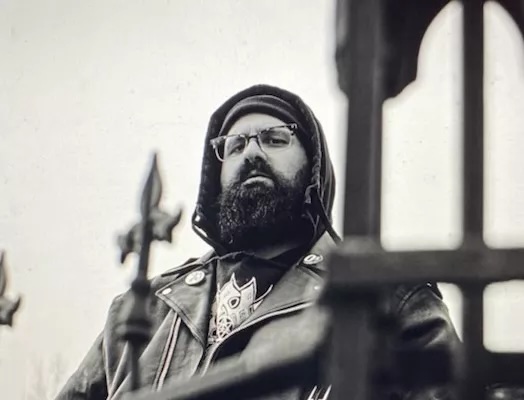
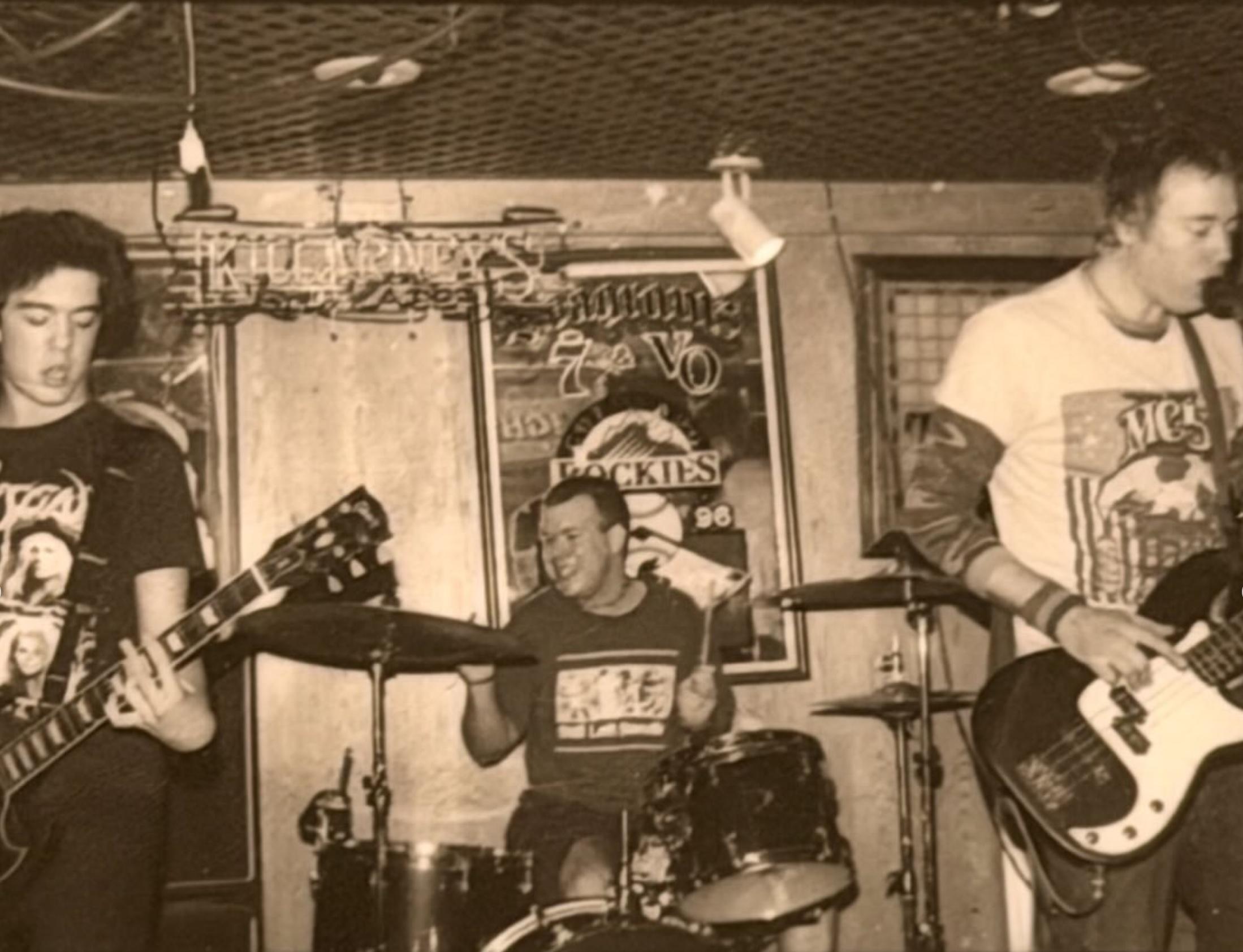
Courtesy Call Sign Cobra

Audio By Carbonatix
The story of Call Sign Cobra is one written in blood, sweat and spit.
The unhinged party rockers became known as the undisputed mayhem merchants of early-2000s Denver, and while blaring loudly for only a few furious years, they certainly left an impression, and maybe a few scars, in their wake.
Now, twenty years since its final show in March 2006, Call Sign Cobra is getting back together for a one-night only reunion show on Friday, January 30, at its old stomping grounds, the hi-dive. Friends of Cesar Romero, El Welk and Total Cult are also on the bill.
The recent resurrection is a result of the longtime friends and former bandmates realizing they really only get together for somber occasions.
“When do we all see each other not at a funeral?” asks bassist Mike Howard.
“Unfortunately, we’ve had a couple of memorial services that we’ve gone to the last couple of years, and it’s the only time we’d all see each other,” says trumpeter Mike Taylor. “We thought it’d be kind of fun to not see each other at a memorial and have a much better reason to hang out and get together and dust of these songs. And it’s been nothing but fun.”
Zach Brooks, the self-destructive vocalist-guitarist who’s been living in Portland since 2005, isn’t super sentimental, but agreed the time felt right for a Call Sign callback.
“There’s a mix of seeing this positive thing that brought people together and an antidote to some of the negativity. I’m usually not too down for the nostalgia trip, like eyes forward musically,” he shares. “But I guess I was feeling some desire for the recent past when we weren’t descending into fascism and a bunch of my favorite people in the world were not dead.”
So far, it’s been nothing but positive.
“It’s been super fun to revisit everything, wondering how we actually sang and played that way twenty years later,” Taylor says.
“There are some high notes,” adds singer-percussionist Jenn Dewey.
But the musical muscle memory is still there.
“Practice went so well, we were going to run through everything one more time, but we were like, ‘I don’t think we need to,’” Howard says after that day’s rehearsal.
“I haven’t played the trumpet since this band, so that’s been really fun to relearn how to do it,” Taylor quips. “And just telling stories of what we were doing back then.”
And, boy, are there stories, including a gory debut, a barroom blitz in the backwaters of Oklahoma and soiling the sacred stage carpets of the Cramps. Starting as a trio before ultimately growing into an eight-piece by the time raucous 2005 sophomore album, Call Sign Cobra II, was recorded and released, the group always rolled deep, featuring members of former Denver players Scott Baio Army, Out on Bail, Mustangs and Madras, Rabbit Fight and Pariah Caste. With a reputation for holding unsuspecting audiences hostage, Call Sign shows are now the stuff of legends.
“The beauty of the band was there was so many of us, even if there was not the best turn out at a show, we had such an entourage of the band we really just didn’t give a shit,” Taylor says. “We didn’t. That just added to the bravado of it all. It was ridiculous.”
Before being named the city’s Best Live Band in 2005 by Westword, which accurately described Call Sign as “a full-scale ninja battle on stage,” the gang made a name for itself from the jump, during its first gig at an unnamed warehouse when a lubed-up Brooks punched out a pane of glass and subsequently showered the crowd in crimson.
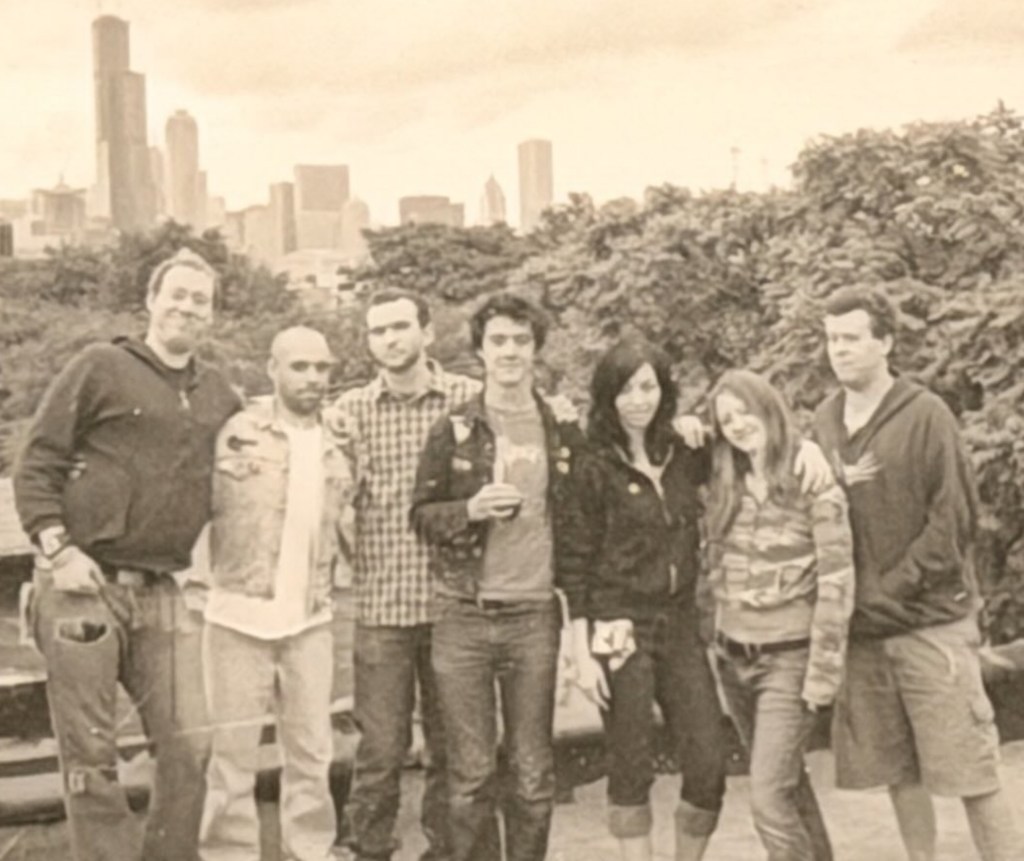
Courtesy Call Sign Cobra
“I could see my tendon,” Brooks, speaking of the incident, recounted for Westword in 2005. “At the hospital, I was, like, ‘Is that my bone?’ They said, ‘No, that’s your tendon.’ Then they asked me if I was doing any drugs, and I said, ‘No, I’ve just been drinking.’ And they said, ‘Yeah, we know.’”
Then there’s the true tale that inspired anthem “Stillwater, Oklahoma,” which chronicles a particularly antagonistic stop in the Okie college town.
“Not only did we tear up the stage, but Don [Bersell, guitarist] stole a yard chicken and swung his guitar and shattered it and all these little kids who came to the show were just covered in blood and they were like, ‘This is the most rock-and-roll thing we’ve ever seen in Stillwater.’ But that was the kind of energy we brought,” recalls Lauren Shugrue, who’s operatic vocals kick-off the track.
“The cops did come to that show,” Brooks adds, pointing to the autobiographical lyrics.
“We were pretty out of control,” drummer Chuck Coffey admits. “We basically just took the place over. The way I remember it is there was maybe thirty people there and maybe three of them were into it and the other 27 who weren’t we were just trying to really annoy them.”
Howard knew exactly what to say, striking a nerve in the home of the Oklahoma State Cowboys by hyping up the rival University of Oklahoma.
“We weren’t getting the reaction, so I was like, ‘Let’s go, Sooners.’ We definitely got their attention,” he says. “This guy when we were done playing cornered me back by the bathroom and was like, ‘Hey, man, you need to know where you’re at. You need to know what town you’re in.’ I was like, ‘I don’t give a fuck what town we’re in, man. I’m from Denver, Colorado, home of the Denver Broncos. We have a real football team.’
“But I knew I had seven other people with me if this guy started kicking my ass,” Howard continues.
Call it the type of confidence that only comes with youth, but being so bold and brash felt natural, felt right, back then. Call Sign gives credit to its hometown for instilling such a sense of fearlessness.
“We were pretty used to not fitting in at that time, and the Denver scene was so small that we called it ‘friendcore,’” Howard says. “There were ten bands and five of them were always playing a show together. We would know if it was a good show if there was as many people at the show as there was in our band.”
“Nobody was doing the party band stuff yet, so we tried to make it an event,” Taylor adds. “We didn’t give a shit if people cared or not.”
“Rock and roll was an interactive experience,” as Shugrue puts it. “It was just chaos. We just tore up every venue we were in, literally tore it up.”
“The swagger that we had, we felt invincible back then,” Dewey admits.
“We were,” Shugrue affirms. “It was a little bit of arrogance and a bunch of fake confidence.”
They laugh now about it all, while reliving the time they disregarded a pesky manager’s warning not to mess with the Cramps personal floor tapestries when opening for them at the Ogden in 2004.
“They came to us and were like, ‘Don’t mess up the carpets. Be very careful of the carpets,’” Taylor remembers. ‘So I was like, ‘Well, I’m going to empty my spit valve on my trumpet all over the carpet.’”
“I remember Zach pouring a beer on the carpet,” Howard, who had officially joined only weeks earlier at that point, adds of his first Call Sign appearance. “We went across the street to a gay bar called Charlie’s. We had a drink and did some drag queen karaoke, and I remember the people running it were like, ‘You’re going to be fabulous. You’re going to kill it, crush it,’ and built our confidence up to go over there and play the show.”
That was Call Sign. You had to be there, but at least for one more night, Call Sign plans to conjure up the mad-dog spirit of bar rock. For the reunion, Andy Wild, Nathaniel Rateliff’s sax player, as well as saxmen Trevor Morris and Travis “Tito” Sprague will also be joining Call Sign, while the second album is being reissued on vinyl by Coffey’s Snappy Little Numbers label.
“It’s been interesting trying to describe this to friends of mine who I want to come to the show who weren’t there for the original incarnation,” Shugrue says.
“It’s like classic rock played by punk kids who grew up on Rocket From the Crypt and we have a horn section and I was trained classically in opera. There’s just no way to describe it,” she concludes. “The energy that we brought twenty years ago, I hope we can bring it again. I’m pretty sure we will.”
Call Sign Cobra, with Friends of Cesar Romero, El Welk and Total Cult, 7 p.m. Friday, January 30, hi-dive, 7 South Broadway. Tickets are $15.