
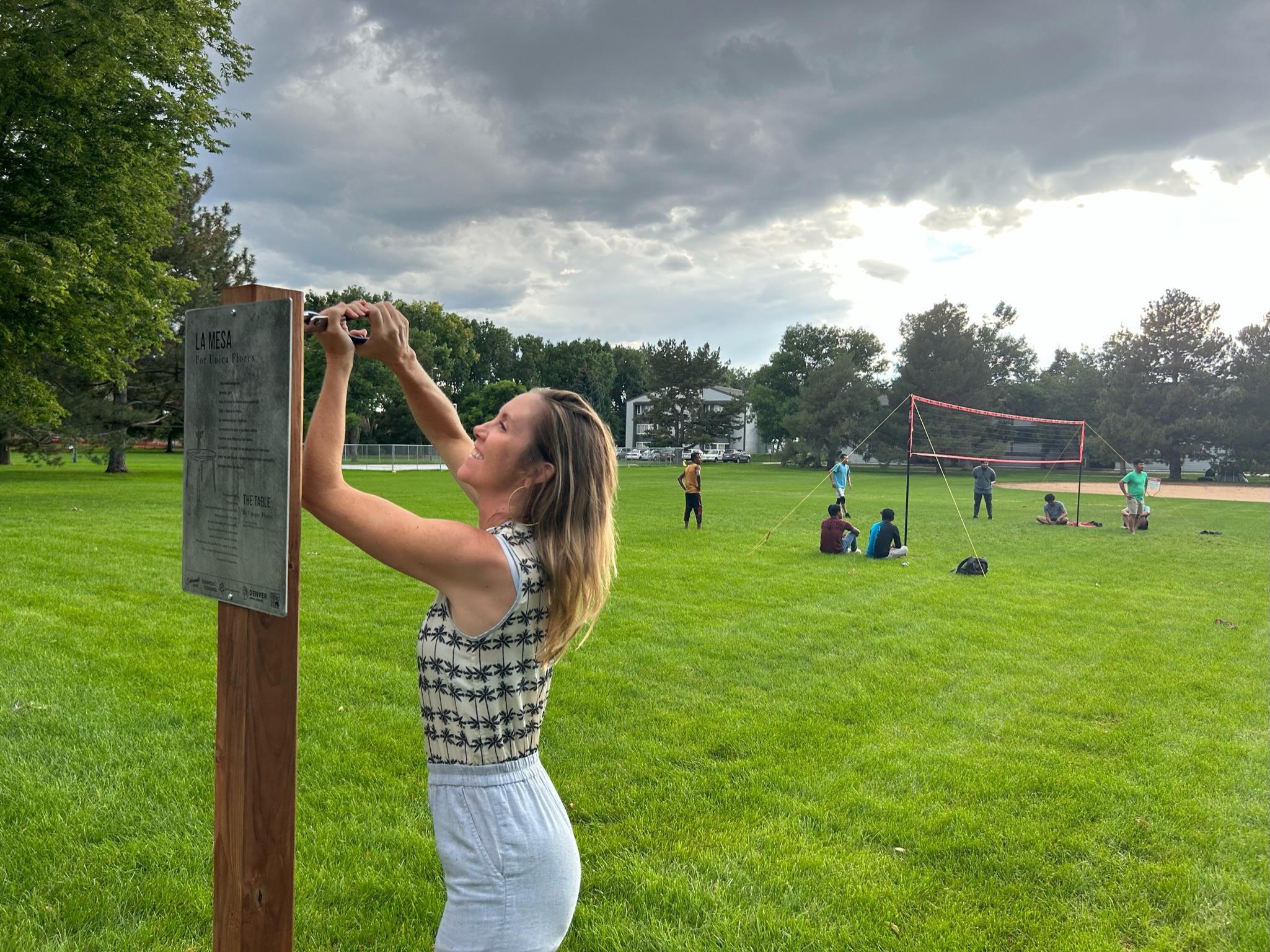
Courtesy of Sidewalk Poets

Audio By Carbonatix
Advertising Can't Do It Alone
The challenges facing local news organizations are very real. That's why reader support matters more than ever. If you believe independent journalism matters, make a contribution today and help us reach our summer fundraising goal of $25,000 by August 9.
What began as an after-school poetry club in South Central Los Angeles has grown into a Denver-based nonprofit rooted in the belief that storytelling can be a lifeline. Working with people who are often denied access to the arts, Sidewalk Poets helps foster a sense of belonging and resilience through creative writing workshops, public art installations and, soon, retreats. The idea is simple: Every voice is valuable, and every story deserves to be told and heard.
“I was getting my MFA in L.A.,” recalls co-founder Abby Templeton Greene, describing the program’s origins in 2008. “It was part of incorporating creative writing into the community, into the world, so it’s not isolated on the page. So I started Sidewalk Poets as an after-school club for fifth graders at Coliseum Street School in South Central L.A. It was so fun,and I loved it, and I always thought the name was cool. Rather than writing being so steeped in craft, it was focused on writing for community, writing for healing, and writing for empowerment and voice. That was, I guess, where it began.”
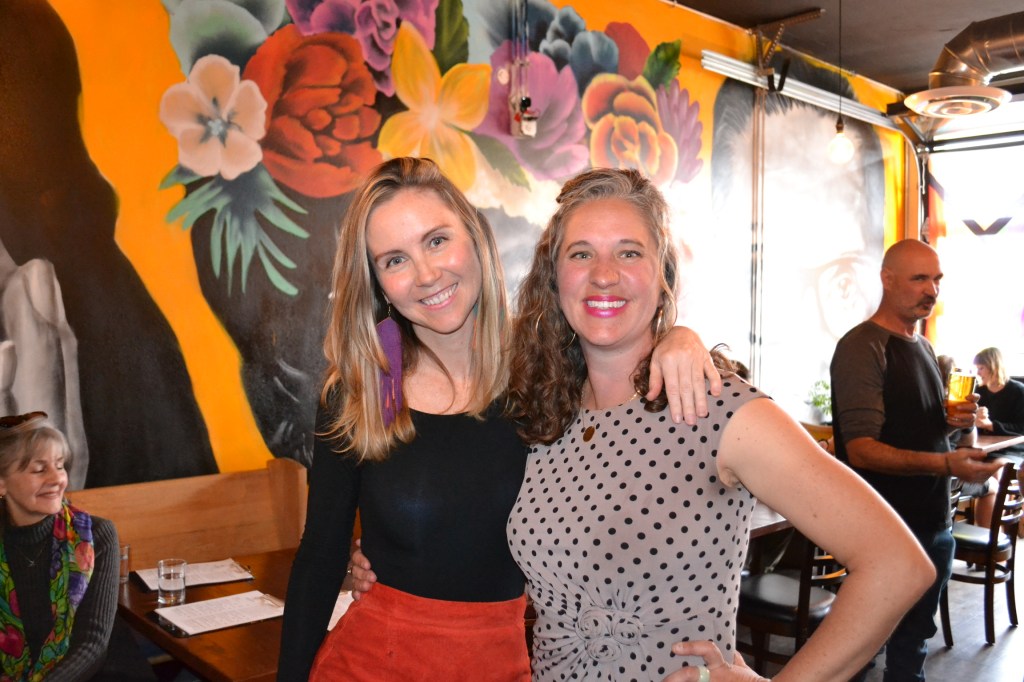
Today, Sidewalk Poets is a nonprofit led by Greene and co-founder Courtney Morgan, both professional writers and longtime creative writing educators. The organization provides storytelling and self-expression workshops for underserved communities. Through partnerships with schools, behavioral health providers and community organizations, Sidewalk Poets works with people navigating incarceration, recovery, displacement, poverty and trauma to process their lived experience and reclaim their voices.
Courtesy of Sidewalk Poets
“Art is often talked about as this elite thing, so we’re just bringing it into the streets and bringing it to everyone, particularly the people who need it,” Morgan says. “Those who don’t have access to the arts in everyday living. The arts are a vital part of life. It gets pushed as this extra thing, this luxury, this privileged thing, and we’re like, ‘No, it’s like breathing, it’s like eating, it’s like walking down the sidewalk.'”
Greene and Morgan officially launched Sidewalk Poets in 2022, but their friendship stretches back much further. The two met as high schoolers playing Club Denver Soccer, drifted apart while pursuing separate creative paths, then reconnected in 2010 through an adult league soccer and later bonded over a shared commitment to community-based arts work. About when the pandemic hit, both were teaching writing through other organizations and found themselves circling the same question: If this work mattered so deeply to them, why not build something sustainable of their own?
“If we want this to exist in the world,” Morgan recalls thinking, “why don’t we just do it ourselves? There feels like a real hole for the work that we really believe in and really want to be doing. So, if we want to do this and make it really sustainable, why don’t we build our own and make this kind of work the heart of the organization and the heart of what everything else is built around? So that’s when we started creating our own business and bringing Sidewalk Poets back to life.”
Courtesy of Sidewalk Poets
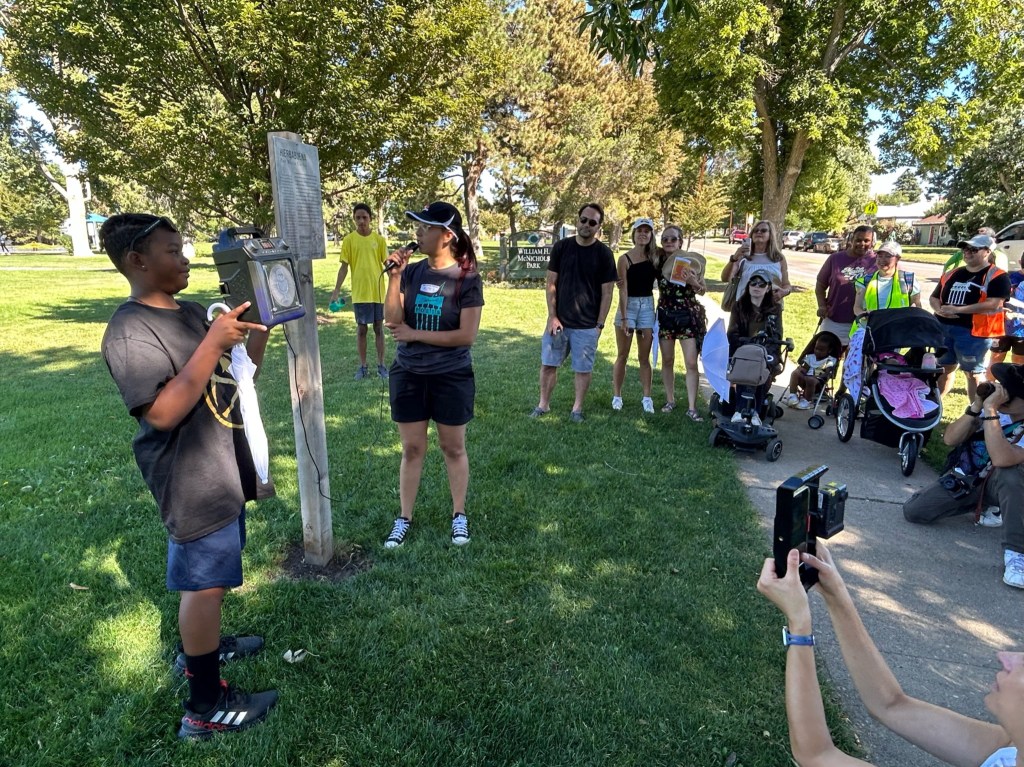
From the beginning, the organization was built around three interconnected pillars. Recurring workshops form the foundation of the organization. Public art installations extend those stories into the neighborhood, making community voice visible and shared. A third pillar, still emerging, focuses on retreats that bring participants into nature, offering time and space outside daily pressures to write, reflect and connect.
Workshops came first and remain the heart of the organization. Sidewalk Poets currently partners with Denver Public Schools, Mile High Behavioral Healthcare, Denver Problem Solving Courts, Aspen Center, Spring Institute for Intercultural Learning and Ashley Elementary School on East Colfax, offering programming in English and Spanish for adults, caregivers and students. “We’re kind of just the space-holders,” Morgan says. “The arts, the writing and the people themselves — their stories really do the powerful work.”
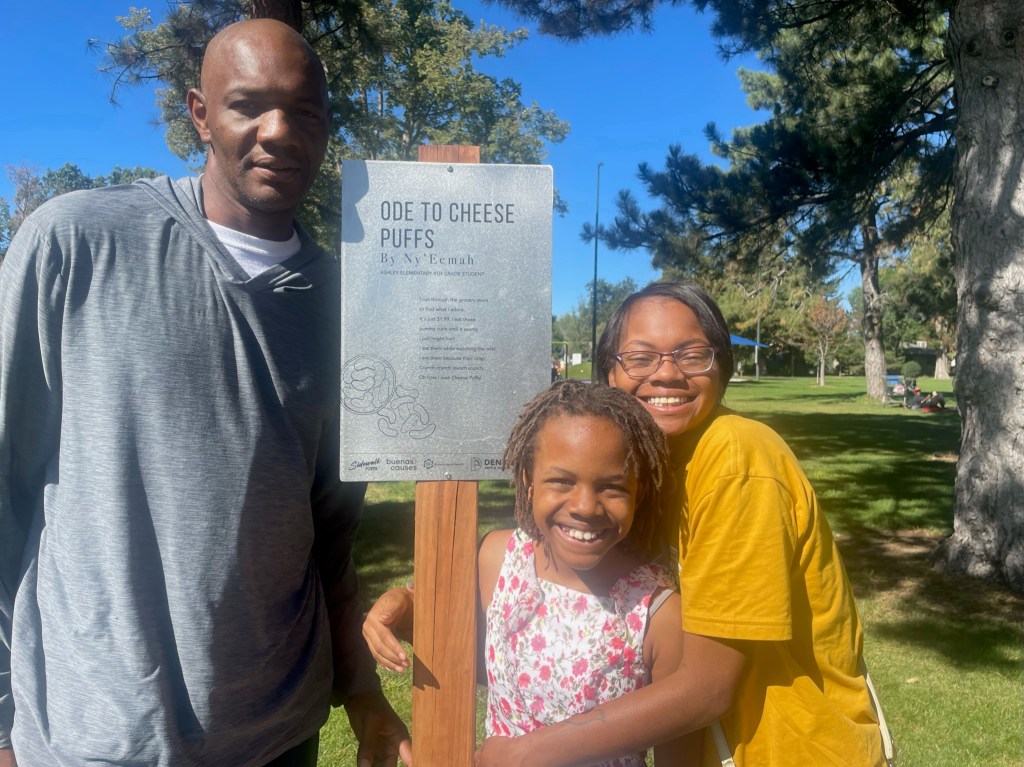
That work first moved into public space in 2023 with the East Colfax StoryWalk, created in partnership with Ashley Elementary School and the Spring Institute. Poems and short texts written by students, parents and staff were installed throughout the neighborhood on utility boxes and signage, turning everyday streets into sites of shared story. The response was immediate and affirming, Greene says: “All but one wrap is still up in the neighborhood to this day.”
Courtesy of Sidewalk Poets
“People were like, ‘Why are you putting this up? It’s just going to get tagged,'” Greene adds. “And we’re like, ‘Well, we’ll see what happens.’ When you do things with the community, people honor it.”
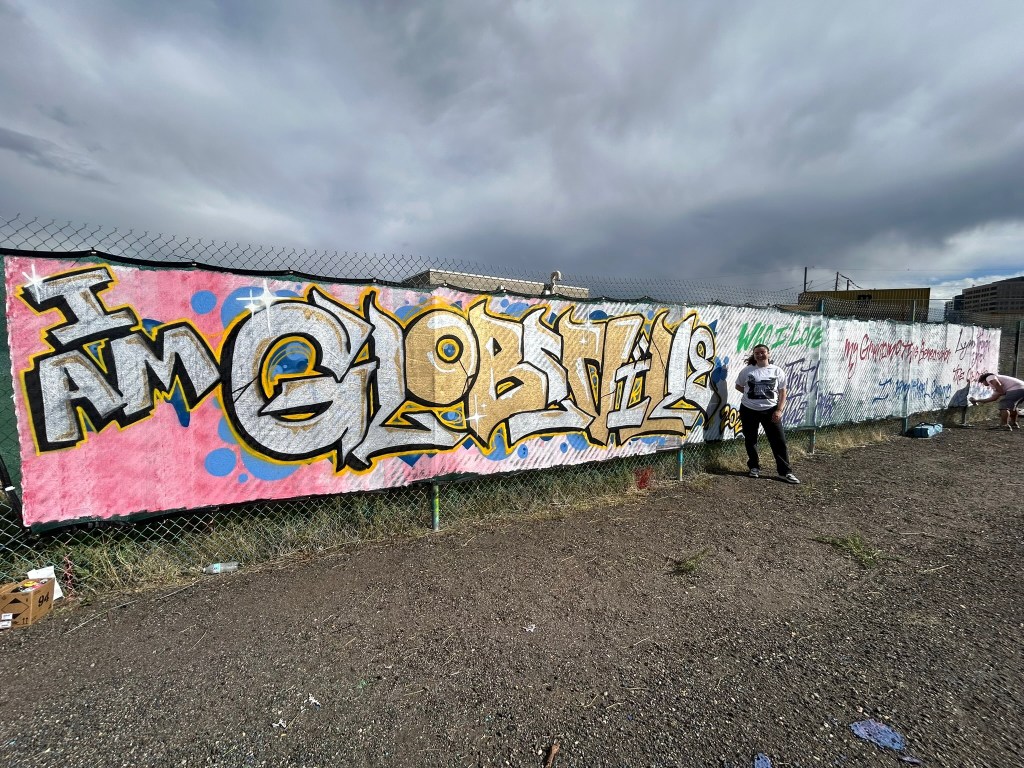
That success laid the groundwork for the organization’s most ambitious public art project to date: With support from an Arts in Society grant administered by RedLine Contemporary Art Center, Sidewalk Poets is completing the Globeville StoryWalk, an interactive installation using the writing of local residents. As with East Colfax, participants create poems and personal texts in workshops; those words are then wrapped around utility boxes and printed on street signs throughout the neighborhood, in English, Spanish and other home languages as a way of preserving the voice of a community navigating rapid change.

The Globeville project also deepens existing relationships. Through the grant, Sidewalk Poets expanded programming at Mile High Behavioral Healthcare’s Delaware Street location, adding women’s recovery groups alongside ongoing workshops for men in recovery, healthy relationships, and postpartum and pregnant mothers. Youth apprentices from Prodigy Coffeehouse and Birdseed Collective are taking part as well, with a six-week self-expression series that will culminate in public readings at the Globeville Fall Festival.
Running a nonprofit admits is harder than it looks, Greene admits. “Everyone says, ‘Don’t start a nonprofit. It’s awful, and you’ll never have any money,’” she says. “In some ways, they were right. In some ways, they were wrong. If you follow your heart, it’ll work out.”
Morgan agrees, noting both the grind and the generosity that come with committing fully to the work. “I’ve been surprised at how successful we’ve been,” she says. “Seeing the impact immediately, from our very first workshop, and then again and again, it just proves how much this work matters.”
Courtesy of Sidewalk Poets
Even as the Globeville StoryWalk goes up, Sidewalk Poets is already looking ahead. Demand for workshops is growing faster than two people can meet, so Morgan and Greene are training former participants and peer specialists to become facilitators. Expansion, retreats and deeper neighborhood connections are on the horizon, even as the founders move carefully in an uncertain funding landscape. For now, the proof of the nonprofit’s impact keeps them going.
“The evidence has taught me more than I ever dreamed,” Greene says. “Because I thought this would help people, and I love doing it, but now I realize that while I enjoy doing it, it is much bigger than me. One person will come to one workshop, and they’ll leave, like, ‘Oh, my god, when can I come back?’ or ‘This is my favorite class I’ve ever done.’ I’ve been so humbled and excited by the response from the community.”
Learn more about Sidewalk Poets at sidewalkpoets.org.