Bennito L. Kelty

Audio By Carbonatix
Reader support matters more than ever
We're in the final stretch of our summer campaign. Our goal is to raise $25,000 by August 9 to support the journalism our community relies on. Reader support is helping shape the future of local news.
The Denver Public Schools board is treading carefully as it considers expanding protections for immigrant students.
A policy proposed at the board’s February 19 meeting would, among other things, label all DPS school property — including bus stops, school transportation and school-sponsored events — as “safe zones and sensitive locations for students, families and employees.”
Immigration and Customs Enforcement agents and any other federal officers would have to present a “valid judicial warrant” for review by the district’s legal counsel before any student can be “questioned, detained or removed from school custody,” according to the proposed policy.
The Department of Homeland Security, the parent agency of ICE, formerly had a policy restricting immigration enforcement at “sensitive locations” and “protected areas” like churches, hospitals and schools. It was rescinded when Donald Trump moved back into the White House last year.
The proposed policy would also prohibit DPS staff from giving ICE or any federal agents a student’s personal information, and would bar school resource officers from arresting or citing anyone if it “would put a DPS student at risk of deportation.”
A draft of the policy first showed up on the agenda for the February 5 DPS board meeting, but any consideration was postponed until boardmembers had a chance to read it.
At the February 19 meeting, Superintendent Alex Marrero told the board that DPS already has guidelines for handling law enforcement and judicial warrants, but explained that this new policy would be a way to clearly comunicate the DPS position on ICE with families. “We have very clear policies in terms of how we respond to first responders and those that may show up with certain documentation,” he said. “I believe the desire is to possibly codify in policy and in a very public way so we can take an official stance so it can be clear.”
Marrero notes that the DPS has been organizing Know Your Rights trainings, during which immigrants can learn what protections they have if confronted or detained by ICE. “They are aware, but it’s sometimes problematic to come out to those because of fear,” he added.
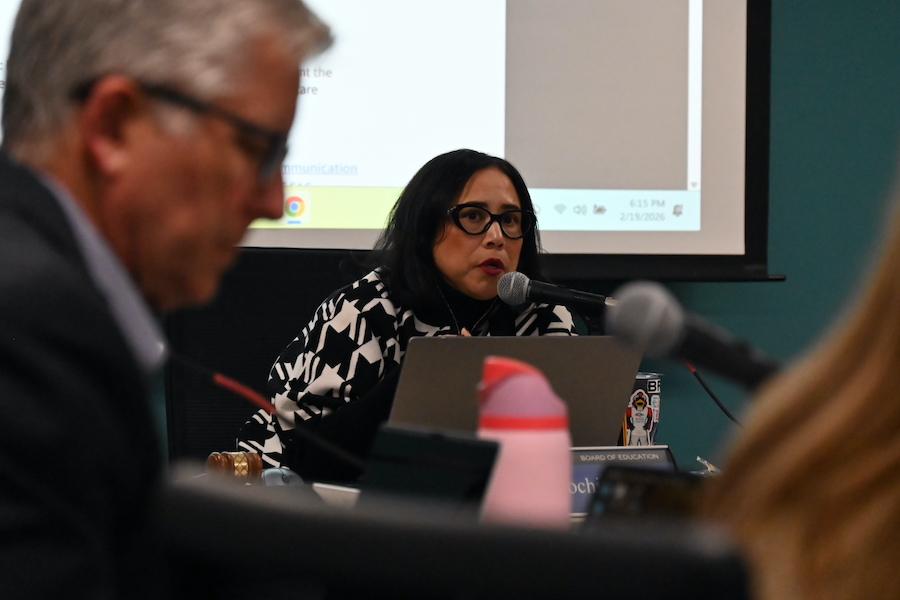
Board President Xochitl Gaytan responded that a policy adopted by the board, specifically an “executive limitation,” would “improve what you can offer” as superintendent. “That’s what immigrant rights activists in the community want,” she said. “They want it addressed as an EL.”
At the February 5 meeting, Gaytan had noted that activist groups Movimiento Poder and the Latino Education Coalition helped draft the proposed policy. Movimiento Poder also helps DPS organize its Know Your Rights trainings, according to Marrero.
The board will take about a month to consider the policy. Under the schedule laid out by Gaytan, there’s a public hearing on March 5 and a first reading on March 19, giving time to “massage the language, bring in new language.”
Nearby school districts have already adopted guidelines and resolutions regarding ICE. Aurora Public Schools guidelines require ICE agents to wait outside or at a front office while their warrants are verified; school officials are not allowed to give agents any student’s records or other information without a subpoena or court order. Jefferson County Public Schools passed a resolution in February 2025 declaring that federal immigration law enforcement activities “harmfully disrupt the learning environment to which all students, regardless of immigration status, are entitled.”
The State of Colorado and the City of Denver have laws on their books that have earned them “sanctuary jurisdiction” labels from the Trump administration. Colorado and Denver ban their employees, including law enforcement, from handing over anyone’s personal information or cooperating with federal immigration enforcement. As a result, the state and city are the targets of a Department of Justice lawsuit against sanctuary jurisdictions that seeks to repeal their laws.
The DPS proposal mentions SB 276, a Colorado bill passed last year to expand immigrant protections. Now law, it requires ICE officials to present a judicial warrant to enter schools, bars local law enforcement from complying with ICE detainers after bond is posted, and restricts access to data at libraries, clinics and schools, according to the Colorado Immigrant Rights Coalition.