Save the Signs

Audio By Carbonatix
Independent Journalism in Denver Needs You
We need to raise $25,000 by August 9 to support the reporting our community depends on. Reader support keeps us independent and is playing a larger role in funding local journalism and shaping what comes next. If you believe independent local journalism matters, make a contribution today.
“Neon is the fifth most abundant element in the universe,” says Todd Matuszewicz. That’s how the co-president of Save the Signs ends every tour he gives of Morry’s Neon, where he’s worked on and off since the 1990s, or at J.J. “Neon Dad” Bebout’s Subjective Coffee, which serves as the Save the Signs headquarters.
“It isn’t terrestrial; it does not exist on the earth; it comes from the heavens into our atmosphere, and we breathe it in and out every day,” he explains. “When we look at Hubble telescope images of star nebulae, we’re seeing cosmic neon lights. And, as Carl Sagan and Neil deGrasse Tyson remind us, we ourselves are made of star stuff.”
The founder of Save the Signs, Corky Scholl, is now star stuff. Sadly, he passed away last August at 48. But Matuszewicz and other true believers are keeping his passion alive.
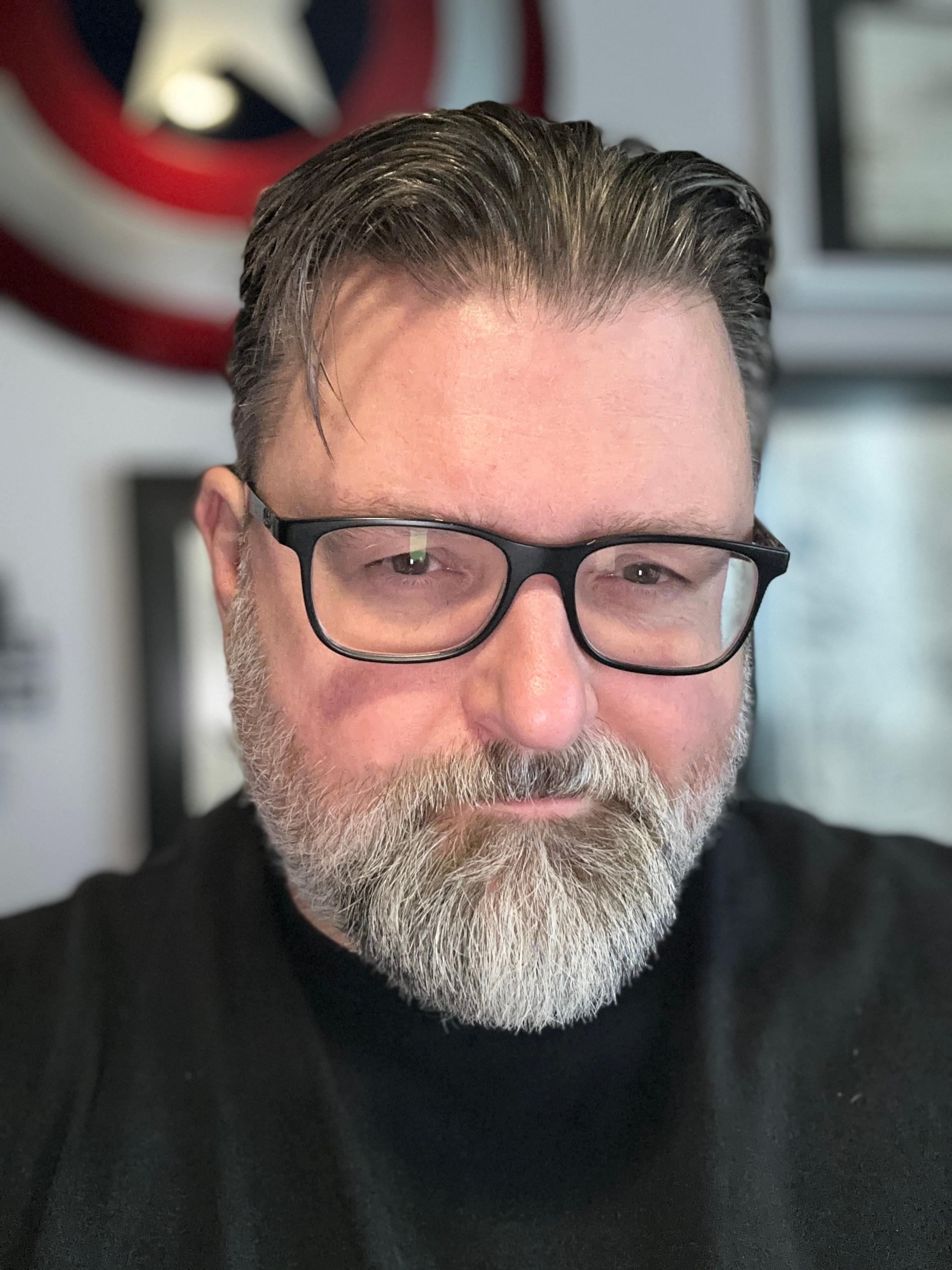
JJ Bebout
A photojournalist with 9News for many years, Scholl was devoted to the preservation and protection of Denver’s roadside signage, those landmarks that so many grew up with, each viewing laying more of a foundation into both their memory and the collective recollections of the city populace as a whole.
“These signs are part of our culture. They’re temporal markers, right? Look at the motels with neon signage along Colfax. People had weddings there. They had quinceañeras. They had vacations there. They have these memories that tie that time to that sign. It’s not just commercial; there’s far more to them than that.”
Todd Matuszewicz, co-president of Save the Signs
A Photojournalism Project Dedicated to Colorado’s Neon Signs
Neon signage is beautiful, of course; while it evokes a sort of noir-era standard, it has a lingering aesthetic appeal that’s also timeless. That’s what inspired the photojournalism project that would eventually become Save the Signs.
In 2012, Scholl had just purchased a home off East Colfax Avenue, and he realized that the classic signs he passed by every day was apt to disappear almost overnight, city markers just lost to time. So he began documenting them, often posting on the StS Facebook page several times a day. As the reach of social media extended, so did the preservationist effort to, well, save the signs. Now, in 2026, scores of signs that might have been scrapped have instead survived, with plans to restore and celebrate them.
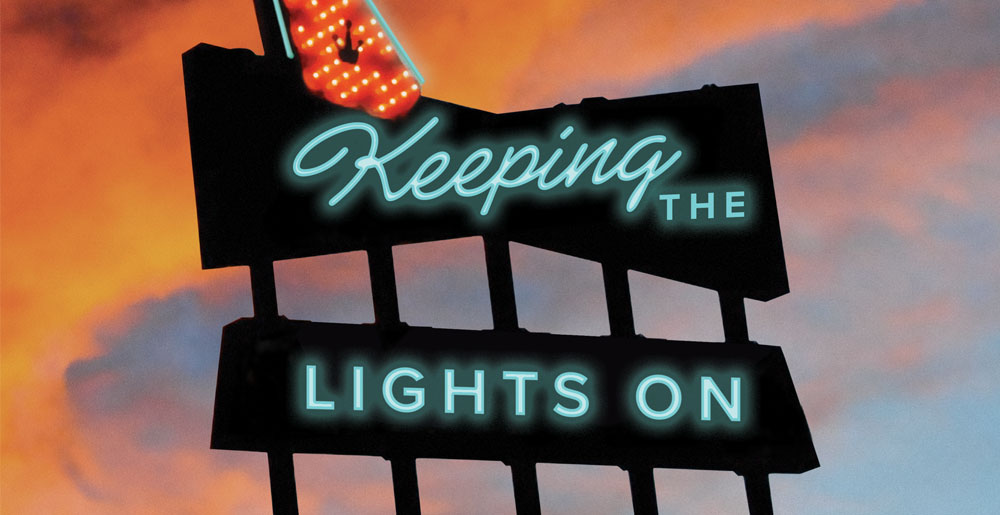
Those plans are being carried out by a team dedicated to keeping the lights on Scholl’s Save the Signs movement. Co-president with Matuszewicz is Corky’s wife, Melissa Scholl, who oversees the long-term collection and stewardship of all the historic signs and related ephemera she assembled with Corky over nearly two decades. Vice President Kit Watkins, from legacy Denver business Watkins Stained Glass, is responsible for community liaison work with property owners regarding landmarking, restoration, tax credits and preservation grants. Chris Geddes is the Save the Signs secretary, as well as a preservation specialist for the City of Aurora and lecturer in the UCD Historic Preservation program. And Bebout serves as treasurer. He’s a coffee entrepreneur who runs Roostercat in Denver and whose Westminster shop, Subjective Coffee, is both an ad-hoc neon museum and the “clubhouse” for a group that calls itself “the Sign Posse,” according to Matuszewicz.
But they’re not alone in the Save the Signs organization. Six more artisans, both local and regional, serve on an advisory board, and three more in a community cohort. And the groups’ overall connections in the landscape of Denver preservationism are strong, with ties to History Colorado, Historic Denver, Colorado Preservation Inc. and the University of Colorado Denver’s Dana Crawford Historic Preservation Program.
Many of these connections came through not only Scholl’s efforts but the work of Matuszewicz, who began his journey in neon two decades before Scholl founded Save the Signs. “I didn’t grow up loving neon signs,” he says. “I had no relationship to neon at all.”
Never Too Cool For Neon School
One day, Matuszewicz’s wife came home from a retreat and mentioned that she’d met someone whose son was going to neon school.
“I immediately said, ‘I’m going to neon school.’ I had never before considered it. Hadn’t thought about it once,” he admits. “But we moved to Minneapolis, where they had a training facility, and I went to this artist-run vocational school. Almost everything they taught me was wrong. I couldn’t find a job until a friend hired me at a big sign company, Nordquist, and I ended up in a union shop. I was there for three years as the only tube bender in the shop. Their big clients were malls. My claim to fame at the time was that I made the Mall of America letters. They’re ten-foot letters, but it’s not all that impressive since they’re all just straight tubes. But people recognize it.”
Matuszewicz worked for different sign companies here and there before getting an offer from Morry’s, where he worked until 2000 — when he left, a bit burnt out, to become a Waldorf School teacher for several years. “I like to say that teachers have an expiration date,” Matuszewicz laughs. “I’d just reached mine. I loved being with the kids, but it was time for them to learn from someone else.”
It was also time for Matuszewicz to learn from someone else. So he enrolled at Metropolitan State University of Denver and earned a chemistry degree while working again at Morry’s, helping position the legacy business for a new owner as the old guard retired. Then Matuszewicz’s wife again mentioned something that would change his life: “She said something about seeing this ‘Change Makers‘ thing at CU Denver, and said maybe I could do that.”
The Change Makers fellowship was designed for professionals nearing the end of one career and exploring the possibilities for their next move. Matuzewicz ended up in the inaugural cohort of that program, where he toyed with a few ideas — being a busker doing nothing but “killing songs” (his cohort thought that wasn’t such a great idea), joining up with a kombucha business he’d worked on in years past (they were sort of “meh” on that one). “And then I said, ‘Well, maybe I’ll save the neon signs of Colorado.’ As soon as I said it, people were like, ‘Yes.‘”
Neon History and Neon Preservation Go Hand in Hand
Coming to know the backstory of neon was just as fascinating as learning the process to preserve it.
“I was doing research on pre-World War II Denver neon,” Matuszewicz recalls. “You know, going through the old newspapers, searching for every mention of neon. One of the amazing things was the way people talked about it even then. Neon was expensive — still is, since it’s handmade — and not everyone could afford it. But they used those signs that did exist as a point of reference: Oh, we’re the delicatessen next to the theater with the neon sign.”
Save the Signs
That all changed with the establishment of sign codes.
“It started with Lady Bird Johnson in 1965, with the Highway Beautification Act. That was really aimed at junkyards and billboards, but neon got swept up in that movement, especially when the city of Denver started enacting ordinances in response to it. Now, I don’t mean to say that I’m against the beautification of highways,” Matuszewicz says, and laughs.
“Lady Bird Johnson wasn’t a villain. It was just the times. It was also the start of the environmental movement, which I think had to do with those first pictures of Earth from space. The big blue marble, right? I mean, it’s one of those things most people now take for granted as something we’ve always had, but that photo didn’t exist when I was young. That was taken in my lifetime. It was a budding awareness of ecology, and part of that was control over the visual element of our cities.”
Todd Matuszewicz, co-president of Save the Signs
Denver Historical Society
A Changing Industry
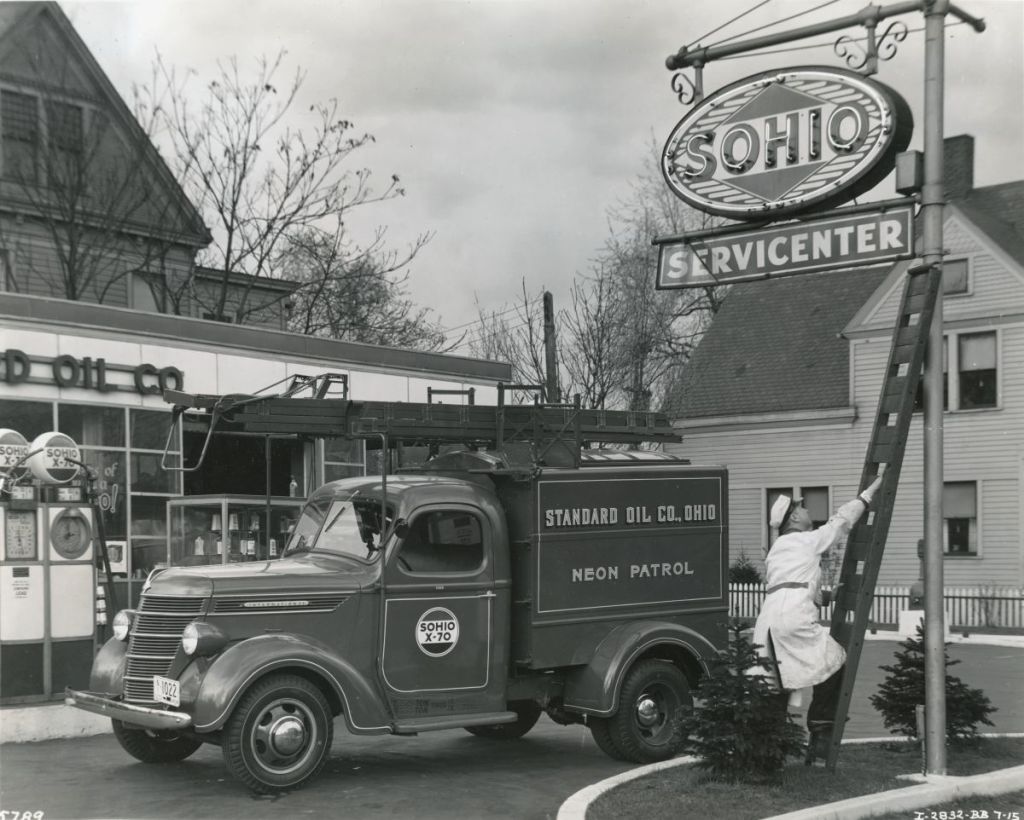
One of the realities of neon signage that most people don’t know, according to Matuszewicz, is that often the businesses that boasted them didn’t actually own their signs.
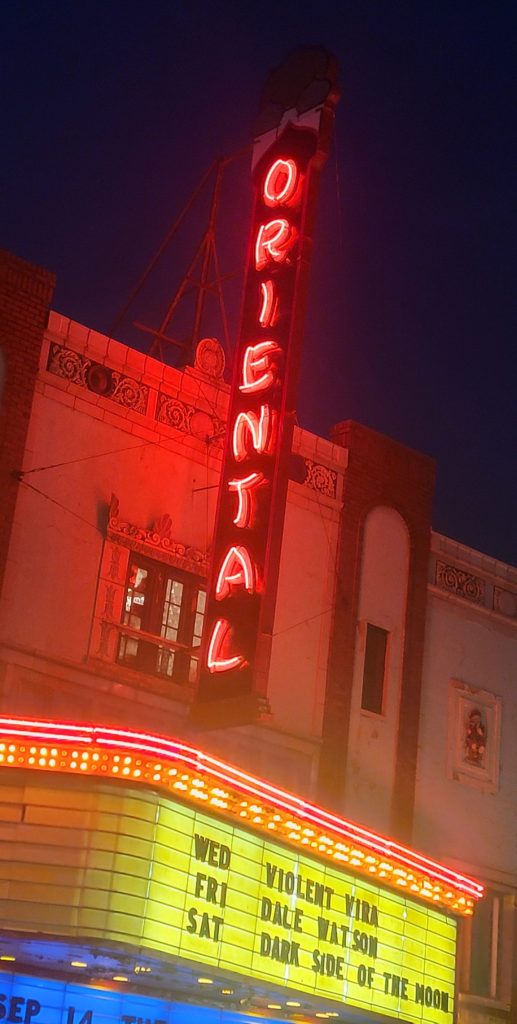
“Lots of classic signs — Pete’s Kitchen, the Satire, the Riviera Motel — those were all owned by sign companies, who lease the signs to the businesses and have a maintenance contract,” he says. “That was very common in the 1960s, which carried over from the infancy of the sign industry, something we still have even today, with these old signage agreements that have been grandfathered in. The business model was based on the idea that you’d pay for this sign for five or ten years, and then you’d want to update it, so they’d sell you a new one. That’s also why we see so many generations of classic signs. Like the Oriental Theater, for example, that’s been updated quite a bit over the course of its life.”
Save the Signs
When the Denver ordinances began, Matuszewicz explains, “we saw sign companies push back. That was their property, and they still had residual income coming in from the maintenance contracts. That went back and forth for a long time, and saw a case move all the way up to the Supreme Court, which refused to hear it because they said they’d already ruled that cities had that right. Following that, Denver was one of over 700 cities that adopted those same ordinances that brought about the disappearance of too many great old signs.”
After that fight was lost in the early ’70s, the city and local businesses figured out how to make good on some of the costs through tax incentives and the like, as sign companies realized that if establishments had to take down old signs, they’d need new ones.
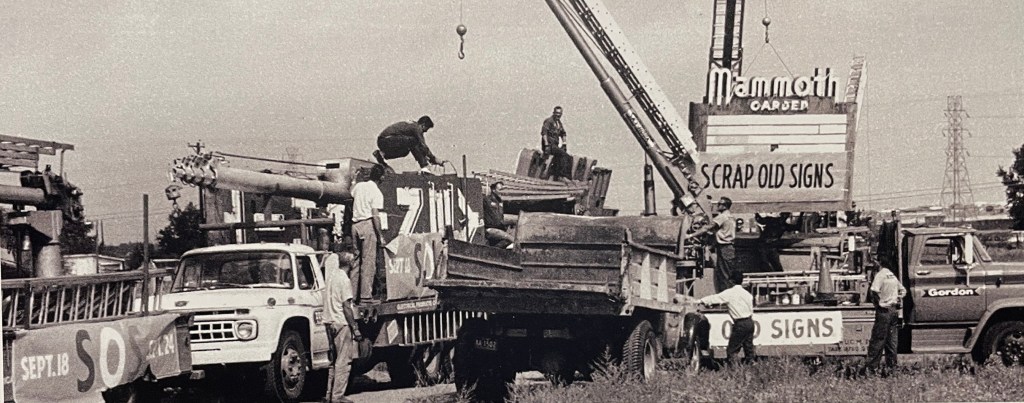
“They actually started a program called SOS — Scrap Old Signs. They’d go out on the weekend and just clear-cut the signs, and then those companies would send out sales reps the next week with new plastic signs they could put right on the buildings,” Matuszewicz says. “They were advertising these neon replacements called Plastilux, these formed plastic faces with fluorescents behind. Service trucks went from requiring skilled artisans to just needing to stock four sizes of fluorescent bulbs.”
From “Scrap Old Signs” to Save the Signs
When the SOS movement began, preservationists and craftspeople started fighting back. In fact, Matuszewicz has just emerged victorious from the latest sign-saving skirmish: Last month, Stephen Antonakos’s “Incomplete Square” on Lawrence Street was listed on the Colorado State Register of Historic Properties.
“It’s the first neon artwork physically attached to a building to receive independent historic designation in Colorado, distinct from more typical listings in which neon appears only as a contributing feature or as a freestanding sign, such as at the Rabbit Ears Motel in Steamboat Springs,” explains Matuszewicz. “The sculpture measures 52 by 52 feet and operates 24 hours a day, combining exposed red neon with concealed blue neon that washes the adjacent wall, an approach characteristic of Antonakos’s mature style. It represents his sixth large-scale public artwork and is the oldest surviving example from the ‘Geometry and Neon’ series that defined the remainder of his career. Despite its artistic importance, the work has remained largely unknown locally; in three years of restoration advocacy, I encountered only one person who was familiar with it.”
Save the Signs has already submitted grant applications to the National Trust for Historic Preservation and the State Historical Fund; there’s also a fundraising page to help pay for its restoration and ongoing care.
A Passion for Vintage Americana
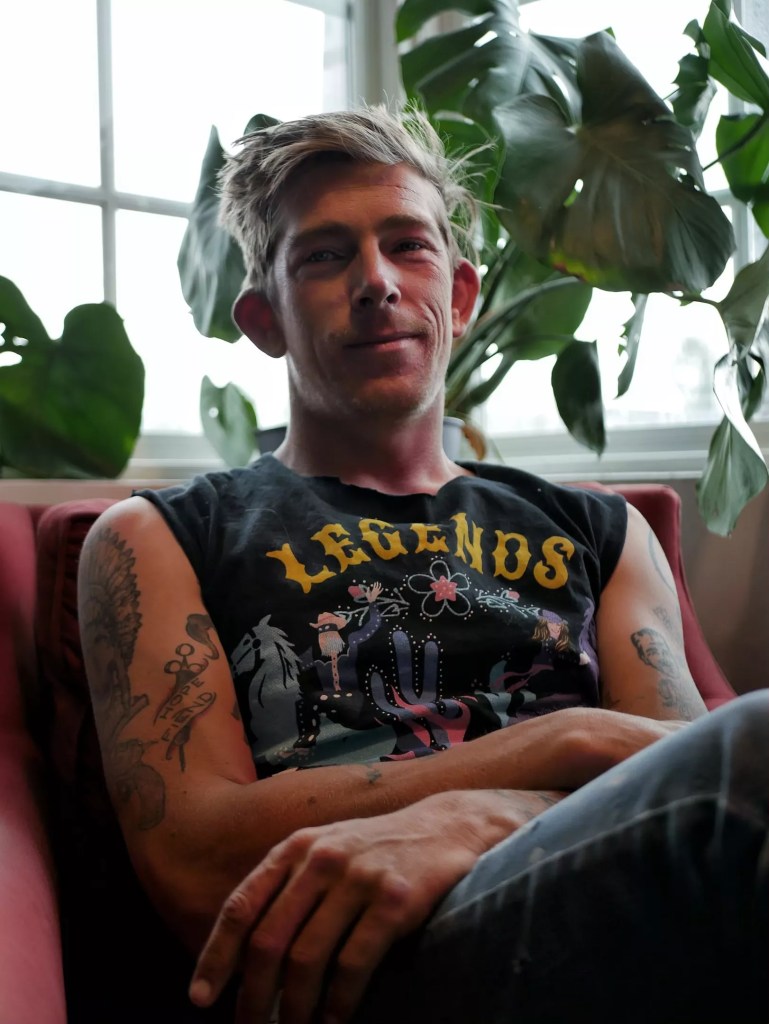
JJ Bebout is another Sign Posse member engaged in the battle to save the signs. His induction into neon preservation came through unconventional means, too.
Cat Evans
“I started as a poet and fiction writer,” he says. “But right around the time I became disenchanted with that — it just wasn’t for me — I saw this documentary on Netflix called Neon. That night, I had a dream about neon. What it really woke up in me was this concept of putting text into the real world, against this backdrop of Americana and its marketing, for better or for worse.”
It also connected Bebout back to a time in his relative youth.
“When I was 19, I was homeless and had warrants in a bunch of different cities,” Bebout admits with a grin. “So we took back roads across the country, avoiding highways, living in a van. We ended up going through a lot of these off-the-highway towns, saw a lot of ghost signs, things that were emblematic of American life through the years.”
He fell in love with vintage Americana then — so when neon was presented to him as both an art form and historic element, he jumped in. But the leap wasn’t easy.
“I tried to get apprenticeships, and just couldn’t land any,” Bebout recalls. “I finally ended up taking a job in Cincinnati, and they had the American Sign Museum there. When I saw that, I was just fucking floored.”
By then, Bebout had connected with Scholl, who introduced him to people at both Morry’s Neon and Acme Neon, but they had no apprenticeships available, either.
“So when I came back to Denver, I started fixing signs for YESCO, with like no experience. I’ve been teaching myself ever since. It’s been a rough road, but Todd [Matuszewicz] has helped a lot.”
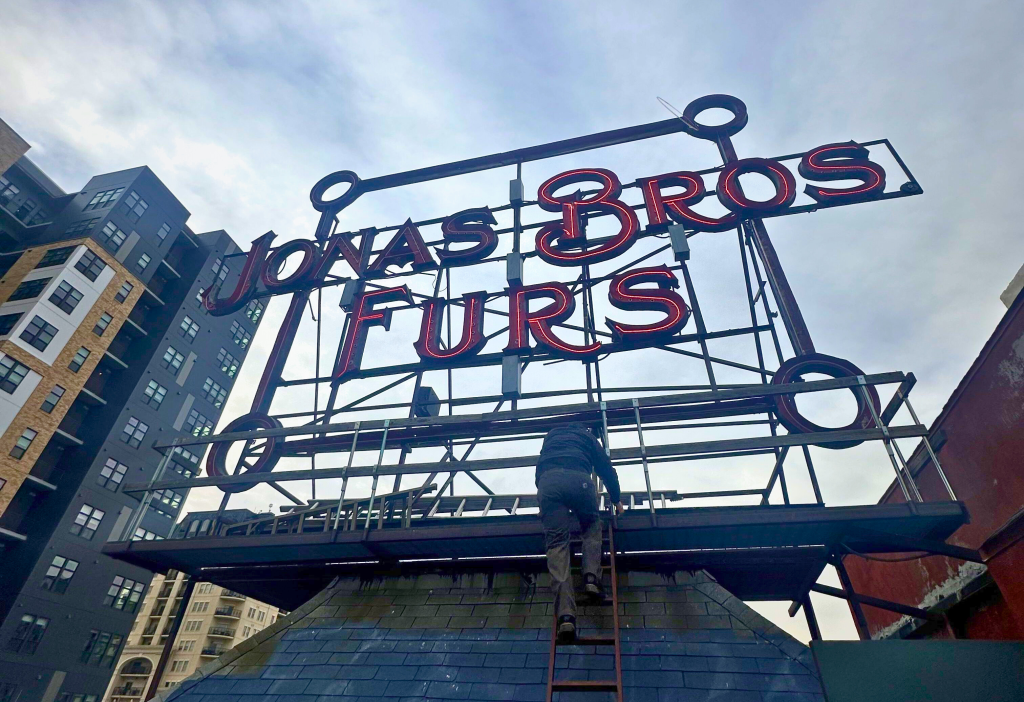
Bebout’s self-apprenticeship may have been tough, but it’s paid off. His restoration work is notable, and includes both the Brandin’ Iron Motor Lodge sign and the Jonas Bros Furs sign perched by the intersection of Tenth and Broadway.
“That building is a state landmark, which includes the signage — but the signage isn’t protected independently,” Bebout says. “As we saw with the Benjamin Moore sign, same story: landmark building, sign included, but apparently that means they can just take that sign down and replace it with LEDs as long as it looks vaguely the same.”
JJ Bebout
Seeking a Safe Haven
Save the Signs not only wants to protect as much signage as possible, but also find a place in the metro area to host an outdoor sign park — somewhere to store some of the larger signs that have been preserved, and display them in such a way that the public can enjoy and appreciate them.
“We’re currently looking for city and private partnerships to make that happen,” Bebout says. “We’re actively seeking that, because it has to happen.
“Some of these signs are upwards of forty feet tall. Having a place to put these signs when they come down is important, because right now, we have to turn some away.”
J.J. “Neon Dad” Bebout
As evidence, Bebout shows off a large hat sign from the King’s Derby Restaurant that stood in Idaho Springs.
“We’re going to have to send this away. It can’t stay here. Just to get it down and in this building, we had to cut it into sections,” he adds.
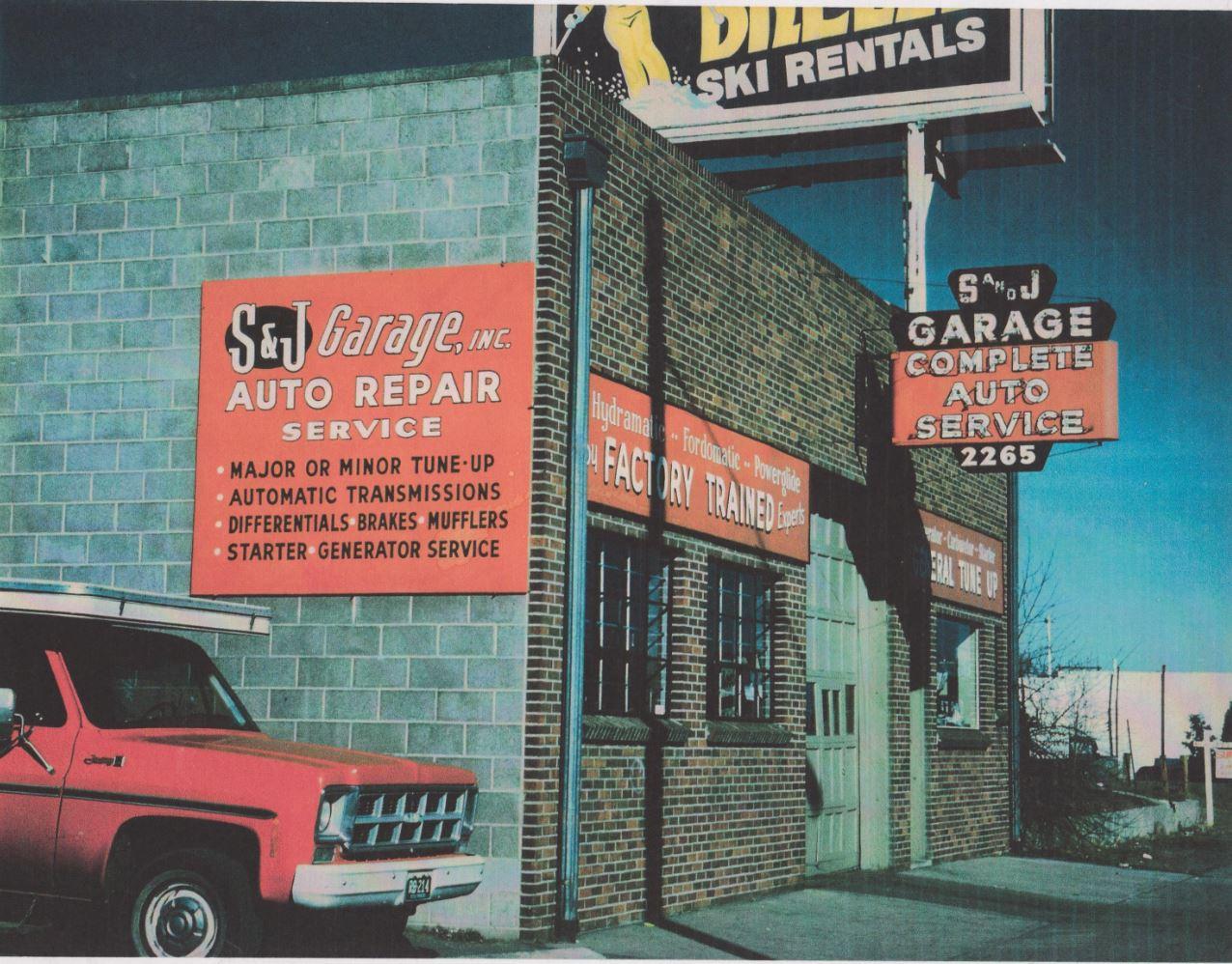
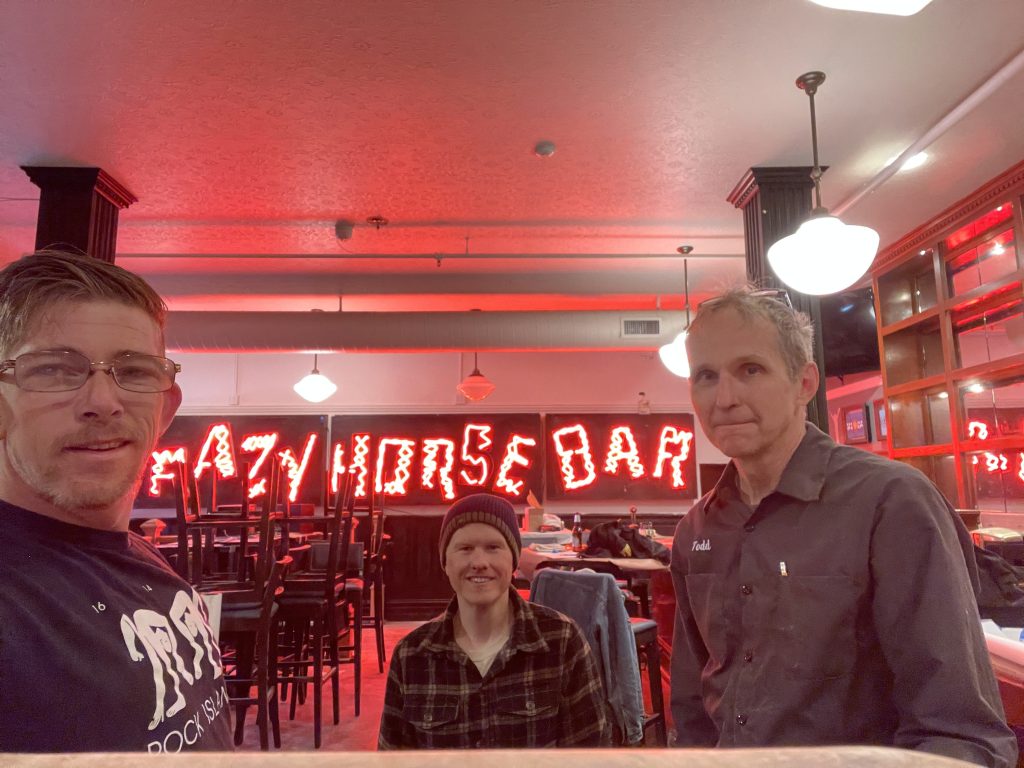
The signs that Bebout has been able to store, along with the ones Scholl collected that are being kept by his widow, read like a business history of Denver. Sid King’s Crazy Horse Bar on Colfax. The S&J Garage (advertising “Complete Auto Service”) that used to be on Broadway. Bell Plumbing, Heating, and Air. Lefty Martin Appliances. Bobcat for Service. The Famous Chef sign that had been hidden for years under the PT’s Strip Club signage on East Colfax. And, most recently, the corner-box Bar Bar sign that was saved when that dive bar on Champa finally gave up the ghost.


“The mission of Save the Signs stays the same,” Bebout says. “It was around before us, and it will remain after us. And people really dig it when they become aware of it.”
As evidence, Bebout relates a recent experience his family had at Disneyland, in the large area with the Cars theme.
“The climax of that movie is in this run-down town that no one is paying any attention to anymore,” he says. “And the heroes of the film have all the town signs restored, and when they turn them all on, it’s beautiful. Everyone is amazed. The same thing happens every night at California Adventure when they recreate that moment. Families gather to wait for it. Hundreds of people with their phones out, doing a countdown for these old signs to come to life. It’s nostalgia, it’s a sense of community. Someone once said that home is a place we long for but that we’ll never see again. I think signs bring that sense of home back again.”
That’s the beauty of neon, and the history it illuminates.
“We already have these gorgeous signs, these gateways to our cities. You don’t have to construct it. You don’t have to do anything. You just have to celebrate it.”
Todd Matuszewicz, co-president of Save the Signs
Save the Signs / Monika Swiderski