Kaizen Food Rescue

Audio By Carbonatix
Advertising Can't Do It Alone
The challenges facing local news organizations are very real. That's why reader support matters more than ever. If you believe independent journalism matters, make a contribution today and help us reach our summer fundraising goal of $25,000 by August 9.
Even with tight budgeting and regular visits to food banks and pantries, Natasha “Tasha” Carter finds it hard to provide nutritious, healthy and affordable meals for her family. “Some days, things align for us and we have stuff, but since I have three kids, food goes fast,” says Carter, whose children range in age from five to twenty; all three are neurodivergent. “Fresh fruit, vegetables and meat don’t last.”
When all else fails, she relies on the free dinners for youth at Denver recreation centers and free lunches at her younger children’s school to bridge the gap. Anything to keep her family fed. “They’re not the biggest fans of school lunches, but I don’t have the ability to send them with other things or have an extra snack, outside of home,” Carter says.
Since she was injured in major car accidents in 2014 and 2015, Carter has lived on a modest disability check, but money got even tighter during the pandemic, when her disability checks increased about 3 percent at the end of 2020, just enough for her to lose her government food assistance through the Supplemental Nutrition Assistance Program. “On paper, we meet the guidelines, but for some reason on the application, they deny us,” says Carter.
The challenges with food insecurity that Carter faces almost daily have been in the spotlight in recent months, as the government shutdown interrupted the distribution of SNAP benefits to tens of millions of people in November. According to the U.S. Department of Agriculture, an estimated 47 million Americans don’t have sufficient access to food to meet their basic needs. In Colorado, that number is nearly 745,000 people, including 172,540 children, data from Feeding America indicates.
While the shutdown focused a spotlight on this issue, dozens of organizations in Colorado have been working to address it for years. Here are some of the food justice warriors fighting on the frontlines to combat food insecurity in the Centennial State.
Gelli’s Community Fridge
Gelli’s Community Fridge
December 22, 2020, was the worst day of Lisa Ridenour’s life. That’s when her oldest daughter, Giselle, died in her Littleton apartment at the age of 24 after an accidental drug overdose, leaving behind a 16-month-old daughter, Ara. “She was a bright light and a force of nature,” says Ridenour of “Gelli,” fighting back tears.
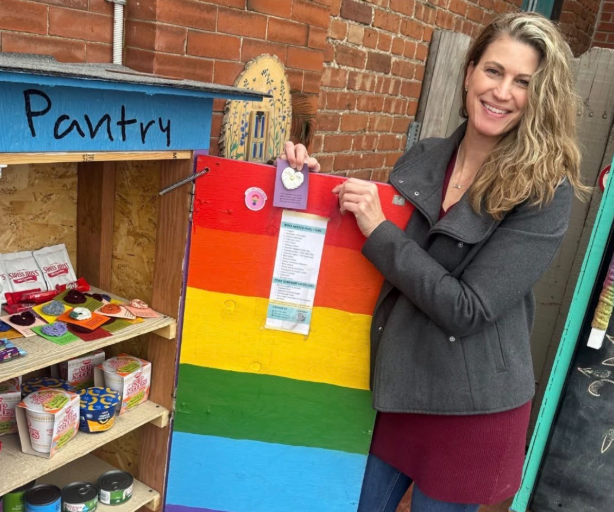
Overwhelmed by grief, she knew she needed to do something to clear her mind and give back to the community. So Ridenour, who works as a federal child-support specialist and volunteers as a victim advocate, decided to put her daughter’s love of food and her compassionate heart into something that would support drug users on their road to recovery. In 2023, she officially turned her pain into purpose and founded Gelli’s Community Fridge, a non-profit organization that provides public access to refrigerators and pantries stocked with food 24 hours a day, seven days a week, for anyone who needs it, no questions asked.
“There is something about supporting people, being there for them during one of the worst times they’ll ever experience, that feels like both a privilege and a responsibility, to witness someone’s pain and help shoulder it, even if just for a moment,” she says. “To feel that way about the support we provide to those who use our fridges and pantries, too, has given me a sense of purpose that nothing else can match.”
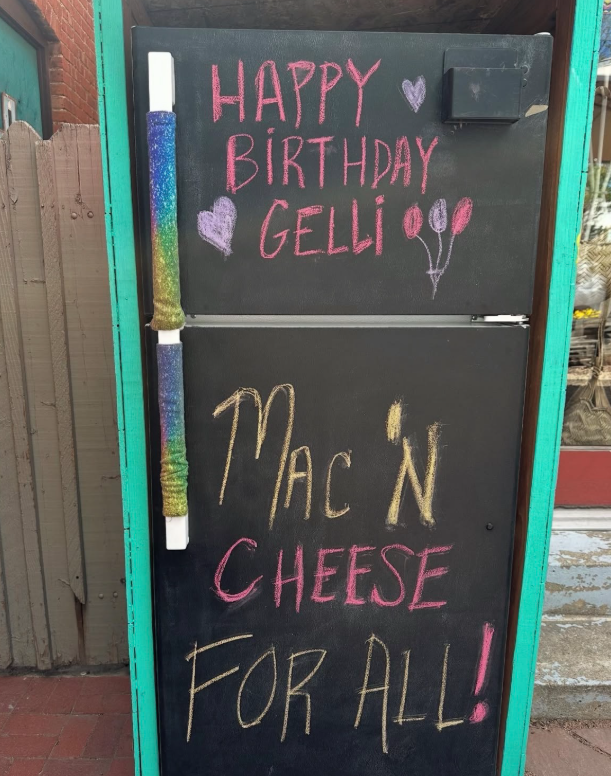
The first location was at Ruby Market on South Pearl Street. “In the two years that fridge and pantry were there, there were so many people using it that we refilled it four times a day, and it still went empty in between refills,” remembers Ridenour. “And we moved probably over 12,000 meals through that fridge, in addition to tens of thousands of pounds of fresh fruit and vegetables and bakery items and shelf-stable food.” Unfortunately, Ridenour was forced to close the location after neighboring businesses complained about unhoused people congregating in the area.
Today, Gelli’s Community Fridge has four locations: Valor at the Fax, a 72-unit affordable apartment complex for people who have suffered brain injuries; Bridge House in Englewood, a nonprofit that offers programming and resources for adults experiencing homelessness; the Arapahoe County Jail; and Behavioral Health Group Treatment Center, a medication-assisted treatment facility in Westminster.
Gelli’s Community Fridge
“These are locations where anybody can come by and drop off extra food they buy at the grocery store, or you can clean out your pantry,” Carter says. “This reciprocity happens between people that have resources and people that don’t. I think it’s really beautiful.”
Gelli’s Community Fridge needs to be restocked constantly, and even with donated food, it costs about $1,500 a month to keep each location full. “We also have an amazing village of donors who provide critical cash donations, which allows us to purchase additional food from membership warehouses to supplement what we receive from those other sources,” she says. “I can’t express how deeply grateful I am for the generosity of our donors.”
Those donors include Whole Foods and Rebel Bread, along with Cafe 180, a nonprofit restaurant in Englewood that contributes proceeds from meal purchases; Gelli’s was also recently approved to receive food from We Don’t Waste.
Ridenour also receives donations from food drives organized by local schools or businesses, including her granddaughter’s school. “The idea of a community fridge is that it creates community, not just for people who need food, but for people who can afford to help with that,” she says. The project has become a family affair: Now six-year-old Ara helps stock the community fridge, and Ridenour’s 24-year-old daughter, Jean, works at the Valor at the Fax location.
“From the very beginning, our family and friends have supported my vision,” Ridenour says. “They’ve donated large amounts of food and financial resources, helped spread the word about our mission, and provided endless encouragement, ideas, connections and moral support.”
In fact, Giselle’s father designed and built the first outdoor community fridge, shed and pantry, and the whole family helped paint it. “It’s taken a village to see this dream come to life, and it’s deeply meaningful to all of us to see how much it’s helped others,” Ridenour says. “Giselle would be so proud.”
The grand opening of the Behavioral Health Group Treatment Center fell on December 22, the anniversary of Gelli’s death. “This one is really special to me. Since I first had this wild idea of creating a nonprofit community fridge in Giselle’s memory, I always envisioned having them at treatment centers,” Ridenour says. “I continually see and feel her in everything we do.”
Christen Aldridge
Stedman Elementary Market
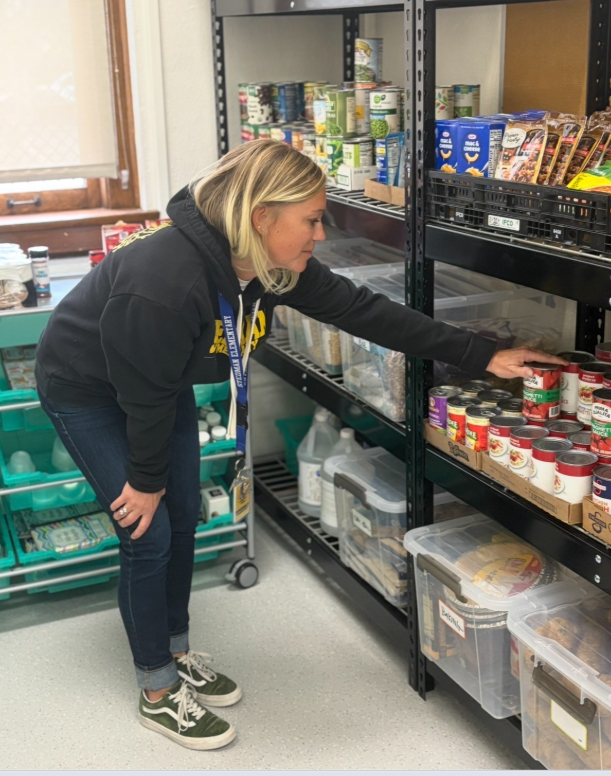
The lessons of food insecurity play out daily at schools. That’s what inspired the leadership at Stedman Elementary School in Park Hill to launch the Stedman Market in 2024 to meet the needs of its 400-plus students and their families. Using a Healthy Foods for Denver Kids grant — funded by a small sales tax increase to support healthy food access and nutrition education for Denver youth — and the help of Food Bank of the Rockies, the school created a free food market. Today, about thirty families use the market daily, according to Lindsay Hieb, family liaison and a Stedman mom herself. “We’re providing relief, knowing that they do have a place that is available to them and is accessible throughout the day, five days a week, and knowing that they can come in and shop and get what they need,” she says.
The school also has a community garden run by students who’ve taken classes led by SustainEd Farms, a nonprofit that partners with schools to teach sustainability and nutrition through hands-on farming. “What makes us unique is that we also provide snacks for the students and oversee the garden,” says Hieb. “And so being confined and being just an addition within the school allows us to be open during the school hours.”
Watching the market serve as a critical resource for Stedman families and the nearby community during the government shutdown was heartwarming for the modest team of volunteers who keep the operation running, she says. It also served as an important reminder that their work is a critical resource.
“I’ve heard families come in and say, ‘This helps me get to the next week,’” Hieb adds. “So I feel like it provides a little bit of relief, so they didn’t have to worry as much.”
Helen Xu
Kaizen Food Rescue
A former refugee, Thai Nguyen knows what it’s like to be hungry and have little access to food. “I’ve been through different refugee camps, being malnourished after the Vietnam War,” recalls Nguyen, a mother of three and former product designer and event planner.
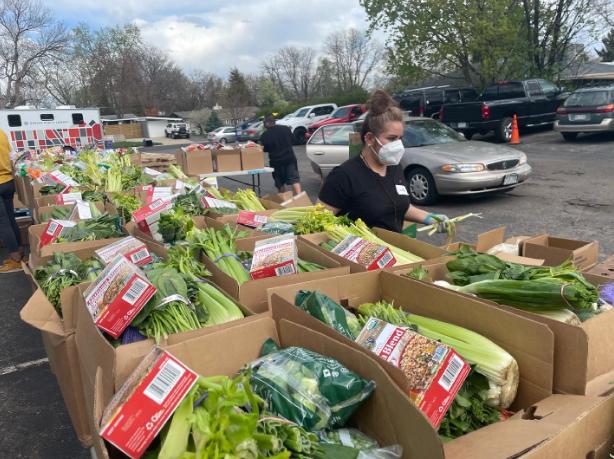
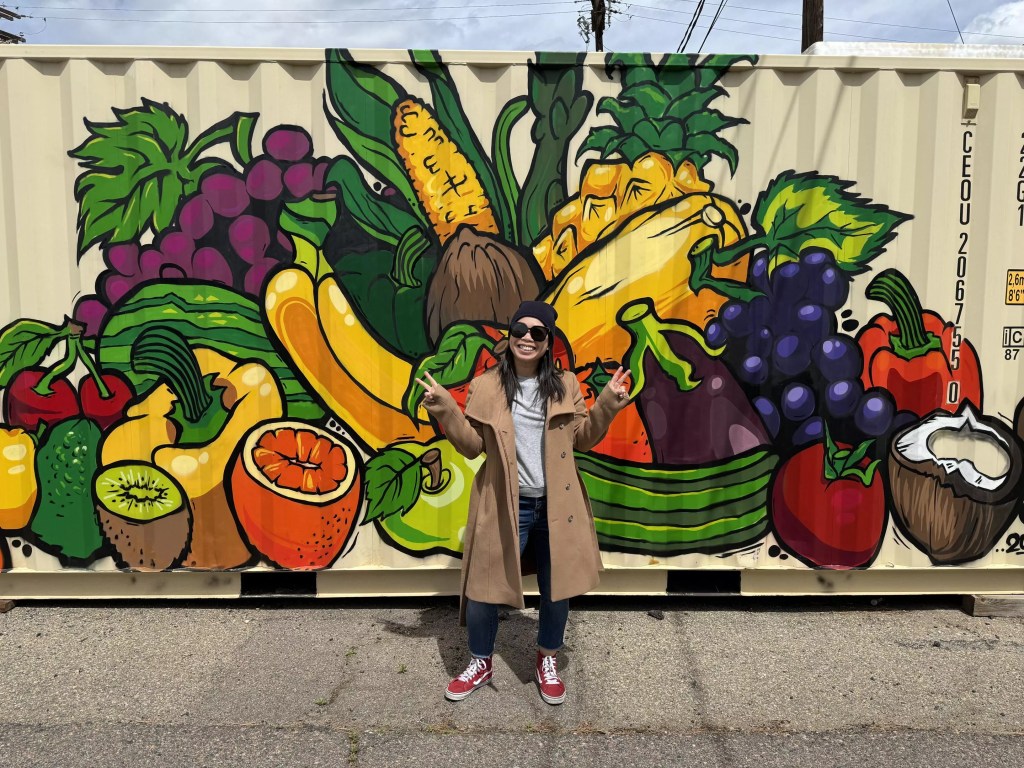
Those painful memories inspired her to create Kaizen Food Rescue in 2019. Billed as “the first refugee-founded and refugee-led food access organization in Colorado,” the Denver nonprofit has redistributed over 17.5 million pounds of “fresh, nutritious food” to more than 400,000 mostly immigrant and low-income families since its launch, she says, through projects such as community food pop-ups and food-share programs.
Nguyen went through the Colorado State University Extension Family Leadership Training Institute, a twenty-week civic engagement workshop, and what began as an idea for a community garden on South Sheridan Boulevard quickly turned into something else. “Initially, I was trying to start a community garden, but the four acres were high in arsenic, so I couldn’t do it,” remembers Nguyen. “So I pivoted to a food pantry after volunteering at the Food Bank of the Rockies.”
A volunteer told her that if she didn’t pick up the food in time, it would all go in the trash — and she was determined not to let that happen. So she worked fast, and her efforts evolved into Kaizen Food Rescue, one of the largest distributors for the Food Bank of the Rockies, supporting thousands of families across 100 Colorado zip codes.
Nguyen says that the organization has been especially impactful for fellow immigrants. “It goes anywhere from Asian communities to the LatinX communities and different West and East African communities as well,” she says, noting that the program supplies a mix of culturally diverse foods, including halal and kosher selections that are not often found at other food banks and pantries. “We try to get that for them and advocate around food justice for those types of products and items that are reflective of their culture or even religion.”
Kaizen Food Rescue has expanded well beyond food pantry offerings, too, providing programs such as Women, Infants and Children ambassador training, CPR and first aid, and instruction on immigration and rental rights.
The word “kaizen” is Japanese for “improvement” or “change for the better,” and Nguyen says she strives every day to have Kaizen Food Rescue live up to its name. “I feel like it’s an honor to actually serve my community in a deeper way than what charity model pantry organizations are,” she says. “I feel that there’s an instinctive trust because of how I go about this work. I’m actually in the community.”
Food to Power
Food to Power
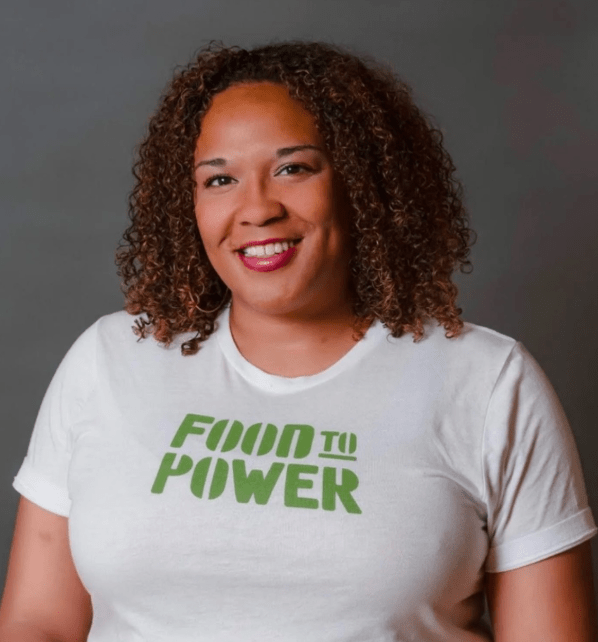
Patience Kabwasa believes in the power of healing through food. It’s a lesson she learned over years as a single mother of three, waiting in long food-bank lines and using her SNAP benefits at the grocery store. She vowed one day to pay it forward.
She made good on that promise in 2015, when she joined Colorado Springs Food Rescue, first as a volunteer and eventually as a program manager. The organization was renamed Food to Power in 2021 to reflect the breadth of the organization’s work providing access to food, food education and food production. “We’re an urban farm that has programs in food access education and advocacy and food production,” says Kabwasa, who emphasizes that the nonprofit’s work focuses on proving food, while also advocating politically for policy changes improving food access.
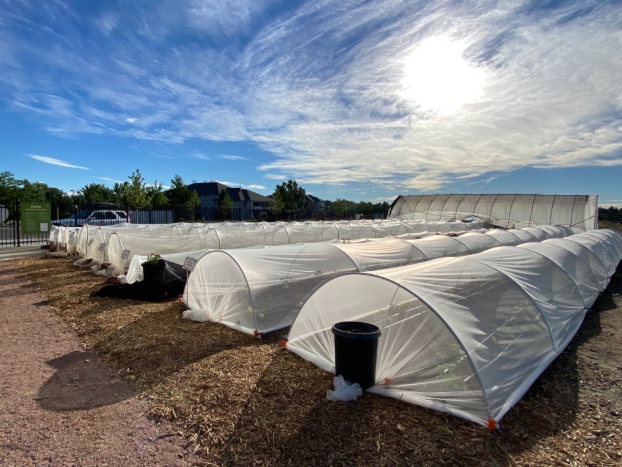
Food to Power offers a no-cost groceries program twice weekly in its building in Colorado Springs and also partners with eight other food-focused organizations in the area. “We also grow food on a quarter of an acre,” she says. “So we have in any given year 25 to 27 crops or a variety of crops that we grow on the land, and those are the vegetables that get partially distributed through No Cost Grocery and or some of our other market partners,” says Kabwasa, who now serves as executive director.
Courtesy Food to Power
The organization’s recent work has included creating focus groups, canvassing and working with coalition groups that helped get two statewide ballot measures, propositions LL and MM, on the November ballot to fund Colorado’s universal school meals program. Both passed.
In 2022, Food to Power opened the Hillside Hub – the first neighborhood food center in the historically Black neighborhood of Hillside in Colorado Springs. Situated on 3.5 acres of land, the initiative promotes food justice by providing the community with a place to grow, cook, access and gain employment and advocate for fresh food. “We served over 35,000 people last year through our networks,” Kabwasa says. “We fundamentally believe that fresh food is a human right and food for all. We do our best not to create barriers to folks accessing fresh food.”