Thomas Mitchell

Audio By Carbonatix
Independent Journalism in Denver Needs You
We need to raise $25,000 by August 9 to support the reporting our community depends on. Reader support keeps us independent and is playing a larger role in funding local journalism and shaping what comes next. If you believe independent local journalism matters, make a contribution today.
Golden Triangle residents expressed a mix of frustration and gratitude towards Denver prosecutors, police and city services during a community meeting on Wednesday, April 8, but issues like homelessness, drug crimes and unreliable sidewalks continue to upset the neighborhood.
“I don’t understand why we’re told, ‘Call, call, call,’ when there’s these problem areas that are obvious as the nose on your face,” one resident said about homelessness along the Cherry Creek Trail. “There isn’t any proactive action in those areas, and it looks like a dump along there. …Cherry Creek is an embarrassment for Denver.”
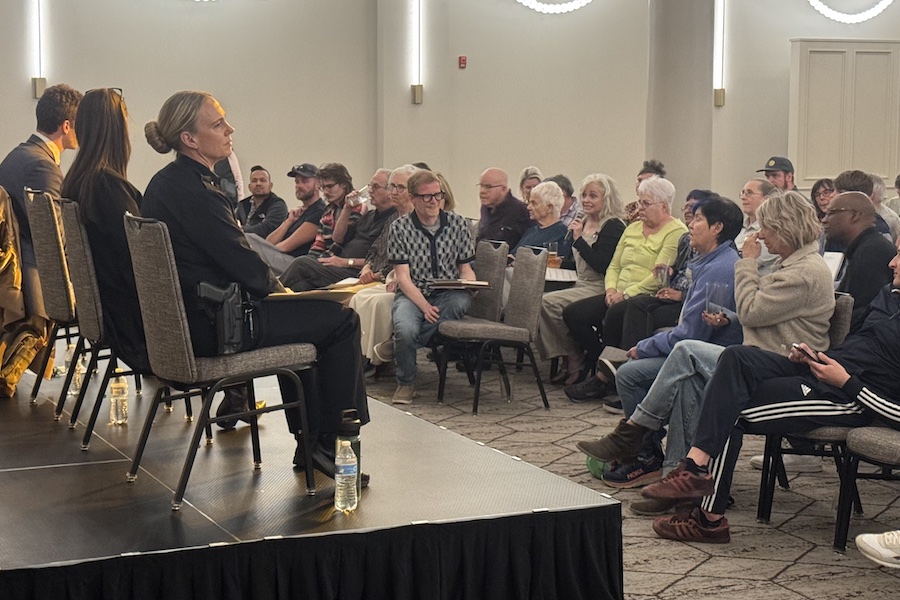
About seventy people attended the meeting at the Schoolyard Beer Garden, 1115 Acoma Street, with a panel of city and state officials. Kim Bowser, the commander of the Denver Police Department District 6, which includes downtown and parts of central Denver, spoke about crime-fighting efforts in the neighborhood, including undercover police and drones as first responders. Like an HBO crime drama, DPD has undercover officers and confidential informants detailing drug dealers in the neighborhood, especially around Broadway and Margot Flats.
“Our undercover officers for things like narcotics are really trying to target dealers that are causing harm to our community,” Bowser explained. “We usually use undercover officers or partner with confidential informants. The goal is to not only identify and arrest a dealer, but go after the next-level dealer as well.”
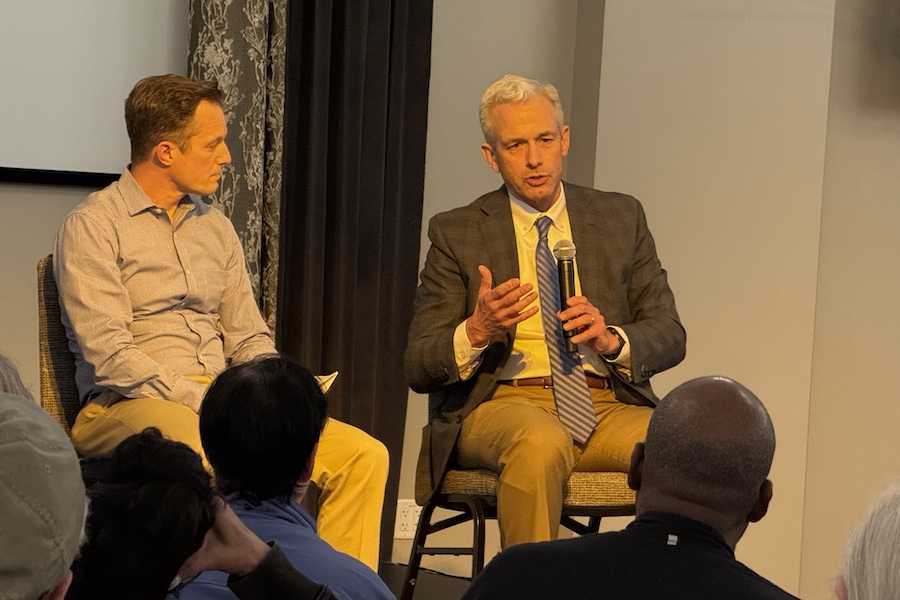
Denver District Attorney John Walsh and Deputy DA Matt James also attended, explaining the process behind the prosecution of low-level offenders and why many are able to leave jail quickly on personal recognizance bonds.
“There are whole categories of lower-level offenses where there is a presumption the person is going to get a personal recognizance bond,” Walsh said. “They’re essentially going to sign a commitment to come back with a penalty associated with that. That’s the circumstance where sometimes you see people, they get arrested and they’re immediately back on the street.
Walsh admitted “it’s a complicated dynamic,” but he reassured residents that “we always have the deputy district attorney in the courtroom, taking into account public safety,” and that calling the police is still worth the time, even without an arrest.
“Sometimes it can feel frustrating when you report crimes and don’t get a response, and it’s usually because [Denver Police] District 6 has to prioritize more significant offenses,” Walsh said. “But it’s so important that you make that report regardless, because that’s how the Denver Police Department and, frankly, our office can assess where crime is and where resources have to be put.”
Bennito L. Kelty
Organized by residents in the neighborhood, the community meeting followed up on questions raised in February, when Golden Triangle residents blamed Mayor Mike Johnston’s All In Mile High program for directing homelessness into their neighborhood. Golden Triangle is home to Margot Flats, a small apartment building that houses homeless residents who were referred and assisted with Housing Connector, a nonprofit that works with AIMH. Elati Village, a 54-person micro-community, is also in the neighborhood, and homelessness along the Golden Triangle’s stretch of Broadway is often visible to drivers and pedestrians.
The February panel featured DPD officers as well as Cole Chandler, who was the mayor’s senior advisor on homelessness at the time. (Chandler was announced as the new head of the Denver Department of Housing Stability (HOST) on Wednesday, April 8.) Residents yelled at him to “open your eyes” when he disagreed with their view that Johnston’s efforts to clear downtown encampments forced homeless residents to migrate into surrounding neighborhoods, a claim also made by members of Denver City Council in west and south Denver and even DPD officers.
Wednesday’s meeting was much calmer, but organizers spent less time letting people ask questions. Instead, most of the questions were prepared and sent to the panelists ahead of time, and organizers took turns reading the questions. Still, about a dozen residents were given the chance to take the mic and share their thoughts or questions. More people were more supportive compared to February, but still wanted more results.
Sidewalks and Streets
“I’m a veteran, and I want to say thank you for your service, all you guys,” a resident said. “I moved here from Alabama. Community engagement like this is unheard of. This is such a privilege that we have a sidewalk [program].”
Still, others had sharp words. Drew Nesmith, a legislative aide to Colorado House Representative Alex Valdez, spoke briefly about partnerships that Valdez has with the Downtown Denver Partnership and DPD, but one resident soon stood up and criticized Valdez for not being concerned enough about neighborhood issues.
“It has seemed to me that Representative Valdez is uninterested in neighborhood issues,” the resident said. “Where has he improved lighting in House District 5? I have just never seen attention paid towards that or any other neighborhood issue.”
Residents on Wednesday and at the February meeting complained that 11th Avenue, in particular, is too narrow in parts and there are holes in the sidewalk. A lack of signage warning residents makes it even more dangerous, they said, especially at intersections with Bannock and Delaware streets. Others complained that 311 is unresponsive to complaints about sidewalk obstructions in front of new developments.
Callanan said that DOTI has upwards of $9 million to improve the city’s sidewalks this year, and the department is asking people to take pictures and use the Denver online service hub to report walkways that are broken, narrow or otherwise damaged in a way that makes it difficult for pedestrians or people with disabilities to pass. About 43 percent of Denver’s sidewalk network is “missing completely or deficient,” he said, including sidewalks that are damaged or fail to meet federal disability standards.
Homelessness
Panel member Erin Atencio, who leads the city-created homeless service program Roads to Recovery, told attendees that Denver’s seven AIMH shelters and their 800 rooms are full.
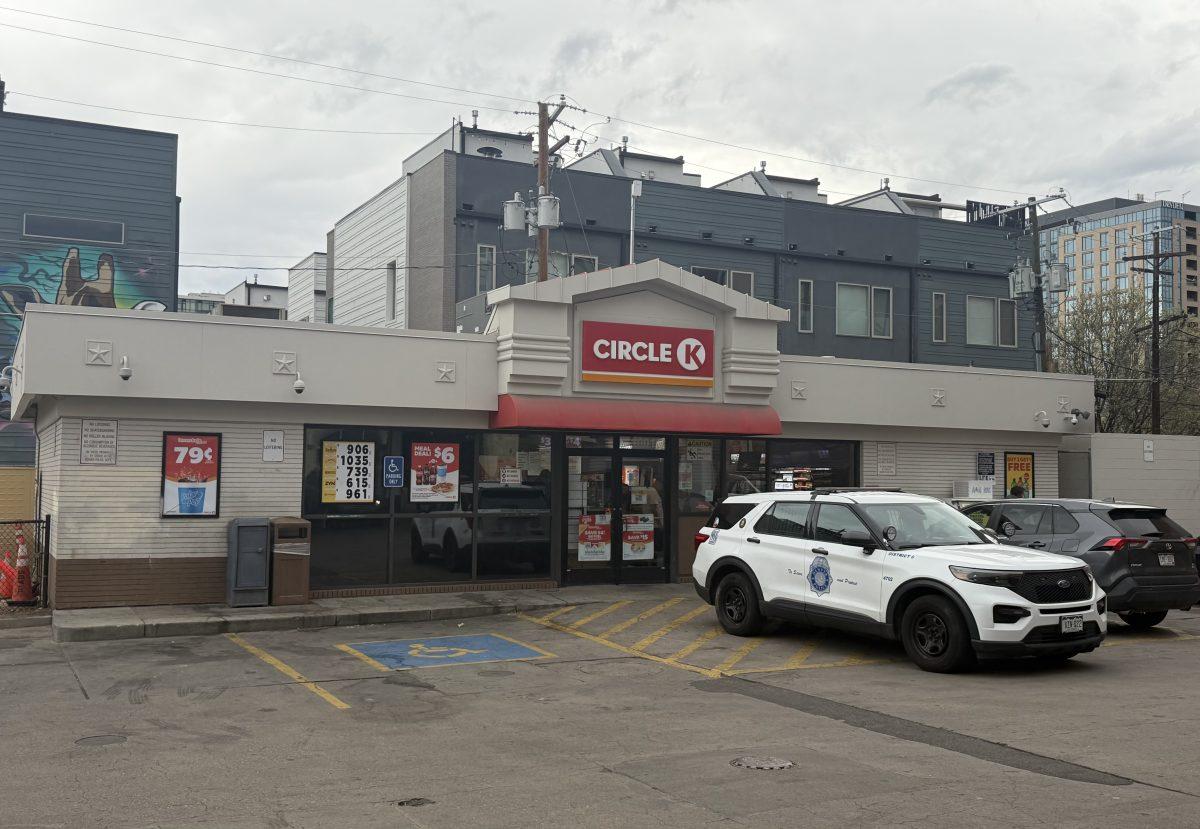
At the meeting in February, one of the most upset and frustrated attendees was a business owner who asked only to go by Petra B. She owns Circle K convenience stores in Colorado and New Mexico, but her location on 10th Avenue and Broadway has the most problems, Petra said at the last meeting. She returned on Wednesday, and said that she had put “rocks and fences” around the Circle K to deter homelessness, and DPD patrols the block “eight hours a day, almost,” she said.
But, according to Petra, she and other businesses in the community are dealing with a new issue: people donating items to the homeless out of a van. She asked panel member Erin Atencio, who if the van was part of a city operation.
“There’s a van showing up at my parking lot, they’re opening up their doors and the homeless people rush this van, and they get items like socks, T-shirts and food,” Petra said, angrily asking Atencio, “Is that part of your group that is all of the sudden showing up in our parking lot?”
Before Atencio could answer, another resident complained that ministries, nonprofits and other unidentified good Samaritans are “reversing that progress” the city has made in reducing homelessness in the Golden Triangle. “How can the city get involved in cracking down on the ministries and the nonprofits that are in direct competition with you?” he asked.
Atencio and Bowser said they didn’t know who was operating the van, and Petra said that she hadn’t asked the drivers directly. In a more tranquil tone, she explained her frustration to the crowd, detailing months of trying to clear her property of homelessness.
“My problem is that we’ve been working tirelessly to do our part in the community, and now we’re like, ‘What are you doing in the parking lot, gathering these people around you? Get these people off the parking lot.'”
Bennito L. Kelty
Another resident stood up and said that in the wake of those donations, she sees people “dumping the food out, trash is going everywhere, we have bags all over the place, we have bags of bread everywhere.”
“We’re always looking for people that do want to work with this population, that do have resources, and how can we plug them in a way that doesn’t cause more disruption?” Atencio said, and then asked Petra and others to help her connect with the unidentified van drivers.
Penny Wagner, the lead organizer of the meeting, gave kudos to the Urban Alchemy ambassadors, a program that launched at the beginning of the year. The ambassadors themselves are recovering from addiction, homelessness and incarceration. and now work with the California-based Urban Alchemy in various parts of Denver. Some are stationed in the Golden Triangle, and can be seen picking up trash; Wagner said that she saw a woman de-escalate an argument between homeless residents, and found out later she was an Urban Alchemy ambassador.
“I saw this woman I didn’t know picking up trash…she followed this guy, got him separated from the people he was with and started talking to him in such a wonderful way. I saw that happening, and it was fabulous,” Wagner said. “And she said to him, ‘I’ve been there. I know what you’re going through.'”
A resident asked Bowser how the Golden Triangle can form an organization similar to the Ballpark General Improvement District, because Broadway is “a drug highway, people are passed out all the time.” The same resident said she would support a property tax increase for a similar program, praising the Ballpark GID’s work. South Broadway is in the first year of its GID, but it stops at 6th Avenue, which is just south of the Golden Triangle.
“You’re all talking about you can’t charge people, you can’t put them in prison, but the fact of the matter is that they still lay out on our street with syringes up their arms,” the resident said. “Literally from the Art Museum all the way down, we all know that. Nothing is ever going to happen until there’s something that we can do. It seems like there’s nothing we can do.”
Wagner said the next Golden Triangle community meeting will be on May 6.