
CCG

Audio By Carbonatix
The recent commentary on Denver’s restaurant economy reflects something many of us know firsthand: Costs are up, margins are tight, and running a restaurant feels harder than ever. On that, there is broad agreement. Where we differ, and where this conversation needs to stay open, is the idea that cutting tipped wages is the right response.
Over the past several weeks, more small, independent restaurant owners have stepped forward to say clearly that we do not support wage cuts. Not because we disagree with the challenges outlined in the 2025 State of Denver Restaurants Report, but because we live them every day and have come to a different conclusion about what real solutions look like.
This conversation did not emerge in a vacuum. It began in February, when Denver City Council representative Darrell Watson confirmed to the Denver Post that he “plans to propose a change to the city’s tipped-wage policy to his fellow council members before the end of March.” The article referenced the report as a foundation for that effort.
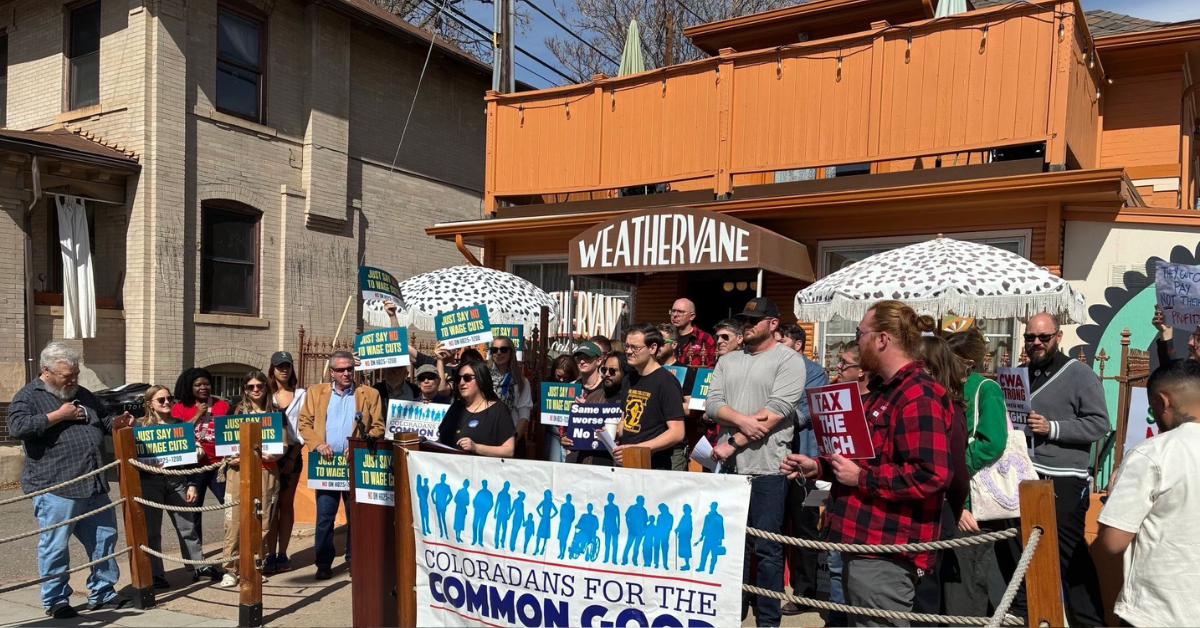
Right now, there is no formal group representing operators who oppose wage reductions. Without it, policymakers may hear only one version of what the industry wants — when in reality, there is no single consensus.
We are here. We run businesses under the same pressures. We deal with the same rent increases, insurance hikes, and rising costs of food. We feel the same uncertainty. But we do not believe that lowering wages for tipped workers, a cut that could mean hundreds of dollars a month for someone, is the lever to pull.
Many of us would actually benefit financially from that kind of policy change. But we do not think it is worth the cost to our staff, to the trust we have built in our communities, or to the long-term health of our businesses.
Referring to the coalition against wage cuts, former Denver restaurateur Delores Tronco wrote that: “They agree with nearly everything in the report — except the part about labor costs. Agreeing that the patient is sick while refusing to discuss the fever isn’t a counterargument. You haven’t entered the debate. You’ve shut it down.”
Our perspective isn’t meant to shut down debate, it’s meant to open it. The conversation only started to feel incomplete when wage cuts, including lowering the tipped minimum wage, began to be framed as the only viable path forward. A wider range of recommendations needs to be brought to the table.
Adding another viewpoint does not close the conversation. It makes it more honest. Disagreement does not mean the conversation is failing.
Tronco assumes there is only one diagnosis. Many of us see the same symptoms and believe the causes, and the solutions, are more complex.
Yes, labor costs have gone up. So has everything else. The question is not whether restaurants are under strain. The question is who absorbs that strain.
Cutting wages puts that burden directly on workers who are already dealing with the cost of living in this city. It also has ripple effects. Less local spending, more turnover, and a weakening of trust between businesses and the communities they depend on.
There is also a broader concern about how this conversation is being shaped. The 2025 State of Denver Restaurants report was authored by groups with a direct financial stake in the policy outcomes being proposed.
The Denver Auditor’s Office has reviewed the report and found that several key claims may be inaccurate or misleading. Its analysis points out that the report relies on outdated or incomplete data, which can make it look like the industry is in sharp decline. It also disputes the claim that tipped workers consistently earn high wages.
Reliable public research and datasets show that most tipped workers, including in Denver, earn low or modest wages, including tips. This problem is worsened by the industry’s high wage violation rates. The Auditor’s Office commissioned research showing that the restaurant industry is the second greatest offender of minimum wage laws in the Denver metro area.
It is worth noting that both the Auditor’s Office and Denver Labor remain neutral on whether the tip credit should be adjusted.
Denver’s restaurant community has always been diverse. Different sizes, different models, different ways of thinking. It makes sense that we would approach a challenge like this differently, too. A healthy policy process should reflect that, not flatten it into one story.
We agree on more than it might seem. Permitting is difficult. Costs are high. The path forward feels narrow. Those are shared realities, but agreeing on the problem does not mean agreeing on the solution.
At some point, we should be able to move past the question of wage cuts and focus together on the larger forces putting pressure on this industry. Commercial rents continue to climb. Vacancy and underused storefronts shape entire corridors and raise rent. Food costs remain volatile and large corporate interests are steadily reshaping local neighborhoods in ways that make it harder for independent operators to compete.
These are structural challenges. They affect all of us. If there is common ground to be found, it is here.
What we need now is more voices, not fewer, and a willingness to work together on the issues that will actually determine the long-term health of Denver’s restaurant community.
If this city is going to make decisions about the future of its restaurant industry, those decisions should reflect the full range of people in it, including those of us who believe that protecting wages is part of protecting the industry itself.
The conversation is not over. It is becoming more complete.
Denver Independent Restaurant Coalition
Aguanile, Alpine Eatery Food Truck, Annette Scratch to Table, Art Club Coffee, Bar Max, Capital Thai, Convict Coffee, Copper Door, Corner Beet, Crema, Devil’s Drink, Dio Mio, Easy Vegan, Farang Thai Kitchen, Finn’s Manor, Fort Greene, Ginger Pig, Good Bones Colfax, Green Bus Cafe, Hearth Denver, hi-dive, Hooked on Colfax, Hudson Hill, Johnny Bechamel’s, Lady Jane, Long Table Brew House, Maiz Denver, MAKfam, Middlestate Coffee, Monarch Denver, Moon Raccoon Baking Company, Mother Other, Neon Cowboy, Outside Pizza, Peach Crease Club, Point Easy Denver, Portside, Procession Coffee, Queen City Collective Coffee, Rebel Bread, Redeemer Pizza, Rooster Cat Coffee, Rougarou, Sap Sua, Sesame Sandwiches, Sfoglina, Somebody People, Stella’s Coffee Haus, Stokes Poke, Stowaway Kitchen, The Cake Bar, The Crypt, The Denver Coffee Co, The Wild, Torpedo Coffee, Town Hall Collaborative, Traveling Mercies, Velvet Lasso, Weathervane Cafe, Yacht Club, Yuan Wonton