Thomas Mitchell

Audio By Carbonatix
Advertising Can't Do It Alone
The challenges facing local news organizations are very real. That's why reader support matters more than ever. If you believe independent journalism matters, make a contribution today and help us reach our summer fundraising goal of $25,000 by August 9.
Colorado’s relatively young psychedelics laws could be tested as a magic mushroom co-op challenges state authority over what constitutes psilocybin facilitation and personal use.
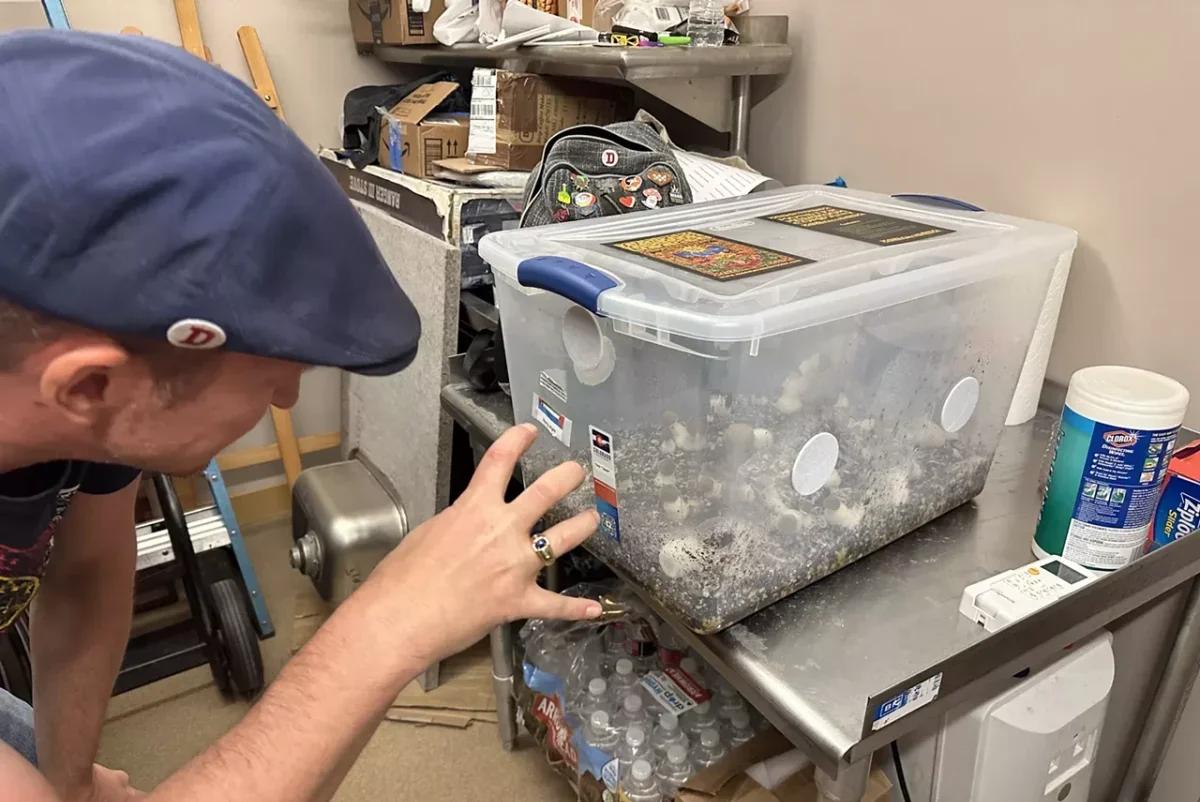
Darren Lyman has operated in the open as a psilocybin purveyor at 800 West Eighth Avenue since 2023, shortly after Colorado voters approved a law decriminalizing the possession, cultivation and sharing of psilocybin and several other natural psychedelics. Intended to be used for medicinal, wellness and spiritual purposes, Lyman’s magic mushrooms are part of what he believes comprise harm reduction and support services in the personal-use space of natural medicine.
Therapeutic psilocybin use is legal in Colorado, but under state law the process requires screening and post-facilitation meetings, and patients must be supervised while they experience psilocybin’s psychoactive effects. The most affordable options cost around $150 to $200 per session, with each session including a specific dose of mushrooms that usually ranges anywhere from one to five grams.
Lyman’s process is unlicensed and has far fewer strings and costs associated with it. After a screening and conversation with Lyman, adults aged 21 and up can purchase his “support” in the form of educational chats, pamphlets and other resources for how to intentionally use psilocybin, and what to do if the psychoactive effects are too intense. The support sessions cost around $60 to $100, and allow members access to psilocybin mushrooms, psilocybin-infused chocolates and DMT, a psychedelic substance that is decriminalized in Colorado but not yet legalized for therapeutic facilitation. However, no one is allowed to consume at his office; nor does Lyman accompany or sit with members during their psychedelic journeys, he notes.
Lyman was so comfortable with what he was doing that he bought ads in the back of Westword, later inviting us over for a few interviews. He maintains that his co-op falls within the law and that he’s merely an early adopter of more support services to come. You can find his self-published books on mushrooms and psilocybin at local stores, and he has appeared at city and state rulemaking hearings to discuss his psilocybin support service. Beth McCann, then the Denver district attorney, acknowledged she was aware of Lyman’s operation in 2023. Even so, his operation was never shut down, and Lyman was not arrested for selling psychedelics.
Colorado allows people to share or gift certain psychedelics, including psilocybin and DMT, and be remunerated for support and production resources. Commercial activity outside of facilitation is still illegal, though, begging the question: Where does harm reduction and support end, and commercialization begin?
State licensing officials view Lyman’s support service as an underground psychedelics dispensary, and have tried to put the clamps on it over the last two years by issuing him two cease-and-desist orders. The first was sent in 2023 by the Colorado Natural Medicine Division (NMD), a branch of the state Department of Revenue that regulates the commercial side of psychedelic therapy. The letter told Lyman that since he conducts “business transactions…the advertisement and exchange of psilocybin mushrooms for remuneration is not lawful and must immediately cease.”
Lyman’s advertisements in Westword were cited in the order. His attorney, Sean McAllister, says that Lyman stopped advertising after receiving the NMD’s order, but his website and studio are still running.
“It never said anything about his website or being engaged in any kind of unlawful facilitation,” McAllister says of the first cease-and-desist order. “We saw that concern and we stopped advertising on the back of Westword. We didn’t hear anything from the state for two years, and you’d think we would have if we were doing something.”
The NMD has maintained a consistent stance on the illegality of support and harm reduction services like Lyman’s since 2023, issuing at least three more cease-and-desist letters to other psychedelics purveyors. Still, the threats of enforcement did not appear to stop psychedelics support services from popping up around Colorado.
Now another licensing arm is stepping in.
Nearly two years after the NMD’s first notice to Lyman, the state Department of Regulatory Affairs (DORA), which is responsible for regulating psilocybin practitioners in Colorado, sent Lyman a cease-and-desist order in December 2025, accusing him of unlicensed facilitation.
According to DORA’s Office of Natural Medicine Licensure, Lyman is operating as a facilitator of psilocybin, which requires approval from both DORA and the NMD — but he “is not licensed, and has never been licensed to practice facilitation,” DORA’s cease-and-desist reads.
McAllister helped draft the Natural Medicine Health Act, or Proposition 122, the voter-approved measure that decriminalized psilocybin and legalized forms of therapeutic use. DORA’s current interpretation “would completely gut the personal use decriminalization provisions,” because the law “specifically said you can give away natural medicine and be paid for harm reduction services,” he notes.
“That would render that section about harm reduction completely meaningless and significantly limit the personal use provision of the Natural Medicine Health Act, so that has a lot of consequences,” McAllister says. “Darren is not sitting with anybody during the use of mushrooms, and he’s not prepping them for state-licensed administration sessions. He’s giving educational information, support services and answering questions people have about the effects of mushrooms.”
DORA will not comment on the case, citing active administrative hearings. According to the cease-and-desist letter, Lyman “offers natural medicine services…including preparation, administration and integration” of DMT and psilocybin at his co-op. He and McAllister deny that Lyman ever provided a space for people to consume psychedelics, or that he sat with or provided hands-on therapeutic services to anyone who consumed psychedelics, other than offering educational materials beforehand.
These distinctions make a facilitation license unnecessary, McAllister argues, but DORA flexes some regulatory muscle in the cease-and-desist by saying that “personal use” and “harm reduction services” can argue their cases in front of a judge “as a defense to criminal charges rather than as an exception to unlicensed practice of facilitation.”
“If that is [facilitation], then anybody providing educational services to people using natural medicines could be targeted by this agency,” McAllister counters.
The psychedelic advocate is set to appear in front of a DORA administrative judge over the matter. McAllister says his client is prepared to take the fight to state court if needed, which could set a precedent for future disputes related to psychedelics transactions in Colorado.
In the meantime, Lyman is still operating his support service and website because the state’s two closure orders are “illegal and not legitimate,” according to McAllister, who calls Lyman a “pioneer” who’s being singled out for selective enforcement.
“Darren has been very vocal about his support for the decriminalization provisions of the law. He’s been very vocal about equal access to natural medicines for adults. He has been to Denver City Council meetings to talk about his work,” McAllister says. “He’s got a somewhat public profile, because I think they’re looking to make an example out of him.”