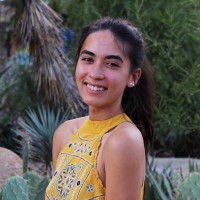
Photo by Michelle Kaye

Audio By Carbonatix
Michelle Kaye was just six years old when she discovered the healing power of horses. She was attending summer camp in Colorado, far from her family’s suburban Kansas City home and the strain of her parents’ divorce. She recalls, “The horses really drew me in when I was little and needed them most. The only place I wanted to be was the barn.”
Kaye spent her childhood summers shoveling, grooming and feeding the camp’s herd whenever her help was welcome. Through her teenage years, she worked as a wrangler at the JCC Ranch Camp in Elbert, where she fell more deeply in love with horses and their connection to humans.
“I was drawn to the people who were scared or who didn’t feel comfortable going on the trail rides yet, so I would stay back at the ranch with them and teach them what I knew about relating with horses. To watch people’s self-confidence grow and to watch them learn how to relate with horses was absolutely miraculous,” she says.
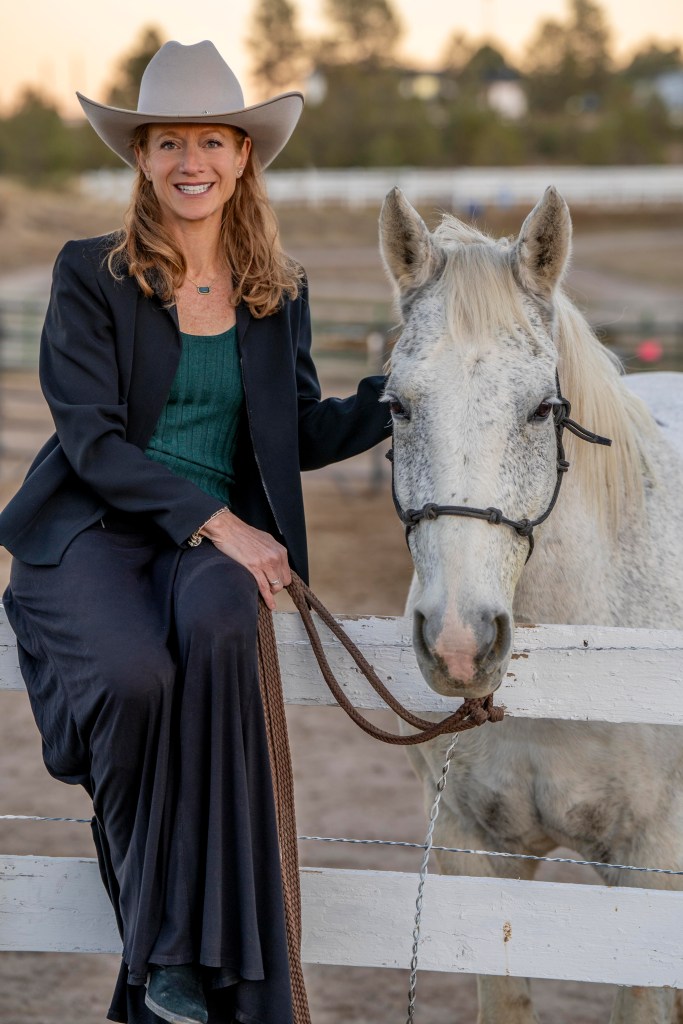
Phot by Mark Smith, PhotoSmith Colorado
Educating kids was of special interest to Kaye, who went on to teach and counsel students after permanently moving to Denver in 1997. She helped establish Academy of Urban Learning (AUL), an alternative charter high school in the Highland neighborhood that serves at-risk youth; then worked with twice-exceptional children.
But Kaye began to feel burnt out in the city. “The horses were calling me back and I was really missing my outdoor self,” she says. “That’s when equine-assisted therapy [certifications] started becoming a thing.”
Masters at self-care
In 2009, Kaye began seeking equine therapy credentials to complement her status as a licensed professional counselor. One of the first organizations she trained with was Eagala, which specializes in equine-assisted psychotherapy using a ground-based, no-riding model.
Clients work alongside a licensed mental health professional, an equine specialist and an unbridled horse within an enclosed pen. This allows clients to engage with the animal and make meaning of its natural feedback. Oftentimes, horses will mirror emotions and set boundaries.
“Horses are masters at self-care. If it doesn’t benefit them to be in your space, they won’t be,” affirms Kaye. “When the human is more regulated, the horse is more likely to want to spend time with them.”
Desiring interaction, many clients become motivated to practice managing their emotions and explore relational dynamics in the hands-on environment. “The stuff that happens will not happen in an office. It just won’t,” says Kaye, who previously practiced talk therapy and motivational interviewing in a clinical setting.
During an equine therapy training session, she met a Marine and Air Force veteran who would become one of her closest friends. Kaye recalls, “He looked at me at the end of that training, and he said, ‘Have you ever thought about working with veterans? Because you have the constitution for it.’”
He explained that her thick skin and dark sense of humor made her a great match. “I’ve been working with cowboys since I was six,” she jokes. “I started getting really involved in working with other organizations who serve the military and veteran communities. I fell in love and never looked back.”
Kaye became a licensed military family and life counselor (MFLC) and worked as a staff counselor for Project Sanctuary, a Colorado-based organization supporting at-risk military families. She then started her own nonprofit, Operation Equine, in Boulder in 2019.
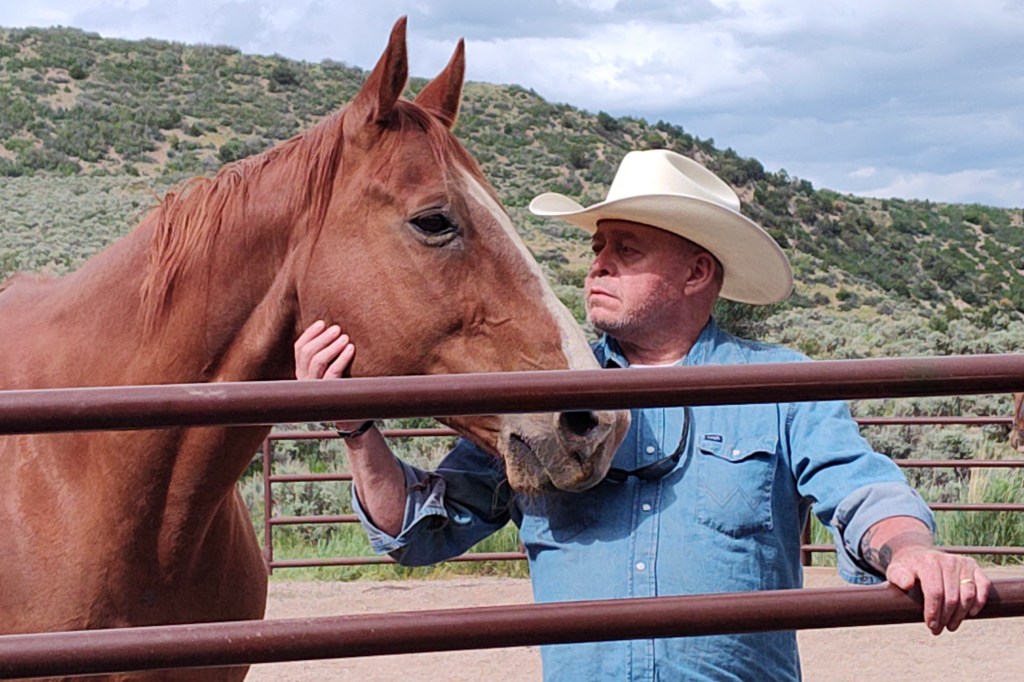
Photo by Michelle Kaye
It’s more than PTSD
By facilitating therapeutic experiences with horses, Operation Equine serves military members, veterans, first responders and their families. Kaye recalls that early on, some questioned her approach, arguing that it would be difficult to effectively support all of those groups well.
“I respectfully disagreed, and I said, ‘That’s who we’re serving because there’s so much overlap,’” she says, adding that many veterans later become first responders, and, in several cases, these communities encounter similar challenges.
Post-traumatic stress disorder is often linked to military service members, and as many as 24% of women and 14% of men receive the diagnosis, according to the Department of Veteran Affairs. Equine-assisted therapy is a promising treatment, with numerous studies finding that it can decrease symptoms like dissociation and hypervigilance.
Kaye notes that during periods of active duty, extreme alertness had its place for veterans. “However, when they get home, and they’re still hypervigilant and don’t need to be, they have a harder time down-regulating back into that situational awareness. Horses are masters at teaching this. They’re situationally aware because they’re prey animals,” she explains.
However, Kaye affirms that the challenges veterans face are complex and varied. “A lot of people write it off to PTSD and TBI (traumatic brain injury), and it’s so much more than that.”
While those conditions are widespread within the military community, the same is true of other issues including sexual trauma, moral injuries such as survivor’s guilt and grief caused by the loss of colleagues in and outside of service.
Reintegration with family is another common struggle, says Kaye, as is identity. “If they’ve been in over ten years especially, it’s really hard [for them] to know who they want to be when they get out,” she adds.
These are the types of issues that Operation Equine looks to support with its signature program: the Warrior Pack Trip.
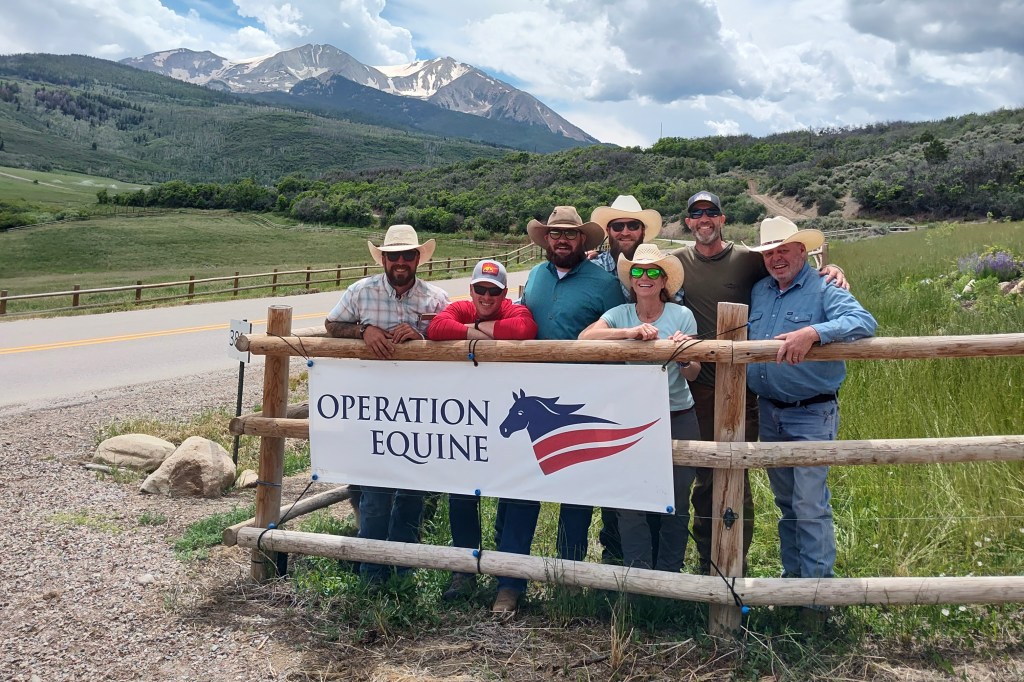
Photo by Michelle Kaye
Healing in the wilderness
Operation Equine has long partnered with the Marcus Institute for Brain Health at the University of Colorado Anschutz, which offers a three-week intensive outpatient program for military veterans and first responders. Individuals are screened for PTSD and TBI, and those who qualify participate in one day of equine-assisted therapy alongside Kaye.
But Kaye dreamed of developing a more immersive program that would allow individuals to create deeper relationships with the horses. In 2022, Operation Equine offered its first Warrior Pack Trip to three female veterans, a group Kaye intentionally prioritized given that women in the military often have access to fewer opportunities than their male colleagues.
But funding granted both men’s and women’s trips in 2024, as well as this year. When Kaye spoke with Westword, she had just returned from the women’s retreat at Music Meadows Ranch in Westcliffe. Soon she’ll be leaving for the men’s pack trip, which will take place in Wyoming from Aug. 29 to Sept. 6.
For the first time, Operation Equine has partnered with National Outdoor Leadership School to host a trip that will combine its Warrior principles (“Warrior” is an acronym for wisdom, acceptance, respect, relationships, integrity, own your impact and responsibility) with NOLS’s leadership model and tactile skill-building.
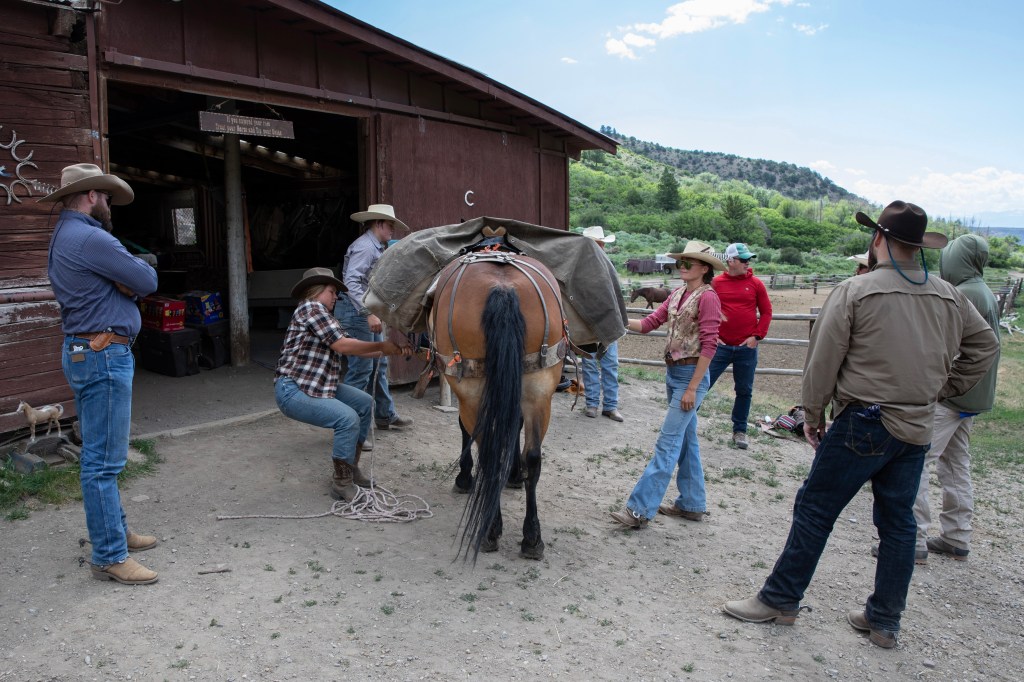
Photo by Michelle Kaye
Kaye will arrive at NOLS’s Three Peaks Ranch a couple of days early to give staff members military cultural competence training, a program she co-founded with Navy veteran Tiffany Morgan.
Ages of the six veteran participants span between early 30s and early 60s. They’ll spend two days at the ranch learning the foundations of horsemanship from Kaye, and NOLS staff will teach the group how to pack the horses’ panniers with gear, set fencing, pitch tents and cook camp meals.
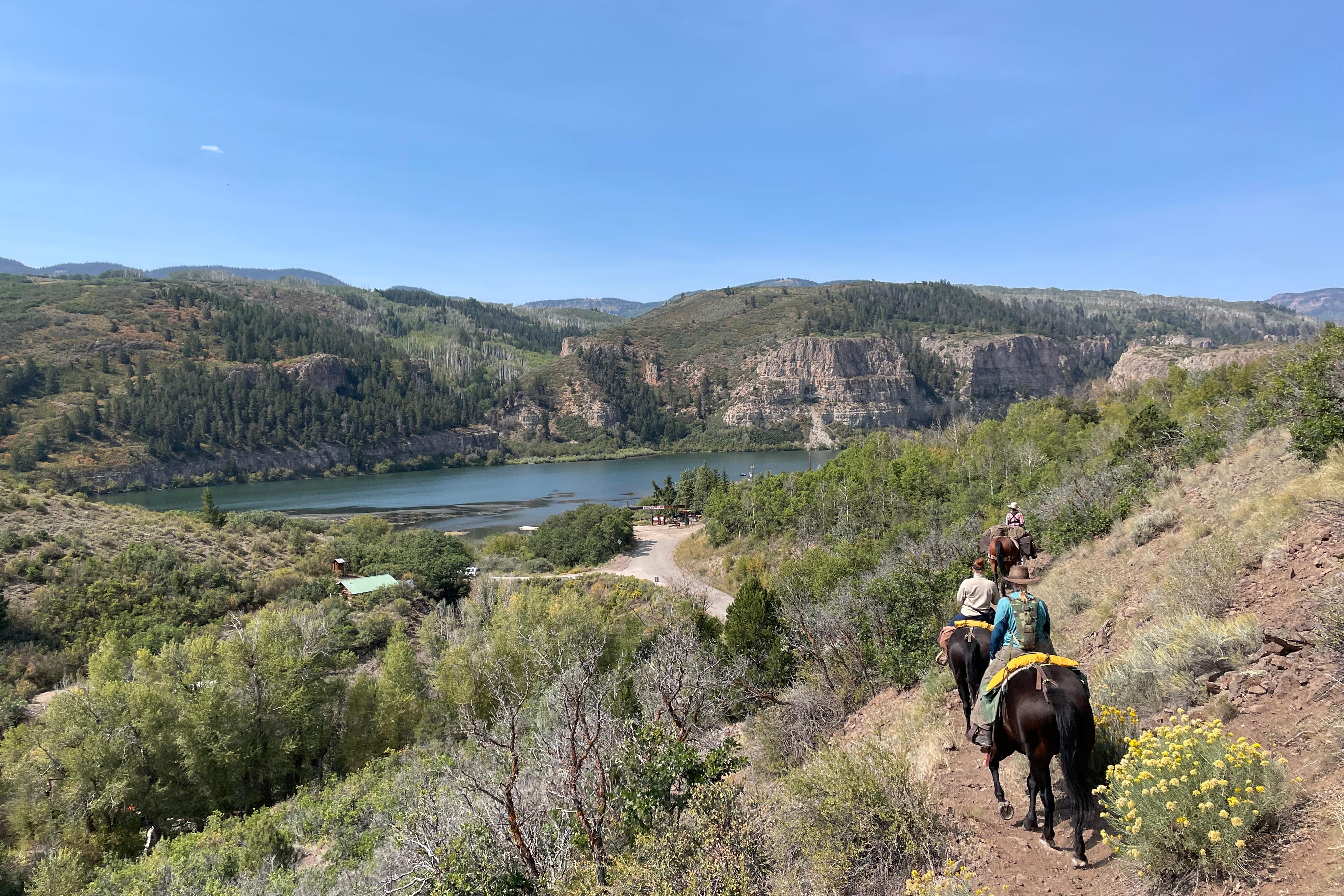
Then, they’ll embark into the backcountry for six days and five nights, exploring the remote Wind River Range. Each day will involve three to eight hours in the saddle and begin with a moment of mindfulness. Kaye affirms that the Warrior and NOLS leadership principles will be practiced throughout the expedition.
“If you’re just coming for a vacation and a horseback ride, this is not your program. You got to be willing to drop in and do your work,” she says. But for those open to growth and healing, the experience has often proved transformative.
“The work we did with the horses allowed me to shine a light on areas of myself I needed to pay attention to that I had never realized before. Forming a bond with a horse is more powerful than the average person is aware of,” writes one Navy veteran participant.
Another Operation Equine alumnus adds, “This trip changed the trajectory of my life forever. I am excited about the future again, primarily because I am now focused on my hopes and dreams. I have found my new sense of purpose.”
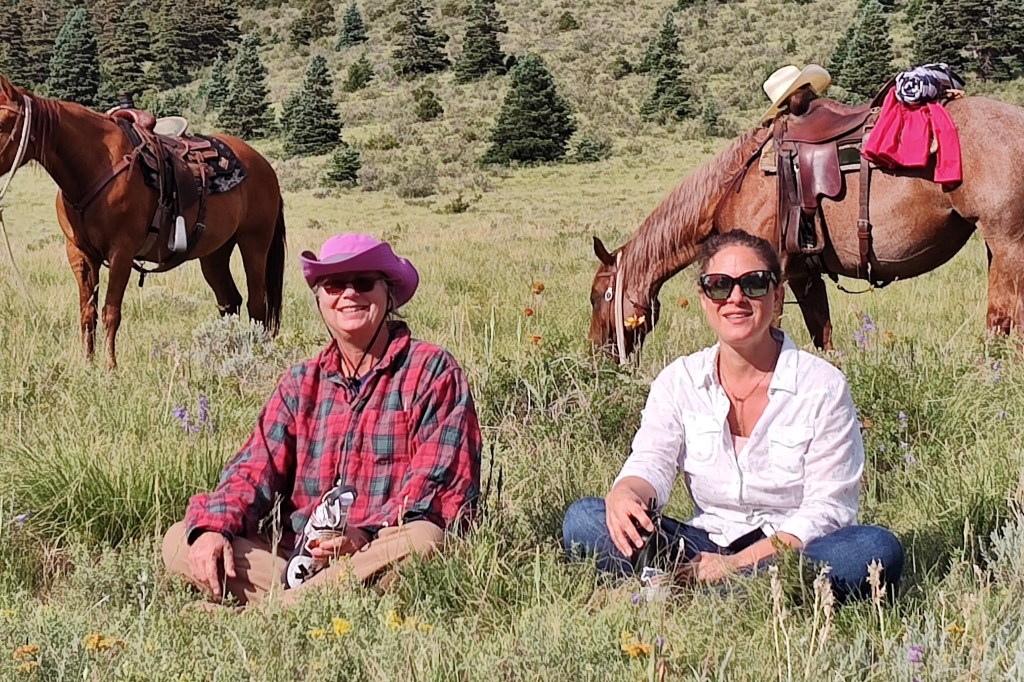
Photo by Michelle Kaye
Funding future expeditions
Thanks to a pledge from an anonymous donor, Operation Equine will partner with NOLS for the next three years, and the 2027 summer expedition in Wyoming will be offered to women.
But Kaye notes, “We can only take as many trips as we have funding for.” Next year, she hopes Operation Equine will offer women’s and men’s expeditions, as well as a couples’ trip for the first time. In the future, she aims to also host outings for military family youths and first responders.
Kaye has big plans and aspires to take Operation Equine to other states, too. Each nine-day excursion supports six veterans and costs $30,000 to facilitate. Military members selected to join Warrior Pack Trips attend at no cost. Those interested in supporting the nonprofit’s work can make a tax-deductible donation on its website, operationequine.org.