
Sage Kelley

Audio By Carbonatix
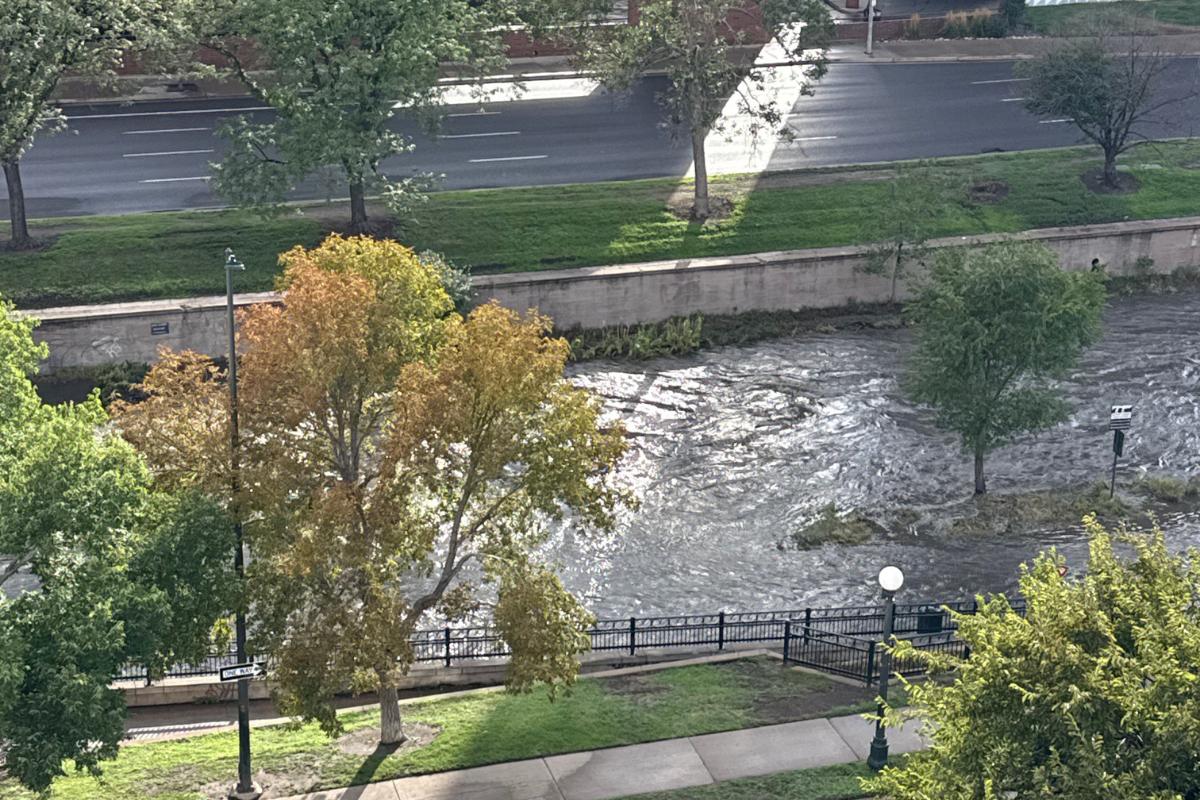
Rip-roaring rains poured through the Denver metro on Aug. 15, pushing Cherry Creek feet above its normal height and covering the nearby trail in Denver.
The visceral flooding may have alarmed some residents, but a selection of the city’s parks and the Cherry Creek Trail are supposed to flood, according to David Skuodas, education and outreach director for the Mile High Flood District, an organization that assists Denver-area governments in flood assessments.
A walled section of the Cherry Creek Trail that runs parallel to Spear Boulevard in central Denver is “primarily there for conveying floods, but, thankfully, it doesn’t rain so hard that the ‘floods’ happen often,” Skuodas tells Westword.
The lack of flooding in the city allows for a peaceful trail along the creek, creating a “daily value when it’s sunny out,” Skuodas says. “But then, when it does rain hard enough — which we know, statistically speaking, it inevitably will, occasionally — there’s a place for that water to go instead of flooding somebody’s house or instead of washing out a road … it’s definitely a system by design.”
Saturday was one of those rare examples, with flash flooding directly affecting multiple cities throughout the metro. For example, some areas in the south metro and Aurora received 2 to 3 inches of rain in less than an hour. Denver saw that amount in around 30 minutes, according to 9News meteorologist Chris Bianchi.
The torrential downpour left many roads flooded. Aurora Fire Rescue tells Westword it responded to 16 weather-related incidents on Saturday between 3 p.m. and 5 p.m., including seven vehicles stranded in water, seven residential floods causing electrical concerns, and two incidents where power lines were arcing near trees.
Around the same time period, South Metro Fire saw nine calls for stranded vehicles in Douglas and Arapahoe counties, two separate rescues of people stranded on paddleboards at Chatfield State Park, and one home being struck by lightning.
Denver Fire Department did not respond to inquiries regarding flood response, but social media posts showed water running through roads, including the under-construction East Colfax.
Multiple Veo scooters are often parked on the Cherry Creek trail, but a spokesperson with the company tells Westword, “Vehicles requiring attention were repositioned, and we did not observe any notable damage.”
While Cherry Creek pooled up well over the trail, it was not as alarming as it appeared. According to the Mile High Flood District, portions of the trail have a dual purpose of conveying floods away from streets.
The Cherry Creek Dam and reservoir were built in the 1950s after the Castlewood Dam gave way on Aug. 3, 1933. The Castlewood Dam was created in 1889 with no machinery, ultimately leading to its demise. After it broke, the city was flooded with several feet of standing water, leading to the construction of a new dam, the creek, and other flood-control measures, which include parks that can help hold water when needed.
“Two particular parks that come to mind are Utah Park and Expo Park. So they’re parks most of the time, but when it rains hard enough, they fill up with water that is stored temporarily to protect homes that were built too close to the creek downstream,” Skuodas explains.
Expo Park was one of the flooded areas that caught attention on Saturday.
According to Skuodas, a lot of the homes built in the metro before the 1970s were not planned well for flood safety, so the organization works to make sure these areas can be protected by redirecting or storing flood water elsewhere. This work includes gauging rivers, looking at topography and studying history, advanced mathematics and engineering. Skuodas compares the work to being an offensive lineman on a football field.
“Offensive line don’t show up in fantasy football because success for them is somebody not getting tackled. Everybody else can’t do their job if offensive linemen aren’t good at their job,” he laughs. “If you see it raining that hard and nobody’s really getting flooded, that success didn’t happen on its own.”