Colorado Parks and Wildlife Northeast Region

Audio By Carbonatix
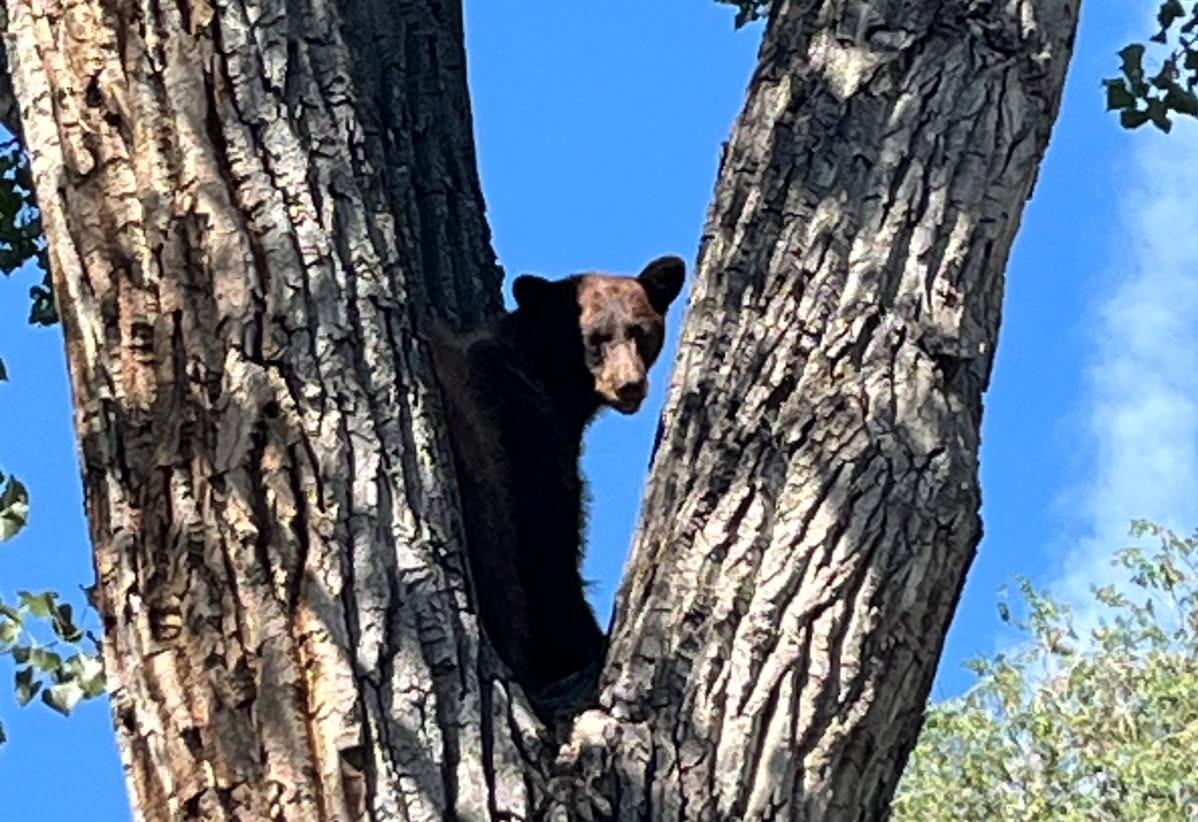
A bear was found in a residential neighborhood over the weekend. That’s common in cities like Durango and Steamboat Springs, but this bear was in Denver — sitting in a tree in the front yard of a Platt Park home, mere blocks away from Sushi Den, Washington Park and McKinley-Thatcher Elementary School.
The Aug. 23 incident was the second reported bear sighting in Denver County this summer, according to Colorado Parks and Wildlife. More than 800 bear sightings and conflicts have been reported throughout the Denver metro this year, nearly triple the number reported at this time in 2025. And bear encounters are expected to rise even further in the coming months.
“In late summer and fall, black bears enter hyperphagia, a natural phase when they can spend up to 20 hours a day searching for food as they build the fat reserves needed to survive the winter,” CPW spokesman Joey Livingston said in an August release. “That search is especially challenging this year.”
Colorado’s drought, wildfires and low snowpack have reduced berries, fruits, nuts, plants and grasses throughout areas of the state where bears typically feed, according to CPW. Now they’re forced to search elsewhere.
“As natural foods become harder to find, bears may travel farther and take greater risks to eat the calories they need,” Livingston explained. “That can bring them into neighborhoods and other developed areas where trash, bird seed, pet food, barbecue grills and other human food sources provide an easy meal.”
Statewide, bear reports have nearly doubled this year, according to CPW. There were 6,129 reports of bear sightings and conflicts from Jan. 1 through Aug. 13 in 2026, compared to 3,115 during the same period in 2025. This year’s reports have already surpassed the total annual reports in 2025 (5,299), 2024 (4,927) and 2023 (3,529).
That puts 2026 on pace to have the most reported bear incidents since CPW implemented its statewide digital reporting system in 2019.
Increased bear encounters can have severe consequences. There have been six reported bear attacks in Colorado this year, including four separate attacks within a one-week span this month: in Jefferson County on Aug. 21, in Aspen on Aug. 19, in Steamboat Springs on Aug. 18 and in Eagle County on Aug. 17. Each of the four victims survived the encounters. Two of the bears were located and euthanized, according to CPW.
The bear spotted in Denver on Aug. 23 didn’t harm anyone. It was found in a tree in the front yard of a house near Louisiana Avenue and South Pennsylvania Street, according to CPW. Officials tranquilized the animal and released it into the wild.
Risky encounters will likely increase. Last year, nearly half of the bear incidents reported in Colorado occurred during August, September and October, according to CPW.
“CPW is urging Coloradans to be especially vigilant about securing trash and other food sources,” Livingston said. “A difficult natural food year is not a reason to feed bears. Providing food — intentionally or by negligently leaving attractants unsecured — can make a dangerous situation worse. Bears that repeatedly get food around homes can lose their natural wariness of people and learn to return to human areas.”
Colorado legislators recently updated state law to strengthen penalties against people who feed bears. Beginning on Aug. 12, it is a misdemeanor offense to knowingly place food or edible waste in the open in circumstances likely to attract a bear, even if the luring is not intentional. First-time offenders are no longer required to be given a warning, and fines for third-time offenders increased from $2,000 to $5,000.
CPW urges residents to take the following actions to prevent bear conflicts:
- Never feed or approach bears
- Secure food, garbage and recycling
- Remove bird feeders when bears are active
- Never leave pet food outdoors
- Clean and store grills
- Alert neighbors to bear activity
“Bears have adapted to living near people; now it’s up to us to adapt to living near bears,” Livingston said.
To report a bear encounter, contact a local CPW office at cpw.state.co.us/contact-us. Reach the Denver office at 303-291-7227.