
Owen Swallow

Audio By Carbonatix
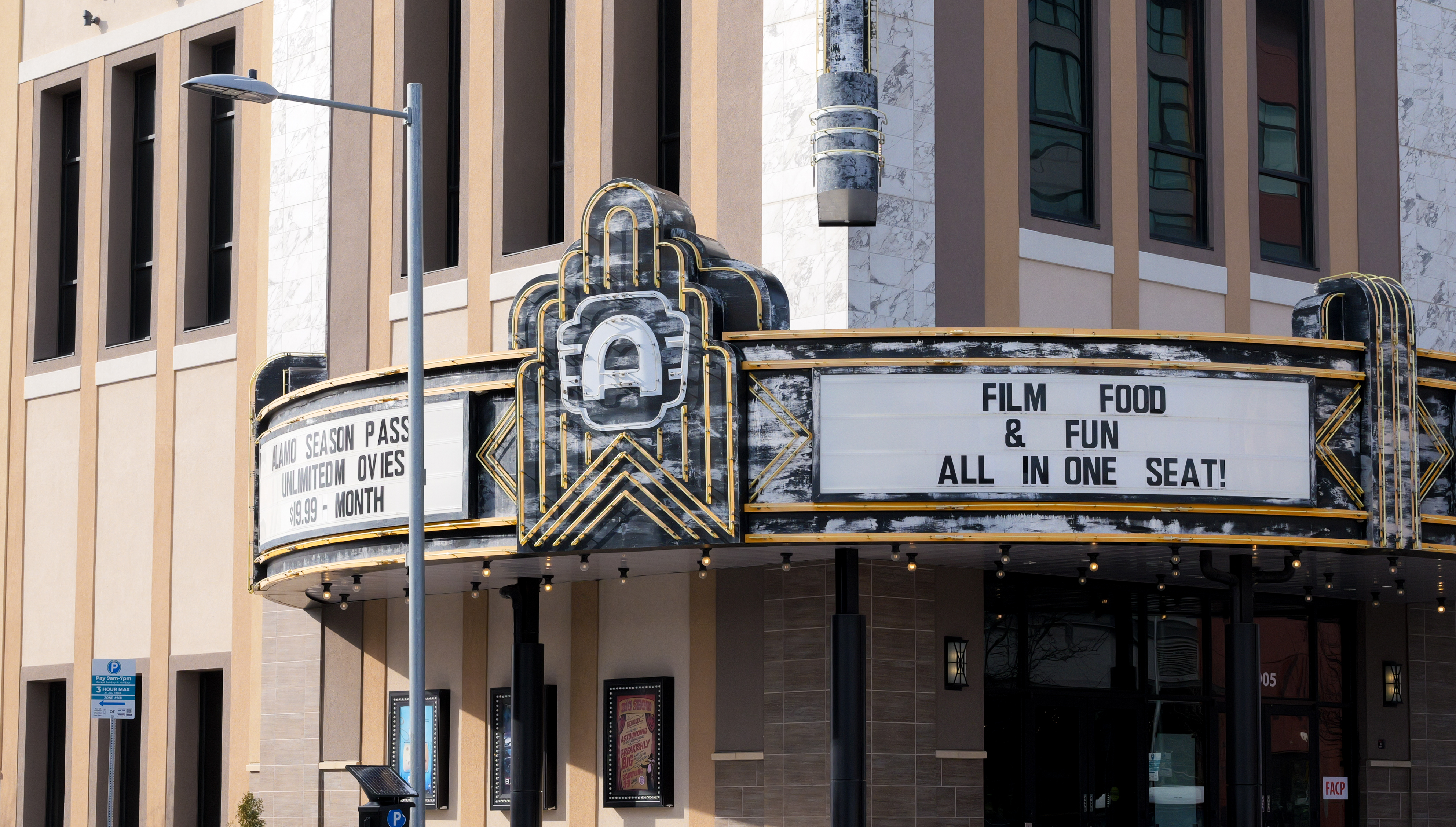
Alamo Drafthouse Cinema, the Texas-based chain known for its “phone-free” policy, will now require guests to use QR codes to order food and drink. But this departure from the company’s longstanding pen-and-paper practice in the theaters has both employees and film fans pushing back.
Alamo announced the shift to a contactless, QR code-ordering system earlier this month, and has been slowly rolling it out. According to an FAQ posted by the company, customers will use their smartphones in a custom, “dark screen” mode to reduce distractions and create a “smoother, more responsive experience.”
But theater regulars are skeptical of the move to go digital. Alamo has historically had a strict “no talking, no texting” policy during movie screenings; it even plays dedicated reminders of that ahead of every showing.
Members of the Alamo union are more skeptical.
Alamo Drafthouse Cinema was founded in 1997 in Austin, and kept expanding for the next twenty years. But the company filed for bankruptcy in 2021 and six locations in Texas and Minnesota closed as a result. Today, there are 35 Alamo locations across the country, including three in the Denver area: Sloans Lake, Littleton and Westminster. In 2024, Sony acquired the company. That’s the year Alamo workers began unionization efforts, which resulted in representation by the Alamo Collective, a local chapter of the Communications Workers of America, CWA 777.
Then a concierge at Littleton’s Alamo, Jacob Kimmick was involved in some of the first union organizing, and says it “was met with such brutal force that it was extremely calculated and bad from the get-go. Before there were even talks about unions at the Littleton location, when it first started going down at Sloans Lake, they immediately hired a union buster and started spreading misinformation.”
The move away from a pen-and-paper ordering system has reignited employee concerns that Alamo’s ethos is changing in the name of efficiency.
Union representatives suggest the switch to QR codes will create a poorer customer experience and eliminate some workers, since Alamo is doing away with “guest attendant” positions and replacing servers with greeters.
Owen Swallow
Changes at Alamo
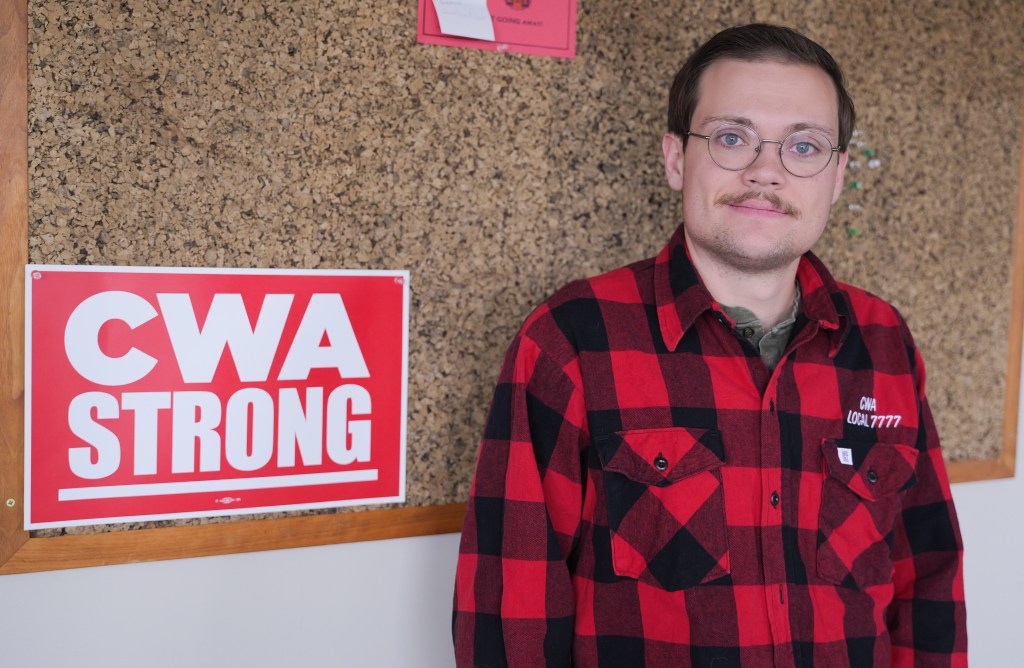
“Since the first QR rollout at our location, [Alamo] has raised par and cut service hours,” says Joseph Mitchell, a server at the Littleton Alamo Drafthouse location. Alamo uses a par system to track how many guests a server handles during a showing. “We’re being forced to serve more guests, and the quality of service has gone drastically down. The quality of our tips has gone down.”
Mitchell believes that Alamo’s policy switch is really about cutting labor hours. Since the QR system rollout, attendants are serving nearly twice as many guests per showing, he says, adding that “people frequently go days where they’re not able to take breaks, where they’re just super overburdened.”
During a bargaining meeting on January 23 with the Alamo Collective, company representatives told union negotiators that the company is planning to move forward with a full rollout of the QR code ordering system next month, and that it’s being driven by “positive feedback from customers.” According to union representatives, Alamo reps said they would not rule out “changes to staff levels in the future,” but added that theaters were not laying off workers with the rollout.
The customer surveys that Alamo has been conducting do not reflect the company’s claims about enthusiasm for the new system, according to workers. Mitchell says the Littleton location typically received a score in the high 80s on surveys. Now that Alamo has implemented a soft rollout of the system, the satisfaction rate has dropped by thirty percentage points.
In fact, Alamo fans have created an online petition to reinstate the “no phone” policy at all locations, which currently has over 5,000 verified signatures.
One person who signed the petition left this note: “I come to Alamo for a phone-free experience and have been loyal for seven years now. Institution of mobile ordering during the movie will force me to cancel my Alamo pass.”
Another fan wrote: “Alamo is one of the last theaters that truly respects cinema and the experience that goes along with it, while offering food during an experience that isn’t horrible! Changing the phone policy and reducing staff goes against the values that Alamo stands for.”
Celebrities and film groups have also come out against the policy shift. On January 26, the Austin Film Critics Association said that requiring a QR code for ordering “is the antithesis of what made the Drafthouse what it is.” Movie stars such as The Lord of the Ring’s Elijah Wood have made similar statements.
Changes in the Movie Business
Alamo’s shift comes at a time when the cinema landscape is changing. Streaming and alternative distribution models have disrupted the dominance of movie theaters. Traditional cinemas now have to persuade film fans to choose an in-person experience over at-home viewing, competing with media giants and subscription-based models. While theaters have recovered somewhat since the pandemic, attendance by faithful fans is still short of historic highs, and the counts for those who only occasionally attend screenings have yet to bounce back.
But in a promising sign for the industry, the demographics of people who go to a movie theater multiple times a month is skewing younger. A study by S&P Global found that millennials and Gen Z members account for a majority of frequent moviegoers, and there are some indications that Gen Alpha is following similar trends.
Entertainment researchers have attributed this surge in younger viewers to people’s relationship with other technology. A 2025 report from the National Research Group argues that the prevalence of smartphones and streaming services has made nights out more enticing: Going to the movies feels special because it’s an opportunity to get out of the house and focus on a shared cultural experience. These studies have also found that younger generations tend to see going out to the movies as a social occasion, often involving groups of friends.
Recent box-office successes have been buoyed by younger audiences. The Dune series, the “Barbenheimer” phenomenon, and recent releases like Sinners, Weapons and Minecraft in 2025, as well as Wicked in 2024 and The Super Mario Bros. Movie in 2023, relied on turnout from Gen Z or younger to be major hits.
Owen Swallow
The entertainment industry and traditional movie theaters have been adapting to the way consumers engage with films. From the start, Alamo Drafthouse branded itself as a unique film experience, one that prioritized quality, quiet viewing and dine-in comfort. Abandoning that for this QR code ordering has left some longtime fans questioning their loyalty.
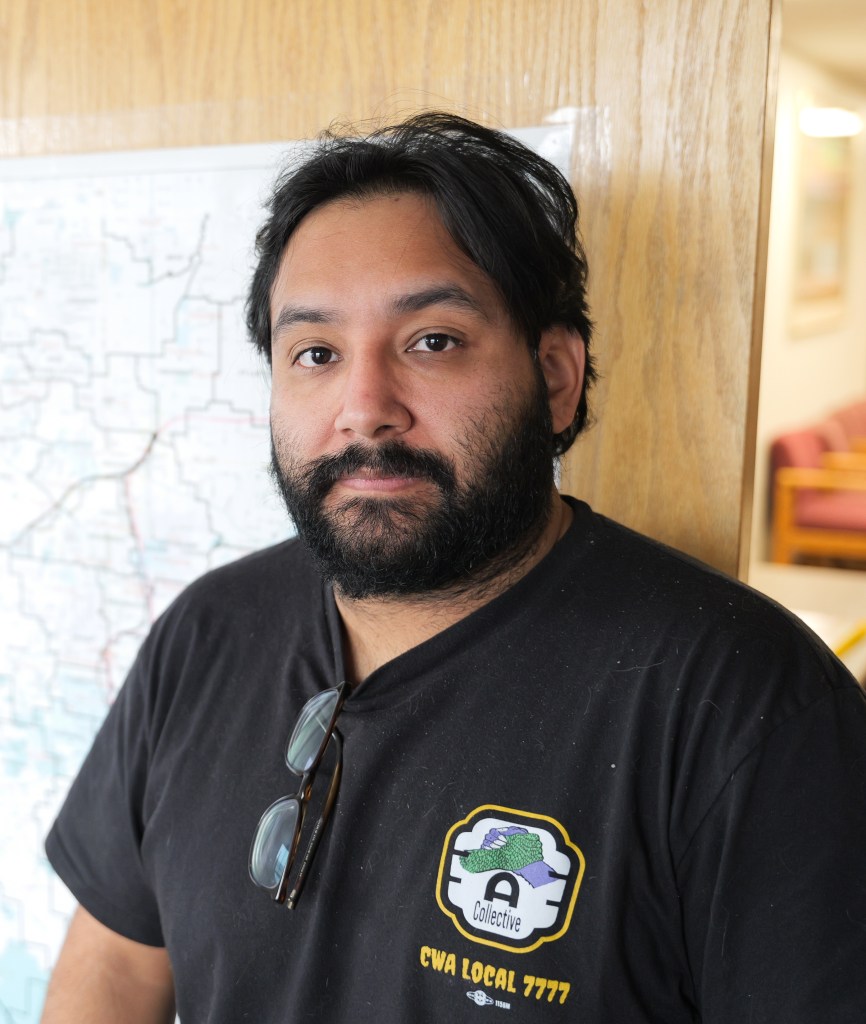
Josh Reitze, a union committee member, works as a line-cook shift lead at the Sloans Lake location. He says that the policy change flies in the face of the experience Alamo has been trying to cultivate.
“Personally, I think what Alamo has been doing since its launch in ‘97 has been to preserve a certain kind of experience for moviegoers, one that is more analog, more personal, that I think offers more value than what an AMC or a Regal offers,” Reitze explains. “It was really clear to me thirteen years ago that Alamo’s model for their business was the future of the industry. AMCS and Regal both have moved to dine-in cinemas….So to me, Alamo’s been ahead of the curve. This change is a rejection of the values and the vision of the company….While other companies are attempting to catch up to our model, we are now choosing to walk back our progress and meet them earlier in their transition, which, to me, is just bad business.”
What workers have been told by Alamo corporate that the shift is driven by consumers is baffling, he adds, since servers have heard nearly universally negative feedback.
“I think it’s short-sighted,” Reitze continues. “It comes with undermining labor, and I just think it’s efficiency chasing.”
Reitze sees the culture at Alamo as having been built around this “no phone” experience. The PSAs ahead of screenings and marketing emphasize “no talking, no texting,” even if enforcement has gotten looser in recent years.
Workers have largely been left in the dark as to the overall strategy and future of Alamo, according to union representatives. Gone are the days when Alamo theaters were doing localized showings with area-specific menus. Instead, they say, Alamo has pushed for an easy way to screen films while minimizing the number of workers on the floor. This ultimately comes at the expense of the overall experience for guests and workers.
Reitze says that Alamo made 30 percent cuts across the company last year. “We fast forward a year later, and they’re implementing a system that will cut that remaining workforce down to somewhere closer to a third,” he notes. “The question becomes, how few of us do they think they can run this business with?”
As the new policy rolls out, Joseph Mitchell wants guests to remember that the workers are still there, just behind the scenes.
“We’re still doing the work,” he says. “Tip your servers. This change is not a change that we enjoy or that we want…we understand the frustration. Please be kind to us.”
