
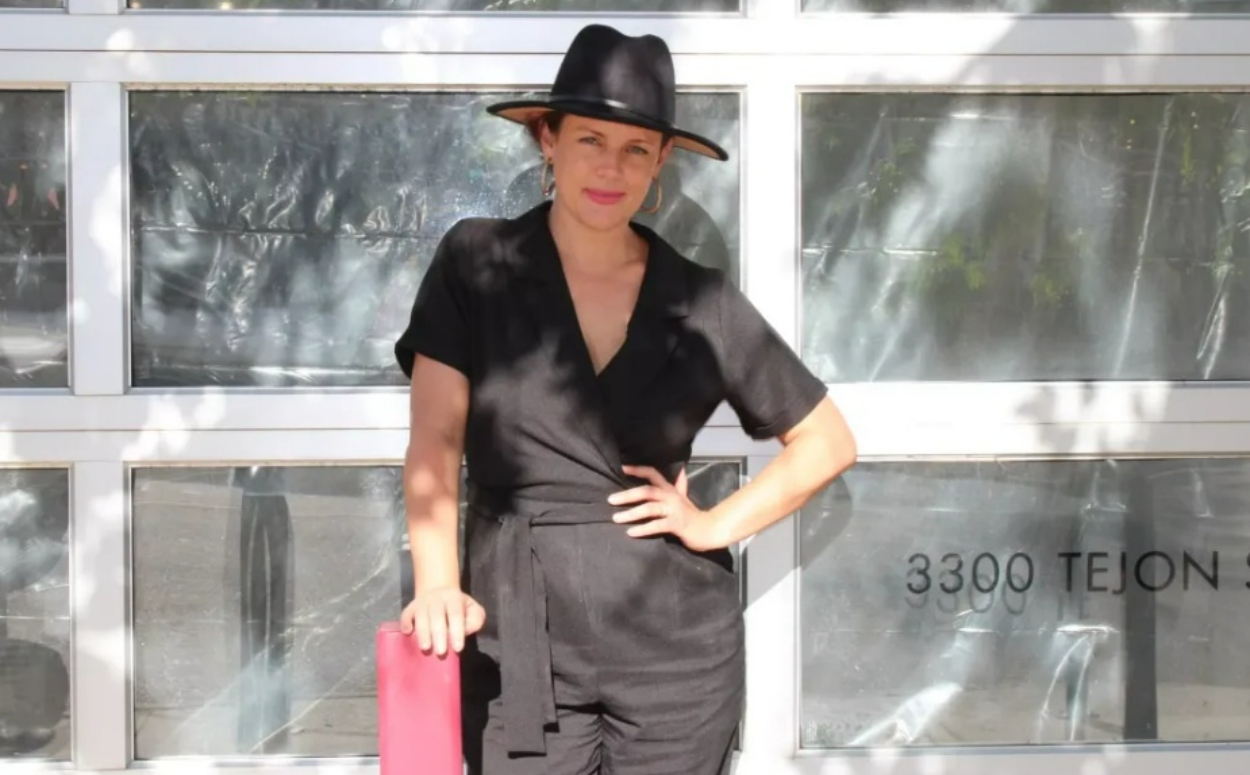
Photo by Toni Tresca

Audio By Carbonatix
When Westword spoke with event producer Julia Tobey in June 2025 prior to the opening of Ballyhoo Table & Stage, her new spot for performance, coffee and cocktails in the former BRDG Project space at 3300 Tejon Street, she was filled with optimism and purpose. “My job is to create joy,” she said. “And joy saves lives.”
Tobey’s tone has changed considerably since then. Ballyhoo, which she had envisioned as a warm and welcoming enclave for anyone who supports diversity, including those who identify as LGBTQ+, is already out of business. An eviction sign is affixed to its door, which last closed to customers on February 12.
Even though more than a month has passed since then, Tobey admits to still feeling stunned by the chain of events that led to Ballyhoo’s shutdown. “I’m taking a huge break as a producer,” she says. “I have no juice left.”
As for why Ballyhoo went dark only a few months after its debut, Tobey cites a number of factors, including the expense related to the labyrinthine permitting process required by the City of Denver, which has nettled small business owners of every description for generations, and the fallout from a social-media dispute in January that put a pox on the venue from which it never recovered.
“When I think about the cancel culture and the hate, I could just cry,” she reveals, her voice breaking. “It’s so tough what this mostly younger generation is doing online. They don’t understand their long-term impact — how they can take down a family and a business and a community.”
She’s referring to Instagram and TikTok videos made by a patron who said she appeared in a promotional video posted by Ballyhoo without her consent, and that the Ballyhoo account refused to take the video down at first. The patron’s posts garnered a lot of support, and social media drama ensued.
A year ago, after BRDG Project closed its doors, Tobey obtained the space, albeit against expert advice. According to Tobey, “My father’s a retired real-estate attorney, and he said, ‘Whatever you do, don’t sign this lease.'”
His warning proved prescient. One problem, Tobey maintains, is that the space “is almost 9,000 square feet total, but only about 2,000 square feet of it are very monetizable, and the rest of it is tricky — basically storage.” Moreover, the landlord’s responsibilities ended at the exterior of the structure. Every other expense was on the tenant.
In the wake of the contract’s inking, complications began to mount. “We were looking to get a food and liquor license, and since it was a street zoned for commercial use and hospitality, that’s all me and my team understood we needed to do,” Tobey says. “But when we went to get the liquor license, we found out we had to completely change the zoning and get a different certificate of occupancy. The last change was in 2011, when it was a church. And since we were going to have booze and drag queens on tables, that really changed what the city felt was safe and permissible in that space.”
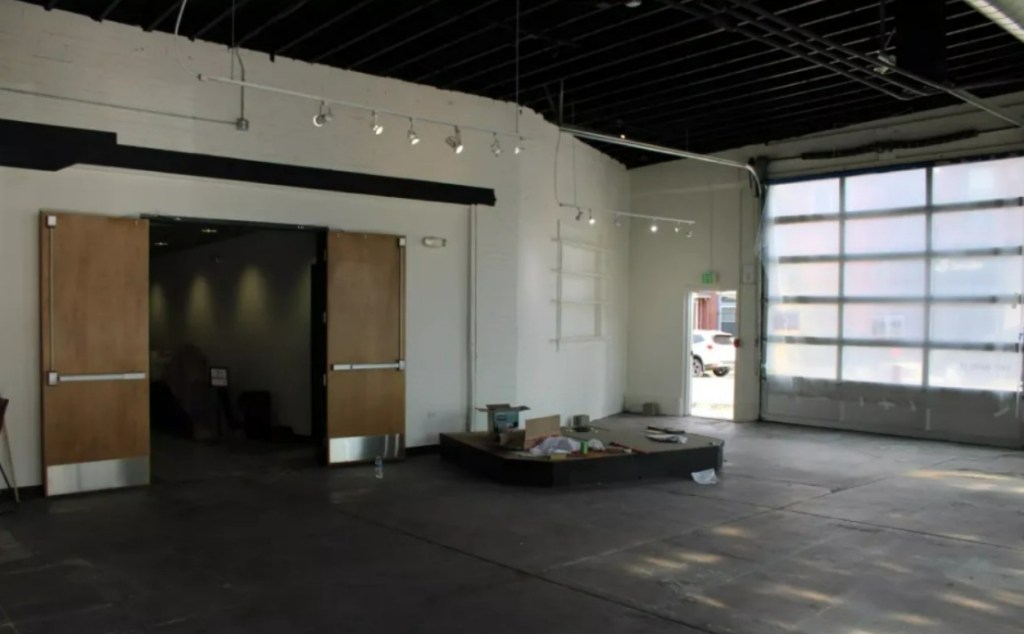
Photo by Toni Tresca
At Denver’s insistence, Tobey had to hire an architect to create drawings of the existing space, “which most people consider ludicrous,” she points out, “since we weren’t doing construction. We weren’t knocking down any walls, not doing any major plumbing changes. The most we did was put in a bar and an espresso machine — super-minor stuff.”
There were self-inflicted errors, too. “We had a general contractor who misrepresented his skill set,” she says. “He did a bunch of stuff without pulling a permit. When the city found out about that, I told them, ‘My guy said it wasn’t necessary,’ and they said, ‘It absolutely is.’ We had to rip out all the plumbing.”
Additional costs accrued after Tobey was asked to task a structural engineer with confirming that the ceiling was strong enough to hold up disco balls, and progress ground to a halt for a full month because a city employee considered key to the process was on leave after breaking a leg. As such, Tobey recalls, “we were bleeding money. We thought we were going to open June 1, but we didn’t open until November 1. So from March through November, we didn’t make a dollar.”
Fortunately, Ballyhoo’s launch, built around a production of Hedwig and the Angry Inch, was a huge success, in Tobey’s estimation. And while the venue didn’t immediately develop organic traffic, subsequent events drew sizable crowds, too. With that in mind, Tobey began booking shows with local and national acts that she felt could build on the initial positive momentum. But the plan crashed and burned in January, when controversy struck.
The patron at the center of the storm communicated with Westword via email under the condition that her name not appear in this post. She didn’t comment on the Ballyhoo eviction but shared what she characterized as a timeline of happenings from her perspective.
“After visiting Ballyhoo in January, I later became aware that content featuring me had been posted on the bar’s social media, including a promotional video,” she writes. “Shortly after seeing the video, I reached out privately to request that it be taken down. I explained that I was not comfortable being featured, particularly in promotional content, and that this raised personal privacy concerns for me. After some time passed and the video remained up, I followed up in person with staff at the venue. I was told the matter would be passed along, but it was not resolved at that time. I continued to request removal and reiterated my concerns.”
She adds: “When the video was still not taken down, I indicated that I would need to share my experience publicly if the issue wasn’t addressed. I also sent a formal request for removal. In response, I was asked to further explain my concerns, and the possibility of legal action was raised in connection with potential public statements. Only after I spoke publicly about my experience was the video ultimately removed.” She stresses that, “for me, the core issue was not just the removal itself, but the delay and the need to repeatedly justify a clear request related to personal privacy and consent.”
The version offered by Tobey shares little in common with the patron’s. “This 25-year-old TikToker from Texas came to town and our social media folks put up a video of her doing karaoke and celebrating, saying joy is an act of resistance — and she asked us to take it down,” she maintains. “She said we were capitalizing on her blackness and outing her as a gay person, even though we were not a totally gay bar. She asked us to take it down within 48 hours, and we took it down nineteen hours later. Before she even went on TikTok, we’d taken it down, but she went on TikTok anyway and created seven videos, saying, ‘This venue has outed me, and if you’re worried about being outed, don’t go to this venue.'”
The observations in the videos quickly gained traction since “she had something like a million followers,” Tobey continues. “We were slaughtered online, crucified. I was attacked personally, and my children were getting death threats. The DPD had to get involved. And even though 99 percent of the reaction was from out-of-state trolls and bots, we had local performers come to us and say, ‘We know you guys and we trust you, but we can’t have our brand associated with this because of all the backlash.'”
Even more frustrating to Tobey, she says, is that “the claims this young woman made were so untrue. The venue was founded to be very, very inclusive, and she was saying we were racist, homophobic, unsafe people — and it really affected how people looked at us. We just were not able to bounce back.”
Ballyhoo lasted only a few weeks longer, and Tobey isn’t the only one for whom the emotional toll lingers. “My staff and I were so crushed emotionally,” she says. “We had been working so hard for almost a year, and when all of this happened, and we looked at what we’d have to do to repair the brand damage, we were like, ‘We can’t do this.’ My husband was physically failing, and we said, ‘We don’t need to kill ourselves to keep the business going. It’s not worth it.'”
Right now, Tobey is acting in a production based in Golden, and she hopes this act of creativity will help to hasten her healing from Ballyhoo’s demise. In other words, she’s waiting for the joy to return.