
Courtesy of Alex Suarez

Audio By Carbonatix
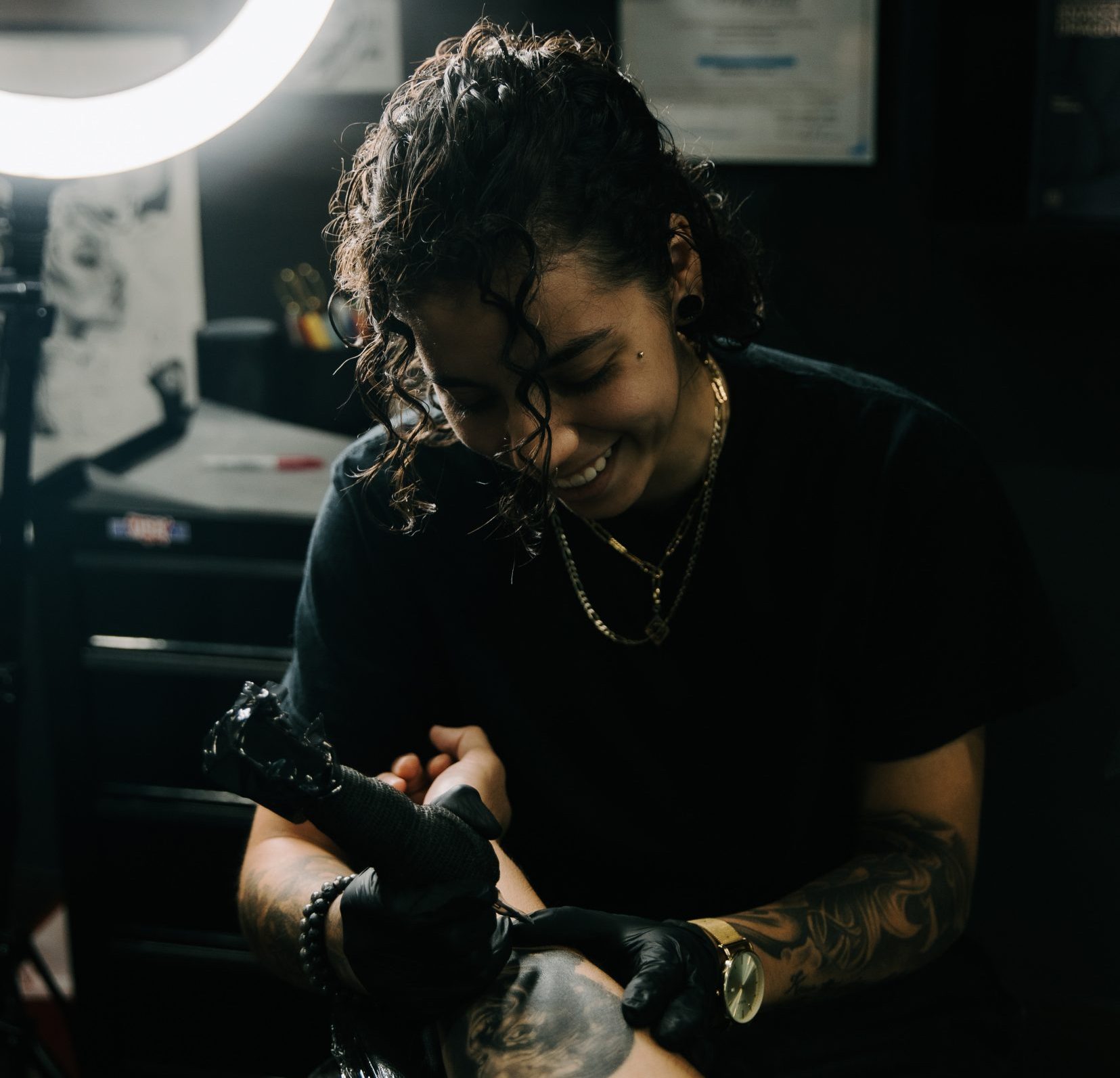
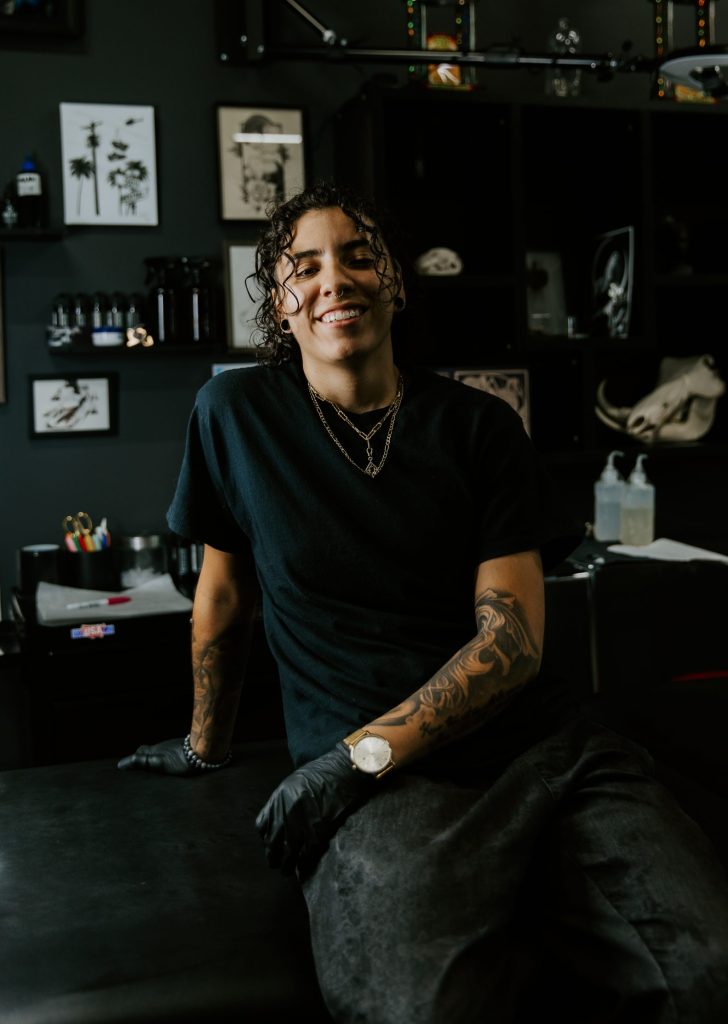
Alex Suarez began tattooing in Denver right before the pandemic, navigating a saturated market, greedy shops that took 50 percent of the profits, and the basic ebbs and flows of entrepreneurship. Now, she’s one of Colorado’s fastest-growing black-and-grey realism artists, with her schedule booked months in advance.
Still, she continues to redefine her role in the male-dominated industry.
Suarez began identifying as an artist in her early childhood. She fell in love with graffiti, illustrated cartoons and creating murals for her high school. By the time she was in her early twenties, she realized a conventional path through college wasn’t for her. She wanted to polish her craft at a tattoo shop, but convincing someone to take her on as an apprentice wasn’t simple, and she went to about ten tattoo shops before an artist took her in.
Courtesy of Alex Suarez
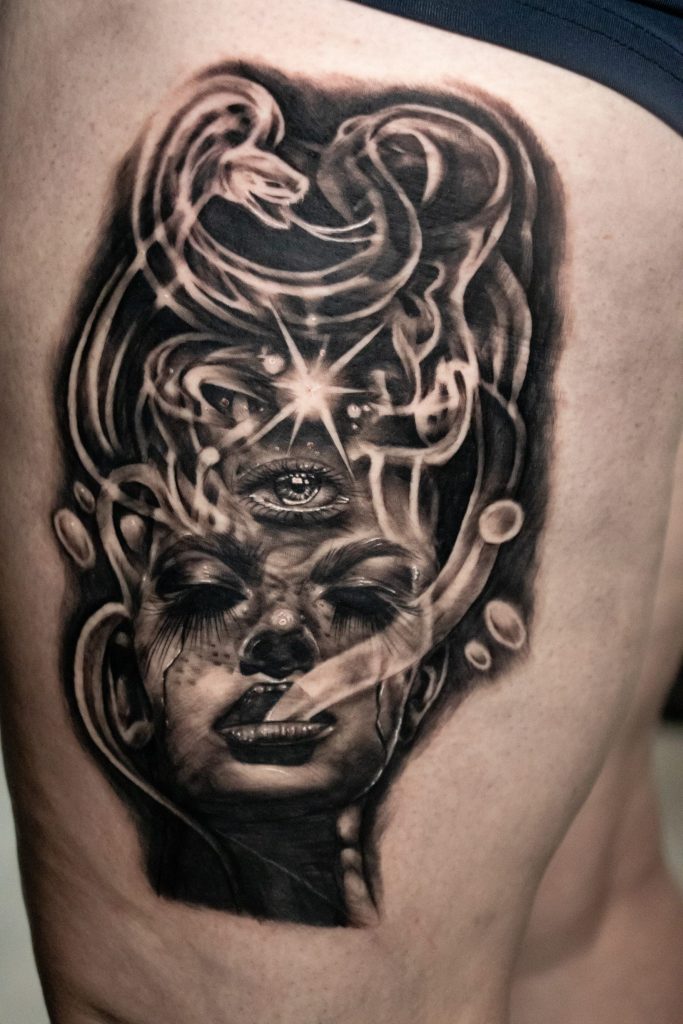
Eventually, she landed in a shop that specialized in her area of expertise: black-and-grey realism. This style of tattooing requires tremendous precision. It involves turning concepts into photo-realistic images, which is only possible with a great amount of skill.
But the novelty of her new environment quickly wore off. “They haze you. They’re not paying you. You’re literally doing all the dirty work to learn,” reflects Suarez. “I was there for like five months, and then my dad passed, and I took a break.”
After a short hiatus from the demands of tattooing, Suarez started a second apprenticeship, where she spent a year honing her craft — a fairly typical timeframe for apprenticeships in the area. Then the pandemic struck. She began building her clientele amidst economic uncertainty and medical masks. Sheer determination fueled her through the worst of the pandemic, but it didn’t come without strain.
In fact, the tattoo industry at large closed its doors to traffic for a time. Many businesses struggled for years, and tattoo artists started to quit the industry in favor of security. While most tattoo shops had already adjusted sterilization practices to maintain a clean environment prior to the pandemic, much of the world stood still, causing tattooing to take a financial hit.
Suarez experienced her own financial difficulties, but artistry has always been at the forefront for her, and she was unwilling to forfeit tattooing, even during the pandemic. “You need to love this stuff for you to excel. Ride or die ‘til the wheels fall off,” she says.
Courtesy of Alex Suarez
Over the last couple of years, the industry has become slightly friendlier, which Suarez attributes to a shift in perspective. A lot of younger artists are entering the industry and getting tattooed, and their biases have helped to shift the overall misogynistic vibe. And Suarez maintains the same energy that pushed her through her earliest years as a tattooer. “I show up an hour early now, and I leave, like, an hour late,” she says. “I’ve never loved anything else like this. And it loves you back.”
While the tattoo industry facedhardship during the pandemic, it eventually experienced growth. In 2021, the global tattoo market generated $1.75 billion, according to Fortune Business Insights. By 2022, it expanded to $1.89 billion. It’s projected to reach $3.55 billion by 2029, marking a significant boost; the Denver tattoo market reflects similar trends. Younger generations are becoming more receptive to tattoos; social shifts like workplace tolerance of tattoos and interest in self-expression have contributed to a bustling tattoo market. With hundreds of tattoo shops open across metro Denver, it can be challenging to stand out from the competition.
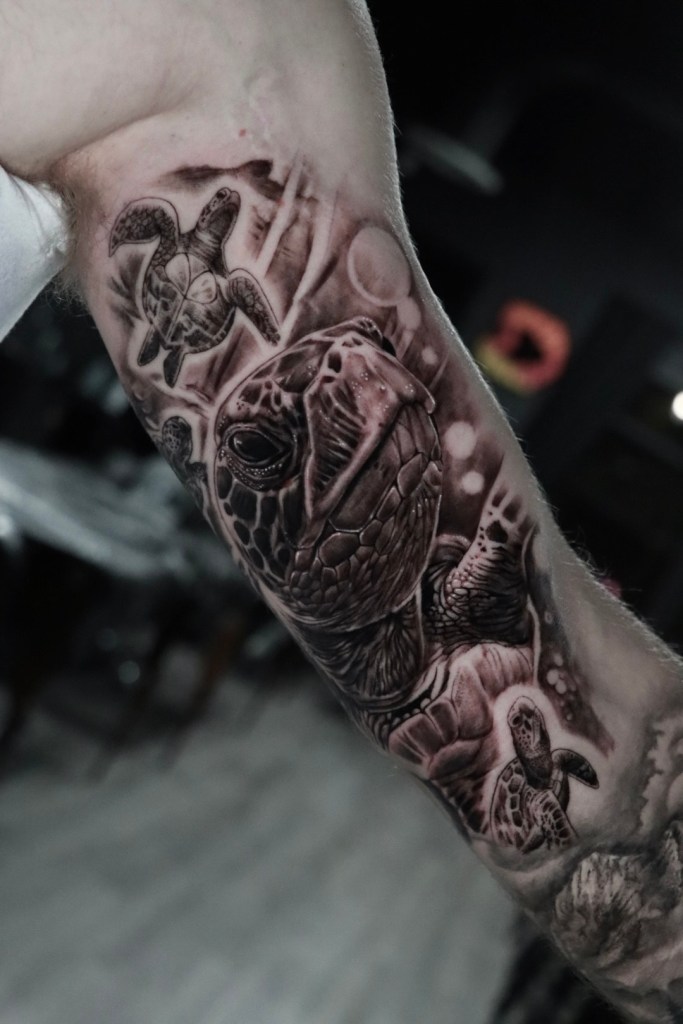
In order to stay competitive, Suarez spends her free time practicing and honing new skills. She’s done everything from guest-tattooing in Honolulu, New York, and Sacramento to practicing oil painting with her peers in a test of patience. Over the past six years, she’s covered nearly every square inch of the human body in tattoos.
Courtesy of Alex Suarez
While Suarez is constantly refining her skills, she’s always gravitated towards black-and-grey realism and surrealism because of her early work as a portrait artist. Many of her clients come to her to execute tattoos in this style, but she’s recently developed an appreciation for other niches, too. “I also like to break out of the box and do neo-Japanese and geometry tattoos,” she says.
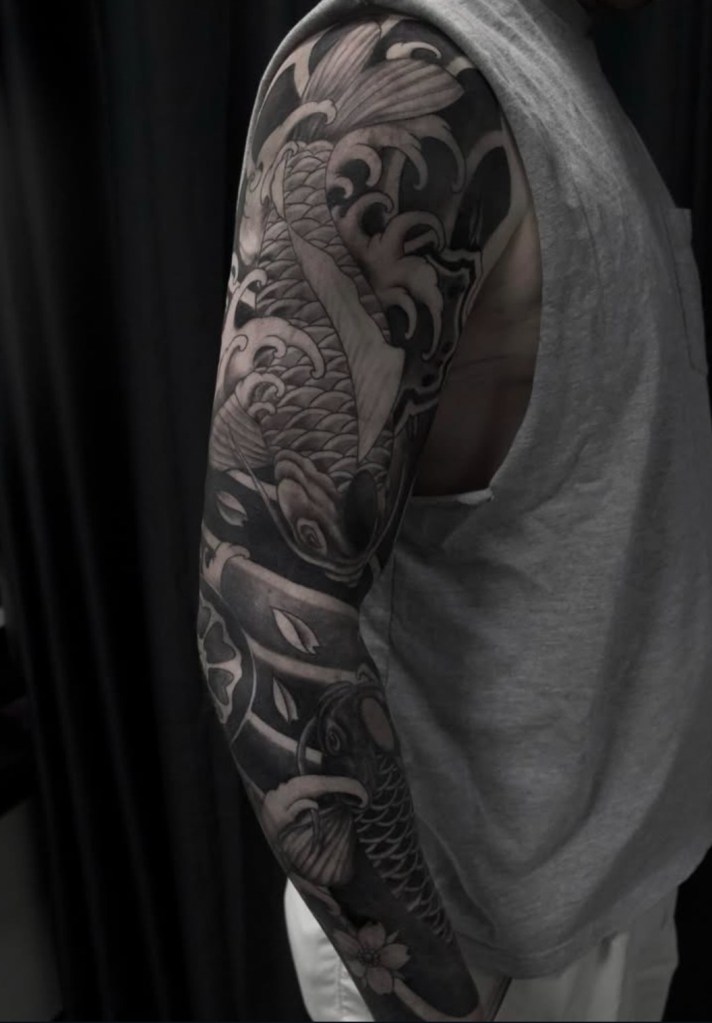
Courtesy of Alex Suarez
But even Suarez has limits. “I don’t do names. I don’t do biomechanical tattoos,” she says.
Every chapter of growth comes with new lessons. “And the shop that I’m at now, I think they taught me to go big or go home,” notes Suarez, who continually puts herself in a position to learn from other artists. “I think it’s always great to be in a space where you’re the worst one in the room.”
For other artists thinking about getting into tattooing, Suarez suggests absorbing skills like a new sponge, and being receptive to learning, “I think the first couple years when you’re starting out, you need to put your head down, and you need to get real quiet, and you need to just learn how to draw,” she says.
It’s also important to leave your ego at the door, especially at the beginning of your career. “Those years will make or break an artist,” she says. Allowing yourself to be humbled and take critiques from artists who’ve been in the industry longer is a key to success.
Suarez has seen artists failing to grow and learn new skills several years into their career – a reality that she thinks relates to teachability. “Always be teachable,” she underscores. “And don’t be afraid to fail, because when you’re failing, you’re learning. And when you’re good at something, it means you’re comfortable.”
She also encourages artists to live their lives to find inspiration. “I’ve been trying to find things that fill my cup outside of tattooing,” she explains. To create balance, she spends time on her motorcycle, in pottery classes and salsa dancing. As a self-defined “workaholic” with a tendency to burn out, she recognizes that she feels most creative when balancing personal pursuits with tattooing.
Suarez currently works at Real Gone, 2957 Wyandot Street. Keep up with her work on her website.