
Space Weather Prediction Center

Audio By Carbonatix
Those who missed the surprise Northern Lights display in November got another chance on January 19. And after that show, the National Oceanic and Atmospheric Administration is predicting the Aurora Borealis might still be visible on Tuesday, January 20, in the northernmost U.S.
On January 19, NOAA’s Space Weather Prediction Center issued a rare G4 geomagnetic storm watch, an alert about a severe disturbance in Earth’s magnetic field. Geomagnetic storms can cause coronal mass ejections, or CMEs, which are eruptions of plasma from the sun that can reach Earth in days, or even as little as eighteen hours, according to NOAA. These solar flares create color in the sky as they clash with Earth’s atmosphere.
November’s Northern Lights display was attributed to a G4-level geomagnetic storm, too.
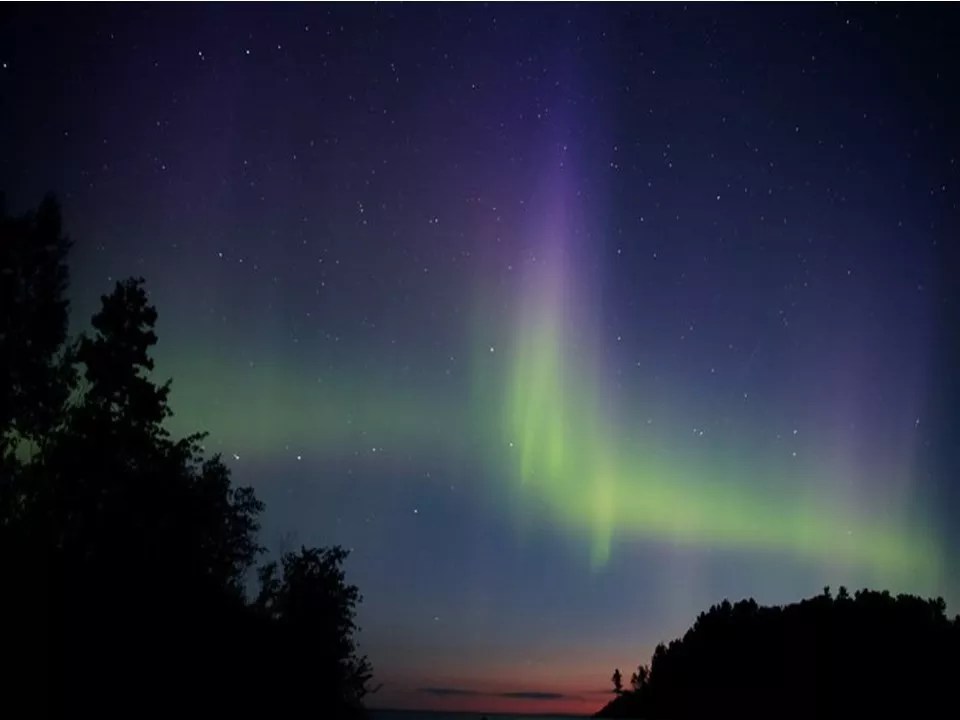
The phenomenon sounds somewhat scary (and it can be; severe geomagnetic storms have the power to damage satellites and power grids), but the resulting shades of red, magenta, purple and green that light up the sky have delighted skywatchers for centuries.
Will the Northern Lights Be Visible in Colorado Again Tonight?
NOAA’s predicted view line for the January 19 show dropped into northeast Colorado, making the area near the Wyoming border the prime spot for seeing the lights.
According to 9NEWS meteorologist Chris Bianchi, the best Colorado counties for views of the lights were Larimer and Weld.
While there could be more Aurora Borealis activity in the U.S. tonight, Tuesday, January 20, NOAA’s predicted view line has moved up, and the Northern Lights likely won’t be strong enough to view from Colorado.
How to See the Northern Lights in Colorado
The best viewing is always on a clear night, away from light pollution.
On any night when the Northern Lights are predicted, bring your patience (the lights can come in waves) and a camera — cameras can capture colors that can’t be seen with the naked eye. But if the lights are strong enough, they will be visible without a camera.
While professional photographers love a chance to capture the Northern Lights, you don’t need a fancy camera to do so. iPhone users can capture the Northern Lights by setting the camera to “night mode,” turning flash off, and making sure exposure and shutter speed are low.
Share your photos of the Aurora Borealis with Westword at editorial@westword.com.