Courtesy of Tracy Holt Doty

Audio By Carbonatix
The Town of Parker is facing public backlash after Parker Arts staff informed Sasquatch Productions, the creative team behind Shrek the Musical at the PACE Center, that Pride flags could no longer be used during one of the show’s musical numbers, citing complaints received after opening weekend.
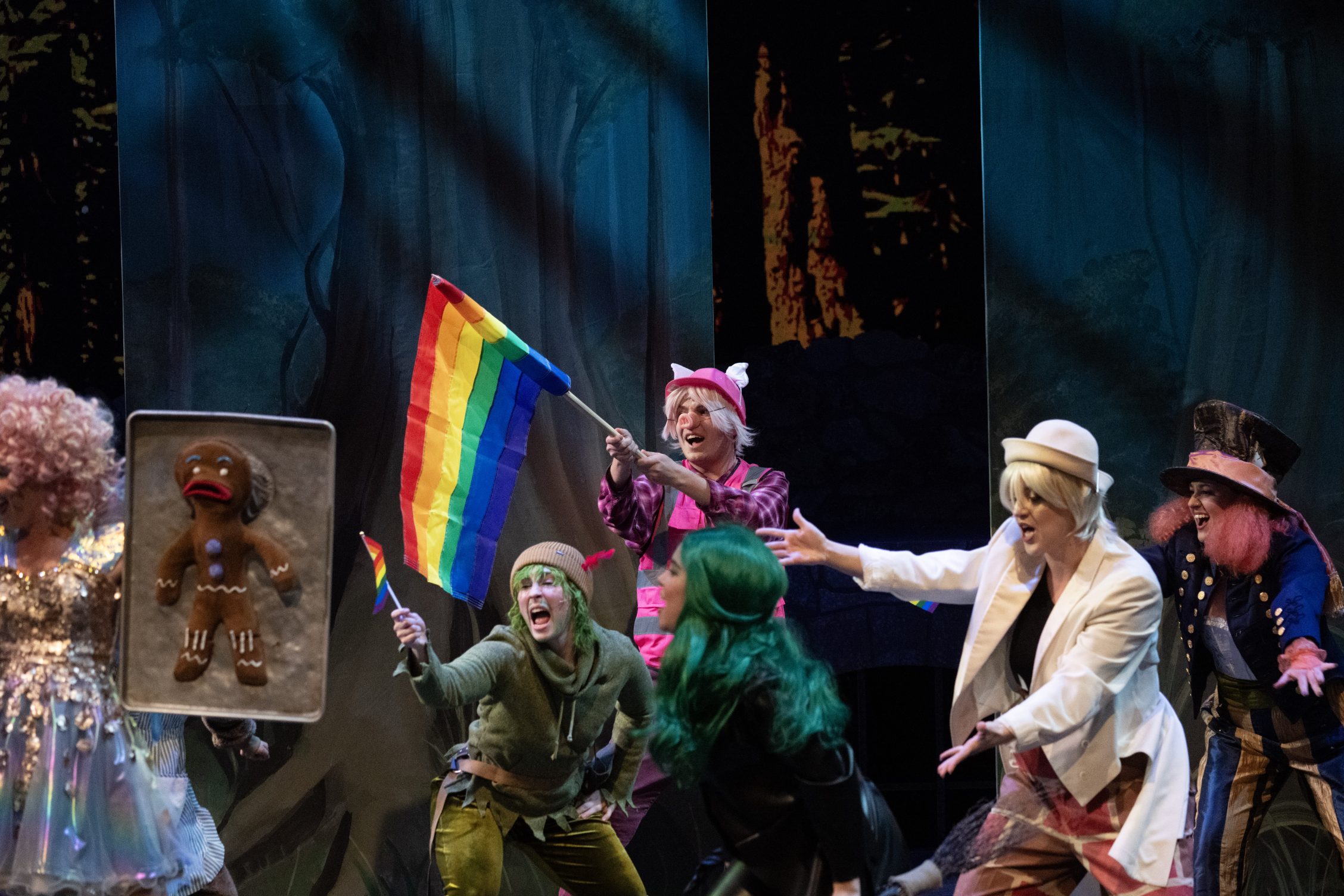
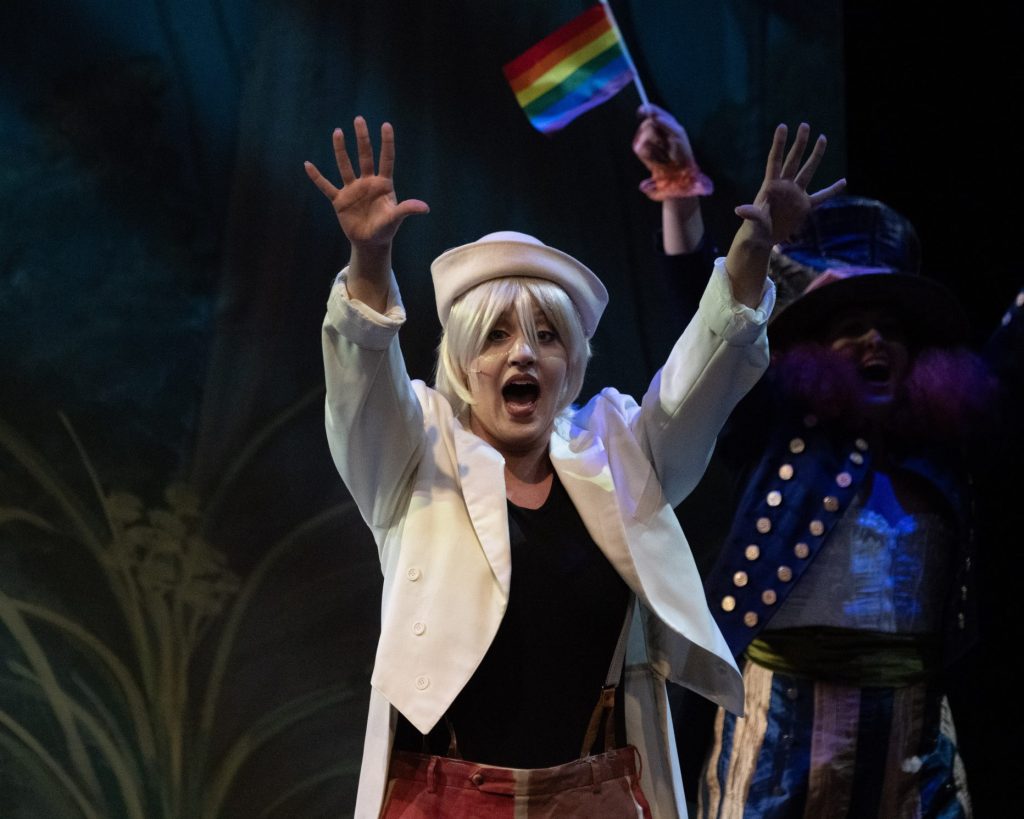
According to multiple members of the production, the request was communicated on January 20, when representatives from the Town of Parker, through arts arm Parker Arts, told the company that the Pride flags used during the song “Freak Flag” were considered offensive by some audience members. “Freak Flag,” which appears late in the show, is a celebratory number about embracing differences and rejecting shame.
“I blocked it with Pride flags because that’s what I think the song is about,” says Kelly McAllister, the director of Shrek the Musical and co-leader of Sasquatch Productions. “It’s about acceptance, and who we are. To me, the rainbow flag is not a political flag. It is a flag of inclusion, love, joy and hope. I was dismayed and shocked that people were so fucking angry about a beautiful moment in a show that I am very proud of.”
Courtesy of Tracy Holt Doty
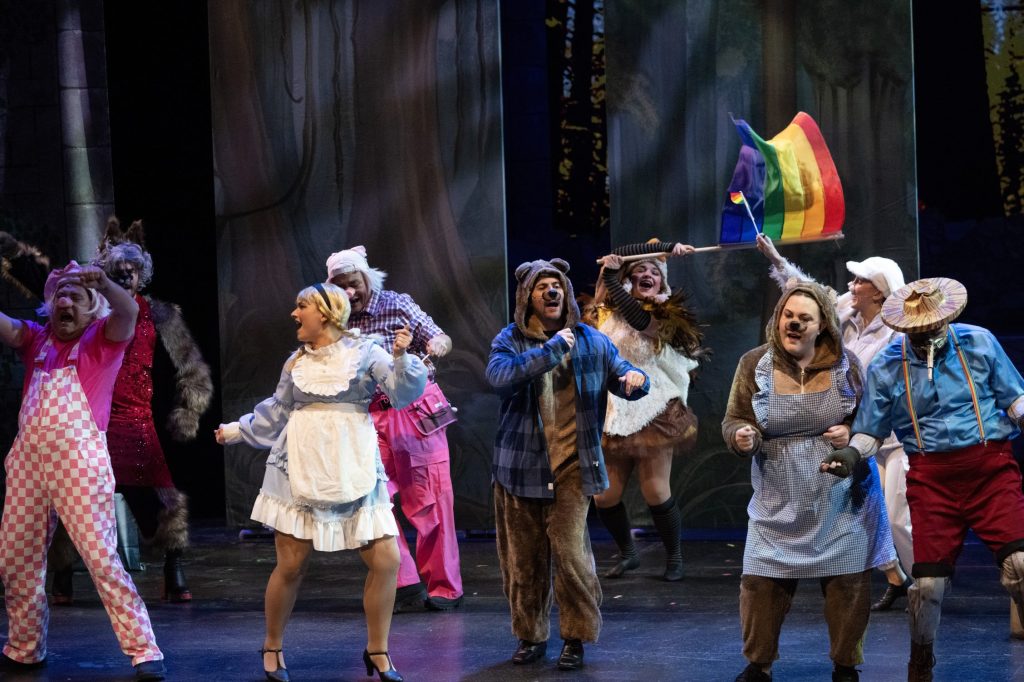
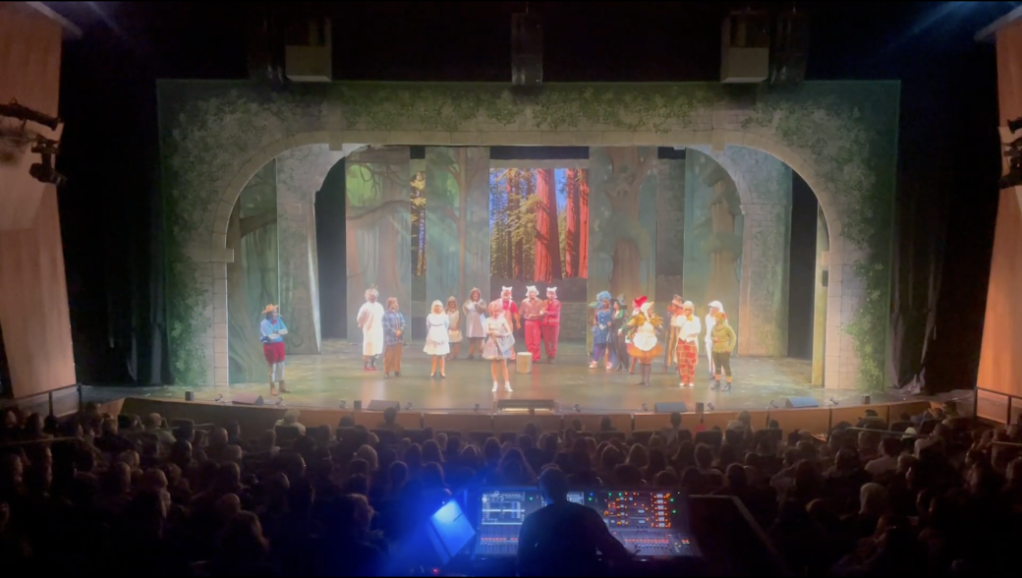
Rather than quietly altering the staging, the cast chose a different response. During the January 23 performance, actor Bekah-Lynn Broas broke the fourth wall just before the number. Standing onstage, she told the audience that the cast had been asked not to fly the flags they had rehearsed with and were previously approved. She then explained that the cast had met during intermission and collectively decided to perform the song as originally staged, Pride flags included.
“This show is about inclusion,” Broas told the audience. “It is community and loving your neighbor no matter what they look like or how they identify … We respectfully, as a cast, and peacefully and with fire in our eyes, protest this request. And this is our protest. We resist this.”
Videos of that moment quickly spread on social media. In one post, cast member Lucas Barta shared a message framing the decision as one of consistency and integrity. “It wouldn’t have sat right with any of us to sing about letting your freak flag fly and never taking it down, while being asked to literally take them down,” Barta wrote. “Freedom of expression is essential, and it’s so important that people see themselves positively represented in the stories we tell.”
Courtesy of Lucas Barta
The controversy prompted an official statement from the Town of Parker, which was sent to media outlets on January 24 and posted on Parker Arts’ Facebook page. In that statement, the town emphasized that it acts as a presenter, not a creative authority, for productions staged at the PACE Center; Parker officials said they received a “variety of complaints” after opening weekend, but stressed they did not demand any changes to the show.
“As a Town-owned performing arts venue funded in part by taxpayer dollars, the Town has a responsibility to remain neutral,” the statement read. “The Town did let the producers know about the concerns brought to the attention of the Town but did not demand or require that any part of the show be removed or modified. However, as a community partner, the producers considered the information and suggested a possible alternative that would still support their creative vision but alleviate the discussion that was taking away from the production itself.”
But several artists involved with the show say that what the town later characterized as a neutral suggestion felt like pressure driven by donor and sponsor concerns. According to McAllister, Parker Arts staff initially floated the idea of modifying the number to avoid refund requests and the possible loss of sponsorship (the sponsor was Lutheran High School, which did withdraw its support following the January 23 performance). When the creative team suggested adding additional flags to broaden the imagery, he recalls, they were told the Pride flag itself was still the problem.
“We were told, essentially, that the Pride flag was too much,” McAllister says, “which is wild, because it’s a show about outsiders finding belonging. There was an opportunity where I could have and should have said, ‘Fuck you,’ or, you know, some more nicely worded version of that. But I didn’t, and I will forever be ashamed of that. The cast had a meeting and decided to stop and address the issue. That was one of the most exciting, inspiring nights of theater I’ve ever witnessed.”
While Parker Arts never explicitly ordered the change, the message was clear, McAllister says. “They’re above us in the food chain,” he explains, describing the town’s role as both presenter and contract holder. “When they say, ‘Could you consider this?,’ you understand what’s at stake. You want the show to go on. You want to reach people. And sometimes that leads to compromises you later wish you hadn’t made.”
Those compromises came to a head before the January 23 performance. After a series of conversations with Parker Arts earlier in the week, cast members gathered before the house opened and again during intermission to decide how to respond. While there was debate over tactics, the company ultimately voted to keep the Pride flags in the show.
“There wasn’t unanimous agreement on how to handle it,” recalls cast member Mosés Brown, who plays Donkey. “But there was agreement that what was happening wasn’t right.”

Courtesy of Tracy Holt Doty
Broas, who plays the Sugar Plum Fairy/Gingy and begins the number “Freak Flag,” says that she decided on her own to address the audience directly. “If we didn’t say something, no one would ever know what had happened,” Broas adds. “It felt too important to let it pass quietly.”
She emphasizes that no one asked her to speak out, but once the decision to use the flags was made, she felt compelled to explain why. “I was proud in that moment,” Broas says. “I would do it again. I wish I didn’t have to do it, but I would do it again.”
The town’s decision and the cast’s response quickly spilled beyond the theater. On Parker Arts’ Facebook page, some commenters echo the original complaints, arguing that Pride flags introduced discussions of sexuality into a children’s show. Others sharply criticize the town’s stance.
“Remaining ‘neutral’ and enabling bigotry are not the same thing,” wrote local scenic designer Brian Watson, who said he would no longer work at the PACE Center. Actor Johnathan Underwood called the request “erasure pure and simple” and accused the town of misunderstanding the very message of Shrek.
That reaction spread to other Front Range theater communities. On January 24, Lafayette Arts Hub publicly announced it would replace flag props in its production of Legally Blonde with Pride flags for the remainder of the run, writing that it stood with the Shrek cast “who bravely stood up for their right to continue showcasing inclusion and diversity.”
Several members of the Shrek team stress that the stakes are not abstract. Olivia Kisicki, one of the few openly queer cast members, says the removal of the flags hit on a deeply personal level. “There are real people being affected,” she explains. “We are the people that it hurts when these symbols get taken away.”
Stage manager Ellie Sinclair pushes back strongly on the argument that Pride imagery is inappropriate for young audiences. “Kids see a rainbow and think it’s cool,” Sinclair says. “But beyond that, seeing something like that can literally save a kid’s life. It can make them feel seen before they even have the language for it.”
Courtesy of Tracy Holt Doty
The Shrek the Musical run continues at the PACE Center, with the Pride flags still part of “Freak Flag,” a scene unchanged from the version the cast rehearsed and originally staged. While the dispute has exposed tensions around sponsorship, artistic control and what neutrality looks like in a publicly funded venue, the company says its focus is now on performing the show and inviting the community into the conversation it has sparked.
“Come see the show,” Brown says. “Art is not supposed to be censored. My big ask is that this should spark a broader conversation — that we reach out to our art institutions, our museums, our city councils, and say, ‘How are we protecting artistic integrity during this time where there is so much pushback on what we should do as artists?’ We’re tired of shutting up and singing. We’re tired of shutting up and dancing or dribbling a ball. We have our values, too. Come to the show. If you don’t like it, that’s fine, but art is supposed to spark a conversation.”
Shrek the Musical runs weekends through Sunday, February 8, at the PACE Center, 20000 Pikes Peak Avenue, Parker. Learn more at parkerarts.org.