
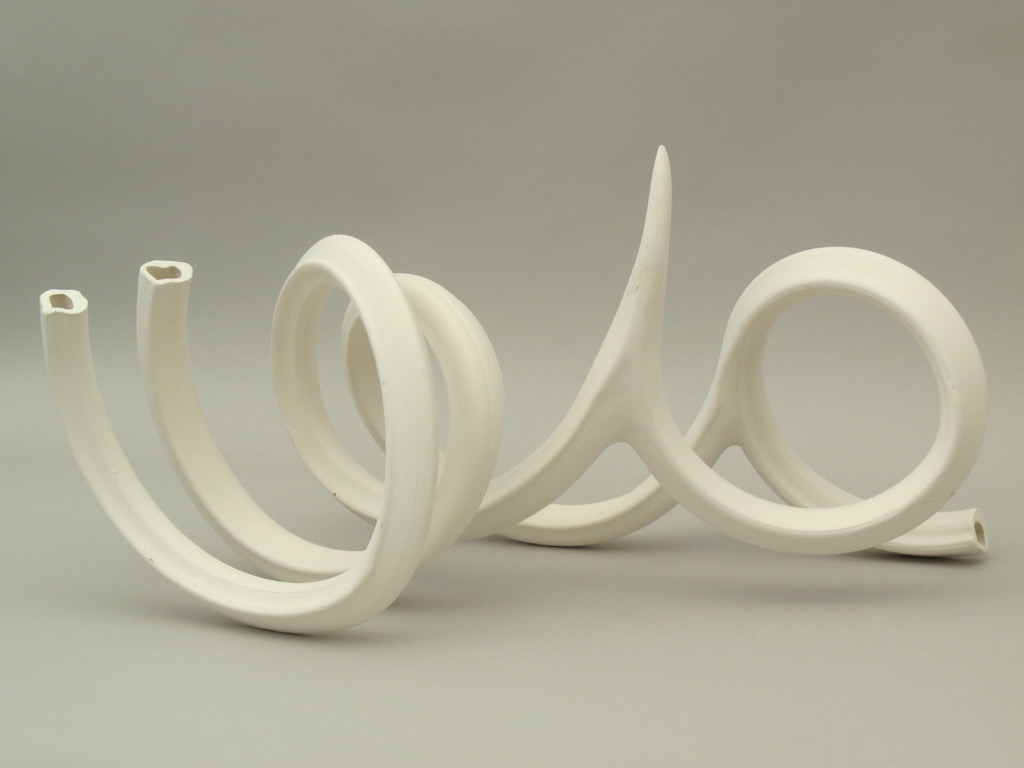
Courtesy of Linda Graham

Audio By Carbonatix
When Linda Graham was a college freshman, she shared a room with an art major who spent her days sketching on a hillside. Graham, meanwhile, was buried in zoology labs and chemistry equations.
“I always thought being an artist was what you did if you couldn’t do anything else,” she says. Decades later, after a lifetime of making, teaching, building institutions and experimenting with clay, Graham has come to a very different conclusion: “What she was doing was probably harder than what I was doing.”
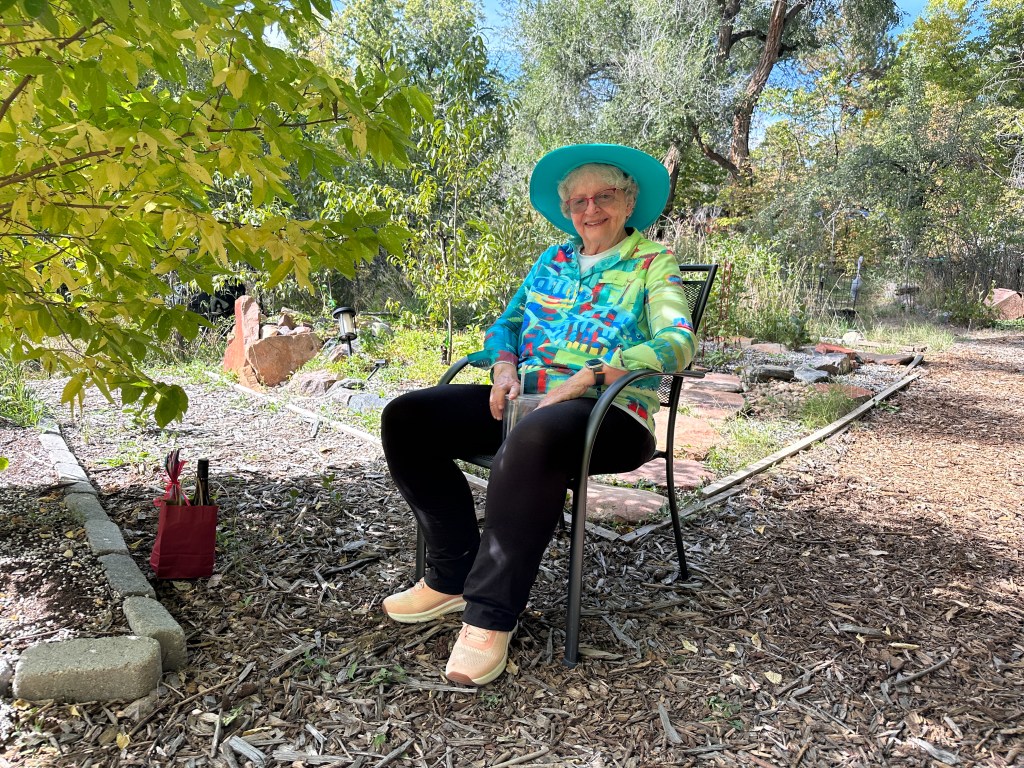
That long arc, from a scientist who made things on the side to a pioneering artist and arts advocate, is what the Downtown Aurora Visual Arts’ new exhibition, The Long View: Making Art a Part of Life, sets out to capture. Opening Friday, January 16, the free retrospective honors Graham as both the founder and first executive director of DAVA and as a restless, curious artist whose work has never stopped evolving. Now 87, Graham is still thinking about the next thing she wants to make.
Courtesy of DAVA
“My whole approach to it is to explore and to experiment,” she says. “I often have said, if I knew how it was going to come out, I wouldn’t bother doing it. I like the unknownness of the big fish I’m going to make. I have no idea how I’m going to make a great big fish in that tiny little kiln — but I will, somehow.”
That spirit of playful uncertainty has guided Graham since the 1960s, when she first began working with clay in Washington, D.C., while her husband, Bill, was finishing his medical residency. She enrolled in classes with artist Peter Pettis with the intention of making something practical, such as a set of dishes, but quickly realized that repetition did not suit her.
“It turns out it was really hard to make a set of dishes,” Graham says. “Also, my personality didn’t fit that mold — to make eight identical plates. I’d make the first one a particular way, and then the second one would be a bit thinner and whiter, and then you make a third one, and it wobbles. I think, ‘Oh, that’s neat. Let’s see if I did this more, and it would turn into something entirely different.’ It was not suitable for me to try to make a set of dishes. That just was not who I was going to be.”
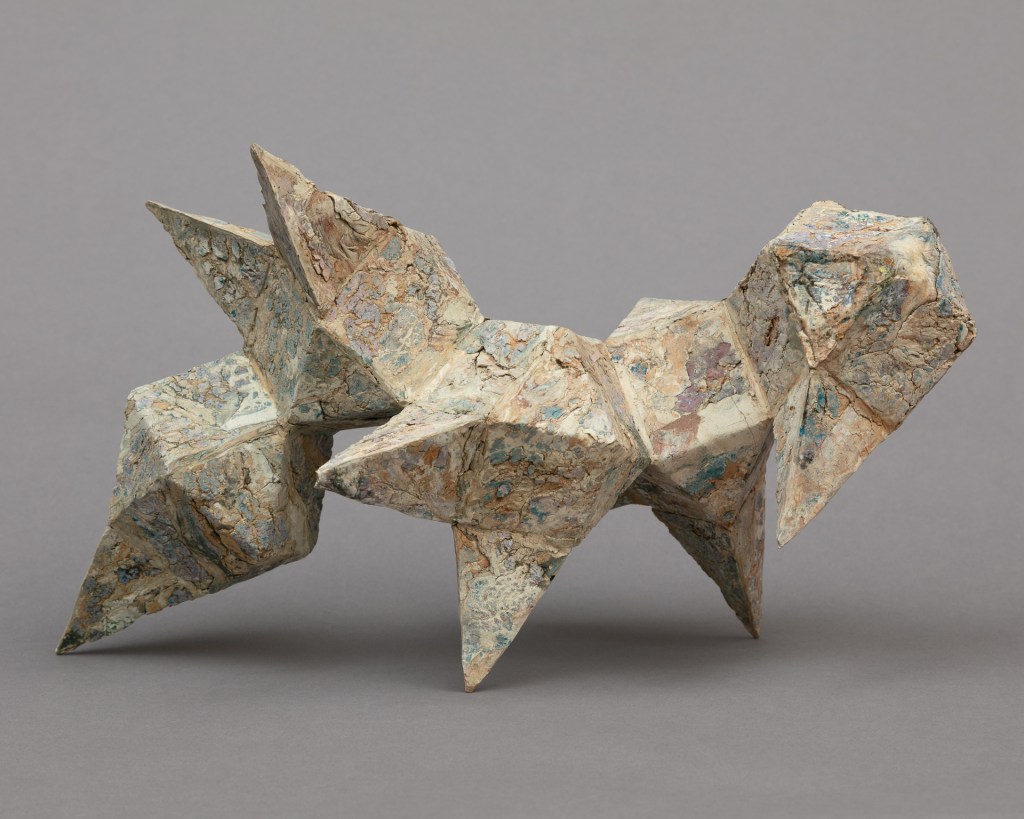
Courtesy of Linda Graham
Graham’s refusal to settle into neat categories would later shape not just her studio practice but also her vision for DAVA. Trained in zoology and chemistry, with parents who were both geologists, Graham brought a scientist’s curiosity and a Montessori educator’s faith in hands-on learning to everything she did.
Graham moved to Denver in 1969 and later became involved with a Colorado craft organization, where she was drawn into the world of nonprofit arts but frustrated by its limitations. To better understand how organizations could serve entire communities rather than just their own members, she enrolled in public administration classes and, by the early 1990s, was heavily involved in efforts to revitalize a struggling stretch of downtown Aurora through the arts.
City leaders initially imagined an art gallery as an engine for economic development, but Graham quickly saw the flaw. “People in that neighborhood would not buy a handmade mug for $10 when they could buy a dollar mug at the dollar store,” she says. “I really could see that the only way we would have people come into an art gallery was if we raised up kids who were knowledgeable about the arts and understood that they weren’t separate from life.”
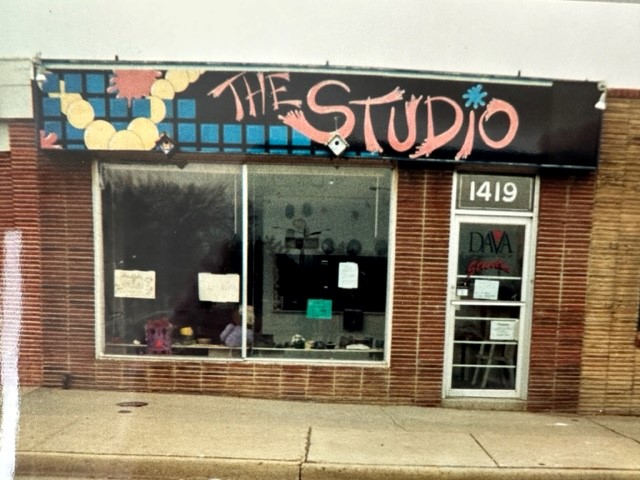
Courtesy of DAVA
What the neighborhood needed first was not a place to buy art, but a place to make it. So Graham went to the local elementary school and asked the art teacher if she could bring in clay. With 2,000 pounds of donated material, she led students in making masks, then mounted their work in an empty storefront so they could see it lit up day and night and bring their families to visit.
“That was the very, very first project that we did, and that made me feel very happy, because those kids, they’re such good kids,” Graham says. “The kids in Aurora were often called ‘disadvantaged kids’ and all kinds of negative things, but really, they’re just kids, and they like to explore just as much as I do.”
From that seed, DAVA grew. In another vacant storefront, Graham and her team rolled out slabs of clay, set up a boombox and invited passing middle schoolers inside to create. Graham fondly recalls one project in which thousands of small clay squares were created, fired, glazed and assembled by neighbors of all ages to form a massive public mural.
One child, Graham remembers, was upset to find that someone else had painted over the volcano he had made. “That’s part of being part of a community,” she told him. “You do your one part, somebody else does another part. You gotta be able to accept the fact that someone else has a different idea than you have.”
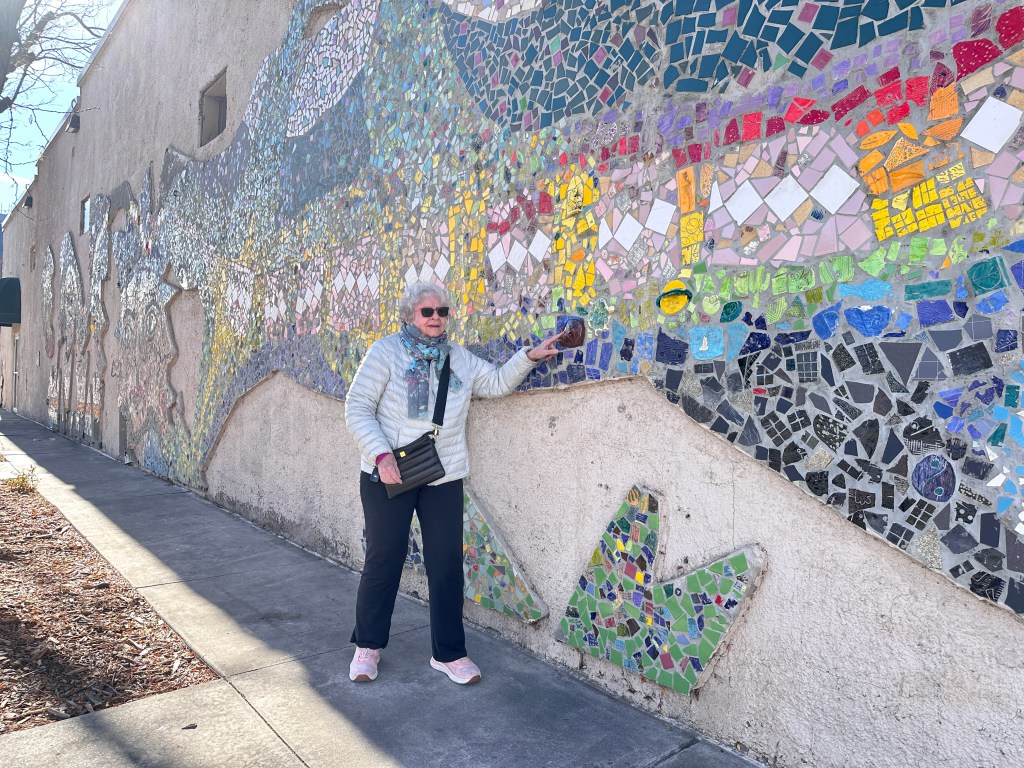
Courtesy of DAVA
Safety and belonging were at the heart of it all. “My thought was, if I could just keep them alive until they’re adults, that would be the biggest challenge,” Graham says of the neighborhood DAVA served, recalling a time when a child was shot while running from a gang and bled out in their sandbox. What she wanted most was “a safe place for these kids to do fun stuff,” surrounded by a rich environment of tools, ideas and possibilities.
DAVA was incorporated in 1993, and for nearly a decade Graham ran it with relentless energy, chasing grants, negotiating with the city and eventually helping the organization purchase its own building. “Starting a nonprofit is hard, hard work,” she says. “If I had known what it was, I would never have done it. Because what I like to do is be in my studio making stuff.”
By 2001, worn out and in her early 60s, Graham stepped away, just as Viviane Le Courtois, now DAVA’s director of art practices and the curator of The Long View, was arriving. “I consider Linda first as an artist before she’s the founder of DAVA,” Le Courtois says. “DAVA was a side shoot. She’s an artist first.”
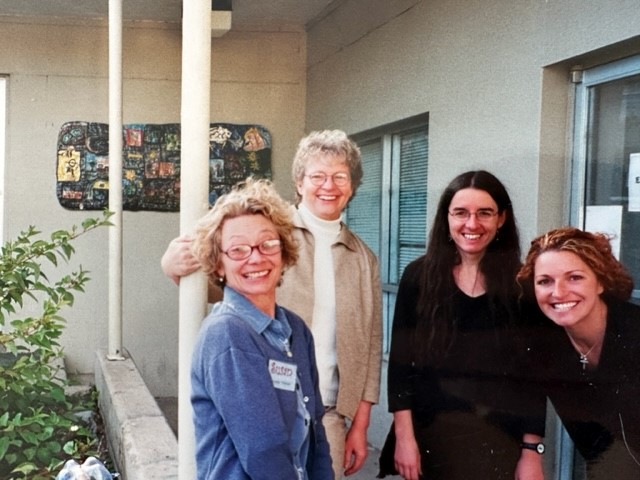
Courtesy of DAVA
The two have stayed connected for more than 25 years, bonded by their shared love of clay, experimentation and science. “We both love to play,” Le Courtois says. “And there’s also the connection with science. That influence of experimenting and including many different subjects — that came from you in the beginning, and then I kept it going.”
After leaving DAVA, Graham returned fully to her studio practice, working at Rocky Mountain College of Art and Design, the Art Students League of Denver, Anderson Ranch and at home. From 2011 to 2017, she experimented with plexiglass and light installations, and during the pandemic, she dabbled in digital art. Her most recent ceramic sculptures, part of her ongoing Denver Under Water series, are inspired by geology and zoology, with layers, fossils and imagined creatures emerging from the depths of time.
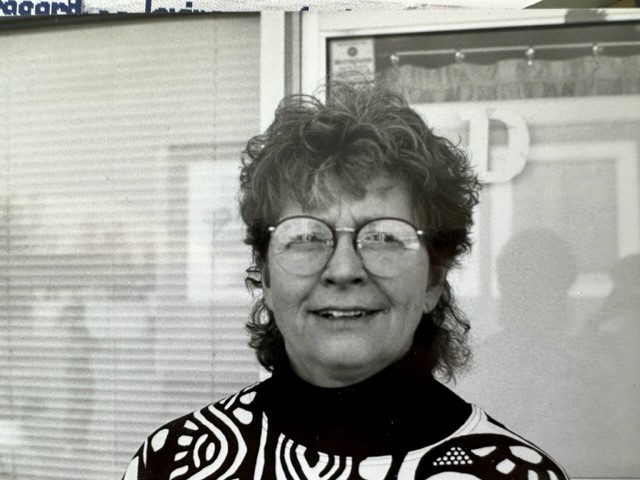
Courtesy of DAVA
Those many phases are what The Long View brings together. Le Courtois selected pieces spanning Graham’s career, with a particular emphasis on clay.
“Clay is also the big connection to DAVA,” she says. “I wanted students and visitors to see, this is where we started. This is why we do so much with clay — because of Linda.”
The exhibition even begins with Graham’s first surviving bowl, a lumpy blue piece made in the late 1960s. “That’s the first piece,” Le Courtois says. “That’s how the show starts.”
The idea for the retrospective took shape last fall, when Graham hosted an open-house exhibition of her Denver Under Water work in her backyard. Le Courtois invited DAVA’s new executive director, Priscilla Montoya, to meet Graham there. From that visit grew the realization that it was time to tell the whole story of DAVA’s origins and of the artist who made them possible.
For Graham, seeing her life’s work gathered in one place has been both thrilling and humbling. “It’s a little overwhelming,” she admits. “I have no idea I made so much stuff.” Going back through old writings, sketches and sculptures has felt like rediscovering herself. “Why did I make so many of those things? And I don’t have an answer to that. I just explore and experiment.”
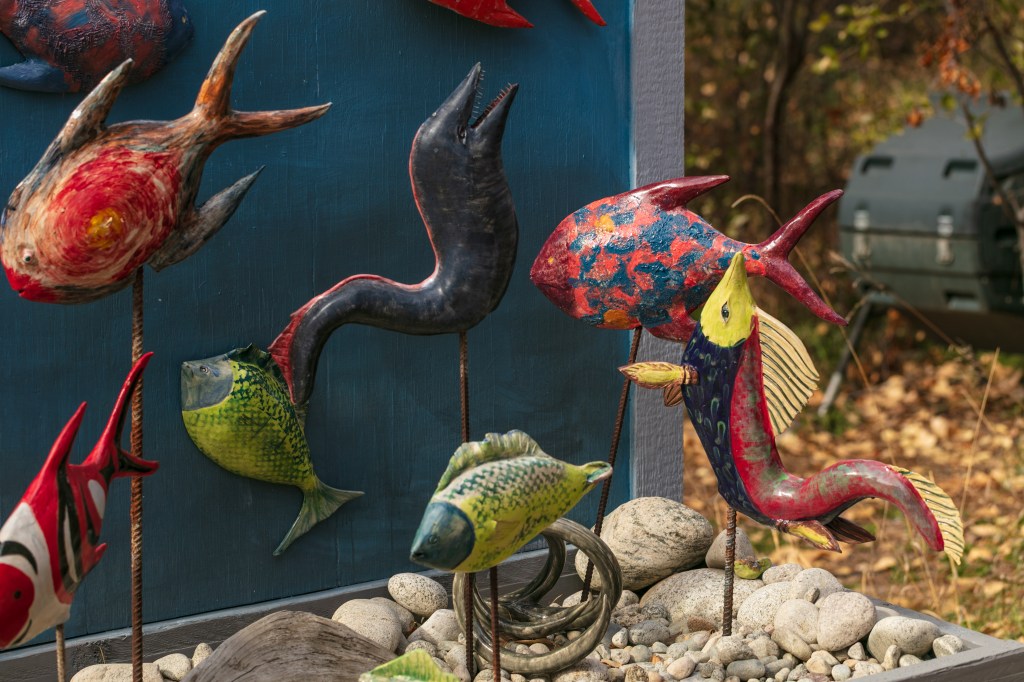
Courtesy of Linda Graham
Her daughter, Sarah, who grew up surrounded by clay, paper and paint, feels that history personally. “Some of these things, like that cup, make me think of my childhood,” she says. “And then there are things that came later, after I moved away, so I have a different connection to those. It’s been really interesting to see it all over time.”
For Graham, seeing all of that history gathered in one place has been just as powerful. “This retrospective is so overwhelming and amazing,” she says quietly. “I could never have dreamt of how it was going to turn out.”
The Long View: Making Art a Part of Life opens with a reception on Friday, January 16, from 4 to 7 p.m. at DAVA, 1405 Florence Street, in Aurora’s Cultural Arts District. The exhibition is free and open Monday through Friday from 10 a.m. to 5 p.m. through Monday, February 23, with additional hours on First Friday, February 6, from 6 to 9 p.m. Learn more at davarts.org.