
Courtesy of Lila Cole

Audio By Carbonatix
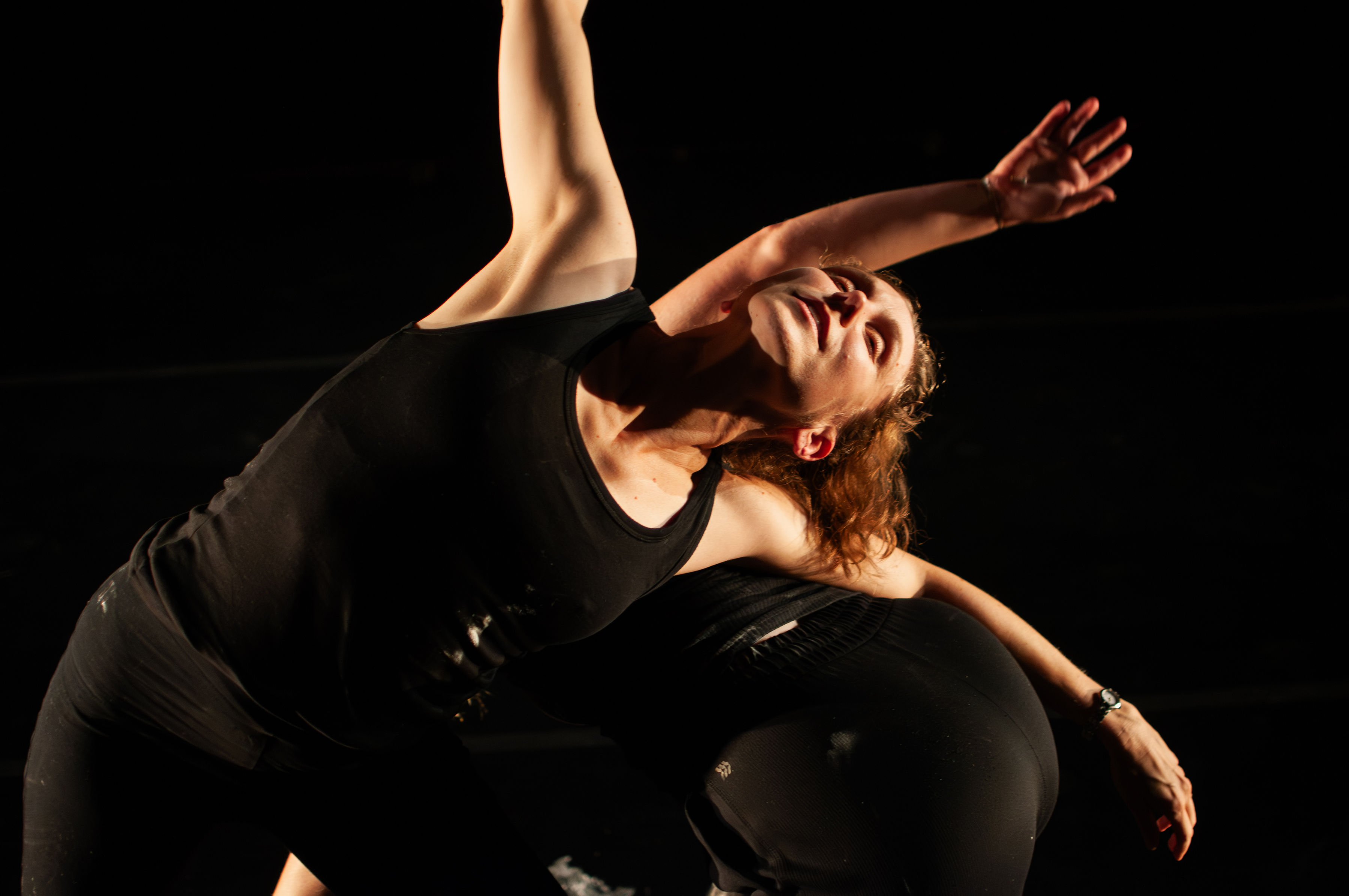
In a moment when conversations around reproductive health are often filtered through political rhetoric, Chalk takes a different approach. The new dance theater work by dancer and choreographer Kristin Marrs and theater artist Anne Marie Nest, which will premiere March 5–8 at the Savoy Denver, focuses on the lived experience of infertility and pregnancy loss rather than policy debates.
“It’s such a deeply felt thing,” Marrs says. “Going through the treatments, having a miscarriage, all of that is so physical, and a lot of it happens alone in a pretty dark room with one technician, or you alone in your bathroom. Chalk is about bringing that embodied experience into the open so that others can truly see what it’s like.”

Courtesy of Lila Cole
Marrs is an Iowa-based dancer, choreographer and Associate Professor of Instruction and Director of Graduate Studies at the University of Iowa Department of Dance, while Nest is a former regional theater actor and voice and speech professor who now works as an executive coach and communications consultant based in Denver. The two met while teaching at the University of Iowa and began developing Chalk after navigating their own experiences with infertility and miscarriage.
“We wanted to raise awareness about the number of women that this affects because our stories are really, unfortunately, not unique,” Marrs says of the performance’s inspiration. “We were cognizant of the types of privileges that we were afforded based on our race and our socioeconomic status and the kind of medical care that we both had access to, so that’s why we wanted to open up this project to include voices from a broader population of more varied identities. A lot of women really wanted to share what they had experienced because there are so few outlets to talk about this type of loss and grief.”
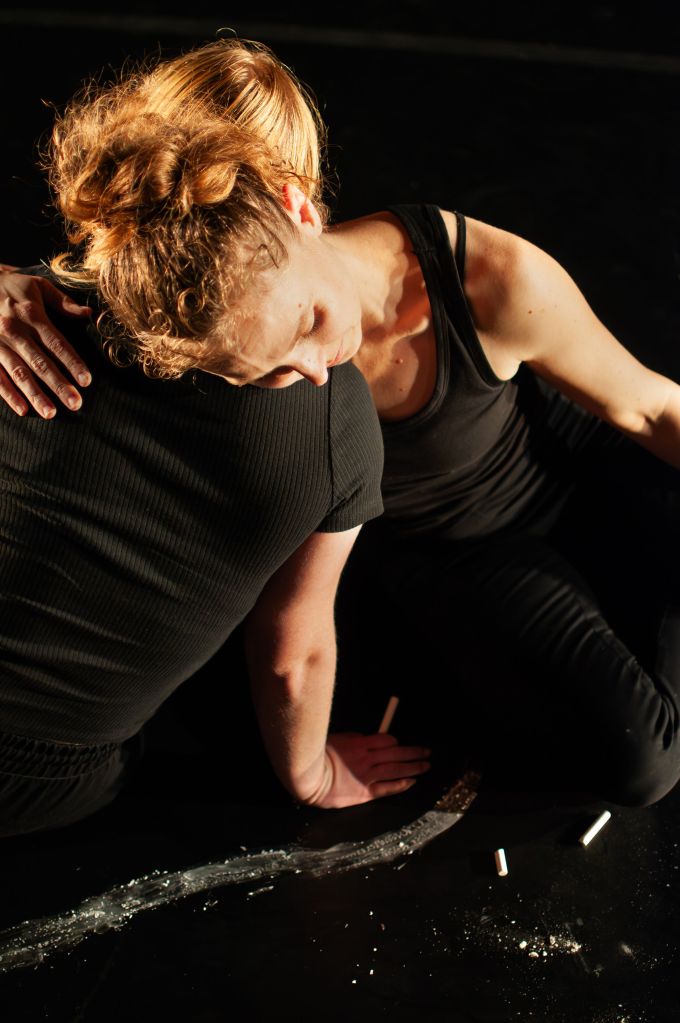
The hour-long performance arose from the artists’ personal struggles with miscarriage and extensive medical intervention, which they began developing into a performance approximately two years ago. What began as a deeply personal exploration expanded as the pair invited others to anonymously share audio recordings about infertility for inclusion in the piece, ultimately creating what Nest describes as “a beautiful collage at the end of their voices that come in.”
Courtesy of Lila Cole
That story bank helped shape the emotional architecture of Chalk, revealing striking similarities across participants’ experiences regardless of race, access to healthcare or socioeconomic status. Nest says that while most people understand on an intellectual level that infertility and miscarriage are common, “somehow it’s an isolating thing,” a contradiction the piece seeks to confront by placing these private struggles into a shared public space.
In translating those experiences for the stage, Marrs and Nest found themselves grappling with the surreal and sometimes humiliating routines of fertility treatment. Marrs says the process often felt like being “moved through this system where there’s a mismatch between the deeply personal experience that you’re going through and then the sterility and sometimes lack of empathy” encountered in clinical settings.
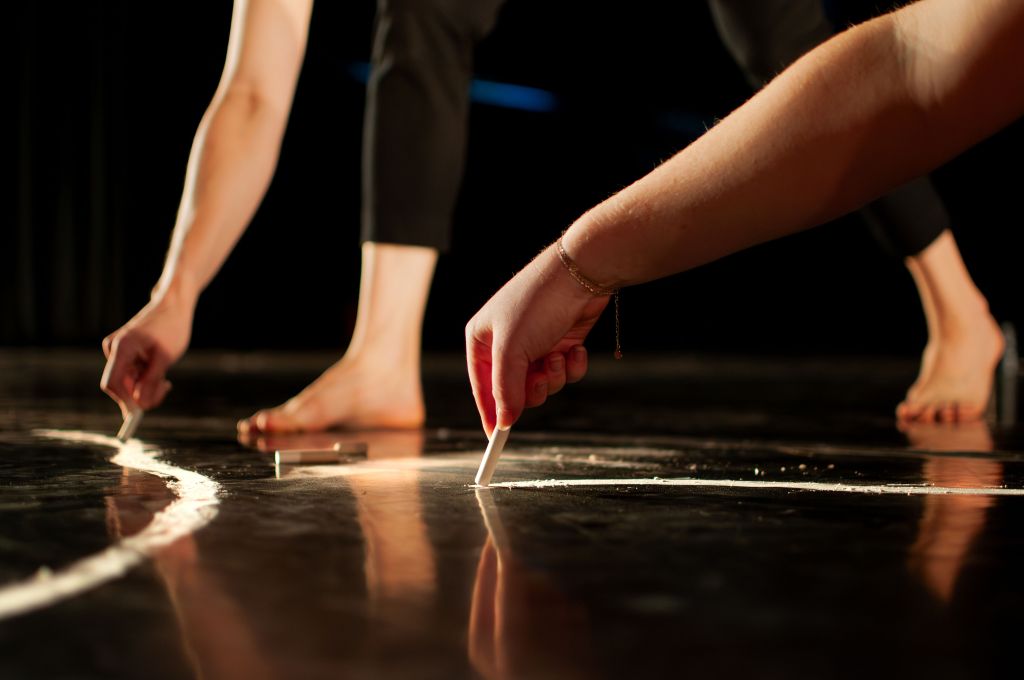
That tension serves as the work’s central thematic engine, combining text-driven physical theater with more avant-garde movement to represent how reproductive loss leaves long-lasting marks on the body.
“There was a surprising amount of humor and levity in both our own and other women’s stories,” Nest says. “What we discovered while developing our piece is that there’s a point where you have to laugh at it, or else you’ll cry your eyes out. Also, there is a general sense of absurdity throughout the medical journey, so clowning began to appear in our piece as well as some other absurdist elements.”
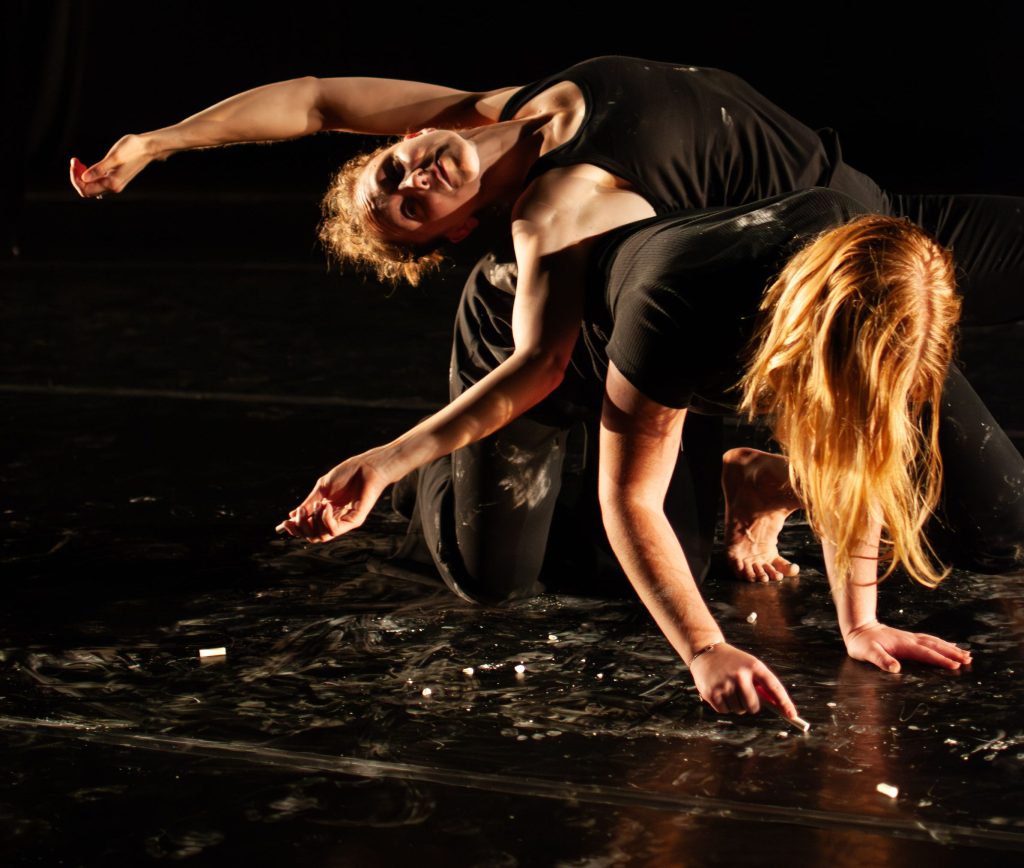
The performers primarily play versions of themselves throughout the piece but also shift into supporting roles, including physicians, technicians and husbands, underscoring the social ecosystems surrounding infertility. Nest says the work is intended not only for those who have personally experienced reproductive loss, but also for the people in their lives who struggle to understand it.
“I had a friend say to me, ‘Well, I’m not going to bring my husband; this isn’t for him,’ and I categorically disagree,” Nest says. “We really want people who have experienced this to see it, as well as people who haven’t, because part of our mission in doing this is to raise awareness about the type of experience and grief that this is, so that even if you haven’t, you can have a better understanding.”
Courtesy of Lila Cole
Conversations like that along the way helped the creators clarify an important question as they developed the work: Who, exactly, is Chalk for? Rather than centering their own eventual paths to parenthood, Marrs and Nest made a conscious choice to leave the performance’s emotional resolution open-ended.
“It’s worth saying that we’ve specifically designed and written this show so that it’s open-ended,” Marrs says. “We were cognizant of the women out there who are child-free, not by choice. We were both very lucky in our infertility journeys, and we don’t want this show to only be for people who have a similar ending to what we did, and so we don’t talk about our children in the show. A very explicit goal of ours is to have this show be for any woman who’s going through infertility.”
That commitment to accessibility extends beyond the performance itself. Evening shows on March 5, 6 and 7 will be followed by an optional talkback featuring the creators, medical professionals or other artists, while the March 8 matinee includes an optional grief circle for audience members seeking additional space for reflection and dialogue.
Courtesy of Lila Cole
Following its Denver premiere, Chalk will travel to Iowa City for an additional run later this month. The creators also intend to professionally film the piece with the goal of making it available for streaming and possible touring engagements in the future, allowing more people to experience it.
As Nest puts it, “the reality is, we all will be affected by this at one point in our lives, whether it’s a friend, a family member, or a child that goes through it,” she says. “And so to be able to have an idea of what it’s like on the inside might help you respond in a way that’s more supportive and helpful.”
Chalk runs Thursday, March 5, through Sunday, March 8, at the Savoy Denver, 2700 Arapahoe Street. Tickets are $10 to $25. Learn more at ChalkDenver.eventbrite.com.