
Uchi

Audio By Carbonatix
No one makes foie gras in Denver. And if Pro-Animal Colorado has its way, no one ever will.
Today, December 10, members of the activist group — the local, and perhaps most active, branch of Pro-Animal Future — will gather at the Denver City and County Building, then deliver petitions with 16,000 signatures to the Denver Elections Division, asking that the Prohibit Force-Feeding Birds Act be placed on the city’s November 2026 ballot.
A few restaurants still serve foie gras in Denver, but if passed, the Prohibit Force-Feeding Birds Act would put an end to that, too.
At this time last year, several foie gras-serving restaurants — and a couple of their owners — were under siege, the focus of protests designed to end the sale of foie gras in the city. “Every single restaurant that sells foie gras in the greater Denver area can expect to soon have an open campaign against their sale of foie gras,” promised Thomas Gorman, director of the Duck Alliance, in November 2024. “We know exactly who you are, where you source it from, what dish you sell it in and how much you make from it – how prized of a menu item it is. And we’re ready for the long haul on every single one, whether it takes a week, a year, a decade or a lifetime.”
Over the last twelve months, that long haul turned from actions outside certain restaurants to a major effort to collect signatures for an act that would ban foie gras in Denver altogether, with more than eighty volunteers working for 2,000 hours, according to Pro-Animal Colorado. Their biggest challenge? “Most people don’t know what foie gras is,” admits Justin Clark, the campaign director.
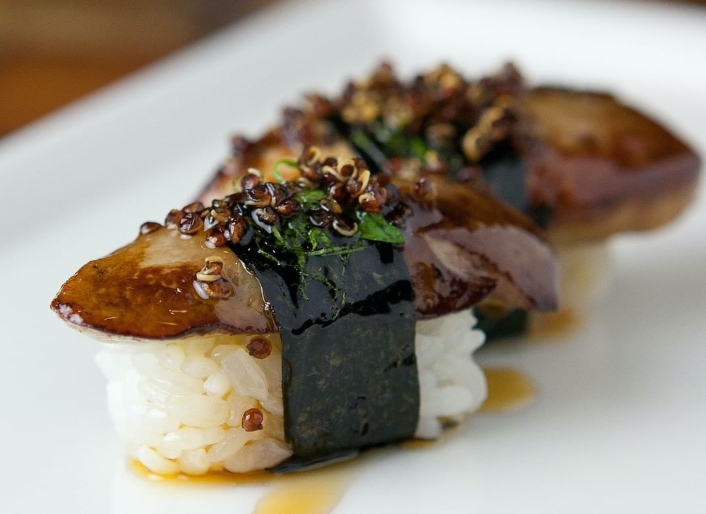
For the unitiated, foie gras is the liver of a young duck or goose that has been force-fed two or three times daily for two to three weeks. The process is called “gavage”: Farmers insert a metal or plastic tube down the bird’s throat and pump in fish and/or grain; this replicates the process known as lipogenesis, when ducks and geese consume more food to build up energy reserves, including in the liver, which can expand up to one and a half to two times its size usually, and up to six times under force-feeding.
Most foie gras comes from New York, where the two remaining foie gras producers in America have gotten used to the complaints. Activists will say, “Imagine if somebody intubated you, they thrust a tube into your throat,” Marcus Henley, director of farm operations at Hudson Valley Foie Gras told Westword last year, “But the physiology of waterfowl is different.”
That explanation doesn’t wash with Pro-Animal Colorado, which learned some lessons from the unsuccessful 2024 effort to ban slaughterhouses in Denver (yes, the city actually has one), as well as ban most furs. Both of those ballot proposals were handily defeated by opposition campaigns that were able to “control the narrative,” Clark explains, particularly with the argument that Denver workers would lose jobs if the lamb slaughterhouse closed. And the fur ban was just too complicated.
“For the best strategy, you target certain practices,” notes Clark, who adds that he wasn’t part of the more “rowdy” anti-foie gras campaigns last year, but did hold up signs outside a few restaurants.
So this round, the campaign is focusing on the practice that creates foie gras, not the people who serve it. “Those people are not evil per se, they just want to make the most money possible,” Clark says.
Pro-Animal Future pushed a similar campaign in Portland, and one is coming up in D.C. But that brings up another challenge unique to getting a citizen’s initiative on this city’s ballot. “It’s so hard to find people who are actually in Denver,” Clark says. “Over half of the people don’t live in Denver.”
Much less eat foie gras.
“What we’ve settled on, it’s probably better for everyone to focus on the areas where we all agree,” Clark adds, noting that the proposed foie gras ban is polling better than the fur ban and the slaughterhouse ban. “Give Denver things that people agree on, with more goodwill. The long game is helping animals.”
For the record, two restaurateurs targeted by the anti-foie gras actions last year, rowdy or not, declined to comment on this latest effort. While a few stopped serving foie gras at the time, it’s made a reappearance on a few end-of-the-year menus