Bruz Beers

Audio By Carbonatix
The next time you order a pint of beer, you may want to double-check that you’re getting a full glass.
Independent researcher and biomedical scientist Steve Nilsen spent the last year visiting 49 bars across Denver, Boston, and Minneapolis/St. Paul, using a calibrated scale to weigh the serving size of the beer poured at each. His findings, published in the report, “Is It a Pint?,” suggest beer consumers may be getting shorted.
According to the report, the average serving of beer he received was 14.7 ounces, rather than the 16 ounces that constitute a full pint. The difference between actual and assumed volume amounts to an annual overcharge of between $733 million and $1.1 billion, he estimates.
It’s not a new complaint. Westword examined the issue 27 years ago after bar customers complained to state regulators about short pours, which should result in a $500 fine per offense.
But while local brewers say some of his observations are on point, they say others fall wide of the mark.
“I think part of the problem is, pint means different things to different people. It’s kinda like Kleenex,” says Charles Gottenkieny, co-founder and brewmaster at Belgo-centric Bruz Beers. “It’s kind of a generic term.”
Sarah Cowell
The standard, straight-walled pint glass is known technically as a shaker pint, because it was originally meant to be paired with a metal shaker and used to shake cocktails. However, the dominance of the shaker pint leads to a presumption that 16 ounces is the default serving size for beer in the United States. That standard does not exist in reality.
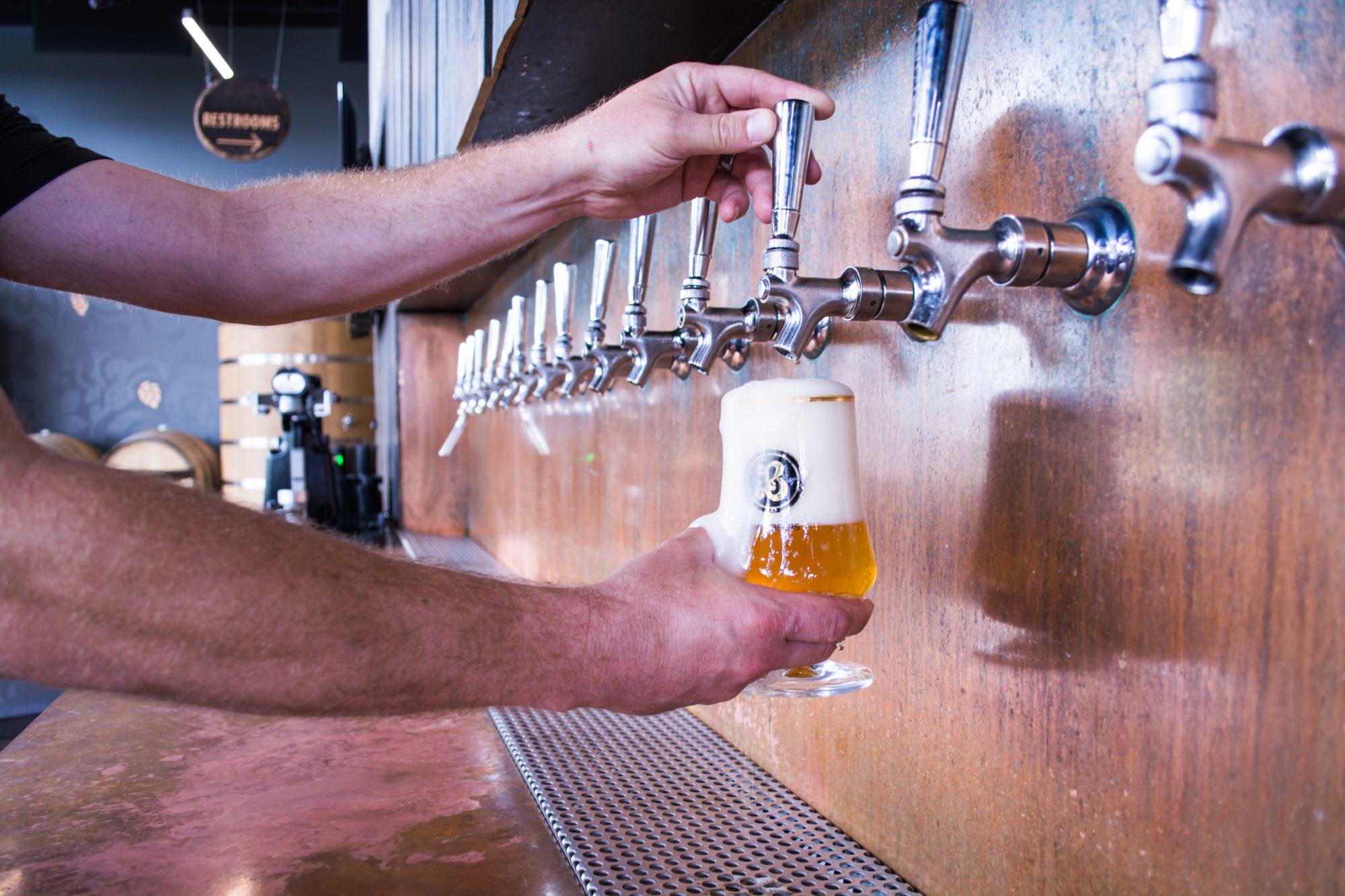
For instance, the standard pint-sized glass at Bruz is one of five house glasses used at the brewery, and holds about 17 ounces.
“We don’t sell it as a pint. We don’t call it a pint. We don’t advertise it as a pint. It’s a glass of beer,” Gottenkieny says. Beers served in that glass are listed on the menu as 14-ounce pours to leave room for a proper head of foam. Naturally, a 16-ounce pint glass, shaker or otherwise, does not leave room for a properly served beer, leading to the discrepancy noted by Nilsen.
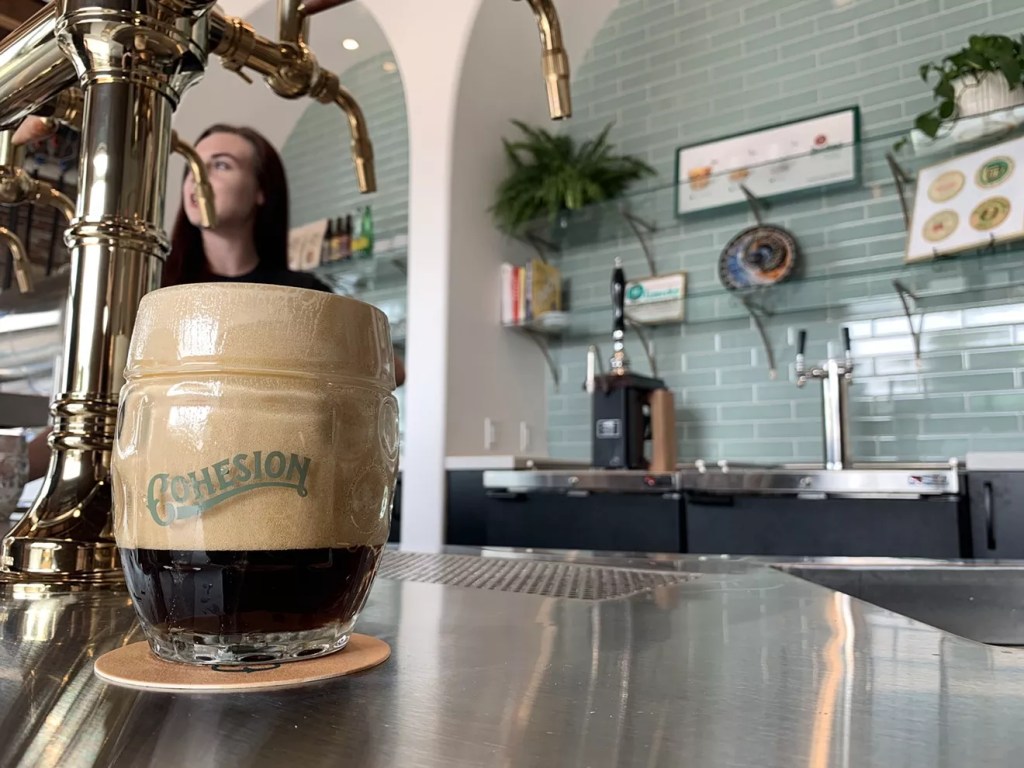
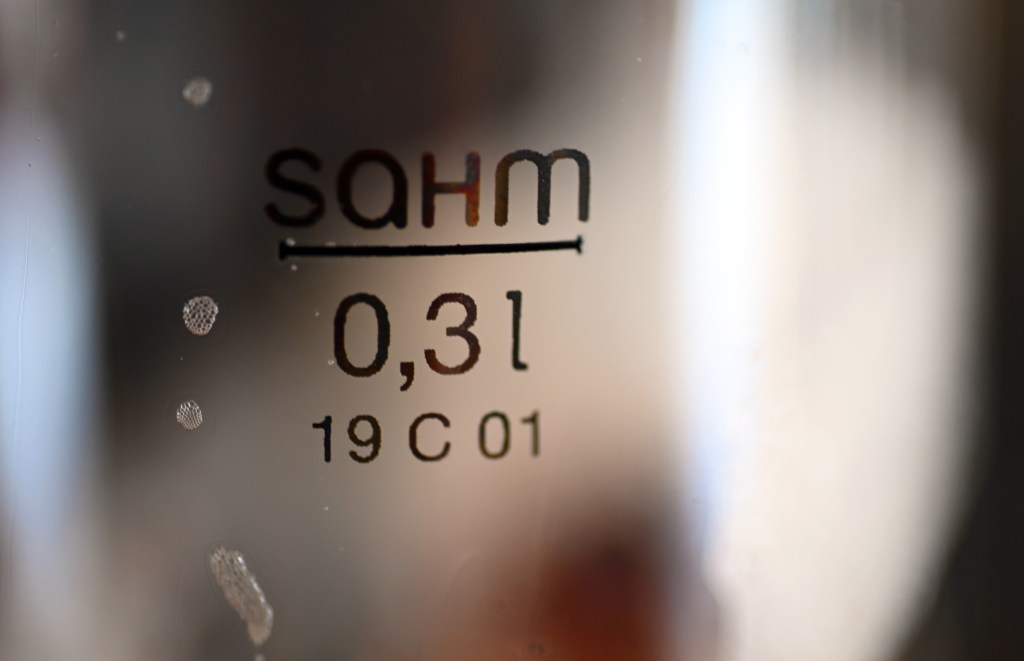
The glasses at Bruz have a mark indicating the fill level and numeric volume, reflecting the tradition of Belgium, Germany, and other countries around Europe. The same is true at Cohesion Brewing, where a focus on Czech-style beers with plenty of heavy, wet foam corresponds with European-style volumetric markings on the glassware. Cohesion even offers the uniquely Czech-style “mlíko” pour, which is essentially a glass of drinkable foam that settles out to a consistent 10 to 12 ounces, all of which is reflected in the price.
However, Cohesion’s co-founder and brewer Eric Larkin says he sees deceptive practices in the local market, as well as plenty of people who pour beer without much critical thought about volumes, expectations, and transparency.
“I’ve been to many breweries where there’s two numbers [on the menu]. It’s just 8 and 5, and you’re like, ‘How much volume am I getting in a $5 pour?’ I have no idea,” he says. “I’ve ordered canned or bottled products, and I get a 16-ounce can instead of a 12-ounce can. I’m like, ‘Oh, that’s cool.’ I’ve seen it work both ways, but there’s definitely a lack of labeling and understanding.”
There’s even sometimes a debate over serving sizes that are too large, notably for beers with higher alcohol content.
“If you’re drinking an 11 percent beer, I think it’s irresponsible to serve it in a pint glass,” Gottenkieny says. “This guy came in here one time and gave us a zero-star rating because the servings were too big on some of the strong beers. That’s the first time I’ve heard that one.”
Bierstadt Lagerhaus co-founder Ashleigh Carter, who uses glasses marked with a fill line — known in Germany as the eichstrich — and lists pour volumes on the menu, agrees with Nilsen that there is an overt issue of beer drinkers being underserved.
“If you say that this is a pint of beer or a half-liter of beer, then you should get a full half-liter of beer, and then you get foam on top of that, or else you are getting ripped off,” she says.
She also notes that some breweries may be actively working to deceive customers with how they describe their pour size and what they actually provide.
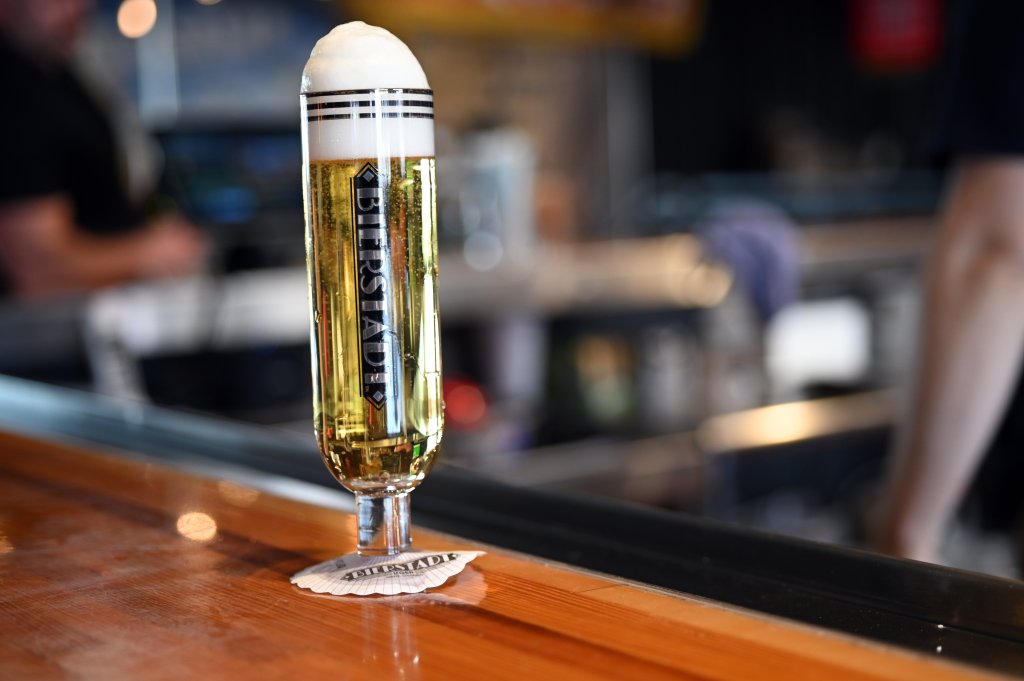
“I won’t call them out specifically, but I know of breweries who just have decided in the last couple of years — because they don’t believe that anybody knows — to change their glasses,” she says. “I think it’s kind of shady, because we should be telling people what you’re getting for their money. If it’s 14 ounces plus foam, then it’s 14 ounces, plus foam. There’s nothing wrong with that. I just think people should be aware of what they’re buying.”
Taprooms like Bierstadt, Cohesion, and Bruz are obvious outliers. After all, there is undoubtedly more Coors poured into shaker pints every day in Denver than upscale German, Czech, or Belgian beers poured with plenty of head into a nice glass with a fill line. But the debate does illustrate the impossibility of proscribing a single “correct” pour size, whether it’s a pint or a liter or anything between.
While they’re not interested in being handcuffed to a single pour size or the use of a cheap, standardized glass that does little to accentuate a finely crafted beer, brewers do hope for more transparency in how beer is served, as well as more thought going into how those pours are advertised.
In that respect, Nilsen’s report highlights a real issue, but one that may be more nuanced than it appears.
“In the last 10 years, I’ve only had two or three guys that have said anything about getting their full pint,” Bruz Beers’ Gottenkieny says, usually due to the amount of foam the glass contains. “I just tell them, the head’s there for a reason. Enjoy it, and I’ll come top you off. No one’s ever argued with that, and they always get more than their money’s worth. It’s not worth arguing with people and taking them to the mat over an ounce or two of beer.”