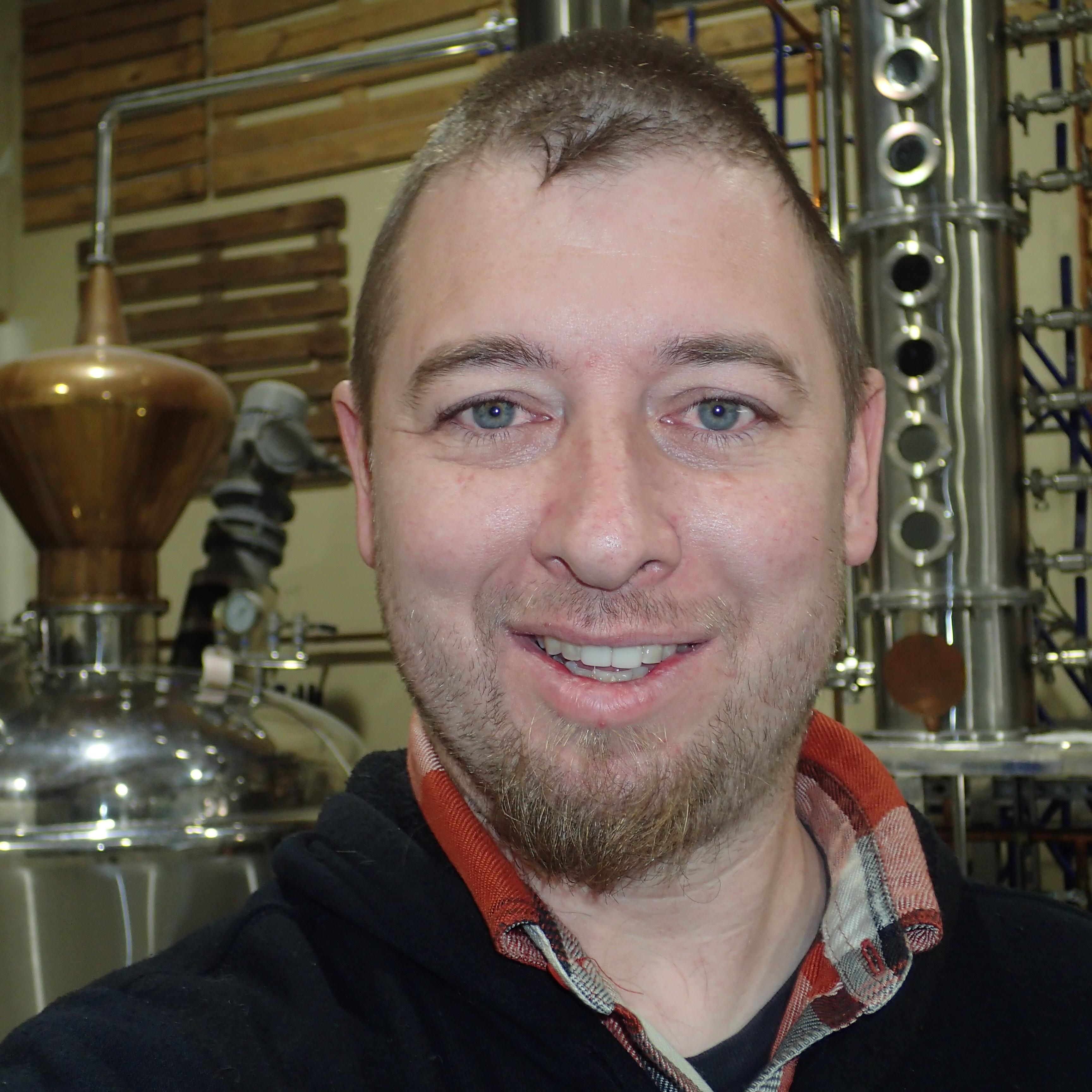
Photo by Gabe Toth

Audio By Carbonatix
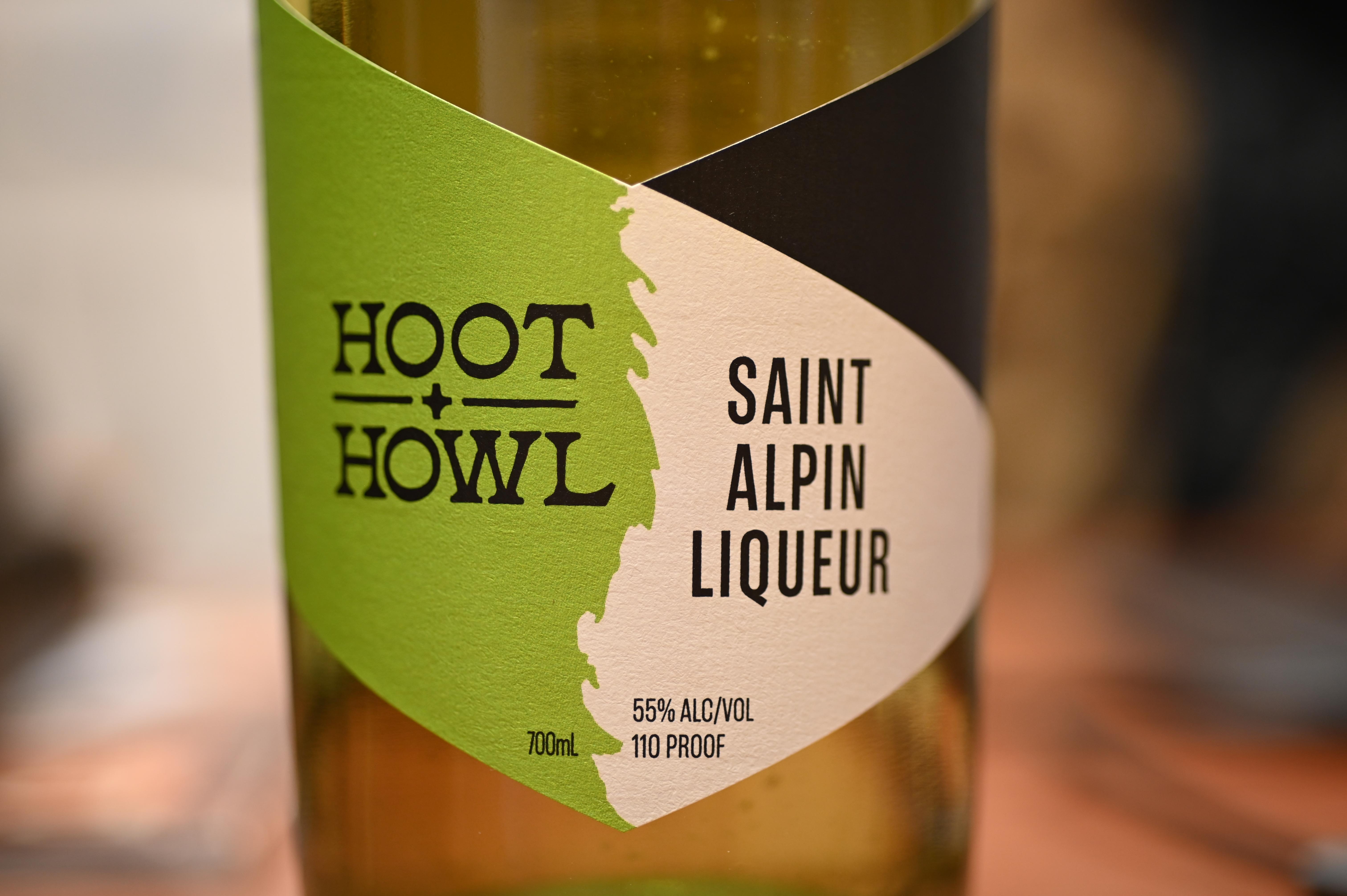
As Hoot+Howl Spirits releases its Saint Alpin Liqueur, the distillery in Golden joins a small coterie of local distillers offering bitter, herbal, alpine-influenced liqueurs of the sort that become a handshake or byword among bartenders, cocktail enthusiasts, and other aficionados.
Its newest product, according to head distiller Chris Ritenour, was inspired by a famous liqueur made at a monastery in the French Alps.
“The whole idea is that it should be able to be slotted in for green Chartreuse in any cocktail,” he says. “The specific flavors in it weren’t trying to match one-to-one. It’s not meant to replicate it, [but] taking a ton of influence.”
Chartreuse has seen an increasing level of interest in recent years, paired with the decision by the monks who make the spirit to cap production, allowing for other producers to step into that gap between supply and demand.
“It’s not cheap to do. And until recently, there wasn’t a lot of demand. If someone wanted Chartreuse, they could get Chartreuse,” Ritenour says.
He started with a recipe from an 1800’s-era distillation manual, which produced a spirit nothing like Chartreuse but served as a jumping-off point for a recipe that evolved to include 18 botanical ingredients, including lemon balm, costmary, green anise, grand wormwood, petite wormwood, cinnamon, mace, angelica root, angelica seed, and even arnica flowers at more than $500 a pound (added in extremely small proportions, in the case of arnica).
Saint Alpin comes in at a similar but slightly lower sweetness than the presumed sugar addition of Chartreuse.
“We pointed ourselves in a pretty broad general direction and responded to each round of R&D like it’s something coming into focus,” Ritenour says. “You’re like, ‘Oh, that’s kinda neat. It’d be fun if there was more of that,’ and tweaking it up. And like anything, whether it’s cooking or these type of spirits, it’s fascinating how dynamic the flavors are.”
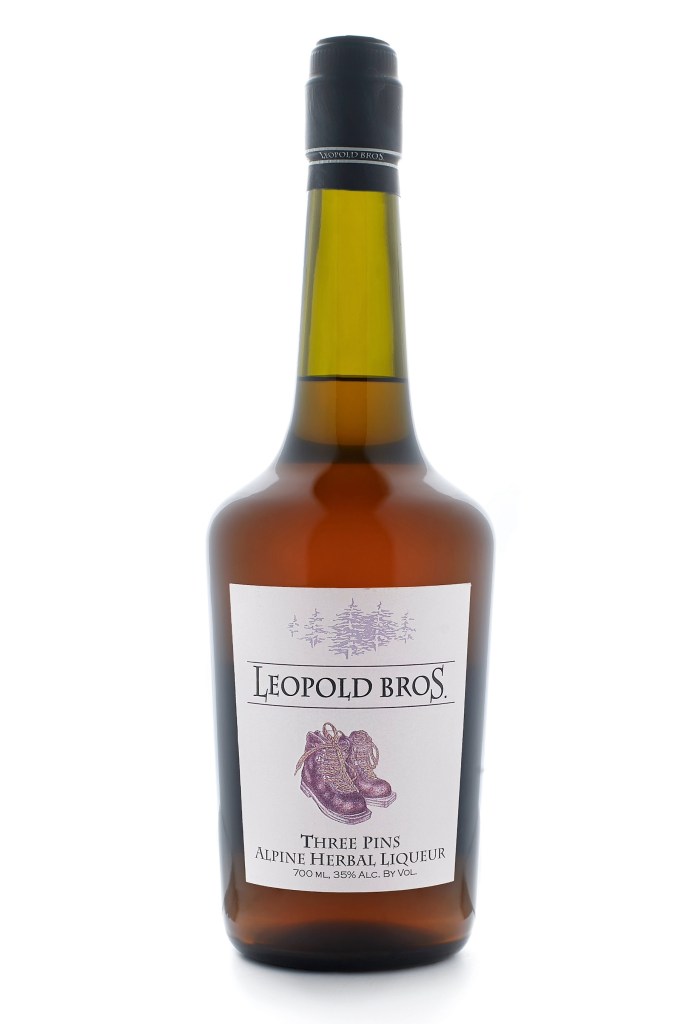
Photo courtesy of Leopold Bros.
Denver’s (and possibly America’s) original alpine liqueur has its roots in Ann Arbor, Michigan, at the first incarnation of Leopold Bros. Originally founded as a brewery, it soon expanded into spirits production, eventually tapping into founder Todd Leopold’s experience working at Keystone Resort in the 1980s and his knowledge of alpine liqueurs after studying brewing and distilling in Europe.
“It’s the first amaro that I’m aware of that was made in the States since Prohibition,” Leopold says, noting that such claims always require some hedging. His vision was for a liqueur that would be perfect at the end of the ski day, and they named it for the bindings used by telemark skiers. “You know, end of a nice run, you’re sitting at the 19th hole, as it were, and it’s a nice apres-ski drink.”
It’s meant as an alpine amaro in the style he encountered in southern Germany and Austria, Leopold said, where they have good winters and a history of good winter warmers. That means a little bitterness, medium sweetness, and some citrus.
“It’s clove, it’s a little bit of cardamom, more of those baking spices, nice little citrus finish to it,” Leopold says. “To me, it’s just wintertime in a glass. It’s basically the same zip code as mulled wine, except a spirit base. You’ve got savory, a little bit of citrus, medium alcohol, medium sugar and just something that’s nice and tasty, and we release it around the holidays every year.”
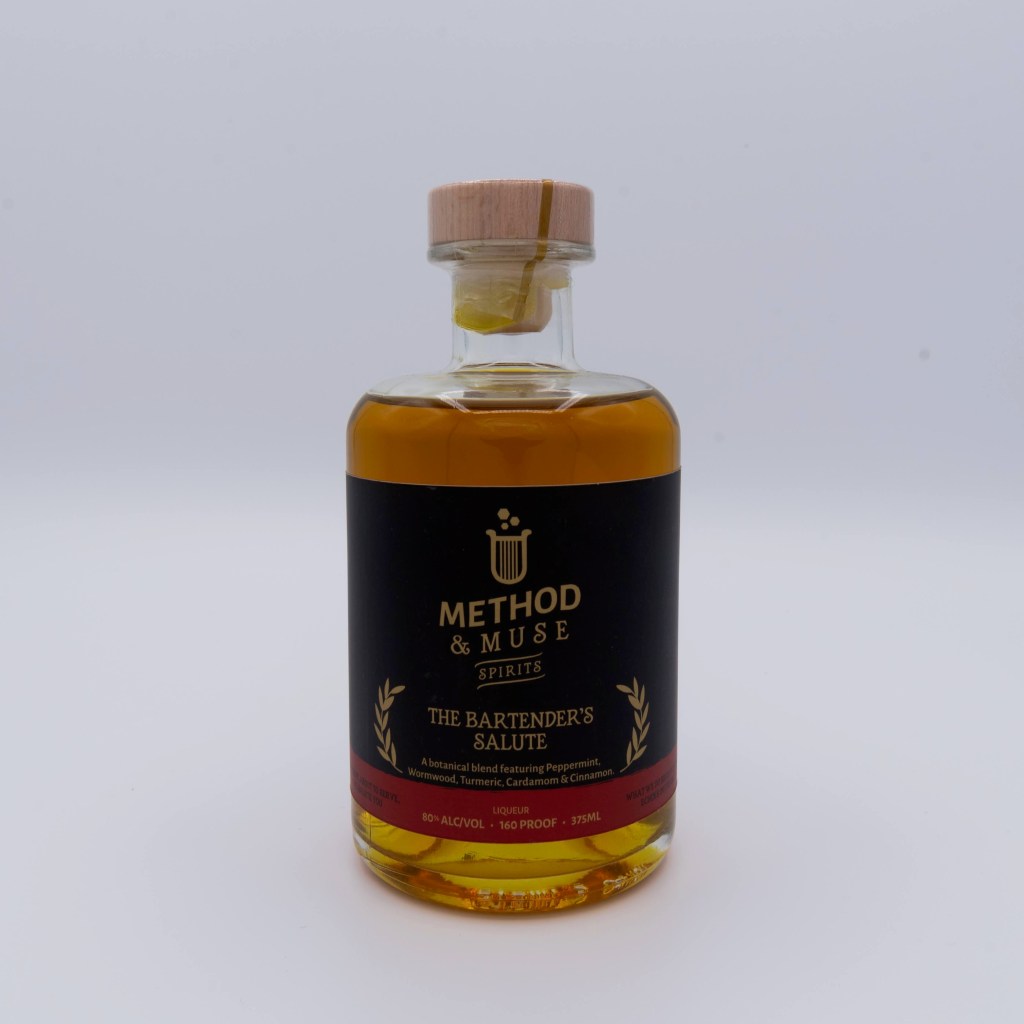
Photo courtesy of Method & Muse
Likely the most intense, memorable, palate-wrecking Alpine amaro being made in the Denver area is the Bartender’s Salute from Method & Muse Spirits.
Distillery co-founder Ethan Tsai said they wanted to create an homage to the powerful experiences he and others have shared with bartenders — the renowned bartender’s handshake, often Fernet-Branca but generally speaking a strong and strongly flavored herbal liqueur.
“There are a handful that come to mind,” he says. “Chartreuse immediately comes to mind. You know, the early 2000s bartender’s handshake is just give me a shot of Fernet. Absinthe was big for a long time. I still love absinthe. I still love the flavor of wormwood. Wormwood and licorice.”
From Fernet to absinthe to Malört and Chartreuse — Tsai says he wanted to include “all of those things into one bottle. Because they’re not, in and of themselves, mutually exclusive. There’s a lot that, when they come together, can be a beautiful thing. It just doesn’t need to be as minty as a Fernet-Branca. It doesn’t need to be so deeply bitter or wormwood-y as an absinthe. It doesn’t need to be so violently explosive as a Chartreuse, palate-wise. But when you combine all those things together, then it becomes very punchy.”
To cram all of those flavors into one spirit without the botanical oils creating a cloudy spirit, Method & Muse had to crank up the ABV to 80%. The Bartender’s Salute includes more than 20 botanicals, such as wormwood, fennel, Ethiopian cardamom, and Ethiopian holy basil, along with a gin base.
It’s a spirit meant to inspire an immediate, visceral reaction. It doesn’t have to be a positive reaction, as long as it’s a strong one. Tsai said the response is equally strong and polarized among both consumers and spirits judges, noting the feedback they received from a competition last year.
“One of the judge’s comments basically was this long-winded near soliloquy: ‘When I drink this, I am transported to ancient monasteries, and the entire history of botanical herbal liqueurs unfolds before my eyes.’ And another judge’s comment was just, “This hurts.’ That’s it,” Tsai says, comparing the experience to spicy food. “When you look at really big, boldly flavored things, not just spirits, just really big, boldly flavored stuff, it’s divisive. People like it, or they don’t. But as long as the response is polarizing, you did your job.”