

Ethan Herrold

Audio By Carbonatix
The cost of dining out in Denver these days is higher than ever, and it’s hard to find anyone not fed up with the situation, from diners to restaurant owners to workers alike.
“Everything costs more – labor, food, insurance, trash,” said one restaurateur quoted in a report just released by the Denver Restaurant Liaison Project. “But our guests have hit their limit on what they can pay for a night out. We are absorbing more and more of the cost just to keep the doors open.”
“The prices simply aren’t worth it anymore,” added a reader in the Westword comments on that story. “Not only have prices risen to stupid levels, but service has seemed to decline at the same time.”
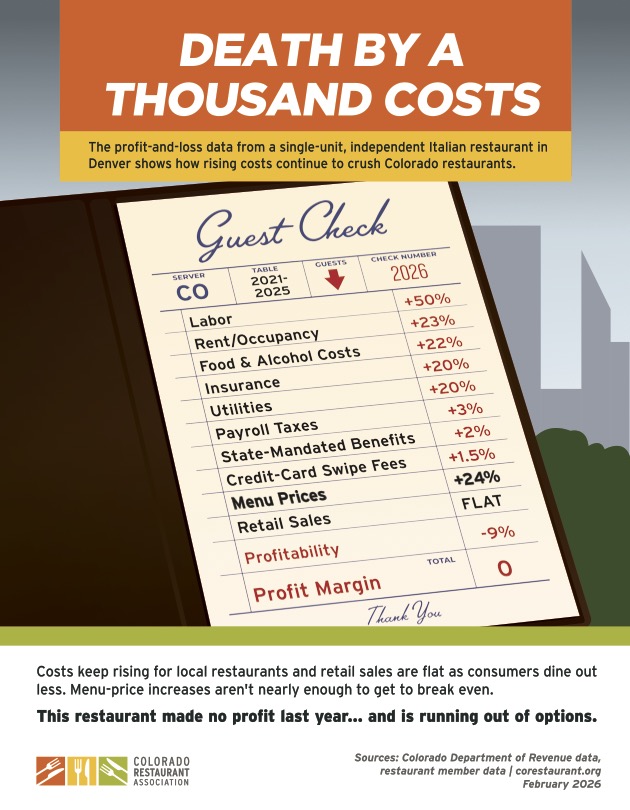
Adding color to this issue is a newly released infographic from the Colorado Restaurant Association that breaks down the extent to which basic restaurant business costs have increased over the last five years. The data used to create it came from the actual balance sheet of a single unnamed Italian restaurant in Denver.
While clearly not all restaurants share the same financial situation (either good or bad), the graphic offers a useful glimpse into the business struggles common among the city’s restaurant industry.
The Rising Costs of the Restaurant Business
Courtesy of the Colorado Restaurant Association
Among the biggest increases are labor costs, which have risen by 50 percent between 2021 and 2025, largely due to a rise in the tipped minimum wage. Rent/occupancy costs rose 23 percent; food and alcohol costs are up 20 percent, and insurance and utility costs have increased 20 percent.
“Prices can’t go any higher because customers are already dining out less right now due to cost pressures and inflation and affordability issues, and if prices get any higher, they’re going to go out even less,” says CRA VP of communications Denise Mickelsen. “What this infographic illustrates is that even with menu prices going up, there’s just no way to stay on top of all these costs, which operators don’t have a lot of control over.”
Of particular note is the 1.5 percent increase in credit card swipe fees, which, while the lowest among the five-year increases, represents one of the highest costs restaurants face in actual dollars.
“It is outrageous how much restaurants, and other retailers too, have to pay in credit card swipe fees,” Mickelsen says, noting that the fee can come to between 2 to 4 percent of the total bill. “Colorado restaurants pay an average of $162,000 in total swipe fees a year.”
Ways To Control Restaurant Costs
In response, the restaurant industry is making a full-court press to convince Colorado legislators to help lower these costs where they can.
The tipped minimum wage issue is sure to be a controversial one. Denver’s tipped minimum wage has increased 95 percent since 2019, from $8.09 to $15.79 (compared to a 69 percent increase in the overall minimum wage). Any attempt to lower that or adjust what workers get paid has faced fierce pushback from worker rights advocates.
Among the solutions under discussion are raising the tip credit threshold, adjusting the minimum wage standards for whole-house tip-sharing establishments, adding a standardized service fee, and others.
Somewhat less controversial is addressing credit card swipe fees. On Wednesday, March 2, SB26-134, the Swipe Fee Relief Act, was introduced in the Senate Business, Labor & Technology Committee today by sponsors Senators William Lindstedt and Iman Jodeh, House Speaker Julie McCluskie, and House Majority Leader Monica Duran with support from the CRA as well as the Colorado Retail Council, the Colorado Association for Viticulture and Enology, the Colorado Convenience Store Association/Colorado Petroleum Marketers Association, the Colorado Hotel & Lodging Association, Colorado Independent Liquor Stores, EatDenver, the National Federation of Independent Business, the Tavern League of Colorado and the American Booksellers Association
SB 134 would eliminate credit-card interchange (or swipe) fees on sales taxes, which would help save Colorado restaurants and retailers tens of thousands of dollars or more at a time when every penny counts. Mickelsen says the bill aims to eliminate swipe fees on the sales tax portion of dining bills. Currently, when you pay your dinner bill, there’s a sales tax of around 8 percent, depending on where you’re eating. Shielding that line item on the bill from swipe fees would save restaurants an average of $25,000 a year.
“We have no control over the sales tax rates that we have to pay, and charging swipe fees on sales tax money being sent to the state is simply a way for the credit card companies to pad their already huge profits,” Annette and Traveling Mercies chef/owner Caroline Glover told Colorado legislators during a speech at a recent CRA-sponsored event. “This bill would save around $7,000 a year to Annette and $2,000 per year at Traveling Mercies … This is money that would go towards bonuses for our managers, overdue repairs, equipment upgrades, and help us stay open and serving our community.”
While it may not seem like much, Mickelsen says that any relief to the cascading cost increases facing today’s restaurant owners is worth pursuing, and going after low-hanging fruit like these fees is just a start.
“Right now, we’re focusing on how we can put more money back into restaurants’ pockets so that they can bring back staff, so they can keep their prices consistent and stay open,” she says.
Not mentioned are the many other fees that come into play. OpenTable takes a cut for its reservation system. Uber Eats and DoorDash take cuts for delivery.
This is the second cost-of-operations infographic that the CRA has released in recent years. In 2023, it issued a similar outline, focused on the costs behind a standard cheeseburger served by a local independent burger joint, highlighting a 40 to 85 percent increase in food costs alone, and also addressing the rise in labor, utility and other costs since 2020.
Worth noting: the restaurant that provided those figures, Fox Run Cafe, has since gone out of business.
“I think people assume that one little cost here, and one little cost increase here shouldn’t be that big a deal,” Mickelsen says. “But when you add them all up, there is nothing left.”