Gil Asakawa

Audio By Carbonatix
No doubt about it, Japanese cuisine has made tremendous inroads into the mouths of American diners. Sushi, ramen and even onigiri rice balls are common eats even around Denver. The latest Japanese import is the tamago sando, better known stateside as the egg salad sandwich.
Anyone who’s traveled to Japan knows that convenience stores there, including 7-Eleven, Lawson’s, Family Mart and other chains, are not just shops that sell snack foods and soda pop, but sources for some amazing meals that go far beyond shriveled hot dogs that have been rolling on heated bars for hours. And among those treats are incredible sandwiches, including the tamago sando.
In Japan, the lowly egg salad sandwich has been elevated into a culinary art form, a simple masterpiece that has become universally praised by non-Japanese, from foodies and social media creators to critics like the late Anthony Bourdain, who called it “a thing of beauty.” Surprisingly, the most common place to find tamago sando throughout Japan is in the country’s many konbini, or convenience stores, as well as supermarket chains and bento shops in train stations that cater to commuters on the go. They’ve been immigrating to the U.S. for some years — Konbi in LA, a hip eatery opened by two staffers from the high-end Momofuku restaurant (get the reference in the name, nudge nudge?) opened in 2018, but shut down in 2023 (it charged $16 for the egg salad sandwich).
Now, we can prepare for a full-on egg salad invasion, because 7-Eleven is finally selling its Japanese-Style Egg Salad sandwiches in the U.S.
Why is 7-11 introducing this product now?
The iconic Texas-based American convenience store chain has actually been majority-owned by a Japanese company, now called Seven & i Holdings, since 1991. 7-Eleven first expanded into Japan in 1974, with a store in Tokyo. By 1990, the Southland Corporation, which owned 7-Eleven, was forced to file for Chapter 11 bankruptcy. The Japanese subsidiary, which had inspired a modern social and economic culture around convenience stores with more efficient management, embrace of new retail technology and, critically, an emphasis on fresh food (delivered throughout the day from kitchens in each major market), financially rescued its American founders and let the company keep its headquarters in Texas. With the tamago sando and other Japanese foods gaining such an international profile, it finally made sense for Seven & i Holdings to begin introducing some products to its American stores.
Not everything would appeal to U.S. palates — don’t expect natto (fermented soybeans), a superfood that’s slimy and stinky to many people, to show up the next time you gas up your car and walk in for a coffee. But egg salad? Bring it on.
Gil Asakawa
What are Japanese-style egg salad sandwiches?
Egg salad sandwiches are part of a Japanese tradition called Yoshoku foods, which are Western dishes that have been adapted — Japanese would say evolved and improved — into Japan’s food culture. The most familiar examples of yoshoku are kare raisu curry rice (adapted from the British), hambagu (hamburger steak), Napolitan spaghetti (made with catsup, a post-war adaptation from lack of tomatoes but a surplus of US Occupation supplies) and even tempura (the deep-frying of seafood and vegetables was introduced by Portuguese priests for the Catholic “tempora” periods of fasting).
The yoshoku menu of sandwiches began appearing during the late 1800s Meiji era, when Japan embraced all things Western. Eggs had been part of the Japanese diet for centuries, but not as part of a sandwich. Egg salad sandwiches were first served in the early 1900s, and they became distinctly Japanese when Kewpie Mayonnaise was introduced in 1925.
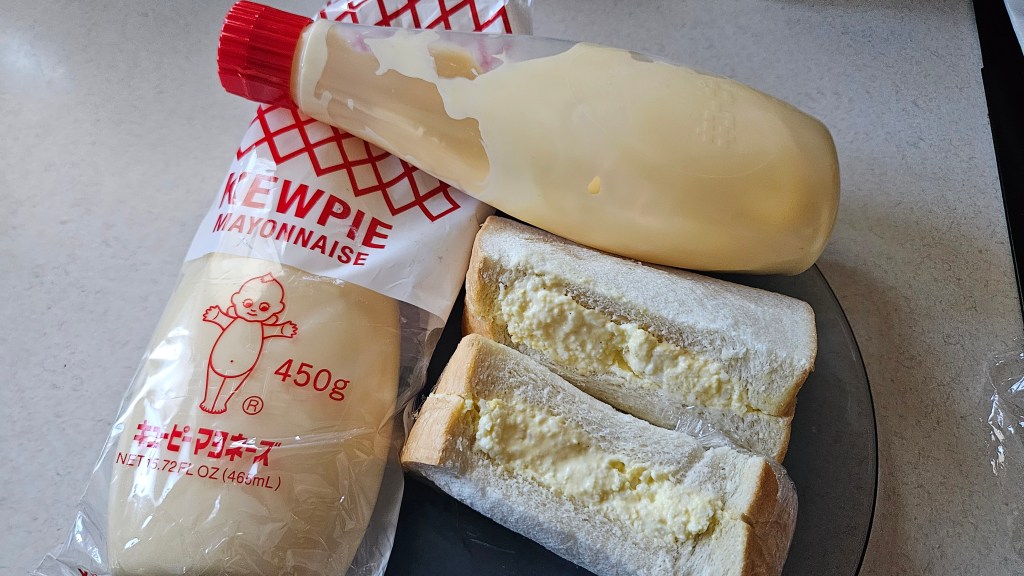
Kewpie was the brainchild of a man who had studied nutrition and food science in America and wanted to create a healthy condiment to help Japanese children grow up healthier. Unlike the mayo he had in the U.S., he created Kewpie, which has a flavor profile that’s subtly sweet and creamier. He named it Kewpie after the then-popular American baby doll, which is long-forgotten on this side of the Pacific, and used the famous doll as the brand’s logo.
The Japanese mayonnaise is combined with finely minced and mixed eggs. Though some Japanese tamago sandos have small diced bits of the hard-boiled whites, the main mouthfeel is a dreamy creaminess. The spread is placed between slices of Shokupan, the ever-so-slightly sweet milk bread that is cut thicker than a typical slice of Wonder Bread but not as thick as a piece of Texas toast. Then the crusts are usually trimmed off for a cleaner appearance.
What do the 7-Eleven Japanese-Style Egg Salad Sandwiches taste like?
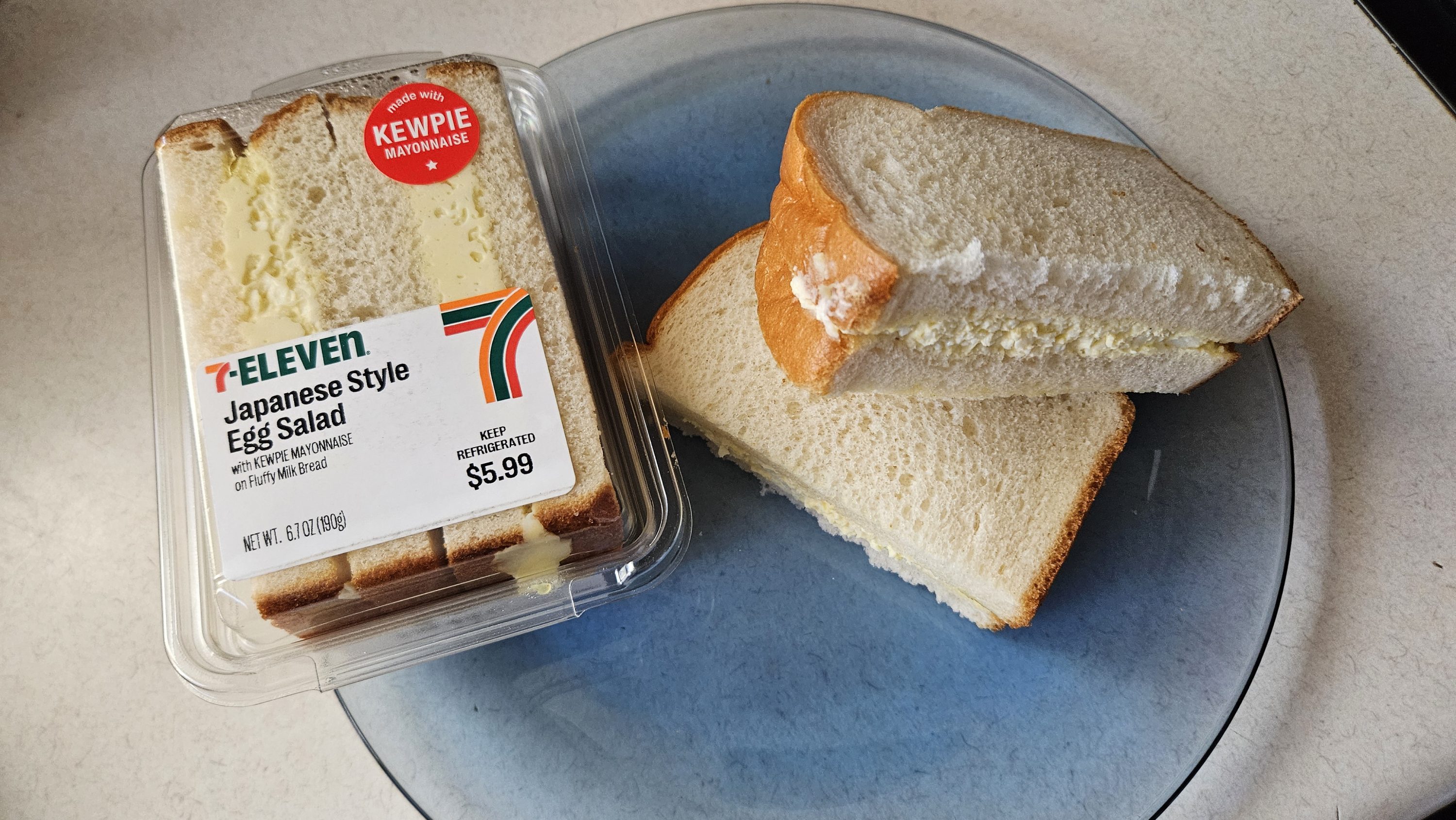
The tamago sandos now available at 7-Eleven (call first to make sure your neighborhood shop stocks them) still have their crusts on — Americans apparently think there’s more value with the whole loaf preserved. (It must go with the Big Gulp mentality.)
The shokupan bread is soft, though it’s best if you grab and go when it’s still fresh, and a little bit too sweet to be legit Japanese. The egg salad itself is not bad. At first taste, it’s a bit bland, and is better with a pinch of extra salt sprinkled on, plus, if you have it, a squirt of more Kewpie mayo. Over time, I expect it’ll improve.
How does it compare to other local Japanese-style egg salad sandwiches?
A couple of months ago, I tried an egg salad and ham sandwich at Tokyo Premium Bakery in the Platt Park neighborhood, across from Sushi Den, where I’ve enjoyed other baked goods in the past. It was unfortunately disappointing, as if someone in charge of the egg salad was off that day. The eggs were a bit bland, and the bread was sliced too thin (for non-Japanese customers, I suspect).
I’ve also had the egg salad sandwich at Longmont’s Kawaii Konbini, where a husband-and-wife duo who love Japan run a cute (“kawaii” means cute in Japanese) approximation of a Japanese convenience store, with freshly-made onigiri rice balls and sandwiches. The egg salad was delicious, though I wished the whites had been chopped finer.
Gil Asakawa
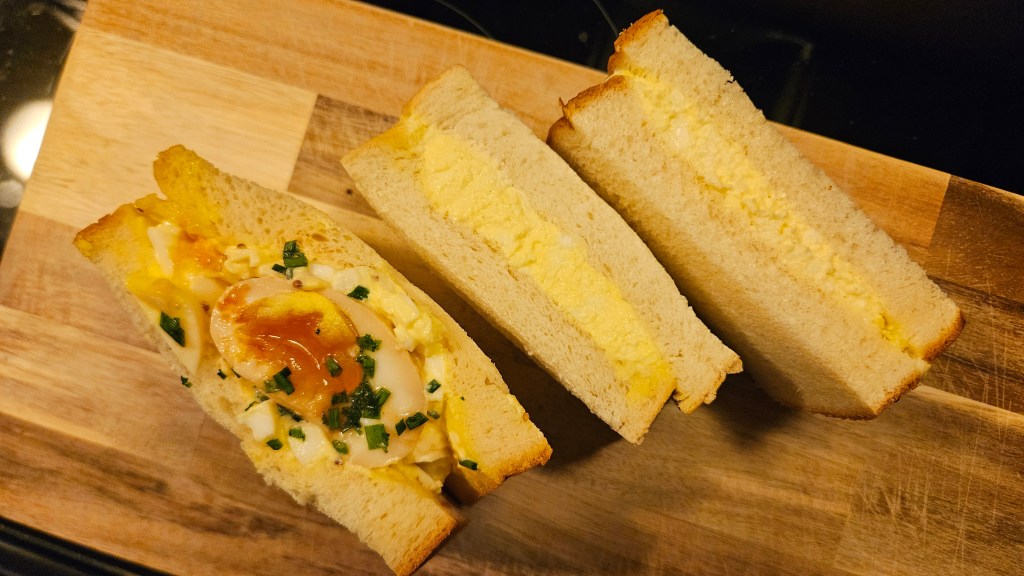
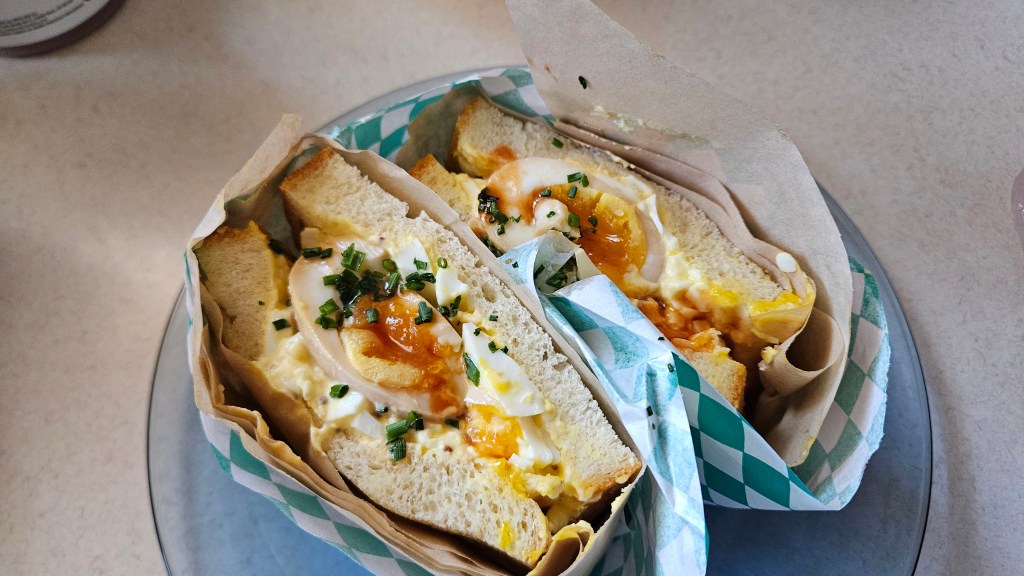
I also stopped by Eloise, a new sandwich shop on Tennyson Street, from the owners of Good Bread, which opened just over a week ago. There was a line to get in, and every table in the small dining space was full. After more than half an hour, I was able to order an egg salad sandwich to go, which was pretty good but not my favorite of the day. The shokupan was lackluster and tasted like a thicker slice of American bread. Like the 7-Eleven salad, I thought the egg could have used more salt. The bonus, though, was the “soy marinated jammy egg” that was cut in half and placed on top of each slice. Its oozing yolk and marinated white added nice umami to the sandwich. The downfall was that the whites of the egg salad were left much too chunky — not Japanese-style at all.
The best tamago sando I had was from the Enchanted Oven, the Japanese bakery in Broomfield near Flatirons Mall. Although the bread had its crust still on (a nod to American consumers), the shokupan was excellent in taste and texture. In fact, the bakery is so picky about its shokupan that if it fails the taste test, it’s crumbled up and given away as bags of panko breadcrumbs to cook with at home. The egg salad had the right balance of egginess, saltiness, and the slightest touch of sweetness, along with an umami aftertaste that wasn’t apparent in the other sandwiches.
If you’re trying to recreate a Japanese tamago sando experience konbini-style, the 7-Eleven version is a winner. The ones sold in the Denver metro area cost $6, which is a big bump from the typical price in Japan, JPY300 (about $2 with the exchange rate). But that’s the American Dream for you. Tokyo Premium Bakery, the Enchanted Oven and Kawaii Konbini charge around $7. Eloise’s egg salad sandwich costs $13, but it’s worth the splurge if you want to be a part of the neighborhood social scene that’s currently packing the place.