Photo by Garage Crycore

Audio By Carbonatix
A battle waged throughout Denver last month between the indestructible punks and the mystifying Blucifer.
Everyone won.
Over 400 bands took up multiple stages in the city on the last weekend of July as, deliberately or not, the Underground Music Showcase (UMS) and Blucifer’s First Rodeo competed for festival supremacy. But in an optimistic twist for the future of Denver music, both festivals saw success despite choosing the same July 24-26 dates as their homestays, with thousands of tickets sold.
Here’s what the numbers show so far.
UMS holds strong
UMS was the first DIY music festival to blast into the Baker neighborhood, founded in 2001 by then-Denver Post reporters John Moore and Ricardo Baca. The two started a concert highlighting local bands, featured in a yearly poll for the best Denver underground artists. But the idea grew exponentially, leading to the creation of UMS LLC by the nonprofit organization Youth on Record and the for-profit marketing agency Two Parts in 2021, after Two Parts purchased the festival from the Denver Post Community Foundation in 2018.
The festival played its last session on South Broadway in 2025 after the LLC announced that the money simply wasn’t making sense. But the RiNo Business Improvement District Board eventually stepped in and approved a memorandum of understanding in February, tossing $250,000 to the festival on an annual basis.
Now UMS is held on Larimer Street, between 24th and 32nd streets. The first RiNo iteration included around 180 bands across four pop-up stages and multiple venues, including Ratio Beerworks and Larimer Lounge.
Overall, UMS’s first year in new territory saw over 6,000 ticket holders every day, with over 50,000 visitors in the Larimer corridor during the weekend and over 50 businesses participating by either hosting bands or having deals during the festival.
“I’m feeling like we pulled off something pretty incredible. We did kind of what we set out to do. We landed UMS in RiNo,” says Keanan Stoner, CEO of Two Parts and director of the new UMS. Stoner says he and his team view the 2026 numbers and successes as a first, rather than the 26th, due to the significant leap to a new location.
“Even though it’s a 26-year-old event, only so much of that really transfers. So the first year event, to have it land this way, I think is an incredibly optimistic feeling,” he says.
Free wristbands were given out to participating businesses and others in a form of community building, but Stoner is still proud of the number of paying attendees and the overall foot traffic it brought to the area. That feeling was shared in the RiNo BID,
“The comment I heard, whether it was a business that was a participating venue or not, is that it felt good. There were people on the sidewalks. There were people walking around. Even with the weather, the way it was,” says Terry Madeksza, executive director of the RiNo BID. “RiNo felt like there was some energy.”
Organizers are already looking on to next year, thinking of ways to do more while also maintaining the neighborhood, local vibe that UMS solidified during its first year in RiNo. Stoner says the team will have to do a bit of “soul searching” on whether they want to keep the date in late July, though, with 100-degree days and storms pulsing through the event during the three-day stretch.
Blucifer starts hot
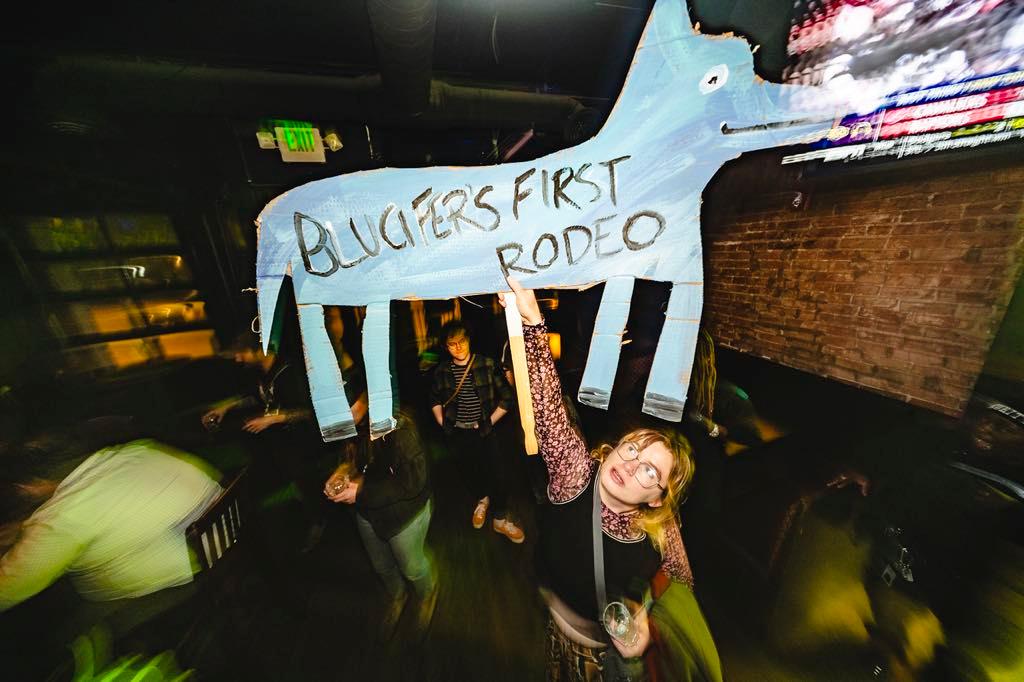
The upstart Blucifer’s First Rodeo was created to fill a Broadway-sized hole after UMS left the Baker neighborhood.
Denver musicians Mike Young and Gillian Pasley announced the entirely artist-run festival in February, right after UMS announced it was moving. Blucifer announced its show dates first, taking up the weekend that UMS had historically held in the past. Then, UMS announced its return, keeping its same date slot, leading to the weekend showdown.
The idea for Blucifer was to fill the void left in South Broadway and keep the underground festival close to its roots, with both of the festival’s founders mentioning that UMS had strayed from showcasing local musicians in an effort to bring in more national acts.
The new showcase ultimately saw 259 local acts at 17 independent venues and businesses stretching from Broadway to South Broadway, as well as 17 Baker neighborhood house shows and five DIY venues across four days.
Tickets sold out almost immediately, with over 3,000 people in attendance. According to festival organizers, Blucifer and its nonprofit partner, Holy Fool, paid out $123,500 to Colorado musicians, with $300 going to every solo act and $500 going to every band that played the festival. At the end of the day, around $168,000 was paid out to bands, engineers, production companies, photographers and other workers, the add.
Young tells Westword that as he was lying in a “heap of exhaustion” after his band, Clementine Was Right, and Pasley’s band, Caspar Milquetoast, finished the ending ceremonies, his trumpet player, Will Mulligan, knelt next to him and said, “I think we broke the world a little.”
“Which is a little grandiose,” he says, “but, goddamn, did it feel that way,.”
“From half-pipes in the backyard, to lightning striking Goldmine Vintage, to the dance ceremony in the new D3 Arts, folks showed up. We did not cancel any sets,” he continues. “We felt honored to carry the torch of a holiday that has been running for 20-plus years in Baker. We felt like this was one great weekend of live, local music all year round. We felt the power of artist labor. This was a Rodeo we all made together.”
Like UMS, Blucifer’s organizers are already looking forward to a second rodeo next year — but we’ll see if they end up on the same weekend again.
“They’re doing something very cool. It looked like what they pulled together was amazing, too, and very community-driven,” Stoner says of Blucifer. “I would love to not do it on the same weekend.”