
Photo by Alive Coverage for Live Nation.

Audio By Carbonatix
Reader support matters more than ever
We're in the final stretch of our summer campaign. Our goal is to raise $25,000 by August 9 to support the journalism our community relies on. Reader support is helping shape the future of local news.
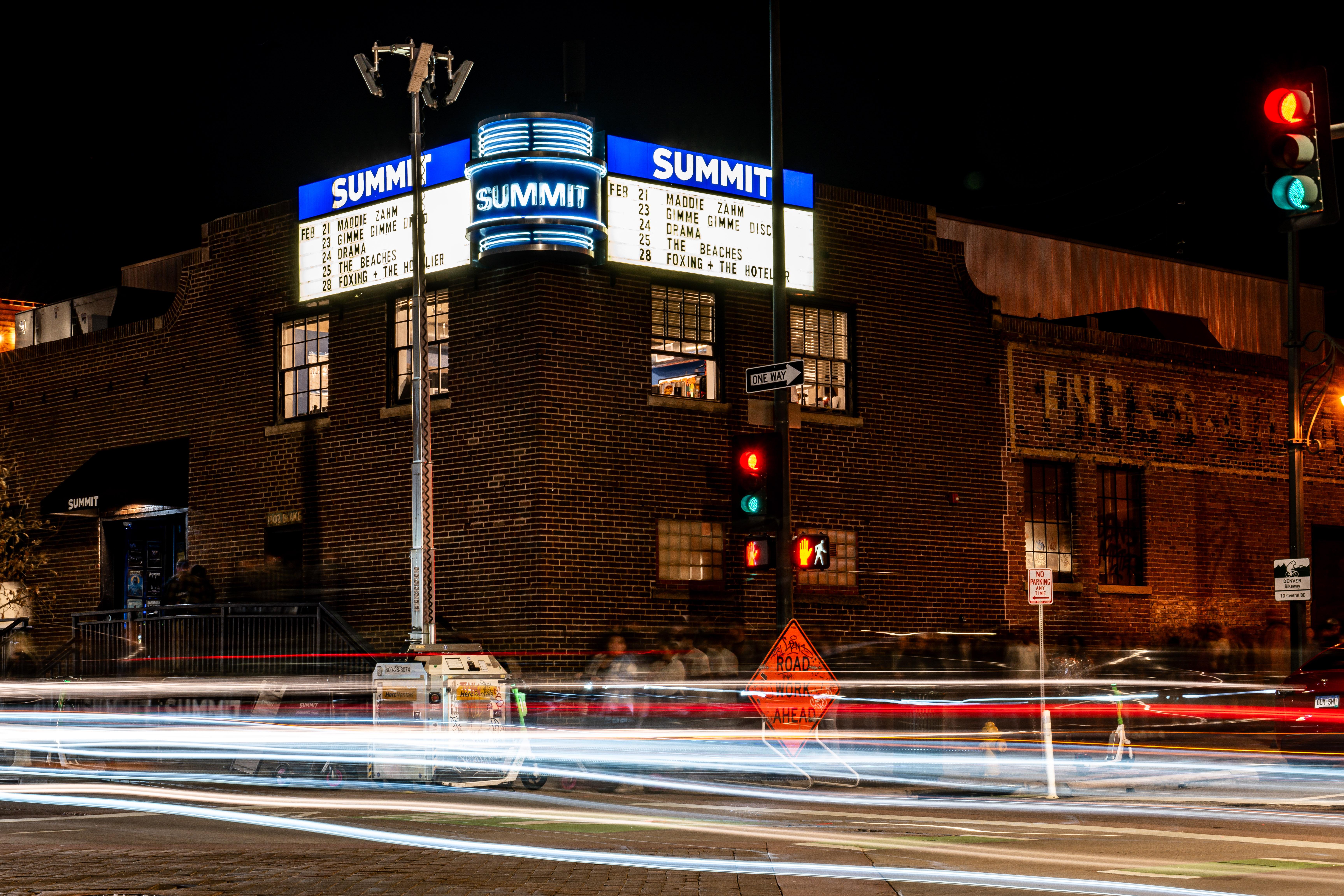
When you walk down Blake Street, it’s hard to imagine the many lives of the building that now houses Summit Music Hall.
Before it became one of the city’s premier mid-sized music venues, the 12,500-square-foot space at 1902 Blake was home to the Blake Street Baseball Club. Decades later, it morphed into the LoDo Music Hall and eventually Club Bash, a hip-hop nightclub that thrived during the early 2000s nightlife boom.
In 2010, everything changed. Independent promoter Soda Jerk Presents acquired the property, redesigned it and opened it as the Summit. Its inaugural show in July 2010 featured Denver favorites the Rouge, Air Dubai and Honor the Fallen, an appropriately local launch for a space that would come to mean so much to the city’s music community.
“I was there for opening night,” recalls general manager Emma Sigley. “For us, the Summit has always been defined by the artists who’ve played here, the fans who’ve shown up and our crew who’ve made it their home. The Summit is an incubation hub. We’ve hosted everything from breakout acts doing their first big Denver show to names that keep coming back year after year. That mix of history and discovery is a big part of our identity.”
The venue’s ownership shifted in February 2018, when international concert giant Live Nation signed a twenty-year lease to take over booking and operations at both the Summit and its sister venue, the Marquis Theater. Soda Jerk Presents retained ownership of the buildings but stepped back from promoting shows, ending nearly two decades as a leading independent promoter.
For Live Nation, the deal was a strategic foothold in a market largely dominated by Anschutz Entertainment Group, which already controlled such venues as the Gothic, Bluebird and Ogden Theatres. “I think it changes the game in Denver quite a bit — at least for Live Nation,” Eric Pirritt, former president of the Colorado branch of the company, told Westword at the time. “It’s a game-changer for us to have the ability to have the proper place to build artists from 400 seats to 1,000-plus.”
Soda Jerk founder Mike Barsch called the decision one of timing rather than necessity, noting his company had just come off its most successful year but saw consolidation as the future of the industry. Just months later, Live Nation oversaw major renovations at the Summit, closing the venue from June through September 2018 to improve sight lines, expand restrooms and dressing rooms and increase capacity.
“The renovations we did in 2018 were huge for us,” Sigley explains. “We opened up sight lines, so now there’s not a bad seat in the house. We expanded capacity, improved the flow and created a flexible space. We can scale up or down depending on the event, whether it’s a sold-out concert, a wedding, a corporate event or anything.”
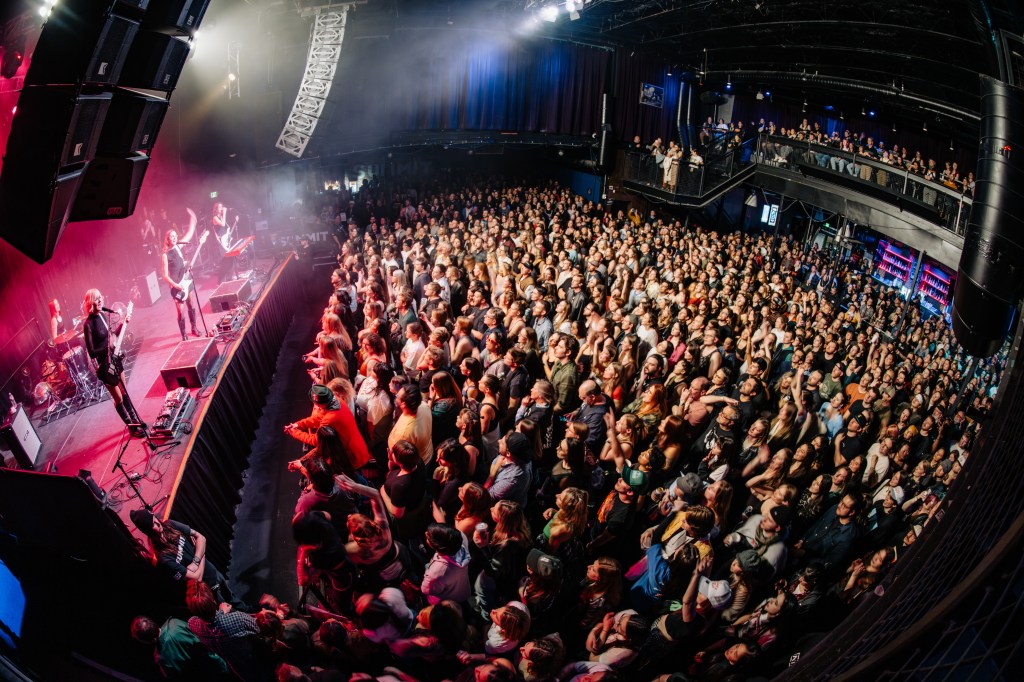
Photo by Alive Coverage for Live Nation.
As it celebrates its fifteenth anniversary, the venue is getting a fresh identity. The space, long known simply as the Summit, has officially rebranded as Summit Music Hall, complete with a new logo, website and visual look designed to carry it into its next chapter. For the team behind the venue, the change is both a nod to its roots and an invitation to the future.
“With our new look and our new logo, we’re inviting fans to let the noise heal you,” Sigley says. “Live shows here have always been about recharging, so the rebrand is about reflecting how fans actually experience music inside this room.”
The main floor is an open pit, where fans pack in tight to be part of the action. Above, a balcony wraps around three sides, offering a bird’s-eye view of the crowd and the performers. That multi-level design, coupled with state-of-the-art sound and lighting, makes the room attractive for touring artists.
“Artists want to come back over and over again because they had a great time and they felt taken care of,” says Rikki Aston, senior talent buyer. “Our location, for bands on tour, is pretty great, because if they want to have a nice dinner, there’s a place nearby. If they want to stay in a good hotel, there are some nearby. If they want to go to a baseball game or Meow Wolf, they can. We’re really centrally located, so this is a place that artists on tour want to come back to.”
Summit Music Hall fills a vital niche in Denver’s music ecosystem. With a capacity of 900, it serves as a critical stop for burgeoning acts. Bands not yet ready for Red Rocks or Ball Arena can headline their first big Denver show in the space, while veterans on “underplay” tours return to reconnect with fans in an intimate setting. And in the Moon Room, a smaller space inside Summit, more local acts and rising stars cut their teeth.
“My hope is always that the calendar reflects my personal playlist,” Aston says. “That means a little bit of everything. Because it’s a mid-sized venue, you get people on their way up, people on their way down and people who kind of stay in between. I’m always trying to make it as diverse as possible, because I really want to bring different people every year.”
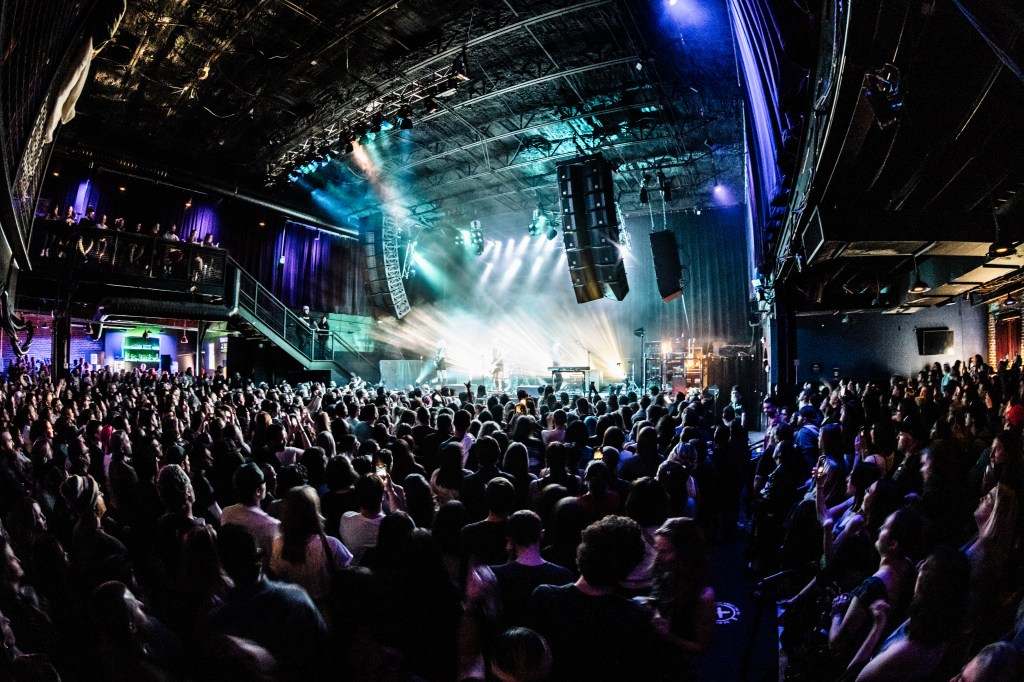
Photo by Alive Coverage for Live Nation.
That diversity has been Summit’s calling card. Over the years, its stage has hosted Talib Kweli, Alkaline Trio, Imagine Dragons, Neon Trees, AWOLNATION and Wale, among others. For Denver bands, Summit has been both a proving ground and a launchpad.
“For me, it’s always the most exciting when I book acts that I grew up listening to because I have such a personal connection to them, whether that’s Good Charlotte or Taking Back Sunday, from when I was in my pop-punk era, or Garbage, because Shirley (Manson) is such a legend, or Tycho, because I’ve always been a huge fan of his. It’s always exciting to book a new act, like Little Simz, who’s coming up this fall, who I have been going after for years, and I’m so excited to have her. So I truly have stars in my eyes. It never gets old.”
Summit Music Hall’s magic doesn’t just come from the names on the marquee. It comes from the roughly 200 staff members who make each show possible. From production to security, food and beverage to the box office, the team orchestrates the night like clockwork.
“My job is about bridging the gaps between departments so the experience feels seamless,” Sigley says. “Every show is different. The unpredictability forces us to stay creative, but it also keeps the energy high. That’s what makes it so rewarding. No two nights are the same, but it always gives us a chance to do something cool and new.”
Out front, box office manager Sydney Wiggs is often the first face fans encounter. Wiggs shared that she is constantly impressed that the Summit Music Hall “can create such different, but equally memorable, experiences for everyone who walks through the doors.”
“A typical night before a big show is a mix of preparation and fast-paced energy. Once doors open, it’s all about keeping things smooth for our fans with questions and keeping the box office line steady so everyone gets inside safely and on time,” Wiggs says. “A very memorable experience for me was putting together an exciting last-minute Hawthorne Heights show a few months ago. The show announced on the same day they were scheduled to play, and the fans were so excited to see them play in such an intimate setting.”
Ask the Summit team members about their favorite shows, and it’s nearly impossible to choose from the 150 to 160 artist events held in the space each year. However, one answer came up again and again: The Kills.
“It was such a vibe,” Aston remembers. “A sold-out show and they’re an act that we both love. From the beginning of the day, it was an easy day for everybody. Across the board, it was just a memorable event to have them there, and obviously, they’re very popular, too, so that’s always fun.” Sigley laughs, admitting she was about to say the same thing.
For Aston, the thrill also comes in seeing bands move up the ladder. “It’s always special to watch an act you booked here go on to headline Red Rocks. And then sometimes, they come back, like Dermot Kennedy, who is playing Summit again on his underplay tour, even after filling massive venues, and that’s the magic of a space like this.”
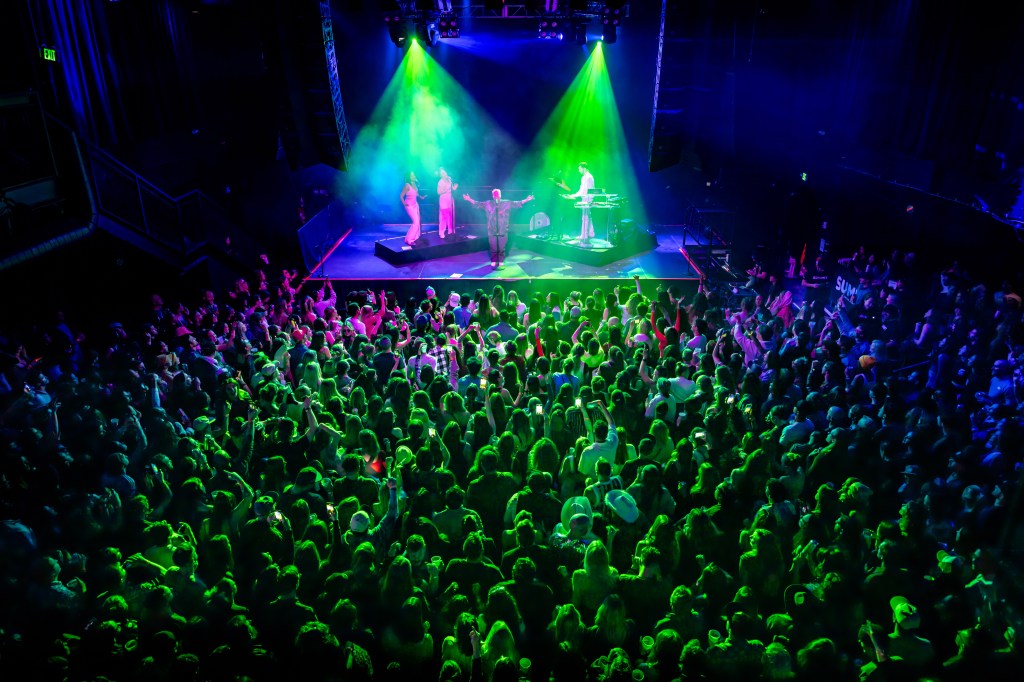
Photo by Alive Coverage for Live Nation.
As Summit Music Hall looks ahead to its next fifteen years, the rebrand is less about changing what works and more about amplifying its spirit. The new name and visual identity are a signal that the venue intends to keep evolving alongside Denver’s music scene, just as it has since opening night.
“We’re open to all acts and all types of fans and everything,” Aston says. “We just want more people to be able to experience it. Like, fifteen years is a long time, but it’s also a drop in the bucket sometimes, so it’s amazing how many people are still discovering us every day.”
Learn more about the Summit Music Hall and its upcoming shows at summitdenver.com.